Question 1:
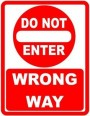 This road sign means:
A
U-turns are prohibited
B
You may proceed only if the way is clear
C
You are about to enter a one-way street the wrong way
D
Do not pass
This traffic sign indicates: you are about to enter a one-way street the wrong way. Observing and obeying all roadway signs ensures safe traffic flow and legal driving.
Question 2:
If a pedestrian is in the middle of the street when your signal light changes to green, you should:
A
proceed unless the pedestrian is in your lane.
B
proceed because you have the right-of-way.
C
wait until the pedestrian crosses the street before proceeding.
Drivers must always yield the right-of-way to pedestrians crossing at intersections and crosswalks: wait until the pedestrian crosses the street before proceeding. Stop and allow them to clear the lane safely.
Question 3:
Fatigue increases the risk of:
A
falling asleep while driving.
B
hitting a roadblock.
C
missing an exit.
Under state DUI and traffic safety laws: falling asleep while driving. Alcohol degrades judgment, slows reaction times, and distorts depth perception.
Question 4:
When driving in winter, you should NOT:
A
use snow tires on all four wheels of your vehicle.
B
use cruise control.
C
drive on interstate roads.
D
check your vehicle's antifreeze level and windshield washer fluid.
The correct driving rule is: use cruise control. Following standard DMV road rules and practicing defensive driving ensures safety for all road users.
Question 5:
 This road sign means:
A
No left turn
B
No U-turn
C
Detour ahead
This traffic sign indicates: No U-turn. Observing and obeying all roadway signs ensures safe traffic flow and legal driving.
Question 6:
 This road sign means:
A
Drive with caution and be ready to stop
B
Slow down or stop
C
You must come to a complete stop
An octagonal Stop sign requires a full and complete stop before the stop line or crosswalk: you must come to a complete stop. Proceed only after yielding to all cross traffic and pedestrians.
Question 7:
 This road sign means:
A
No left turn
B
No right turn
C
No U-turns
This traffic sign indicates: No right turn. Observing and obeying all roadway signs ensures safe traffic flow and legal driving.
Question 8:
You should use turn signals to indicate your intention with sufficient time to allow other drivers to see the signal:
A
if it’s raining.
B
AFTER you move.
C
BEFORE you move.
State laws require signaling your intention: BEFORE you move. Signal at least 100 feet before making a turn or changing lanes.
Question 9:
You are driving in the left lane and want to change to the right lane. Before changing lanes, you should check your mirrors, signal and:
A
look over your left shoulder.
B
look over both shoulders for vehicles in front of you.
C
accelerate slightly before looking around your vehicle.
D
look over your right shoulder.
State laws require signaling your intention: look over your right shoulder. Signal at least 100 feet before making a turn or changing lanes.
Question 10:
Before changing lanes or attempting to pass another vehicle, you should:
A
signal your intention before changing lanes.
B
check your blind spots and, mirrors.
C
All of the above.
All of the listed points are essential driving requirements: signal your intention before changing lanes; check your blind spots and, mirrors. Practicing each ensures compliance with DMV safety laws.
Question 11:
If your car goes into water, you should:
A
wait for water to rush in and let it out in small breaths through your nose.
B
call the fire department immediately.
C
remove yourself before it starts to sink.
The correct driving rule is: remove yourself before it starts to sink. Following standard DMV road rules and practicing defensive driving ensures safety for all road users.
Question 12:
What should you do if a vehicle is approaching head-on in your lane?
A
Pull over to the left and use your emergency lights to stop the other driver.
B
Decrease speed, pull over to the right and sound your horn to warn the other driver.
C
Turn off the ignition if your vehicle has power steering.
The correct driving rule is: Decrease speed, pull over to the right and sound your horn to warn the other driver. Following standard DMV road rules and practicing defensive driving ensures safety for all road users.
Question 13:
What should you do if your headlights suddenly go out?
A
Brake immediately and activate your emergency lights.
B
Use your emergency lights, parking lights or directional signals.
C
Ease your foot off the gas pedal and brake gently.
The correct driving rule is: use your emergency lights, parking lights or directional signals. Following standard DMV road rules and practicing defensive driving ensures safety for all road users.
Question 14:
Drivers should use high beam headlights when:
A
following another vehicle.
B
when they come within 50 feet of an oncoming vehicle.
C
there are no oncoming vehicles approaching.
The correct driving rule is: there are no oncoming vehicles approaching. Following standard DMV road rules and practicing defensive driving ensures safety for all road users.
Question 15:
If an aggressive driver cuts you off, you should:
A
sound your horn.
B
look towards the left side of the road.
C
stay calm and get out of the aggressive driver's way.
D
call the police immediately.
The correct driving rule is: stay calm and get out of the aggressive driver's way. Following standard DMV road rules and practicing defensive driving ensures safety for all road users.
Question 16:
From top to bottom, traffic lights are:
A
green, red and yellow.
B
green, yellow and red.
C
red, yellow and green.
The correct driving rule is: red, yellow and green. Following standard DMV road rules and practicing defensive driving ensures safety for all road users.
Question 17:
On two-lane, two-way streets or highways, you should start left turns close to the center line.
A
True
B
False
The correct driving rule is: True. Following standard DMV road rules and practicing defensive driving ensures safety for all road users.
Question 18:
Which of the following is true about the Anti-Locking Brake System?
A
It prevents skidding.
B
It allows drivers to steer during an emergency braking situation.
C
All of the above.
All of the listed points are essential driving requirements: It prevents skidding; It allows drivers to steer during an emergency braking situation. Practicing each ensures compliance with DMV safety laws.
Question 19:
Warning signs are normally:
A
blue.
B
yellow.
C
red.
D
green.
The correct driving rule is: yellow. Following standard DMV road rules and practicing defensive driving ensures safety for all road users.
Question 20:
If one of your tires blows out, you should:
A
apply your brakes gently and steer smoothly where you want to go.
B
pump your brakes and steer where you want to go.
C
apply your brakes immediately.
D
hold the steering wheel tightly, slowly take your foot off the gas pedal and steer smoothly where you want to go.
The correct driving rule is: hold the steering wheel tightly, slowly take your foot off the gas pedal and steer smoothly where you want to go. Following standard DMV road rules and practicing defensive driving ensures safety for all road users.
Question 21:
Drivers may continue carefully through a yellow light if:
A
there are no pedestrians crossing.
B
they are turning right.
C
they already are within the intersection.
D
an emergency vehicle is crossing your lane.
According to standard right-of-way regulations: they already are within the intersection. Yielding appropriately prevents intersection collisions and maintains safe traffic flow.
Question 22:
 This road sign means:
A
Watch for trucks entering from the side
B
Merging traffic
C
Steep hill
This traffic sign indicates: Steep hill. Observing and obeying all roadway signs ensures safe traffic flow and legal driving.
Question 23:
When exiting a highway, you should slow down:
A
when you first see the exit sign.
B
before moving into the exit lane.
C
once you have moved into the exit lane.
D
once you see the toll booth.
Defensive driving guidelines state that: once you have moved into the exit lane. Anticipating road hazards and communicating maneuvers keeps traffic predictable and safe.
Question 24:
Alcohol causes:
A
poor judgment.
B
loss of concentration.
C
reduced perception.
D
All of the above.
Alcohol and impairing substances degrade all critical driving functions: poor judgment; loss of concentration; reduced perception. Driving while impaired carries severe criminal and safety penalties.
Question 25:
After parking, are you allowed to open a door on the road side of your vehicle?
A
Yes, always.
B
Yes, but only if it does not interfere with bicyclists and other traffic.
C
No, never.
Under standard parking and curb regulations: Yes, but only if it does not interfere with bicyclists and other traffic. Following parking distance clearances keeps roadways unobstructed and emergency lanes accessible.
Question 26:
If you continually pass the other vehicles on a road with one lane in each direction, you will:
A
help prevent the chances of a crash occurring due to traffic congestion.
B
get to your destination much faster.
C
increase your chances of being involved in an accident.
The correct driving rule is: increase your chances of being involved in an accident. Following standard DMV road rules and practicing defensive driving ensures safety for all road users.
Question 27:
Blind spots are:
A
Dangerous intersection where the maximum speed limit is 15 MPH or less.
B
At night, the darkest areas of a road, where emergency flashers should be used.
C
Areas to the side or rear of a vehicle that the driver cannot see with use of mirrors.
The correct driving rule is: Areas to the side or rear of a vehicle that the driver cannot see with use of mirrors. Following standard DMV road rules and practicing defensive driving ensures safety for all road users.
Question 28:
What does BAC stand for?
A
Blood Alcohol Commission
B
Blood Alcohol Concentration
C
Blood Alcohol Content
Under state DUI and traffic safety laws: Blood Alcohol Concentration. Alcohol degrades judgment, slows reaction times, and distorts depth perception.
Question 29:
Drivers may pass on a two-lane roadway marked with a single solid yellow line on their side of the center line.
A
False
B
True
The correct driving rule is: False. Following standard DMV road rules and practicing defensive driving ensures safety for all road users.
Question 30:
Excessive speed:
A
helps you to maneuver around obstacles.
B
saves time so you can get to your destination more quickly.
C
increases the likelihood of serious bodily injuries and death.
For safe speed and stopping control: increases the likelihood of serious bodily injuries and death. Adjusting speed to match visibility and road traction prevents loss of steering grip.
Question 31:
When changing lanes:
A
slow down and check your left mirror.
B
look over your shoulder to make sure no one is in the blind spot.
C
change lane before checking the inside rearview mirror.
The correct driving rule is: look over your shoulder to make sure no one is in the blind spot. Following standard DMV road rules and practicing defensive driving ensures safety for all road users.
Question 32:
Tailgating:
A
cannot result in a traffic citation.
B
helps reduce traffic congestion.
C
is a defensive driving tecnique.
D
can frustrate other drivers and make them angry.
The correct driving rule is: can frustrate other drivers and make them angry. Following standard DMV road rules and practicing defensive driving ensures safety for all road users.
Question 33:
A defensive driver:
A
never drives below the speed limit.
B
knows when it is safe to pass other vehicles.
C
considers what other drivers might do and is always prepared to act.
The correct driving rule is: considers what other drivers might do and is always prepared to act. Following standard DMV road rules and practicing defensive driving ensures safety for all road users.
Question 34:
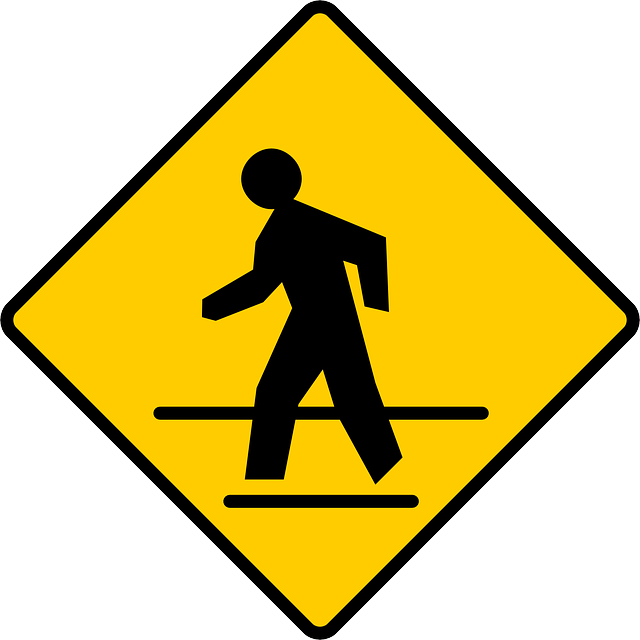 This road sign means:
A
School zone ahead
B
Pedestrians must not cross here
C
Pedestrian crossing ahead
This traffic sign indicates: Pedestrian crossing ahead. Observing and obeying all roadway signs ensures safe traffic flow and legal driving.
Question 35:
If you stop along the road at night:
A
turn on your emergency flashers and leave your low beams on.
B
turn off your emergency lights and leave your high beams on.
C
turn on your headlights only.
D
turn off all your lights.
The correct driving rule is: turn on your emergency flashers and leave your low beams on. Following standard DMV road rules and practicing defensive driving ensures safety for all road users.
Question 36:
 This road sign warns drivers that:
A
the road surface ahead changes to a low-type surface or earth road.
B
vehicles must leave the pavement immediately.
C
the dirt on the side of the road is soft.
This traffic sign indicates: the road surface ahead changes to a low-type surface or earth road. Observing and obeying all roadway signs ensures safe traffic flow and legal driving.
Question 37:
When pedestrians are in a crosswalk, drivers should:
A
pull over to the right and stop.
B
go ahead because drivers have the right-of-way.
C
wait for them to cross.
Drivers must always yield the right-of-way to pedestrians crossing at intersections and crosswalks: wait for them to cross. Stop and allow them to clear the lane safely.
Question 38:
When taking medication while driving, you should:
A
follow other vehicles closely.
B
consult your physicians and/or pharmacist regarding any prescription medication and its possible effects on driving.
C
drive 20 MPH below the posted speed limit.
Under state DUI and traffic safety laws: consult your physicians and/or pharmacist regarding any prescription medication and its possible effects on driving. Alcohol degrades judgment, slows reaction times, and distorts depth perception.
Question 39:
A red arrow on a traffic light means:
A
You may not turn in the direction of the arrow until a green light or arrow light goes on.
B
You may turn in in the direction of the arrow after coming to a complete stop.
C
You must stop and then proceed when the way is clear.
The correct driving rule is: you may not turn in the direction of the arrow until a green light or arrow light goes on. Following standard DMV road rules and practicing defensive driving ensures safety for all road users.
Question 40:
When you are involved in an accident and your vehicle is blocking traffic, you should:
A
not move your vehicle under any circumstances.
B
wait for the police to arrive before moving your vehicle.
C
move your vehicle off of the travelled portion of the roadway, if possible.
D
None of the above.
The correct driving rule is: move your vehicle off of the travelled portion of the roadway, if possible. Following standard DMV road rules and practicing defensive driving ensures safety for all road users.
Question 41:
Two drivers reach an uncontrolled intersection at the same time. Who has the right of way?
A
The driver on the left.
B
No one.
C
The driver on the right.
At an uncontrolled intersection or 4-way stop where vehicles arrive at the same time: The driver on the right. The driver on the left must always yield to the driver on the right.
Question 42:
Night driving can be more difficult because:
A
the ratio of motorcyles to cars is much higher at night.
B
vehicle operators tend to drive faster at night.
C
speed limits do not apply at night.
D
visibility is reduced.
The correct driving rule is: visibility is reduced. Following standard DMV road rules and practicing defensive driving ensures safety for all road users.
Question 43:
The minimum drinking age in this State is ____ years.
A
20
B
21
C
9
D
18
The correct driving rule is: 21. Following standard DMV road rules and practicing defensive driving ensures safety for all road users.
Question 44:
A pedestrian starts to cross in front of your vehicle. You should:
A
sound your horn and proceed with caution.
B
slow down.
C
speed up and pass in front of the pedestrian.
D
stop until the person is out of the crosswalk.
Drivers must always yield the right-of-way to pedestrians crossing at intersections and crosswalks: stop until the person is out of the crosswalk. Stop and allow them to clear the lane safely.
Question 45:
If the entrance lane is too short to allow acceleration to expressway speed, you should:
A
stop and wait for a large space in traffic.
B
enter the expressway and accelerate quickly.
C
reduce your speed to 15 MPH or less and blend with traffic.
For safe speed and stopping control: stop and wait for a large space in traffic. Adjusting speed to match visibility and road traction prevents loss of steering grip.
Question 46:
An inattentive driver:
A
carries on an eye-contact conversation with a passenger while driving.
B
gazes at objects off the roadway while driving.
C
daydreams.
D
All of the above.
All of the listed points are essential driving requirements: carries on an eye-contact conversation with a passenger while driving; gazes at objects off the roadway while driving; daydreams. Practicing each ensures compliance with DMV safety laws.
Question 47:
After you stop for a school bus, you must:
A
turn off your engine.
B
pass the bus before the red lights stop flashing.
C
None of the above.
When a school bus displays flashing red lights and extended stop sign: None of the above. Traffic in both directions must come to a full stop on undivided roads until children are clear.
Question 48:
 This sign means:
A
divided highway ahead.
B
narrow bridge ahead.
C
road construction.
D
lane ends, merge left.
This traffic sign indicates: lane ends, merge left. Observing and obeying all roadway signs ensures safe traffic flow and legal driving.
Question 49:
When parking uphill on a road with a curb, turn the front wheels:
A
towards the curb.
B
parallel to the curb.
C
straight ahead.
D
away from the curb.
When parking uphill with a curb: away from the curb. Turn wheels away from the curb (left) so the back of the front tire catches the curb if brakes slip.
Question 50:
Driving under the influence of any medication which impairs your driving ability is permitted:
A
under no circumstances.
B
if it is prescribed by a physician.
C
if you dont feel drowsy.
Under state DUI and traffic safety laws: under no circumstances. Alcohol degrades judgment, slows reaction times, and distorts depth perception.
Question 51:
To drive defensively, you must:
A
anticipate errors by other drivers.
B
assume that a driver who approaches a STOP sign on a side road is actually going to stop.
C
not check behind you through your mirrors.
The correct driving rule is: anticipate errors by other drivers. Following standard DMV road rules and practicing defensive driving ensures safety for all road users.
Question 52:
To pass a bicyclist traveling in the same direction on a two-lane road without bicycle lanes, you should:
A
continue driving straight, it is the bicyclist’s responsibility to get out of your way.
B
slow down and wait until there is no oncoming traffic, then pass the bicyclist leaving him or her sufficient space.
C
honk at the bicyclist to let him or her know you are about to pass.
D
not pass the bicyclist until you come to a traffic signal or stop sign.
State laws require motorists to provide a safe clearance buffer: slow down and wait until there is no oncoming traffic, then pass the bicyclist leaving him or her sufficient space. Allow at least 3 feet of space when overtaking a bicyclist.
Question 53:
On what three conditions does your blood alcohol content (BAC) depend?
A
Your weight. How much alcohol you drink. How much time passes between drinks.
B
Your weight. The type of beverage you drink. How fit you are.
C
Your height. How much alcohol you drink. The type of beverage you drink.
Under state DUI and traffic safety laws: Your weight. How much alcohol you drink. How much time passes between drinks. Alcohol degrades judgment, slows reaction times, and distorts depth perception.
Question 54:
When passing another car, you have enough room to return to the driving lane when:
A
you cannot see the vehicle directly to your right.
B
you are at least 50 feet in front of the vehicle.
C
you can see both headlights of the car you passed in your rearview mirror.
Defensive driving guidelines state that: you can see both headlights of the car you passed in your rearview mirror. Anticipating road hazards and communicating maneuvers keeps traffic predictable and safe.
Question 55:
Drivers can not pass a vehicle on the left if:
A
they approach the top of a hill on a two-way road and can not see over it.
B
they can not safely return to the right lane before they reach a solid yellow center line for the right lane.
C
All of the above.
All of the listed points are essential driving requirements: they approach the top of a hill on a two-way road and can not see over it; they can not safely return to the right lane before they reach a solid yellow center line for the right lane. Practicing each ensures compliance with DMV safety laws.
Question 56:
The extra space in front of a large truck is needed for:
A
other drivers when merging onto a freeway.
B
the truck driver to stop the vehicle.
C
other drivers when they want to pass the truck.
When sharing the road with other vehicles: the truck driver to stop the vehicle. Giving large vehicles and vulnerable users adequate clearance prevents dangerous accidents.
Question 57:
When following motorcycles, drivers should:
A
reduce the minimum following distance.
B
try to pass them as they have different braking capabilities than other motor vehicles.
C
keep more space in front of their vehicle.
The correct driving rule is: keep more space in front of their vehicle. Following standard DMV road rules and practicing defensive driving ensures safety for all road users.
Question 58:
When driving near light rail vehicles, drivers should:
A
never drive around lowered crossing gates.
B
expect trains on any track at any time.
C
always obey signs and traffic signals.
D
All of the above.
All of the listed points are essential driving requirements: never drive around lowered crossing gates; expect trains on any track at any time; always obey signs and traffic signals. Practicing each ensures compliance with DMV safety laws.
Question 59:
 This road sign means:
A
Winding road
B
Side road ahead
C
Slippery when wet
This traffic sign indicates: Slippery when wet. Observing and obeying all roadway signs ensures safe traffic flow and legal driving.
Question 60:
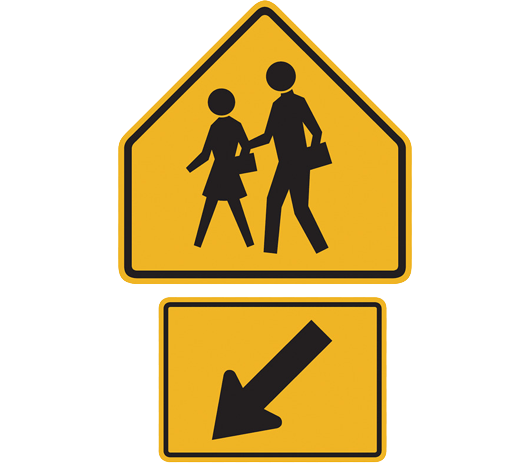 At a school crossing, drivers should:
A
always stop, whether there’s a stop sign or not.
B
always sound their horn and stay alert.
C
watch for children and be ready to stop.
The correct driving rule is: watch for children and be ready to stop. Following standard DMV road rules and practicing defensive driving ensures safety for all road users.