DriveQuiz drivequiz.com

MD DMV PERMİT PRACTİCE TEST 6

Maryland
Duration: 23 min
|
Questions: 25
Student Name:
Date:
Correct:      Incorrect:      Score:      
1.
The road is the most slippery:
A) when it first starts to rain.
B) after it rains.
C) All of the above.
2.
Designated school crosswalk location. You must yield to all schoolchildren and pedestrians in the crossing.
When they approach this sign, drivers must:
A) slow down and watch for children crossing the road.
B) obey signals from crossing guards.
C) stop if necessary.
D) All of the above.
3.
Your BAC depends on:
A) how much alcohol you drink.
B) how much time passes between drinks.
C) All of the above.
4.
Warns of an upcoming YIELD sign. Prepare to slow down and check for cross traffic before proceeding.
This road sign means:
A) Yield sign ahead
B) Side road entering from the left
C) Side road
5.
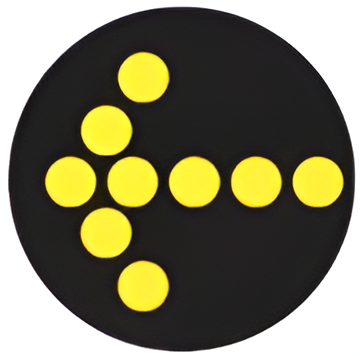
Protected left turns have ended. You may make a left turn only after yielding to all oncoming vehicles and pedestrians.
What does a flashing left yellow arrow mean?
A) Vehicles turning left must stop if they can. The light will soon be red.
B) Only right turns are allowed.
C) Left turns are allowed. Yield to oncoming traffic and pedestrians.
D) None of the above.
6.
Driver distractions include:
A) Avoiding unnecessary lane changes.
B) Slowing down to look at crash scene.
C) turning your headlights on when rain and fog make it hard to see.
7.
If your front wheels start to skid, the first thing you should do is:
A) Take your foot off the gas pedal and shift to neutral.
B) Immediately turn in the direction you want to go.
C) Speed up, pump your brakes and steer in the direction the vehicle is trying to go.
8.
Regulatory signs are:
A) Suggestions
B) Warnings
C) Law
9.
Night driving can be more difficult because:
A) vehicle speed and distance are harder to judge.
B) there are more cars on the roads at night.
C) the speed limit is increased at night.
10.
Where must you position your vehicle when you prepare to make a left turn from a two-way roadway into a one-way roadway?
A) As far to the right as possible.
B) On the right curb.
C) As close as possible to the center line.
11.
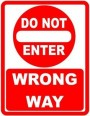
Alerts drivers to a major crossroads intersection ahead. Watch for vehicles entering or crossing the roadway.
This road sign means:
A) Drivers may proceed if the way is clear
B) Drivers are about to enter a one way street the wrong way
C) U-turns are prohibited
12.
Which statement about taking medications and driving is true?
A) Cold medications can make a person drowsy.
B) Prescribed drugs are safe to take at any time.
C) Over the counter drugs do not affect driving ability.
13.
Regulation signs normally are:
A) white triangles.
B) green rectangles.
C) white rectangles.
14.
Any use of a cell phone while operating a motor vehicle is considered a distraction because:
A) it occupies the driver's mind, hands and eyes.
B) it draws the attention of other drivers.
C) it causes the driver to be concerned about the latest news.
15.
When taking medication while driving, you should:
A) follow other vehicles closely.
B) consult your physicians and/or pharmacist regarding any prescription medication and its possible effects on driving.
C) drive 20 MPH below the posted speed limit.
16.
In case of skidding, drivers should NOT:
A) take their foot off the gas pedal.
B) pump the brakes gently if they are about to hit something.
C) tap the gas pedal with their foot.
17.
A steep downhill grade is ahead. Trucks and heavy vehicles should downshift to a lower gear to prevent brake overheating.
This road sign means:
A) Watch for trucks entering from the side
B) Merging traffic
C) Steep hill
18.
Which shape is a warning sign?
A) Diamond
B) Triangle
C) Pennant
19.
Does a vehicle prepared to enter a traffic circle or rotary have right-of-way over vehicles in the circle?
A) Yes, but only if they are entering the rotary from the right lane.
B) No. Vehicles already in the circle have the right-of-way.
C) Only if the light is green.
D) Yes.
20.
What should you do in case of a steering failure?
A) Pump your gas pedal a few times to increase the pressure.
B) Don't panic. Turn on your emergency lights to let other drivers know you are having car problems. Move toward the side of the road and bring the car to a gradual stop.
C) Leave the road immediately.
21.
The roadway ahead is narrowing or a lane is ending. Merge smoothly into the continuing lane.
This road sign means:
A) Merge right
B) Stop sign ahead
C) Reduction in lanes
22.
When a hazard is seen ahead, reaction distance:
A) is the sum of perception distance and braking distance.
B) equals total stopping distance minus perception distance.
C) is how far a vehicle will continue to travel, in ideal conditions, before the driver hits the brakes.
23.
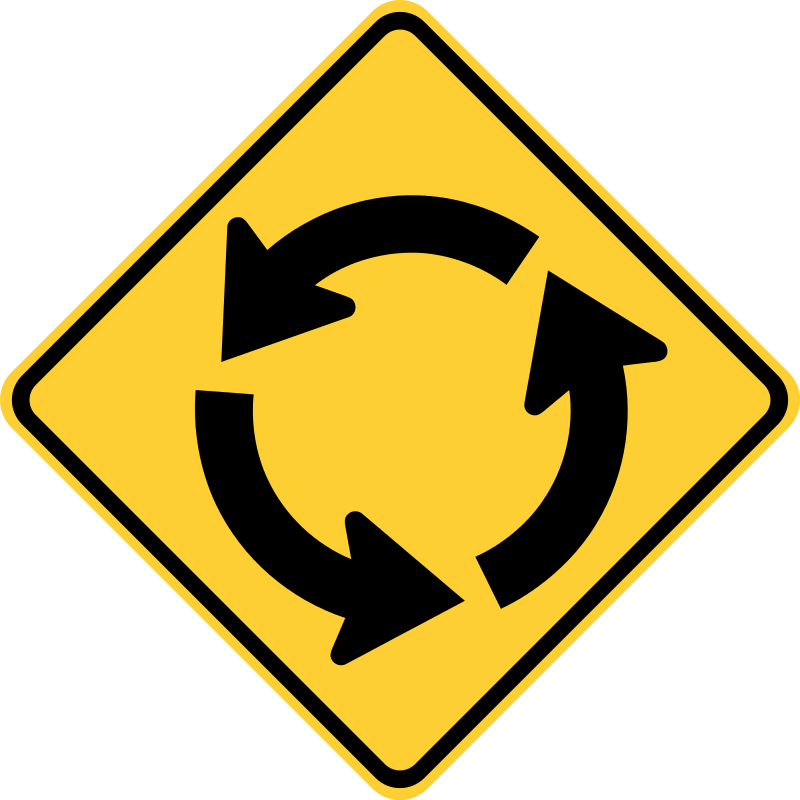
A circular intersection is ahead. Vehicles inside the roundabout have right-of-way; entering traffic must yield to traffic approaching from the left.
This road sign:
A) warns drivers of a sharp turn left. Drivers should slow their speed and keep to the left.
B) provides an advance notice of a roundabout.
C) warns drivers that U-turns are not permitted.
D) is a no-right-turns sign.
24.
Stopping distances:
A) are not affected by vehicle speed.
B) decrease as vehicle speed increases.
C) increase as vehicle speed increases.
25.
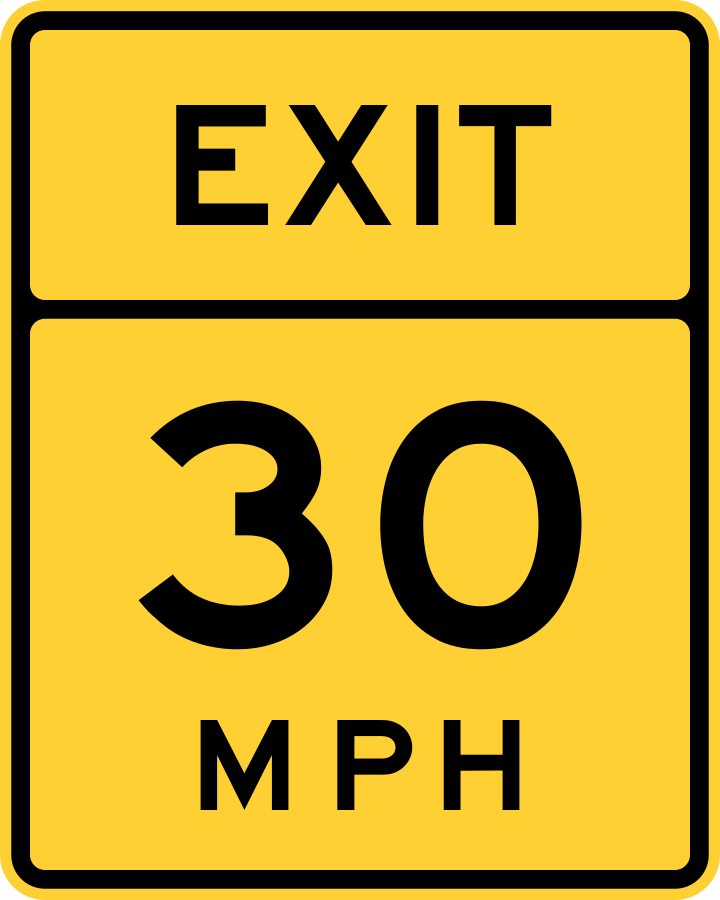
Recommends a safe speed of 30 MPH for negotiating the freeway exit ramp deceleration lane.
The sign in the picture:
A) shows the highest speed drivers can travel at the exit of the intersection.
B) is used to advise motorists of the appropriate ramp speed at the highway exit point.
C) indicates the minimum ramp speed at the highway exit point.
ANSWER KEY Check answers after completing the test.
1 A
2 D
3 C
4 A
5 C
6 B
7 A
8 C
9 A
10 C
11 B
12 A
13 C
14 A
15 B
16 C
17 C
18 A
19 B
20 B
21 C
22 C
23 B
24 C
25 B