Question 1:
The road is the most slippery:
A
when it first starts to rain.
B
after it rains.
C
All of the above.
No explanation available.
Question 2:
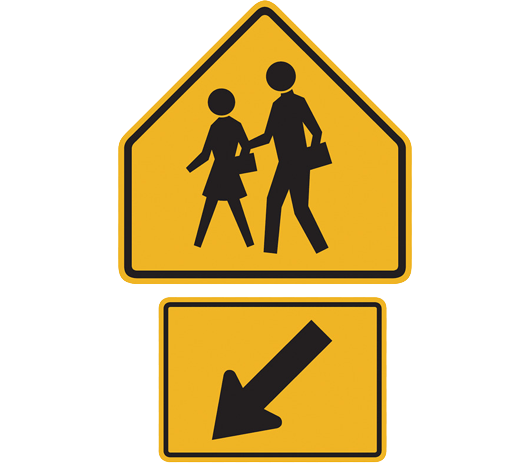 When they approach this sign, drivers must:
A
slow down and watch for children crossing the road.
B
obey signals from crossing guards.
C
stop if necessary.
D
All of the above.
No explanation available.
Question 3:
Your BAC depends on:
A
how much alcohol you drink.
B
how much time passes between drinks.
C
All of the above.
No explanation available.
Question 4:
 This road sign means:
A
Yield sign ahead
B
Side road entering from the left
C
Side road
No explanation available.
Question 5:
 What does a flashing left yellow arrow mean?
A
Vehicles turning left must stop if they can. The light will soon be red.
B
Only right turns are allowed.
C
Left turns are allowed. Yield to oncoming traffic and pedestrians.
D
None of the above.
No explanation available.
Question 6:
Driver distractions include:
A
Avoiding unnecessary lane changes.
B
Slowing down to look at crash scene.
C
turning your headlights on when rain and fog make it hard to see.
No explanation available.
Question 7:
If your front wheels start to skid, the first thing you should do is:
A
Take your foot off the gas pedal and shift to neutral.
B
Immediately turn in the direction you want to go.
C
Speed up, pump your brakes and steer in the direction the vehicle is trying to go.
No explanation available.
Question 8:
Regulatory signs are:
A
Suggestions
B
Warnings
C
Law
No explanation available.
Question 9:
Night driving can be more difficult because:
A
vehicle speed and distance are harder to judge.
B
there are more cars on the roads at night.
C
the speed limit is increased at night.
No explanation available.
Question 10:
Where must you position your vehicle when you prepare to make a left turn from a two-way roadway into a one-way roadway?
A
As far to the right as possible.
B
On the right curb.
C
As close as possible to the center line.
No explanation available.
Question 11:
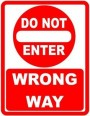 This road sign means:
A
Drivers may proceed if the way is clear
B
Drivers are about to enter a one way street the wrong way
C
U-turns are prohibited
No explanation available.
Question 12:
Which statement about taking medications and driving is true?
A
Cold medications can make a person drowsy.
B
Prescribed drugs are safe to take at any time.
C
Over the counter drugs do not affect driving ability.
No explanation available.
Question 13:
Regulation signs normally are:
A
white triangles.
B
green rectangles.
C
white rectangles.
No explanation available.
Question 14:
Any use of a cell phone while operating a motor vehicle is considered a distraction because:
A
it occupies the driver's mind, hands and eyes.
B
it draws the attention of other drivers.
C
it causes the driver to be concerned about the latest news.
No explanation available.
Question 15:
When taking medication while driving, you should:
A
follow other vehicles closely.
B
consult your physicians and/or pharmacist regarding any prescription medication and its possible effects on driving.
C
drive 20 MPH below the posted speed limit.
No explanation available.
Question 16:
In case of skidding, drivers should NOT:
A
take their foot off the gas pedal.
B
pump the brakes gently if they are about to hit something.
C
tap the gas pedal with their foot.
No explanation available.
Question 17:
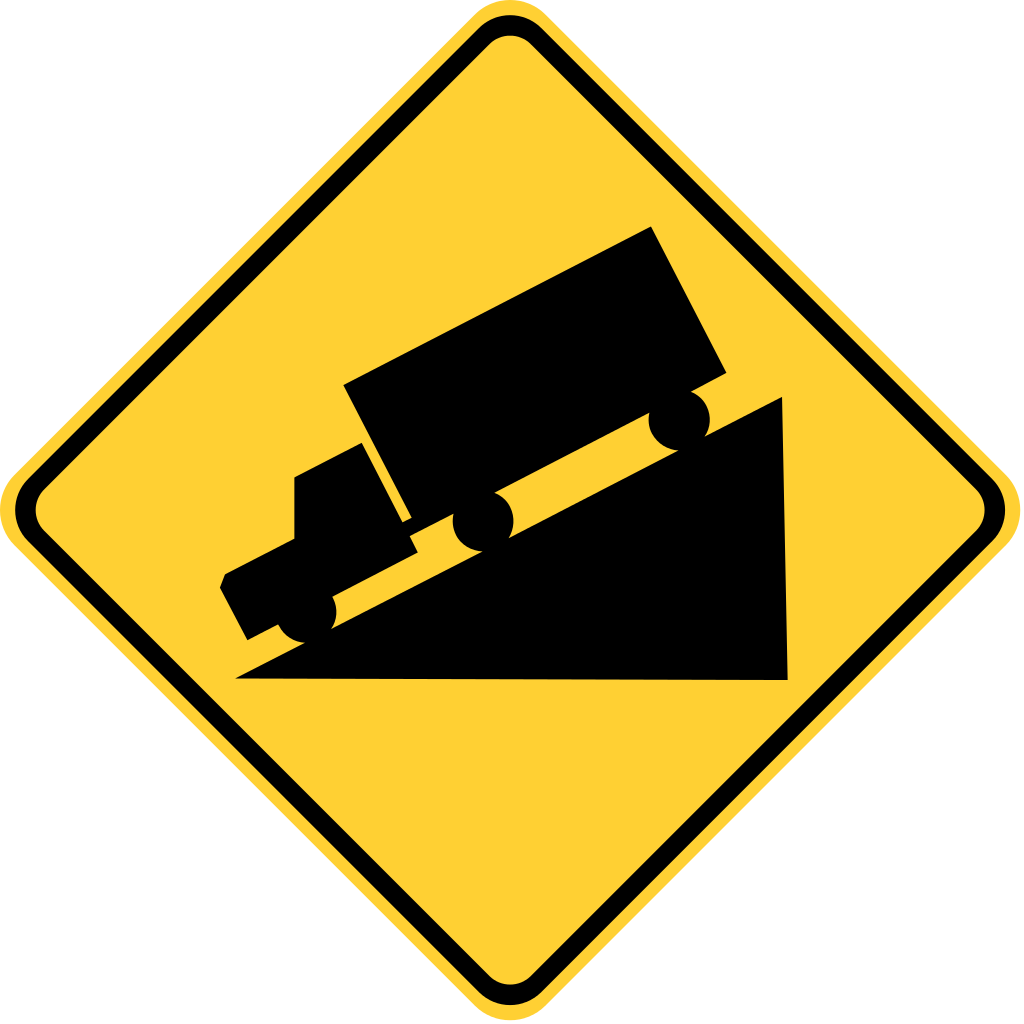 This road sign means:
A
Watch for trucks entering from the side
B
Merging traffic
C
Steep hill
No explanation available.
Question 18:
Which shape is a warning sign?
A
Diamond
B
Triangle
C
Pennant
No explanation available.
Question 19:
Does a vehicle prepared to enter a traffic circle or rotary have right-of-way over vehicles in the circle?
A
Yes, but only if they are entering the rotary from the right lane.
B
No. Vehicles already in the circle have the right-of-way.
C
Only if the light is green.
D
Yes.
No explanation available.
Question 20:
What should you do in case of a steering failure?
A
Pump your gas pedal a few times to increase the pressure.
B
Don't panic. Turn on your emergency lights to let other drivers know you are having car problems. Move toward the side of the road and bring the car to a gradual stop.
C
Leave the road immediately.
No explanation available.
Question 21:
 This road sign means:
A
Merge right
B
Stop sign ahead
C
Reduction in lanes
No explanation available.
Question 22:
When a hazard is seen ahead, reaction distance:
A
is the sum of perception distance and braking distance.
B
equals total stopping distance minus perception distance.
C
is how far a vehicle will continue to travel, in ideal conditions, before the driver hits the brakes.
No explanation available.
Question 23:
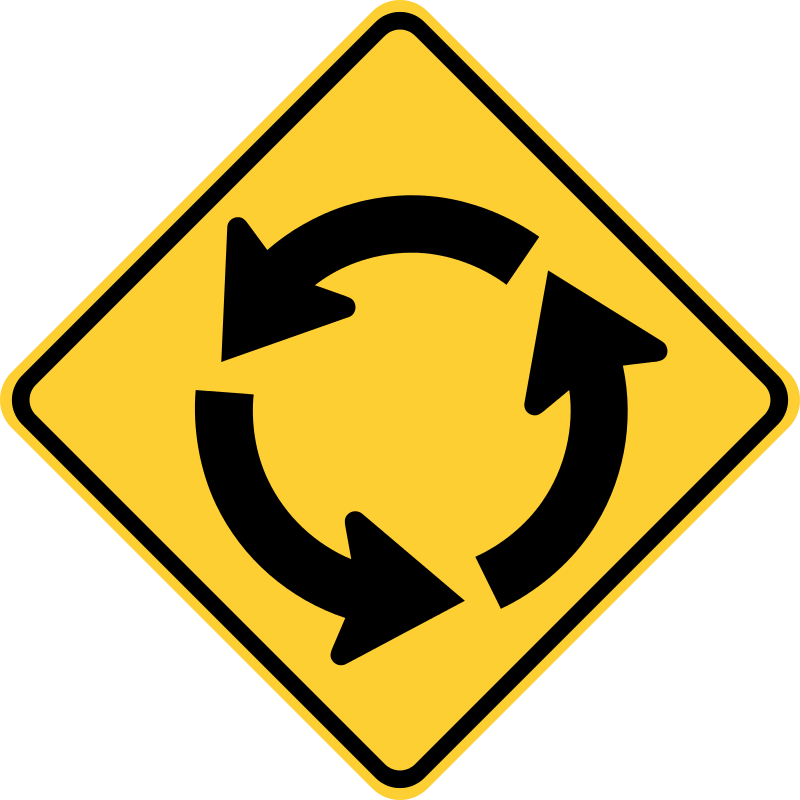 This road sign:
A
warns drivers of a sharp turn left. Drivers should slow their speed and keep to the left.
B
provides an advance notice of a roundabout.
C
warns drivers that U-turns are not permitted.
D
is a no-right-turns sign.
No explanation available.
Question 24:
Stopping distances:
A
are not affected by vehicle speed.
B
decrease as vehicle speed increases.
C
increase as vehicle speed increases.
No explanation available.
Question 25:
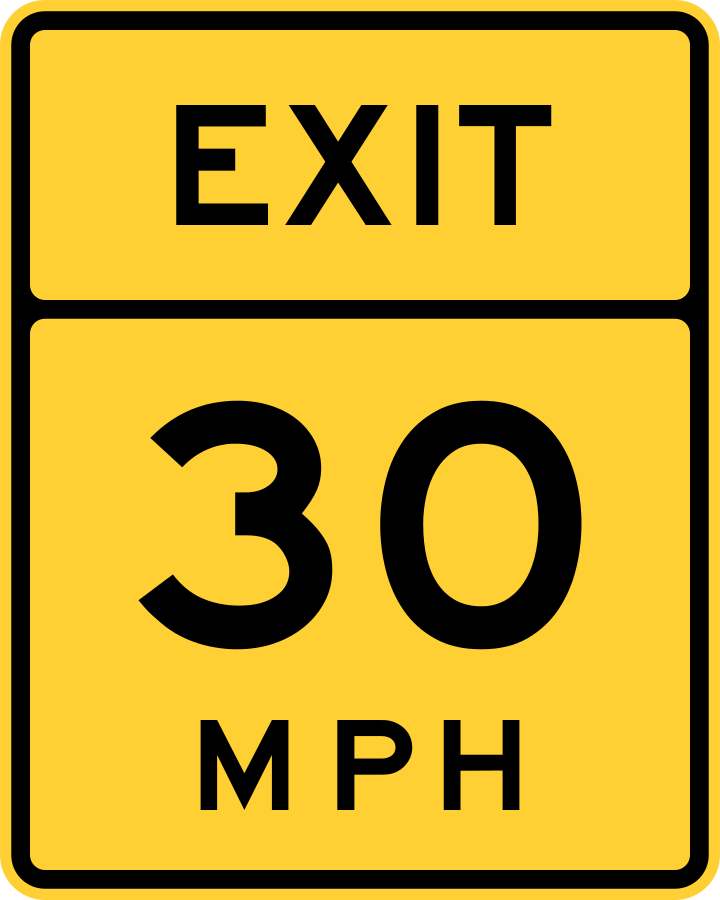 The sign in the picture:
A
shows the highest speed drivers can travel at the exit of the intersection.
B
is used to advise motorists of the appropriate ramp speed at the highway exit point.
C
indicates the minimum ramp speed at the highway exit point.
No explanation available.