Question 1:
 This road sign warns drivers that:
A
the road surface ahead changes to a low-type surface or earth road.
B
vehicles must leave the pavement immediately.
C
the dirt on the side of the road is soft.
This traffic sign indicates: the road surface ahead changes to a low-type surface or earth road. Observing and obeying all roadway signs ensures safe traffic flow and legal driving.
Question 2:
 This road sign means:
A
Slow down and be prepared to stop if necessary
B
You must come to a complete stop
C
You may proceed at regular speed through the intersection
D
Wrong Way
This traffic sign indicates: slow down and be prepared to stop if necessary. Observing and obeying all roadway signs ensures safe traffic flow and legal driving.
Question 3:
Before backing up, you should:
A
get off the car to see if it is clear to proceed.
B
rely on your mirrors to see if it is clear to proceed.
C
turn your head and look through the rear window.
D
flash your headlights.
The correct driving rule is: turn your head and look through the rear window. Following standard DMV road rules and practicing defensive driving ensures safety for all road users.
Question 4:
 This road sign means:
A
Winding Road Ahead
B
Persons with Disabilities Parking
C
Merge
This traffic sign indicates: merge. Observing and obeying all roadway signs ensures safe traffic flow and legal driving.
Question 5:
What type of pavement marking shows you which lane you must use for a turn?
A
Edge line
B
Diamond
C
Crosswalk Lines
D
Arrows
This traffic sign indicates: Arrows. Observing and obeying all roadway signs ensures safe traffic flow and legal driving.
Question 6:
You can reduce the chance of a collision with a large vehicle if you:
A
delay near it.
B
cut abruptly in front of it.
C
pay close attention to the turn signals.
The correct driving rule is: pay close attention to the turn signals. Following standard DMV road rules and practicing defensive driving ensures safety for all road users.
Question 7:
When following a motorcycle, drivers must remember that motorcycles can ____________ than other vehicles.
A
accelerate much faster
B
stop much more quickly
C
stop much more slowly
Motorcycles can stop rapidly and are easily hidden in vehicle blind spots: stop much more quickly. Always allow an increased following distance of at least 3 to 4 seconds.
Question 8:
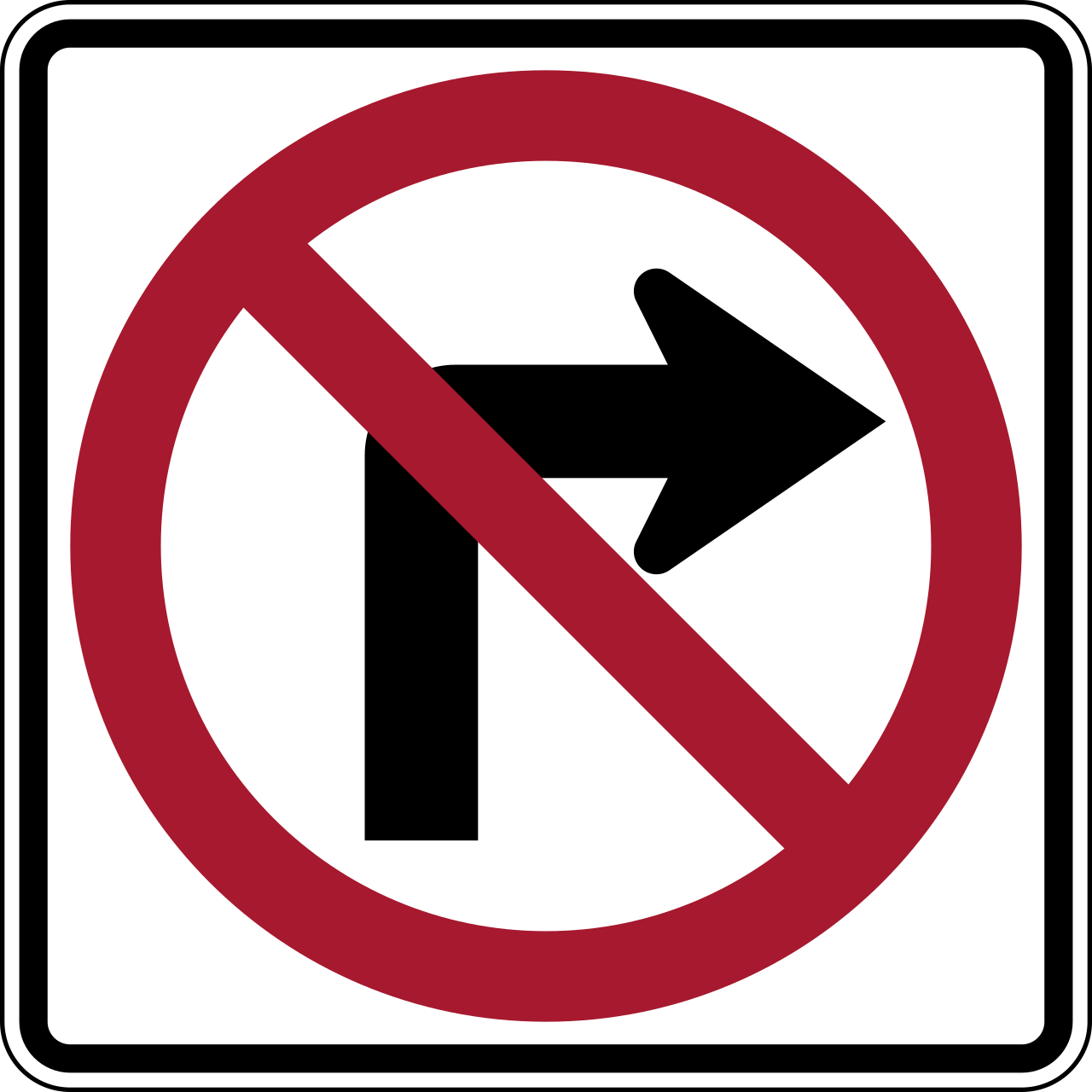 This road sign means:
A
No left turn
B
No right turn
C
No U-turns
This traffic sign indicates: No right turn. Observing and obeying all roadway signs ensures safe traffic flow and legal driving.
Question 9:
A broken white line:
A
means passing or crossing is prohibited in that lane.
B
separates two lanes traveling in the same direction.
C
marks the right edge of the roadway.
The correct driving rule is: separates two lanes traveling in the same direction. Following standard DMV road rules and practicing defensive driving ensures safety for all road users.
Question 10:
To avoid having to make an emergency stop while driving in traffic, drivers should:
A
drive in the right lane only.
B
look ahead and maintain a safe following distance.
C
sound their horn to warn other drivers.
D
drive slower than the flow of traffic.
The correct driving rule is: look ahead and maintain a safe following distance. Following standard DMV road rules and practicing defensive driving ensures safety for all road users.
Question 11:
Drivers are required to stop:
A
when a traffic officer orders them to stop.
B
where there is a red light.
C
at an intersection with a stop sign.
D
All of the above.
All of the listed points are essential driving requirements: when a traffic officer orders them to stop; where there is a red light; at an intersection with a stop sign. Practicing each ensures compliance with DMV safety laws.
Question 12:
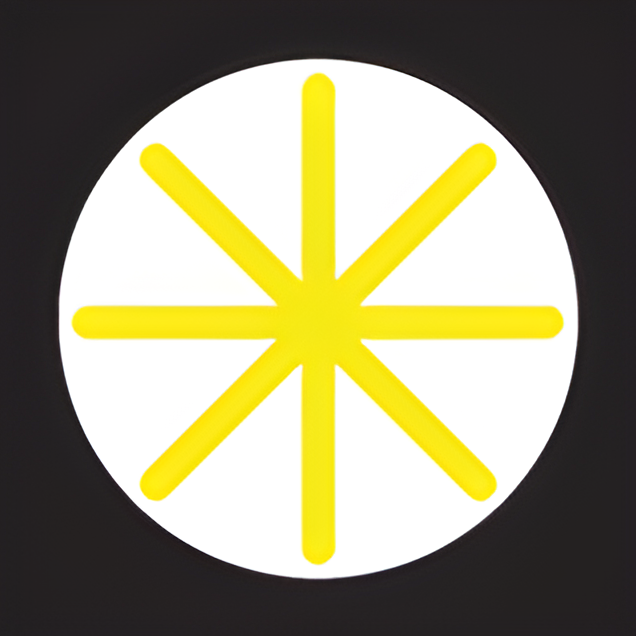 A flashing yellow light:
A
warns drivers to proceed with caution.
B
is used at dangerous intersections.
C
All of the above.
Safe navigation at intersections requires following all established rules: warns drivers to proceed with caution; is used at dangerous intersections. Always yield right-of-way properly to prevent collisions.
Question 13:
 This road sign means:
A
Drive with caution and be ready to stop
B
Slow down or stop
C
You must come to a complete stop
An octagonal Stop sign requires a full and complete stop before the stop line or crosswalk: you must come to a complete stop. Proceed only after yielding to all cross traffic and pedestrians.
Question 14:
What should you do if you see smoke come from under the hood?
A
Call the fire department and then pull off the road and park your vehicle.
B
Pull off the road and park your vehicle. Turn off the ignition, get away from the car and call the fire department.
C
Try to fight the fire yourself.
The correct driving rule is: pull off the road and park your vehicle. Turn off the ignition, get away from the car and call the fire department. Following standard DMV road rules and practicing defensive driving ensures safety for all road users.
Question 15:
 This sign indicates:
A
A slow-moving vehicle
B
A no-passing zone
C
Yield
This traffic sign indicates: A slow-moving vehicle. Observing and obeying all roadway signs ensures safe traffic flow and legal driving.
Question 16:
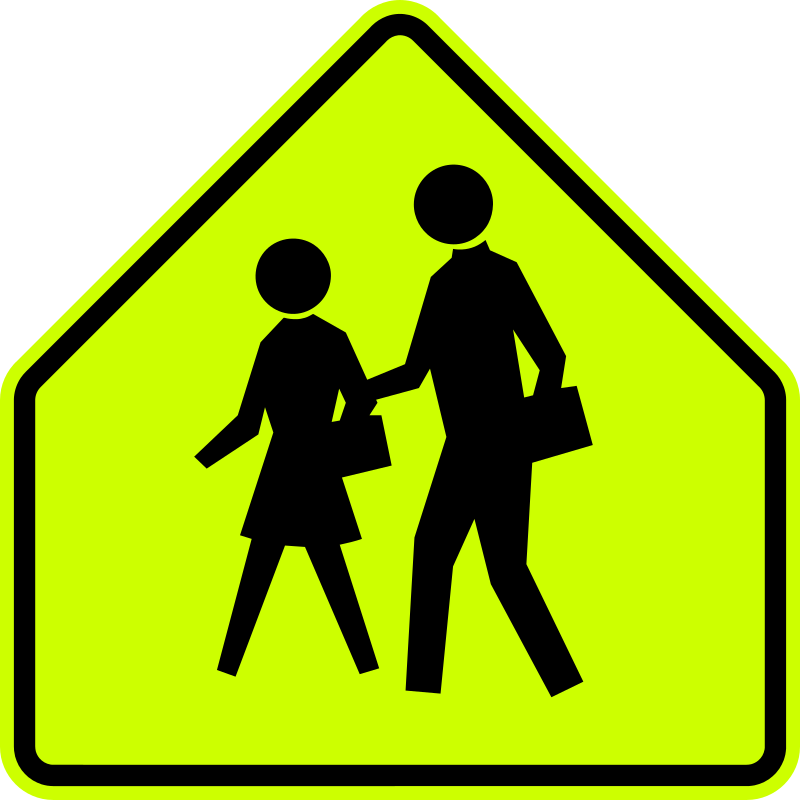 This warning sign means:
A
You are approaching a school
B
Watch out for children crossing the street
C
Slow down, drive with caution and watch for children
D
All of the above.
This sign alerts drivers to several mandatory requirements: You are approaching a school, Watch out for children crossing the street, Slow down, drive with caution and watch for children. Obeying all posted traffic control instructions is required by law.
Question 17:
 This sign means:
A
divided highway ahead.
B
narrow bridge ahead.
C
road construction.
D
lane ends, merge left.
This traffic sign indicates: lane ends, merge left. Observing and obeying all roadway signs ensures safe traffic flow and legal driving.
Question 18:
Where must you position your vehicle when you prepare to make a left turn from a two-way roadway into a one-way roadway?
A
As far to the right as possible.
B
On the right curb.
C
As close as possible to the center line.
The correct driving rule is: As close as possible to the center line. Following standard DMV road rules and practicing defensive driving ensures safety for all road users.
Question 19:
When changing lanes, you can check your blind spot by:
A
using the outside rearview mirror.
B
using the inside rearview mirror.
C
turning your head and glancing over your shoulder.
D
checking the rearview and outside mirrors.
Large commercial trucks have extensive blind spots on all four sides called the 'No-Zone': turning your head and glancing over your shoulder. If you cannot see the truck driver in their side mirrors, they cannot see you.
Question 20:
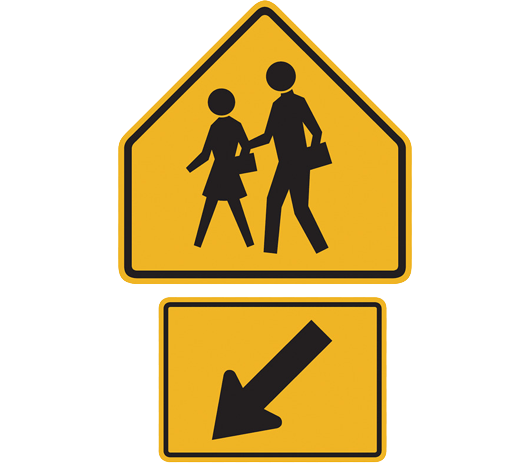 When they approach this sign, drivers must:
A
slow down and watch for children crossing the road.
B
obey signals from crossing guards.
C
stop if necessary.
D
All of the above.
This sign alerts drivers to several mandatory requirements: slow down and watch for children crossing the road, obey signals from crossing guards, stop if necessary. Obeying all posted traffic control instructions is required by law.
Question 21:
What can you do to prevent skids on snow and ice?
A
Allow the wheels to keep turning.
B
Brake early and gently.
C
All of the above.
Hazardous road and weather conditions require extra caution: Allow the wheels to keep turning; Brake early and gently. Reducing speed and expanding following distance preserves control.
Question 22:
 This sign means:
A
The road will curve to the right.
B
Left turns are not allowed at the intersection.
C
Do not turn right.
This traffic sign indicates: The road will curve to the right. Observing and obeying all roadway signs ensures safe traffic flow and legal driving.
Question 23:
This road sign means:
A
Yield the right-of-way to oncoming vehicles
B
Stop if necessary
C
You must make a complete stop
D
Slow down or stop
An octagonal Stop sign requires a full and complete stop before the stop line or crosswalk: you must make a complete stop. Proceed only after yielding to all cross traffic and pedestrians.
Question 24:
Drivers should use the horn:
A
if a driver is moving slowly, and you want them to drive faster.
B
only when necessary, to avoid collisions.
C
when feeling angry or upset.
D
to alert other drivers that they made a mistake.
The correct driving rule is: only when necessary, to avoid collisions. Following standard DMV road rules and practicing defensive driving ensures safety for all road users.
Question 25:
A flashing yellow light means:
A
Merging traffic ahead
B
Pedestrian crossing
C
Come to a full stop
D
Proceed with caution
According to standard right-of-way regulations: proceed with caution. Yielding appropriately prevents intersection collisions and maintains safe traffic flow.