Question 1:
 This sign warns drivers that:
A
there is a one lane bridge ahead.
B
the right lane ends.
C
the road ahead is narrow.
This traffic sign indicates: the right lane ends. Observing and obeying all roadway signs ensures safe traffic flow and legal driving.
Question 2:
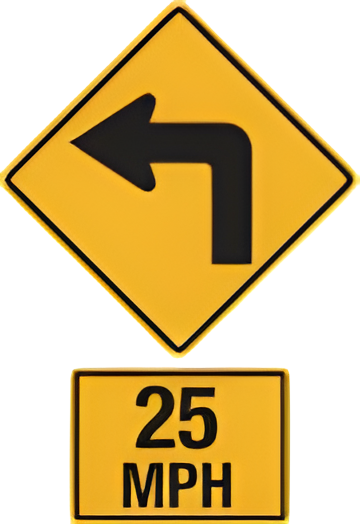 This sign indicates that:
A
the highest safe speed drivers should travel around the curve ahead is 25 MPH.
B
the safe speed around the curve ahead is at least 25 MPH.
C
drivers may not turn right if traveling at 25 MPH or less.
This traffic sign indicates: the highest safe speed drivers should travel around the curve ahead is 25 MPH. Observing and obeying all roadway signs ensures safe traffic flow and legal driving.
Question 3:
A flashing yellow light means:
A
The light will soon change from green to red.
B
Drive with caution.
C
Yield the right-of-way to other traffic at the intersection.
According to standard right-of-way regulations: drive with caution. Yielding appropriately prevents intersection collisions and maintains safe traffic flow.
Question 4:
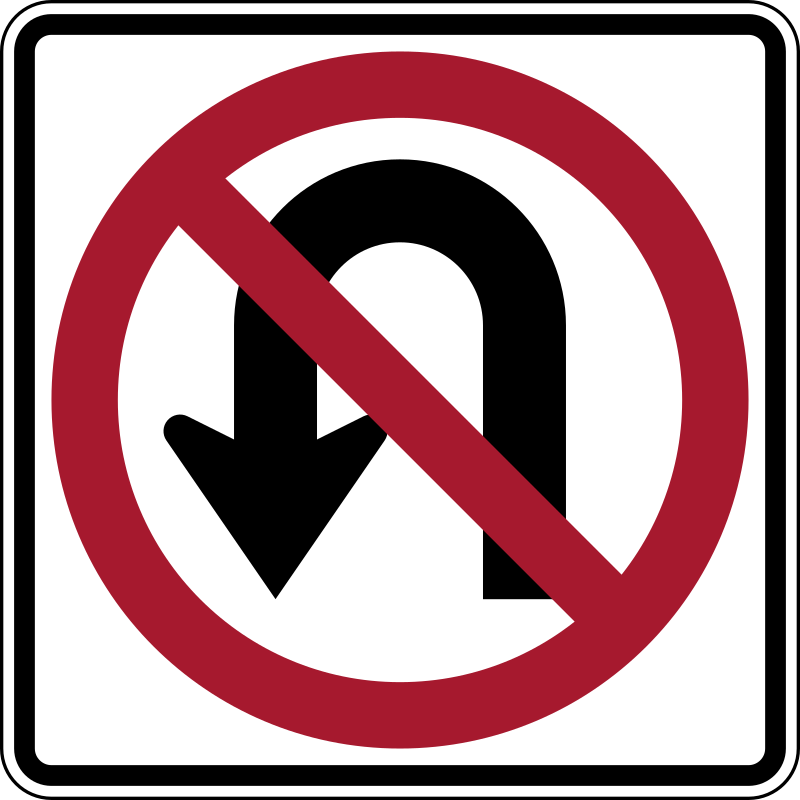 This road sign means:
A
Left turns are not allowed where this sign is displayed.
B
Drivers cannot make a complete turn to go in the opposite direction.
C
Vehicles turning left must make a U-turn.
This traffic sign indicates: drivers cannot make a complete turn to go in the opposite direction. Observing and obeying all roadway signs ensures safe traffic flow and legal driving.
Question 5:
What should you do if your vision through the windshield becomes blocked?
A
Pull your vehicle off the road and park it.
B
Turn on your emergency lights.
C
Open the side window so you can see.
D
All of the above.
All of the listed points are essential driving requirements: Pull your vehicle off the road and park it; Turn on your emergency lights; Open the side window so you can see. Practicing each ensures compliance with DMV safety laws.
Question 6:
You should increase your following distance when:
A
exiting a freeway.
B
following a motorcycle.
C
driving behind a large vehicle that blocks your vision.
D
All of the above.
Defensive driving best practices include: exiting a freeway; following a motorcycle; driving behind a large vehicle that blocks your vision. Staying alert and maintaining spacing prevents unexpected hazards.
Question 7:
 The yield sign means:
A
Go. The light will soon be red.
B
If the way is clear, you may move forward slowly without stopping.
C
Stop if you can.
A triangular Yield sign requires drivers to slow down and give right-of-way to other traffic: If the way is clear, you may move forward slowly without stopping. Proceed only when there is a safe opening.
Question 8:
What does it mean If an oncoming driver flashes headlights at you during a period of low visibility?
A
Your headlights are too bright. You should turn them off.
B
Your vehicle was difficult to see. You should turn on your headlights.
C
Your headlights are too bright. You should use parking lights instead.
The correct driving rule is: Your vehicle was difficult to see. You should turn on your headlights. Following standard DMV road rules and practicing defensive driving ensures safety for all road users.
Question 9:
Before crossing any railroad tracks, you must:
A
look and listen for trains.
B
make sure there is room for your vehicle on the other side.
C
All of the above.
All of the listed points are essential driving requirements: look and listen for trains; make sure there is room for your vehicle on the other side. Practicing each ensures compliance with DMV safety laws.
Question 10:
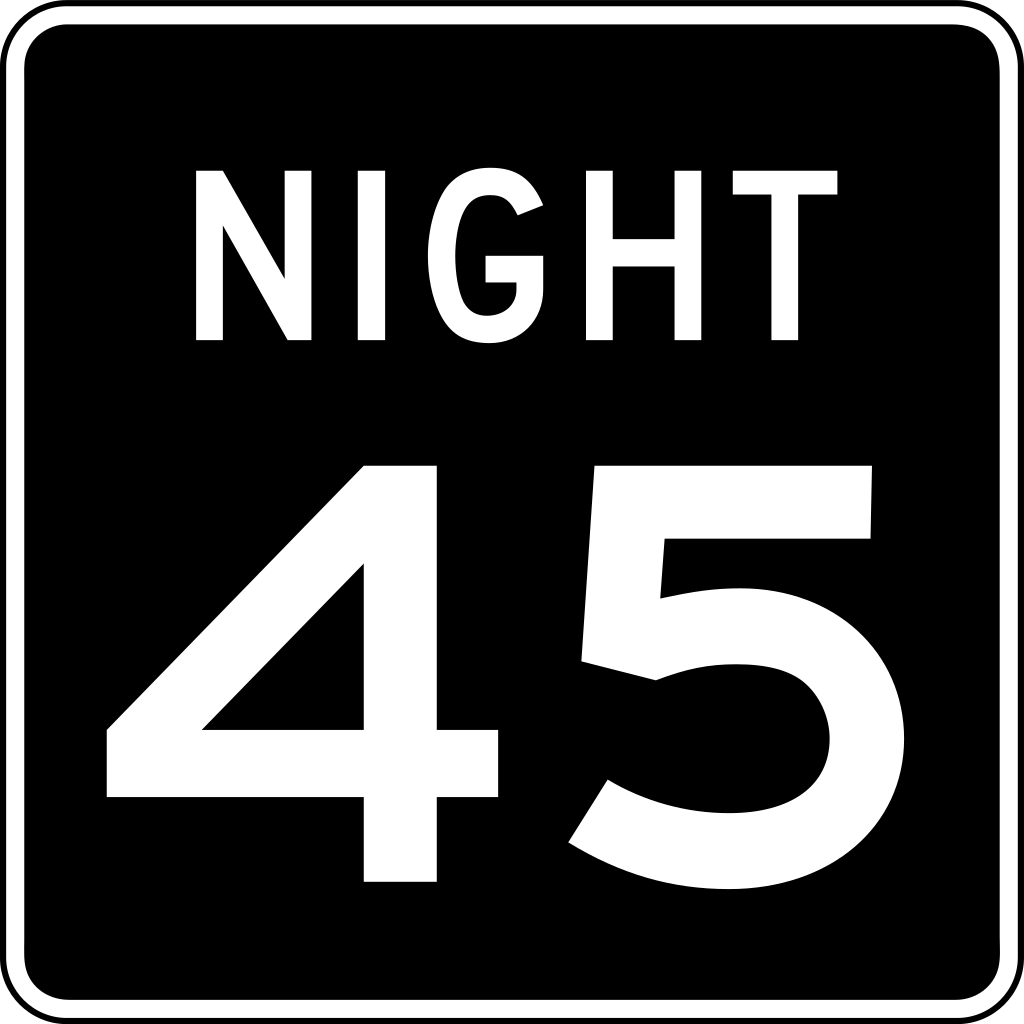 This sign means:
A
Take route 45 if you are driving at night.
B
The night-time speed limit is 45 MPH.
C
The minimum speed limit is 45 MPH.
This traffic sign indicates: The night-time speed limit is 45 MPH. Observing and obeying all roadway signs ensures safe traffic flow and legal driving.
Question 11:
A flashing red light means:
A
The same as a STOP sign.
B
The light will soon change to steady red.
C
Drive with caution.
When an emergency vehicle approaches with flashing lights or sirens, you must safely pull over to the right curb and stop completely until it passes.
Question 12:
 This sign is a:
A
regulatory sign.
B
warning sign.
C
guide sign.
This traffic sign indicates: warning sign. Observing and obeying all roadway signs ensures safe traffic flow and legal driving.
Question 13:
What should you do if one of your tires blows out?
A
Hold the steering wheel tight and brake immediately to avoid the risk of skidding.
B
Leave the road immediately.
C
Hold the steering wheel tight and slowly take your foot off the gas pedal.
The correct driving rule is: Hold the steering wheel tight and slowly take your foot off the gas pedal. Following standard DMV road rules and practicing defensive driving ensures safety for all road users.
Question 14:
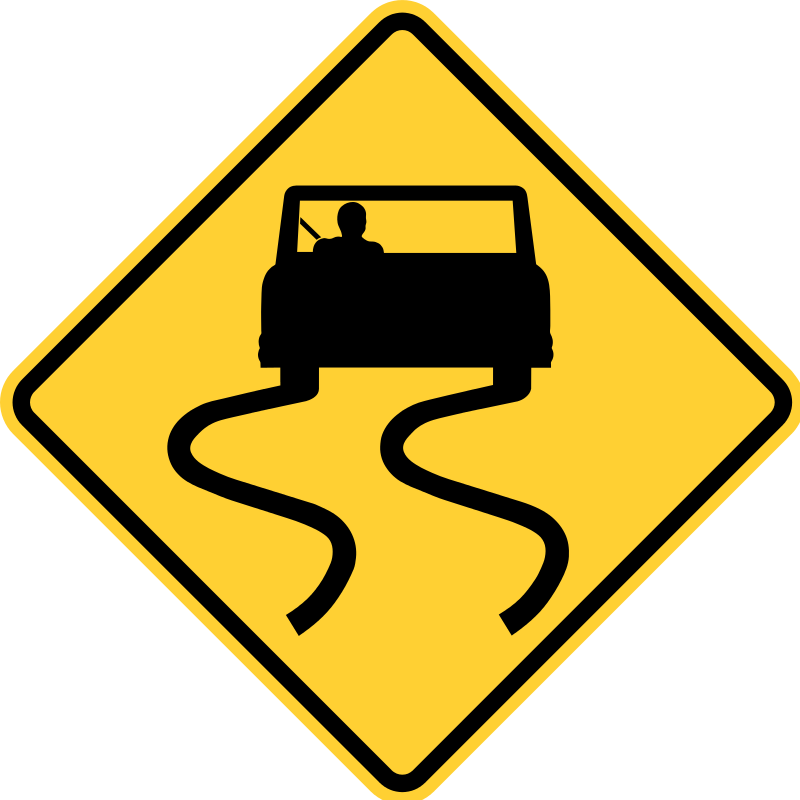 This road sign means:
A
Traffic increases ahead
B
Steep grade ahead
C
Winding road ahead
D
Slippery road ahead
This traffic sign indicates: Slippery road ahead. Observing and obeying all roadway signs ensures safe traffic flow and legal driving.
Question 15:
What is the meaning of blue traffic signs?
A
A blue background indicates a regulatory sign.
B
They give directional information.
C
Blue indicates road user services.
The correct driving rule is: Blue indicates road user services. Following standard DMV road rules and practicing defensive driving ensures safety for all road users.
Question 16:
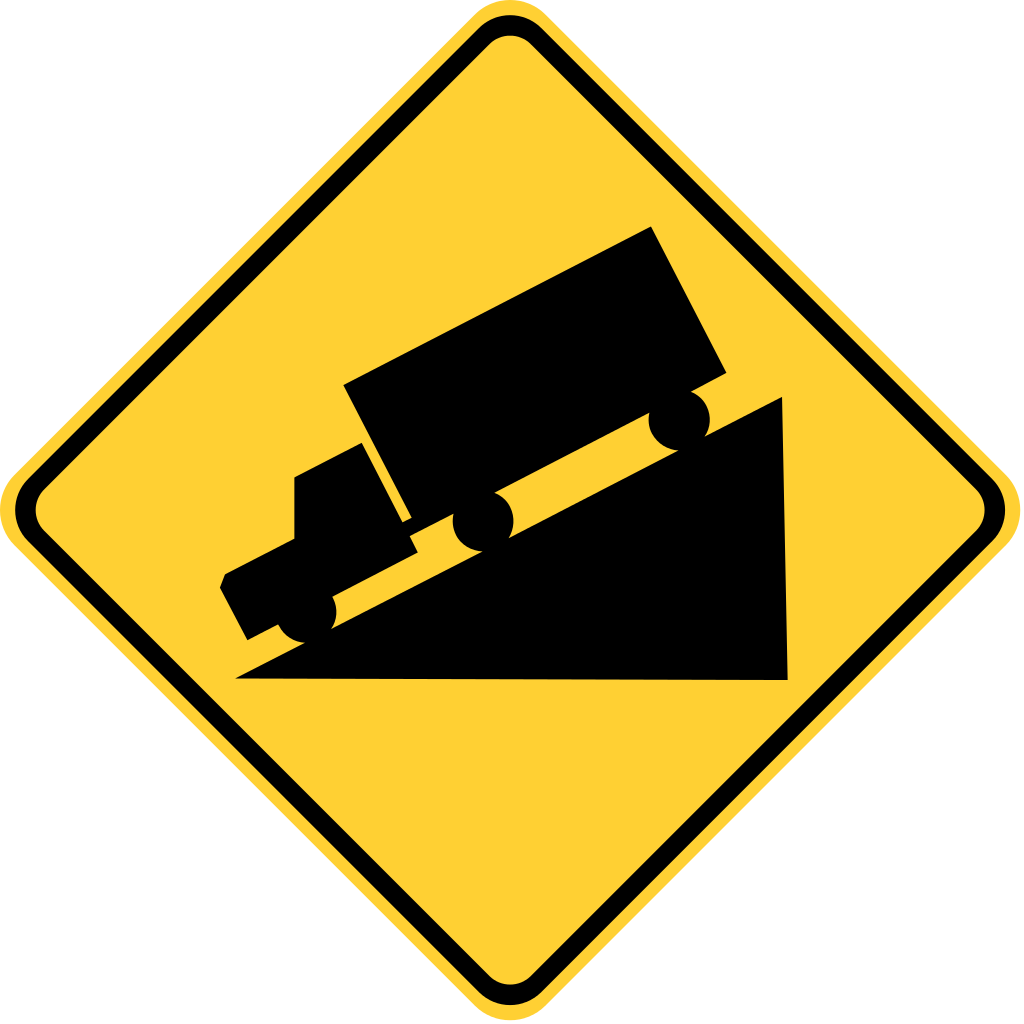 This road sign means:
A
Merging traffic
B
Steep grade ahead
C
Intersection ahead
This traffic sign indicates: Steep grade ahead. Observing and obeying all roadway signs ensures safe traffic flow and legal driving.
Question 17:
This road sign means:
A
Winding road ahead
B
Warning, slippery when wet
C
Railroad Warning
D
Stop Sign Ahead
This traffic sign indicates: Warning, slippery when wet. Observing and obeying all roadway signs ensures safe traffic flow and legal driving.
Question 18:
Who is most at risk?
A
Drivers who have overslept.
B
Drivers who are driving long distances without rest breaks.
C
Experienced drivers.
The correct driving rule is: drivers who are driving long distances without rest breaks. Following standard DMV road rules and practicing defensive driving ensures safety for all road users.
Question 19:
When two cars arrive at an intersection with no signs or signals at the same time, which car has the right-of-way?
A
The car that is traveling faster.
B
The car approaching from the right.
C
The car approaching from the left.
D
The car in which the driver sounds the horn.
According to standard right-of-way regulations: The car approaching from the right. Yielding appropriately prevents intersection collisions and maintains safe traffic flow.
Question 20:
While inside the roundabout, you should:
A
remain in your lane until you are ready to exit.
B
change lanes before you check for vehicles behind you.
C
use your left turn signal if you are in position to exit now.
Vehicles entering a roundabout must yield right-of-way to circulating traffic already inside: remain in your lane until you are ready to exit. Wait for a safe gap before entering.
Question 21:
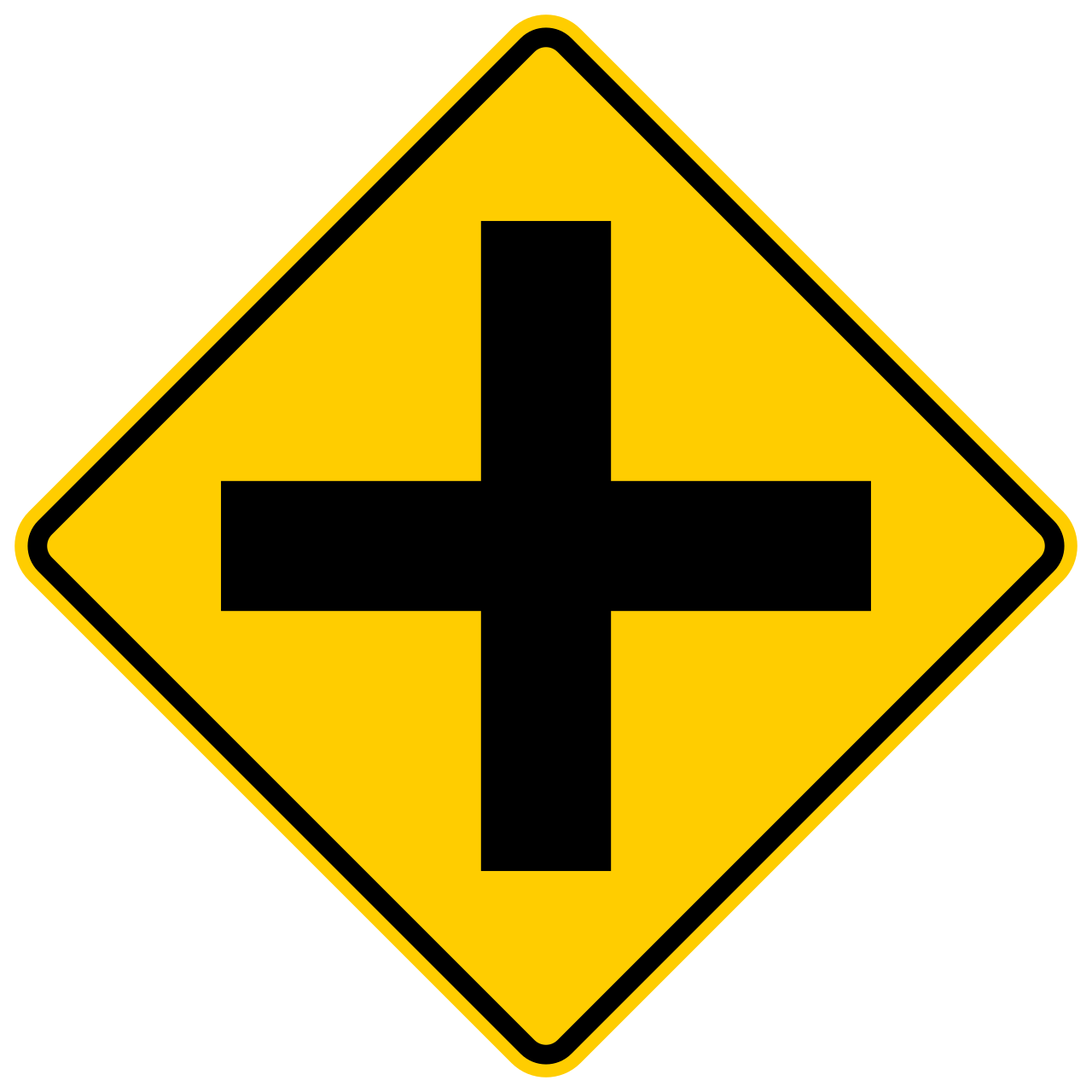 This road sign means:
A
Crossroads ahead
B
Side Road
C
Turn right or go through
D
Flagger ahead
This traffic sign indicates: Crossroads ahead. Observing and obeying all roadway signs ensures safe traffic flow and legal driving.
Question 22:
_________________ your mirrors when you prepare to change lanes.
A
Never depend on
B
Never use
C
Always rely on
The correct driving rule is: Never depend on. Following standard DMV road rules and practicing defensive driving ensures safety for all road users.
Question 23:
To avoid the risk of being involved in an alcohol-related crash, you should:
A
decide before you start drinking that you are not going to drive.
B
say 'No, thanks' if someone offers you alcohol.
C
call a taxi if you've been drinking.
D
All of the above.
Alcohol and impairing substances degrade all critical driving functions: decide before you start drinking that you are not going to drive; say 'No, thanks' if someone offers you alcohol; call a taxi if you've been drinking. Driving while impaired carries severe criminal and safety penalties.
Question 24:
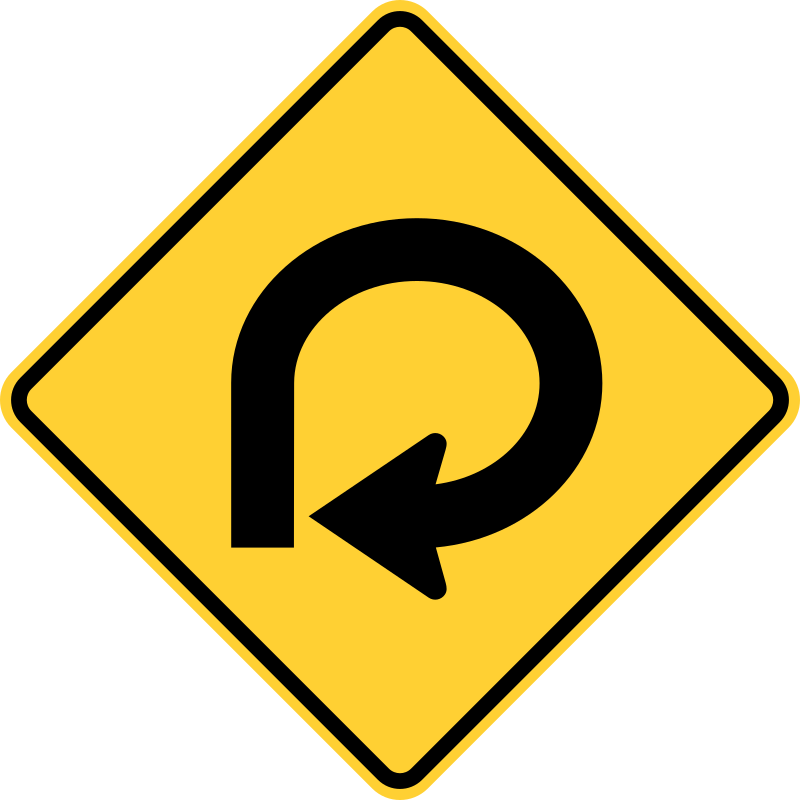 This sign means:
A
Roundabout ahead.
B
270 degree turn ahead.
C
Wrong way; Turn around immediately.
This traffic sign indicates: 270 degree turn ahead. Observing and obeying all roadway signs ensures safe traffic flow and legal driving.
Question 25:
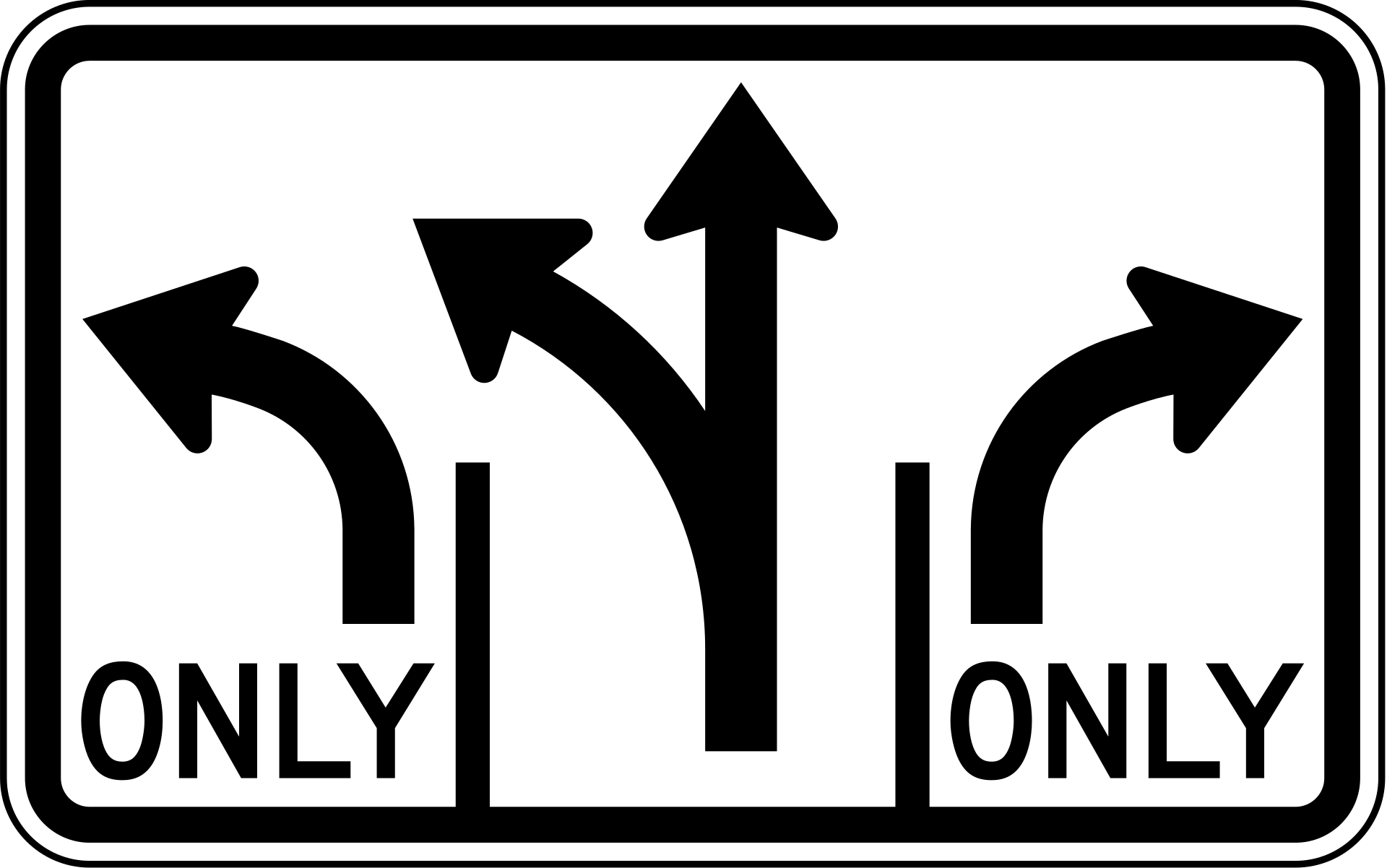 This regulatory sign tells drivers that:
A
traffic in the left lane must turn left at the intersection ahead.
B
all vehicles must turn left immediately.
C
traffic in the right lane must go straight.
This traffic sign indicates: traffic in the left lane must turn left at the intersection ahead. Observing and obeying all roadway signs ensures safe traffic flow and legal driving.