Question 1:
Which sign has white letters on a red background?
A
Stop
B
School zone
C
Yield
Answer Explanation
The correct driving rule is: stop. Following standard DMV road rules and practicing defensive driving ensures safety for all road users.
The correct driving rule is: stop. Following standard DMV road rules and practicing defensive driving ensures safety for all road users.
Question 2:
Which of the following must you obey over the others?
A
A flashing red light.
B
A stop sign.
C
A steady red light.
D
A police officer.
Answer Explanation
The correct driving rule is: A police officer. Following standard DMV road rules and practicing defensive driving ensures safety for all road users.
The correct driving rule is: A police officer. Following standard DMV road rules and practicing defensive driving ensures safety for all road users.
Question 3:
Drive below the posted speed limit when:
A
anything makes conditions less than perfect.
B
you are on a four lane road.
C
entering a highway where there are other cars.
D
others drive below the speed limit.
Answer Explanation
For safe speed and stopping control: anything makes conditions less than perfect. Adjusting speed to match visibility and road traction prevents loss of steering grip.
For safe speed and stopping control: anything makes conditions less than perfect. Adjusting speed to match visibility and road traction prevents loss of steering grip.
Question 4:
How can you prevent fatigue on a long trip?
A
Plan to drive long trips with a companion.
B
Get enough sleep.
C
All of the above.
Answer Explanation
Alcohol and impairing substances degrade all critical driving functions: Plan to drive long trips with a companion; Get enough sleep. Driving while impaired carries severe criminal and safety penalties.
Alcohol and impairing substances degrade all critical driving functions: Plan to drive long trips with a companion; Get enough sleep. Driving while impaired carries severe criminal and safety penalties.
Question 5:
What do warning signs mean?
A
Danger ahead.
B
Drivers are approaching a location where there is a special rule.
C
All of the above.
Answer Explanation
All of the listed points are essential driving requirements: Danger ahead; Drivers are approaching a location where there is a special rule. Practicing each ensures compliance with DMV safety laws.
All of the listed points are essential driving requirements: Danger ahead; Drivers are approaching a location where there is a special rule. Practicing each ensures compliance with DMV safety laws.
Question 6:
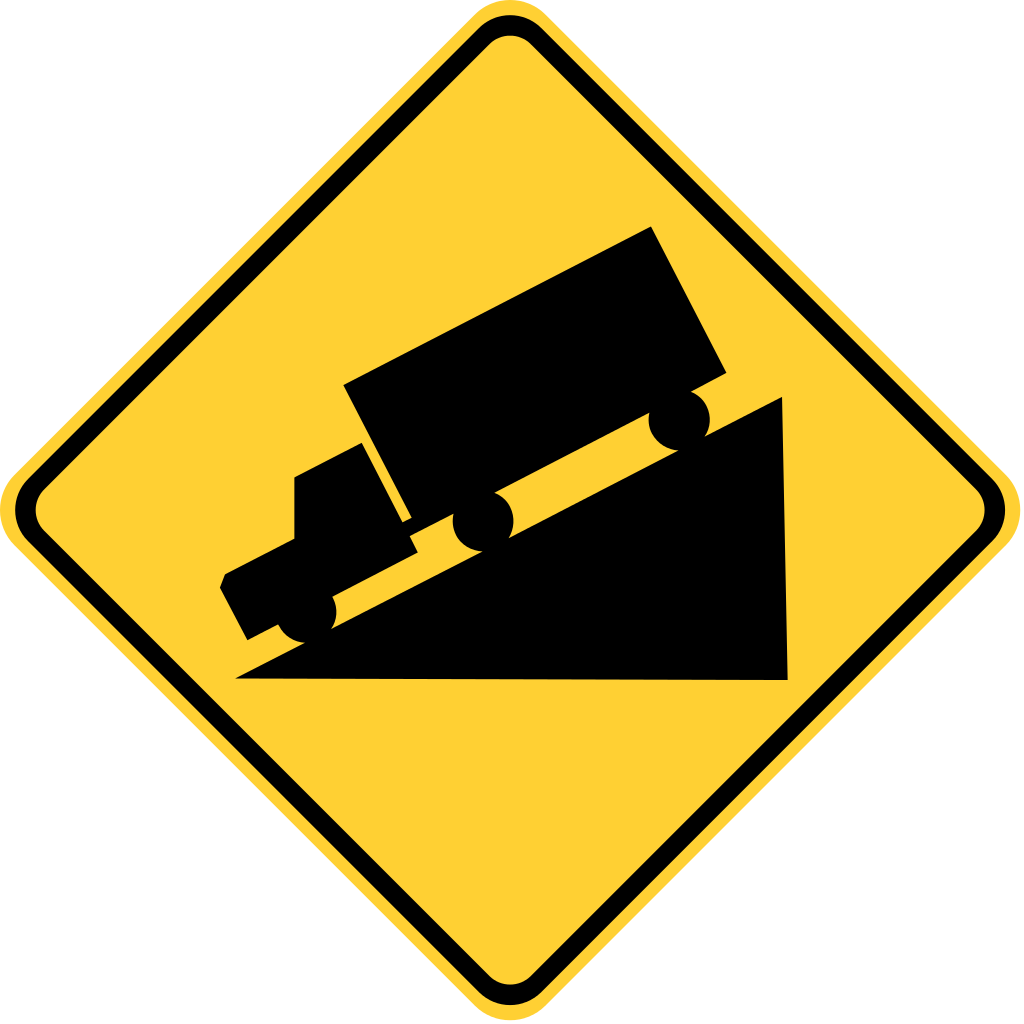 This sign warns of a ________ ahead.
A
hill
B
no passing zone
C
soft shoulder
Answer Explanation
This traffic sign indicates: hill. Observing and obeying all roadway signs ensures safe traffic flow and legal driving.
This traffic sign indicates: hill. Observing and obeying all roadway signs ensures safe traffic flow and legal driving.
Question 7:
Which signs have black letters on a white background?
A
Warning signs (diamond)
B
Regulatory signs (vertical rectangle)
C
Guide signs (horizontal rectangle)
Answer Explanation
The correct driving rule is: Regulatory signs (vertical rectangle). Following standard DMV road rules and practicing defensive driving ensures safety for all road users.
The correct driving rule is: Regulatory signs (vertical rectangle). Following standard DMV road rules and practicing defensive driving ensures safety for all road users.
Question 8:
To avoid being in a truck driver’s blind spot, you should:
A
never pass the truck and put your headlights on.
B
avoid driving on either side of the truck and don’t tailgate.
C
flash your lights.
D
sound your horn.
Answer Explanation
Large commercial trucks have extensive blind spots on all four sides called the 'No-Zone': avoid driving on either side of the truck and don’t tailgate. If you cannot see the truck driver in their side mirrors, they cannot see you.
Large commercial trucks have extensive blind spots on all four sides called the 'No-Zone': avoid driving on either side of the truck and don’t tailgate. If you cannot see the truck driver in their side mirrors, they cannot see you.
Question 9:
Parking is not allowed:
A
in an intersection, unless permitted by signs.
B
within 300 feet of a pedestrian safety area.
C
on public roads
Answer Explanation
Under standard parking and curb regulations: in an intersection, unless permitted by signs. Following parking distance clearances keeps roadways unobstructed and emergency lanes accessible.
Under standard parking and curb regulations: in an intersection, unless permitted by signs. Following parking distance clearances keeps roadways unobstructed and emergency lanes accessible.
Question 10:
When driving on slippery roads, drivers should:
A
increase their following distance.
B
avoid crossing bridges or intersections.
C
brake harder than usual.
D
change lanes quickly.
Answer Explanation
For safe speed and stopping control: increase their following distance. Adjusting speed to match visibility and road traction prevents loss of steering grip.
For safe speed and stopping control: increase their following distance. Adjusting speed to match visibility and road traction prevents loss of steering grip.
Question 11:
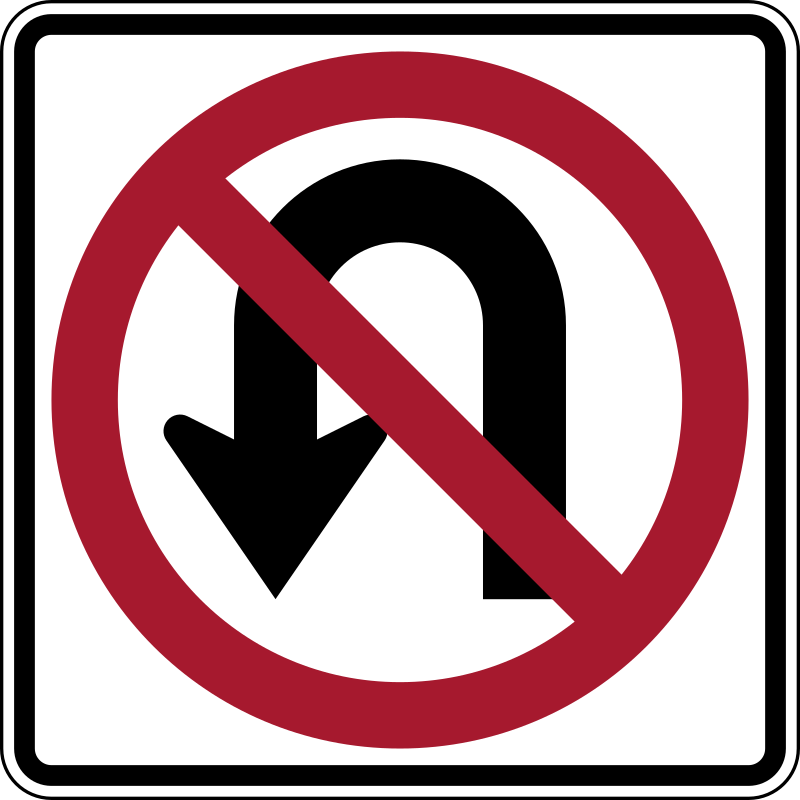 This road sign means:
A
No left turn
B
No U-turn
C
Detour ahead
Answer Explanation
This traffic sign indicates: No U-turn. Observing and obeying all roadway signs ensures safe traffic flow and legal driving.
This traffic sign indicates: No U-turn. Observing and obeying all roadway signs ensures safe traffic flow and legal driving.
Question 12:
 What does this road sign indicate?
A
Hospital service
B
Area reserved for people with disabilities
C
Interstate highway
Answer Explanation
This traffic sign indicates: Hospital service. Observing and obeying all roadway signs ensures safe traffic flow and legal driving.
This traffic sign indicates: Hospital service. Observing and obeying all roadway signs ensures safe traffic flow and legal driving.
Question 13:
Double solid yellow lines mean:
A
the lane to the right may pass.
B
passing is not permitted in either direction.
C
the lane to the left may pass.
D
passing is permitted in either direction.
Answer Explanation
The correct driving rule is: passing is not permitted in either direction. Following standard DMV road rules and practicing defensive driving ensures safety for all road users.
The correct driving rule is: passing is not permitted in either direction. Following standard DMV road rules and practicing defensive driving ensures safety for all road users.
Question 14:
What is the main reason night driving is more difficult than daytime driving?
A
The use of headlight is required by law.
B
Reduced visibility.
C
Driving within the range.
Answer Explanation
The correct driving rule is: Reduced visibility. Following standard DMV road rules and practicing defensive driving ensures safety for all road users.
The correct driving rule is: Reduced visibility. Following standard DMV road rules and practicing defensive driving ensures safety for all road users.
Question 15:
 This road sign means:
A
Curves ahead
B
Divided highway ahead
C
Divided highway ends
Answer Explanation
This traffic sign indicates: Divided highway ends. Observing and obeying all roadway signs ensures safe traffic flow and legal driving.
This traffic sign indicates: Divided highway ends. Observing and obeying all roadway signs ensures safe traffic flow and legal driving.
Question 16:
A steady yellow light means that a ______ light will soon appear.
A
steady green
B
steady red
C
flashing yellow
D
flashing green
Answer Explanation
According to standard right-of-way regulations: steady red. Yielding appropriately prevents intersection collisions and maintains safe traffic flow.
According to standard right-of-way regulations: steady red. Yielding appropriately prevents intersection collisions and maintains safe traffic flow.
Question 17:
steady red
A
Divided highway ahead.
B
Drivers are coming to a point where another traffic lane joins the one they are on.
C
Reversible lane ahead.
D
The divided highway ends ahead.
Answer Explanation
The correct driving rule is: The divided highway ends ahead. Following standard DMV road rules and practicing defensive driving ensures safety for all road users.
The correct driving rule is: The divided highway ends ahead. Following standard DMV road rules and practicing defensive driving ensures safety for all road users.
Question 18:
 This road sign means:
A
The left lane ends soon
B
one-way street ahead.
C
The right lane ends soon
D
Highway entrance ramp ahead
Answer Explanation
This traffic sign indicates: The right lane ends soon. Observing and obeying all roadway signs ensures safe traffic flow and legal driving.
This traffic sign indicates: The right lane ends soon. Observing and obeying all roadway signs ensures safe traffic flow and legal driving.
Question 19:
When following motorcycles, drivers should:
A
reduce the minimum following distance.
B
try to pass them as they have different braking capabilities than other motor vehicles.
C
keep more space in front of their vehicle.
Answer Explanation
The correct driving rule is: keep more space in front of their vehicle. Following standard DMV road rules and practicing defensive driving ensures safety for all road users.
The correct driving rule is: keep more space in front of their vehicle. Following standard DMV road rules and practicing defensive driving ensures safety for all road users.
Question 20:
When you make a left turn from a one-way road into a one-way road, if the road you enter has two lanes, you:
A
must turn into its right lane.
B
can not turn left.
C
must turn into its left lane.
Answer Explanation
The correct driving rule is: must turn into its left lane. Following standard DMV road rules and practicing defensive driving ensures safety for all road users.
The correct driving rule is: must turn into its left lane. Following standard DMV road rules and practicing defensive driving ensures safety for all road users.
Question 21:
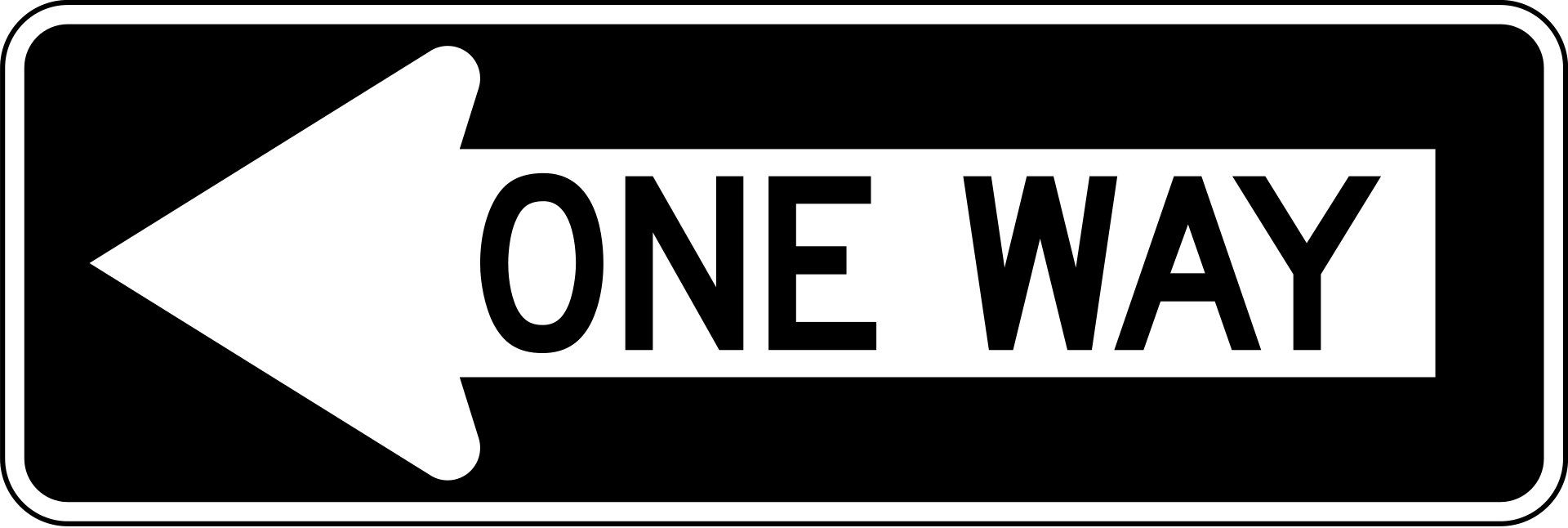 The ‘One Way’ sign means that:
A
only vehicles turning left may travel in the direction of the arrow.
B
there is only one road that turns left at the intersection.
C
drivers may travel only in the direction of the arrow.
Answer Explanation
This traffic sign indicates: drivers may travel only in the direction of the arrow. Observing and obeying all roadway signs ensures safe traffic flow and legal driving.
This traffic sign indicates: drivers may travel only in the direction of the arrow. Observing and obeying all roadway signs ensures safe traffic flow and legal driving.
Question 22:
 This sign means:
A
Hairpin corner ahead.
B
Warning: U-turn ahead.
C
Sharp right turn ahead.
Answer Explanation
This traffic sign indicates: Hairpin corner ahead. Observing and obeying all roadway signs ensures safe traffic flow and legal driving.
This traffic sign indicates: Hairpin corner ahead. Observing and obeying all roadway signs ensures safe traffic flow and legal driving.
Question 23:
What should you do if your headlights suddenly go out?
A
Brake immediately and activate your emergency lights.
B
Use your emergency lights, parking lights or directional signals.
C
Ease your foot off the gas pedal and brake gently.
Answer Explanation
The correct driving rule is: use your emergency lights, parking lights or directional signals. Following standard DMV road rules and practicing defensive driving ensures safety for all road users.
The correct driving rule is: use your emergency lights, parking lights or directional signals. Following standard DMV road rules and practicing defensive driving ensures safety for all road users.
Question 24:
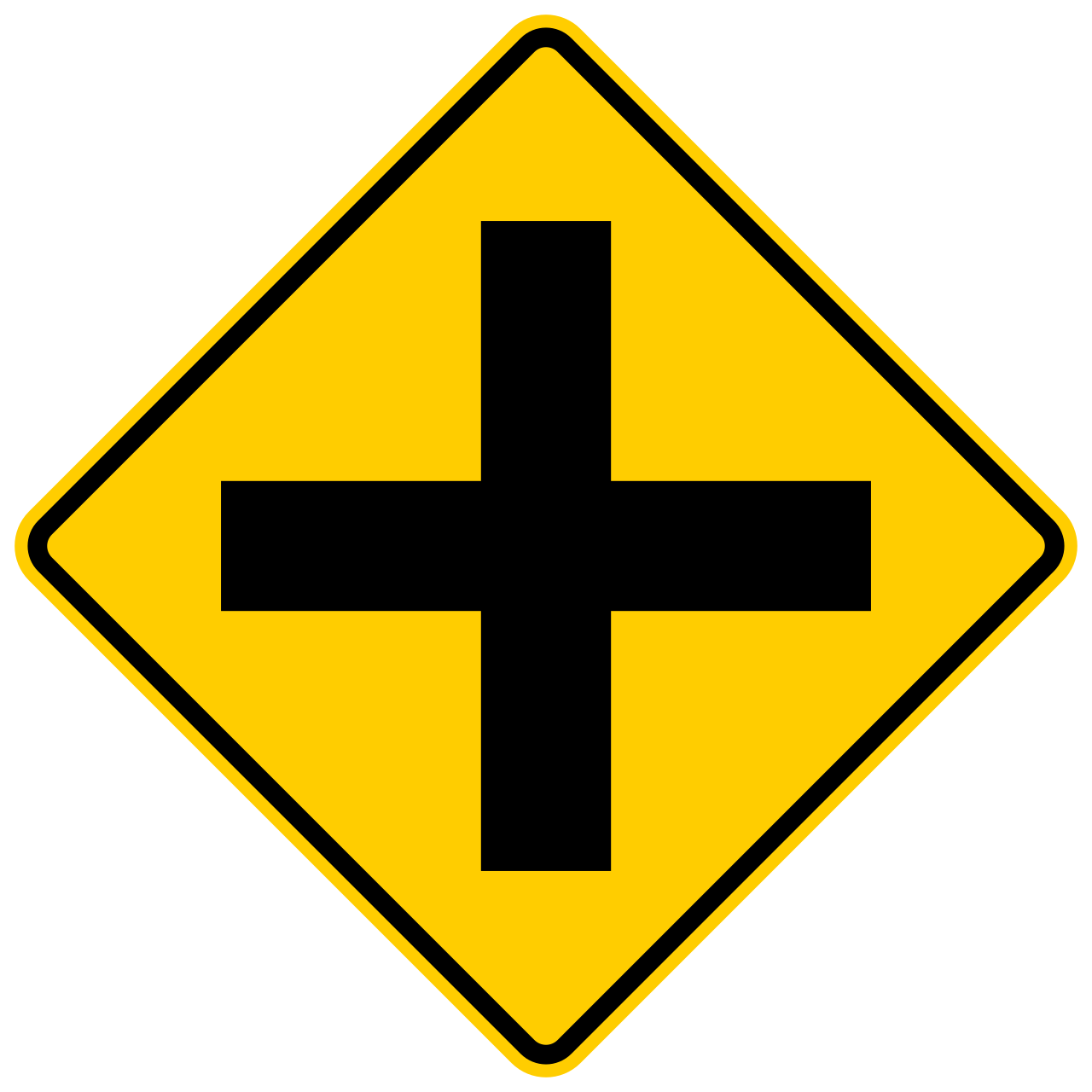 This road sign means:
A
Crossroad
B
Hospital parking ahead
C
Merge
Answer Explanation
This traffic sign indicates: Crossroad. Observing and obeying all roadway signs ensures safe traffic flow and legal driving.
This traffic sign indicates: Crossroad. Observing and obeying all roadway signs ensures safe traffic flow and legal driving.
Question 25:
 What does a flashing yellow light mean?
A
The same thing as a stop sign.
B
Drivers may move forward with caution.
C
All of the above.
Answer Explanation
According to standard right-of-way regulations: drivers may move forward with caution. Yielding appropriately prevents intersection collisions and maintains safe traffic flow.
According to standard right-of-way regulations: drivers may move forward with caution. Yielding appropriately prevents intersection collisions and maintains safe traffic flow.