Question 1:
A yellow arrow means:
A
Do not go in the direction of the arrow.
B
If you intend to turn in the direction of the arrow, be prepared to stop.
C
The same as a steady yellow light.
The correct driving rule is: If you intend to turn in the direction of the arrow, be prepared to stop. Following standard DMV road rules and practicing defensive driving ensures safety for all road users.
Question 2:
A driver approaching a flashing red traffic signal must:
A
merge to the left.
B
stop before the intersection.
C
carefully drive through the intersection without stopping.
D
slow down at the traffic signal.
This traffic sign indicates: stop before the intersection. Observing and obeying all roadway signs ensures safe traffic flow and legal driving.
Question 3:
You reach an intersection that is not controlled at the same time as a driver on your right, and both of you prepare to go straight. Who has the right-of-way?
A
You.
B
No one.
C
The other driver.
According to standard right-of-way regulations: The other driver. Yielding appropriately prevents intersection collisions and maintains safe traffic flow.
Question 4:
The driver of an emergency vehicle that uses lights and a siren can legally:
A
pass red lights.
B
exceed the speed limit
C
All of the above.
Sharing the road safely requires mutual awareness and respect: pass red lights; exceed the speed limit. Maintaining safe space cushions protects all roadway users.
Question 5:
In case of skidding, drivers should NOT:
A
take their foot off the gas pedal.
B
pump the brakes gently if they are about to hit something.
C
tap the gas pedal with their foot.
The correct driving rule is: tap the gas pedal with their foot. Following standard DMV road rules and practicing defensive driving ensures safety for all road users.
Question 6:
Which of the following is true about the Anti-Locking Brake System?
A
It prevents skidding.
B
It allows drivers to steer during an emergency braking situation.
C
All of the above.
All of the listed points are essential driving requirements: It prevents skidding; It allows drivers to steer during an emergency braking situation. Practicing each ensures compliance with DMV safety laws.
Question 7:
What is the meaning of red traffic signs?
A
High emphasis warning.
B
Stop, do not enter or wrong way.
C
Regulatory.
The correct driving rule is: Stop, do not enter or wrong way. Following standard DMV road rules and practicing defensive driving ensures safety for all road users.
Question 8:
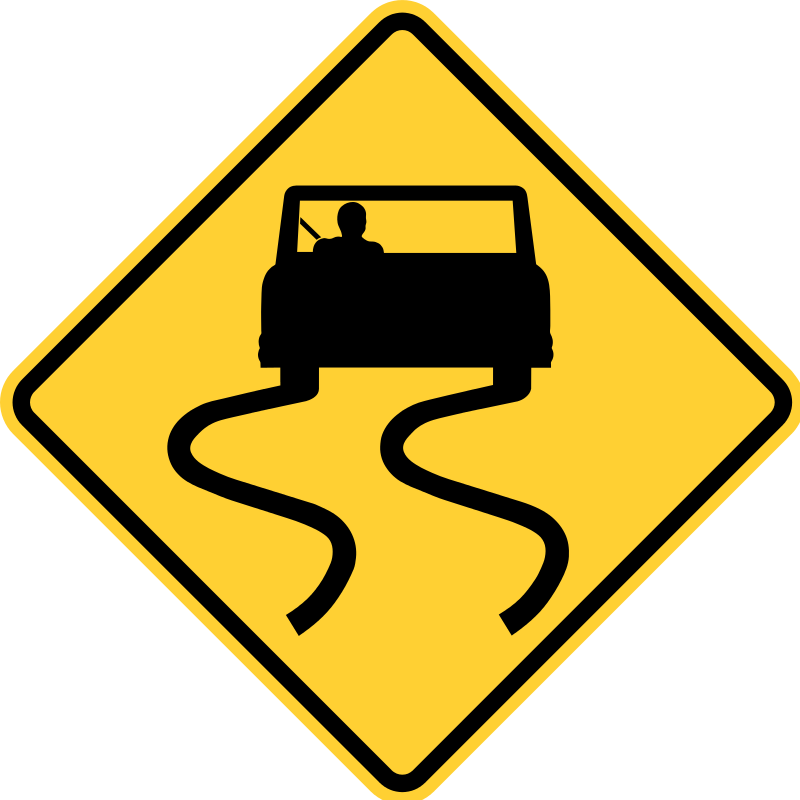 This sign means:
A
The road will curve to the right, then to the left.
B
Road slippery when wet. Drive slowly.
C
Winding road ahead. Drive with caution.
This traffic sign indicates: Road slippery when wet. Drive slowly. Observing and obeying all roadway signs ensures safe traffic flow and legal driving.
Question 9:
Never make a U-turn from:
A
the lane you’re in.
B
the right lane.
C
the left part of the lane nearest to the centerline of the roadway.
According to standard right-of-way regulations: the right lane. Yielding appropriately prevents intersection collisions and maintains safe traffic flow.
Question 10:
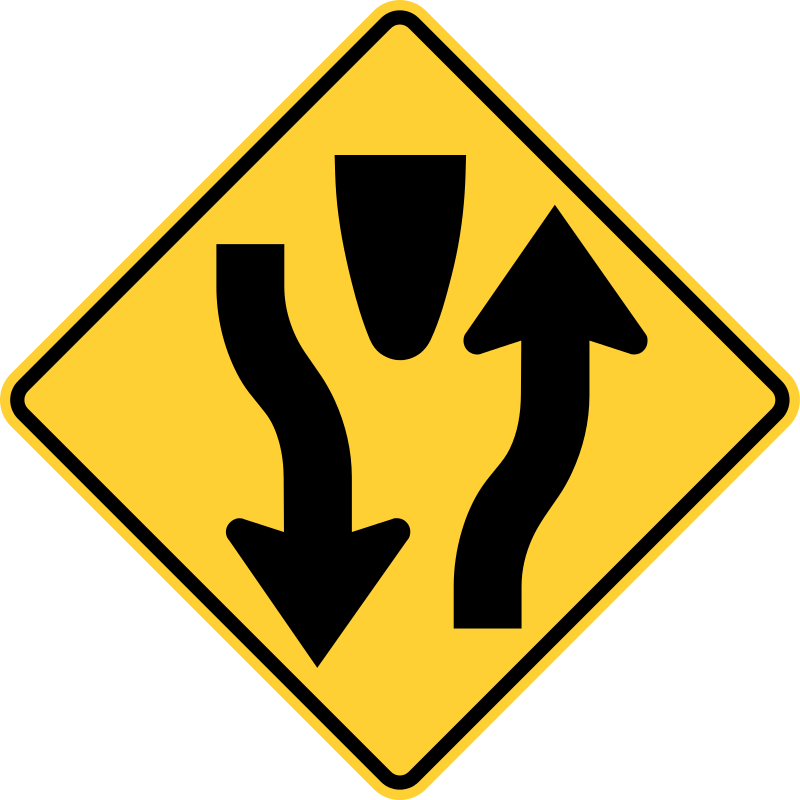 This road sign means:
A
Divided highway ahead
B
Merging traffic
C
Flagger ahead
This traffic sign indicates: Divided highway ahead. Observing and obeying all roadway signs ensures safe traffic flow and legal driving.
Question 11:
When entering a highway from an entrance ramp, drivers should:
A
enter slowly to avoid other vehicles.
B
stop first, then gradually enter traffic.
C
accelerate to the speed of traffic.
D
drive above the speed of traffic to get ahead.
Defensive driving guidelines state that: accelerate to the speed of traffic. Anticipating road hazards and communicating maneuvers keeps traffic predictable and safe.
Question 12:
When driving in travel lanes on the roadway:
A
you may make a U-turn if you get on the wrong entrance ramp of the freeway.
B
you may stop to let out passengers.
C
do not stop for any reason, keep moving until you can safely pull off the road.
D
you may make back up quickly if there are no vehicles behind.
The correct driving rule is: do not stop for any reason, keep moving until you can safely pull off the road. Following standard DMV road rules and practicing defensive driving ensures safety for all road users.
Question 13:
Hydroplaning is a situation in which:
A
your tires throw water to the rear, causing problems for the vehicles behind.
B
the tires of the car ahead cause sheets of water to splash on your vehicle.
C
one of your tires goes flat, causing the others to skid.
D
your tires ride up on a thin surface of water, losing contact with the pavement, and resulting in sudden loss of control
The correct driving rule is: your tires ride up on a thin surface of water, losing contact with the pavement, and resulting in sudden loss of control. Following standard DMV road rules and practicing defensive driving ensures safety for all road users.
Question 14:
What do pennant-shaped signs indicate?
A
A school crossing
B
Yield
C
A No Passing Zone
The correct driving rule is: A No Passing Zone. Following standard DMV road rules and practicing defensive driving ensures safety for all road users.
Question 15:
 The yield sign means:
A
Drive with caution in wet weather.
B
You must come to a complete stop.
C
Slow down and give vehicles crossing your path the right-of-way.
A triangular Yield sign requires drivers to slow down and give right-of-way to other traffic: slow down and give vehicles crossing your path the right-of-way. Proceed only when there is a safe opening.
Question 16:
Which signs have black letters on a yellow or orange background?
A
Warning signs (diamond)
B
Regulatory signs (vertical rectangle)
C
Railroad advance warning signs (round)
The correct driving rule is: Warning signs (diamond). Following standard DMV road rules and practicing defensive driving ensures safety for all road users.
Question 17:
When in a motor vehicle on a highway, it is:
A
illegal to drink from, but permissible to transport, open containers of alcohol in the passenger compartment.
B
illegal to possess an open container of alcohol in the passenger compartment.
C
acceptable to drink alcoholic beverages if you are not driving.
D
permissible to drink a moderate amount of alcohol when driving with a passenger.
Defensive driving guidelines state that: illegal to possess an open container of alcohol in the passenger compartment. Anticipating road hazards and communicating maneuvers keeps traffic predictable and safe.
Question 18:
You ________ traffic headed toward you when you turn left.
A
must not yield to
B
must interrupt
C
must yield to
According to standard right-of-way regulations: must yield to. Yielding appropriately prevents intersection collisions and maintains safe traffic flow.
Question 19:
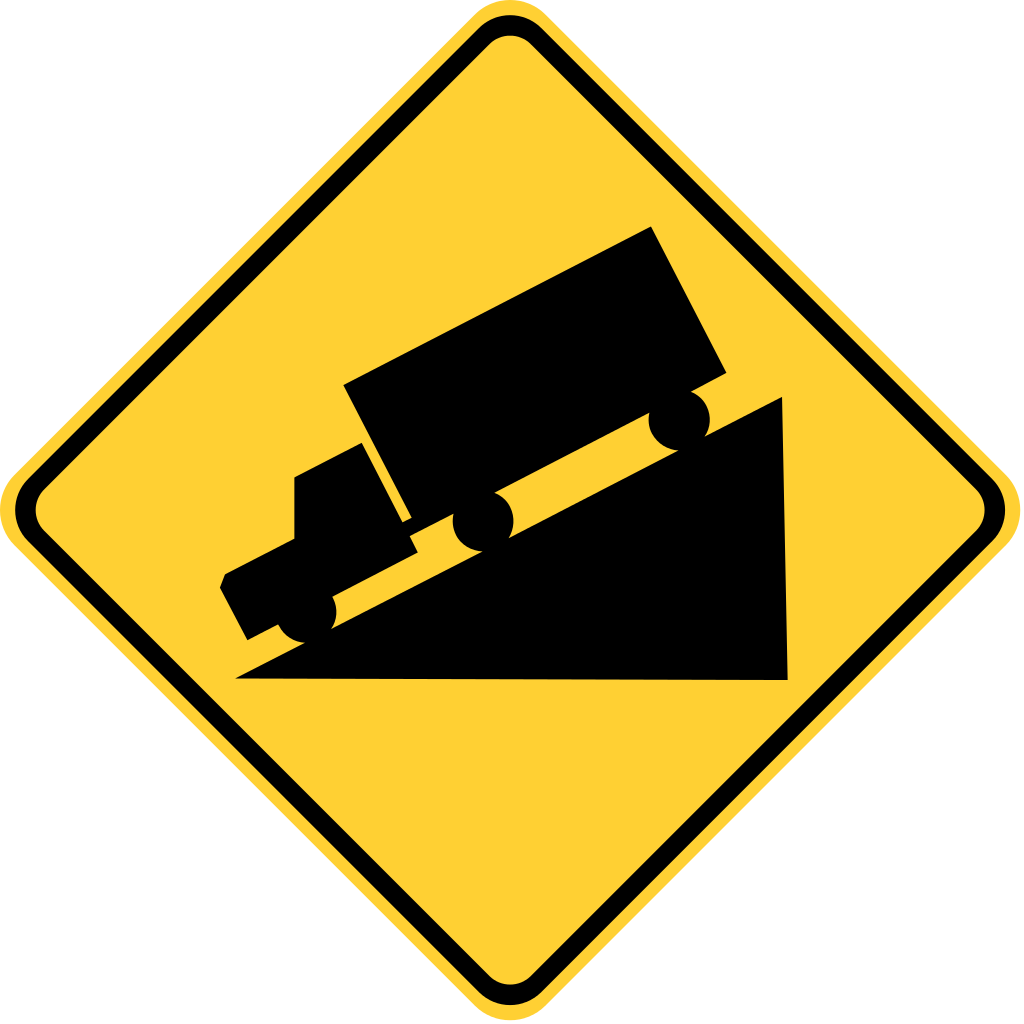 This road sign means:
A
Do not pass trucks
B
Truck must back up
C
Steep downgrade ahead
This traffic sign indicates: Steep downgrade ahead. Observing and obeying all roadway signs ensures safe traffic flow and legal driving.
Question 20:
 This road sign means:
A
Winding Road Ahead
B
No turns are allowed on this road
C
Right lane closed
D
Do Not Enter
This traffic sign indicates: Winding Road Ahead. Observing and obeying all roadway signs ensures safe traffic flow and legal driving.
Question 21:
At a light rail intersection, you should always:
A
share the road with pedestrians and bicyclists.
B
look both ways before crossing the tracks.
C
be alert and obey all traffic signals.
D
All of the above.
Safe navigation at intersections requires following all established rules: share the road with pedestrians and bicyclists; look both ways before crossing the tracks; be alert and obey all traffic signals. Always yield right-of-way properly to prevent collisions.
Question 22:
Select the most effective safety restraint(s) in a traffic crash.
A
Lap and shoulder belt only
B
Air bag only
C
Pumping brakes.
D
A combination of lap/shoulder belt and air bag.
The correct driving rule is: A combination of lap/shoulder belt and air bag. Following standard DMV road rules and practicing defensive driving ensures safety for all road users.
Question 23:
Aggressive driving includes:
A
quick lane changes without a signal.
B
chasing or challenging other drivers.
C
All of the above.
All of the listed points are essential driving requirements: quick lane changes without a signal; chasing or challenging other drivers. Practicing each ensures compliance with DMV safety laws.
Question 24:
 This sign indicates:
A
Winding road
B
Merging traffic
C
Divided highway ends
This traffic sign indicates: Merging traffic. Observing and obeying all roadway signs ensures safe traffic flow and legal driving.
Question 25:
You are approaching an intersection with a yellow flashing light. You should:
A
stop and wait for the light to change.
B
speed up to beat the red light.
C
prepare to stop; the light is about to turn red.
D
proceed with caution through the intersection.
This traffic sign indicates: proceed with caution through the intersection. Observing and obeying all roadway signs ensures safe traffic flow and legal driving.