Question 1:
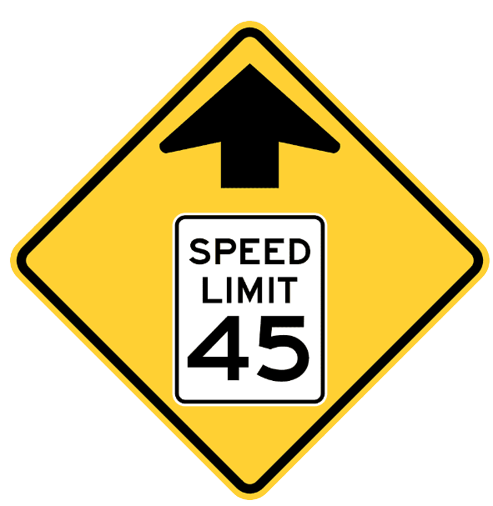 This warning sign:
A
provides advance notice to upcoming speed limit change.
B
shows the current speed limit that all vehicles traveling in the direction of the arrow must not exceed.
C
indicates the suggested highest safe speed.
This traffic sign indicates: provides advance notice to upcoming speed limit change. Observing and obeying all roadway signs ensures safe traffic flow and legal driving.
Question 2:
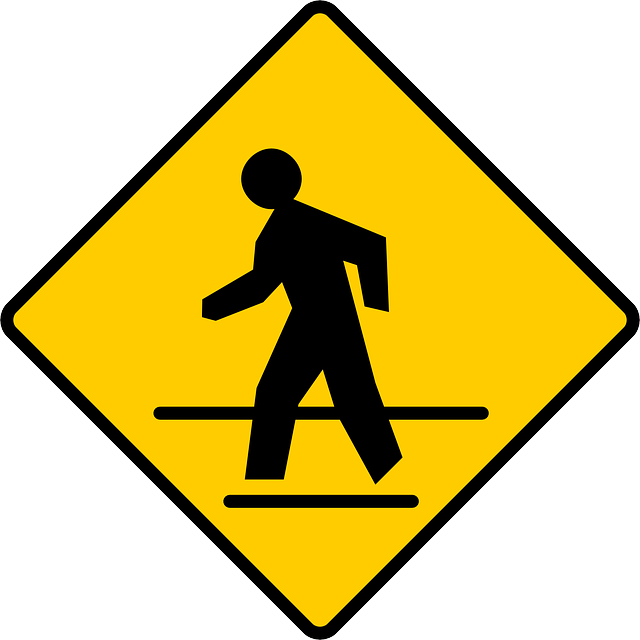 This road sign means:
A
School zone ahead
B
Pedestrians must not cross here
C
Pedestrian crossing ahead
This traffic sign indicates: Pedestrian crossing ahead. Observing and obeying all roadway signs ensures safe traffic flow and legal driving.
Question 3:
BAC is expressed in:
A
percentage of alcohol to blood.
B
percentage of blood to alcohol.
C
ounces of alcohol in your blood.
Under state DUI and traffic safety laws: percentage of alcohol to blood. Alcohol degrades judgment, slows reaction times, and distorts depth perception.
Question 4:
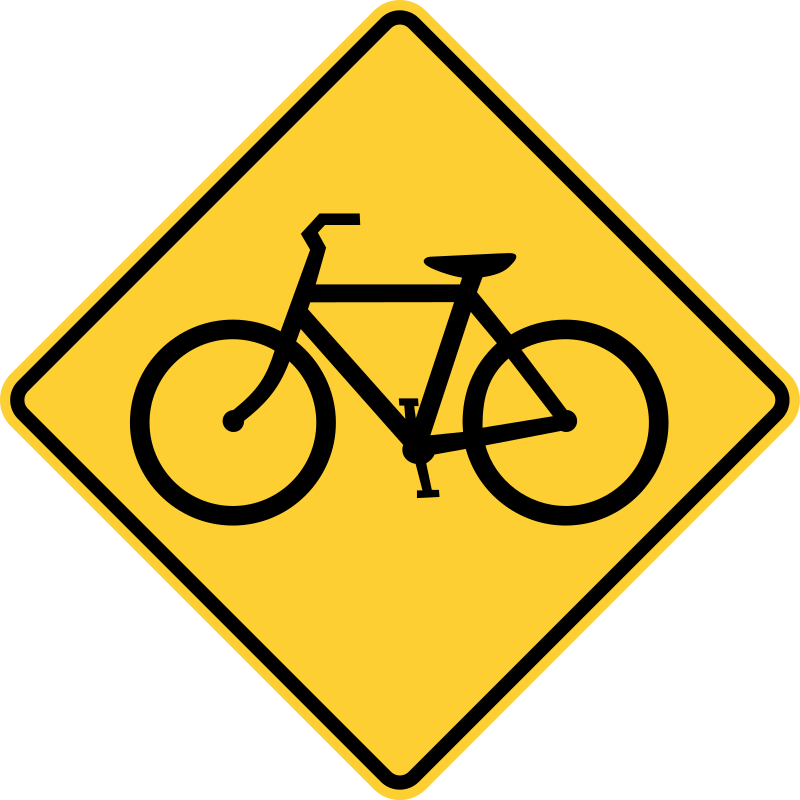 This road sign means:
A
Yield right-of-way to bicycles
B
Bicycles cross or ride beside traffic
C
Yield to motorcyles, but not to bicycles
D
Bicycles have the same rights as other vehicles
This traffic sign indicates: Bicycles cross or ride beside traffic. Observing and obeying all roadway signs ensures safe traffic flow and legal driving.
Question 5:
The following symptoms are associated with drowsy driving:
A
You continue to yawn.
B
You don’t remember driving the last few miles.
C
All of the above.
Alcohol and impairing substances degrade all critical driving functions: You continue to yawn; You don’t remember driving the last few miles. Driving while impaired carries severe criminal and safety penalties.
Question 6:
 This road sign means:
A
Divided highway ahead
B
Two-way traffic ahead
C
Four-lane traffic ahead
This traffic sign indicates: Two-way traffic ahead. Observing and obeying all roadway signs ensures safe traffic flow and legal driving.
Question 7:
Drivers may continue carefully through a yellow light if:
A
there are no pedestrians crossing.
B
they are turning right.
C
they already are within the intersection.
D
an emergency vehicle is crossing your lane.
According to standard right-of-way regulations: they already are within the intersection. Yielding appropriately prevents intersection collisions and maintains safe traffic flow.
Question 8:
When driving on slick roads, drivers should:
A
accelerate quickly.
B
take turns more slowly.
C
use alternate routes.
D
drive as they would on dry roads.
The correct driving rule is: take turns more slowly. Following standard DMV road rules and practicing defensive driving ensures safety for all road users.
Question 9:
If a vehicle is approaching with high beams, drivers should look __________ until the vehicle passes.
A
to the right of the road
B
at the center of the road
C
to the left of the road
D
straight ahead
The correct driving rule is: to the right of the road. Following standard DMV road rules and practicing defensive driving ensures safety for all road users.
Question 10:
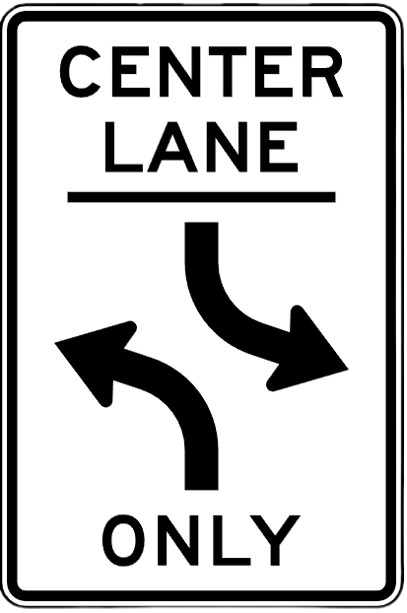 This sign means:
A
The center lane is shared for left turns.
B
Left turns in both directions of travel are not permitted.
C
Vehicles may only turn left.
This traffic sign indicates: The center lane is shared for left turns. Observing and obeying all roadway signs ensures safe traffic flow and legal driving.
Question 11:
Which of the following must you obey over the others?
A
Red light
B
Stop sign
C
Police officer
The correct driving rule is: Police officer. Following standard DMV road rules and practicing defensive driving ensures safety for all road users.
Question 12:
Where must a pedestrian walk when there are no sidewalks?
A
On the side of the road, in the same direction of traffic.
B
In the middle of the road, facing oncoming traffic.
C
On the side of the road, facing the traffic.
Drivers must always yield the right-of-way to pedestrians crossing at intersections and crosswalks: On the side of the road, facing the traffic. Stop and allow them to clear the lane safely.
Question 13:
 This is the shape and color of a ________ sign.
A
yield
B
stop
C
do not enter
The correct driving rule is: yield. Following standard DMV road rules and practicing defensive driving ensures safety for all road users.
Question 14:
An octagonal sign means that drivers must:
A
respect the posted speed limit.
B
come to a complete stop at the marked stop line.
C
be aware possible hazards ahead.
An octagonal Stop sign requires a full and complete stop before the stop line or crosswalk: come to a complete stop at the marked stop line. Proceed only after yielding to all cross traffic and pedestrians.
Question 15:
Which shape is a railroad advance warning sign?
A
Crossbuck
B
Round
C
Pentagon
Circular signs with an 'X' and 'RR' designate a Railroad Advance Warning: Round. Drivers must slow down, look both ways, listen for trains, and be prepared to stop.
Question 16:
On slippery roads, drivers should:
A
leave more space in front of their vehicle.
B
increase their speed to avoid hydroplaning.
C
come to a complete stop.
For safe speed and stopping control: leave more space in front of their vehicle. Adjusting speed to match visibility and road traction prevents loss of steering grip.
Question 17:
When you reach an intersection with a stop sign, you should:
A
follow the vehicle ahead of you.
B
stop, look right, then left, then right again.
C
stop, look left, then right, then left again.
D
check your rearview mirror, look left, then right, then proceed.
According to standard right-of-way regulations: stop, look left, then right, then left again. Yielding appropriately prevents intersection collisions and maintains safe traffic flow.
Question 18:
What should you do when an aggressive driver confronts you?
A
Avoid eye contact with the aggressive driver.
B
Make eye contact.
C
Challenge the aggressive driver with increased speed.
The correct driving rule is: avoid eye contact with the aggressive driver. Following standard DMV road rules and practicing defensive driving ensures safety for all road users.
Question 19:
Who is most at risk?
A
Drivers who are fatigued.
B
Drivers who are driving on long, boring roads.
C
All of the above.
All of the listed points are essential driving requirements: Drivers who are fatigued; Drivers who are driving on long, boring roads. Practicing each ensures compliance with DMV safety laws.
Question 20:
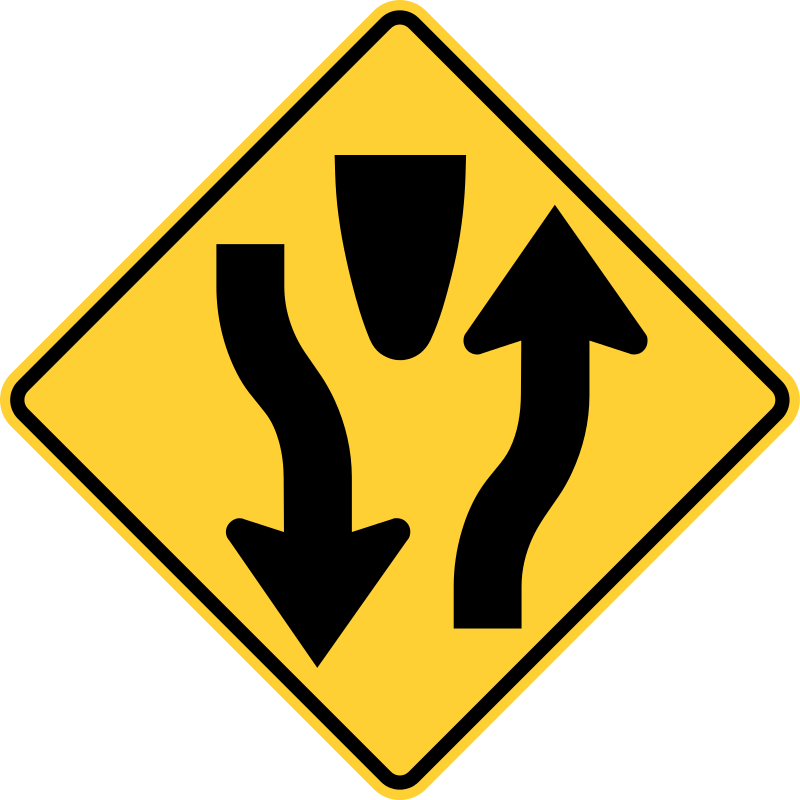 This sign means:
A
The highway ahead is divided into two one-way roadways.
B
Roundabout ahead. Slow down.
C
The divided highway on which drivers are traveling ends ahead.
This traffic sign indicates: The highway ahead is divided into two one-way roadways. Observing and obeying all roadway signs ensures safe traffic flow and legal driving.
Question 21:
For protection, motorcyclists are required to:
A
keep their headlights and taillights on at all times.
B
signal turns, lane changes and stops.
C
wear approved helmets.
The correct driving rule is: wear approved helmets. Following standard DMV road rules and practicing defensive driving ensures safety for all road users.
Question 22:
A red traffic sign means?
A
Construction warning.
B
Railroad crossing.
C
Stop.
This traffic sign indicates: stop. Observing and obeying all roadway signs ensures safe traffic flow and legal driving.
Question 23:
You must come to a full stop at a yield sign:
A
Always.
B
Never.
C
If traffic conditions require it.
The correct driving rule is: If traffic conditions require it. Following standard DMV road rules and practicing defensive driving ensures safety for all road users.
Question 24:
If you get on a wrong expressway exit, you must:
A
get off at the next exit and look for signs that tell you how to return to the expressway.
B
use the the exit ramp to accelerate to expressway speed and blend with traffic.
C
drive in reverse to return to the expressway.
Defensive driving guidelines state that: get off at the next exit and look for signs that tell you how to return to the expressway. Anticipating road hazards and communicating maneuvers keeps traffic predictable and safe.
Question 25:
 This sign warns drivers of:
A
a reduction of lanes.
B
a dip in the road. Drivers should be ready to stop if the dip is filled with water.
C
a bridge ahead, wide enough to accommodate two lanes of traffic, but with very little clearance.
This traffic sign indicates: a bridge ahead, wide enough to accommodate two lanes of traffic, but with very little clearance. Observing and obeying all roadway signs ensures safe traffic flow and legal driving.