Question 1:
If a driver follows you too closely, you should:
A
move to another lane if possible.
B
activate your stop lights.
C
brake suddenly.
No explanation available.
Question 2:
With a Class C Driver’s License you may:
A
operate vehicles with a gross vehicle weight rating of more than 26,001 pounds.
B
operate any motor vehicle, regardless of size or weight.
C
operate vehicles with a gross vehicle weight rating of less than 26,001 pounds.
No explanation available.
Question 3:
Arrows on the roadway:
A
show which lanes you must use.
B
indicate reserved lanes.
C
indicate HOV lanes.
No explanation available.
Question 4:
 This road sign means:
A
Divided highway ahead
B
Two-way traffic ahead
C
Four-lane traffic ahead
No explanation available.
Question 5:
Which signs have black letters on a yellow or orange background?
A
Warning signs (diamond)
B
Regulatory signs (vertical rectangle)
C
Railroad advance warning signs (round)
No explanation available.
Question 6:
 This road sign means:
A
There is a series of sharp turns up ahead on the road
B
Sharp right turn ahead.
C
A road joins from the right
No explanation available.
Question 7:
If the entrance lane is too short to allow acceleration to highway speed, you should:
A
go to the next entrance ramp.
B
stop and wait for a large gap in traffic, then enter the highway and accelerate quickly.
C
merge into highway traffic as soon as possible.
No explanation available.
Question 8:
You are stopped at a stop sign and you are going to go straight through the intersection. A car on the cross road has stopped at a stop sign on your right and is going to go straight. Who has the right-of-way?
A
Whoever enters the intersection first.
B
You.
C
The car on your right.
No explanation available.
Question 9:
Before entering a curve, you should:
A
pump your brakes several times.
B
activate your turn signal.
C
reduce your speed.
No explanation available.
Question 10:
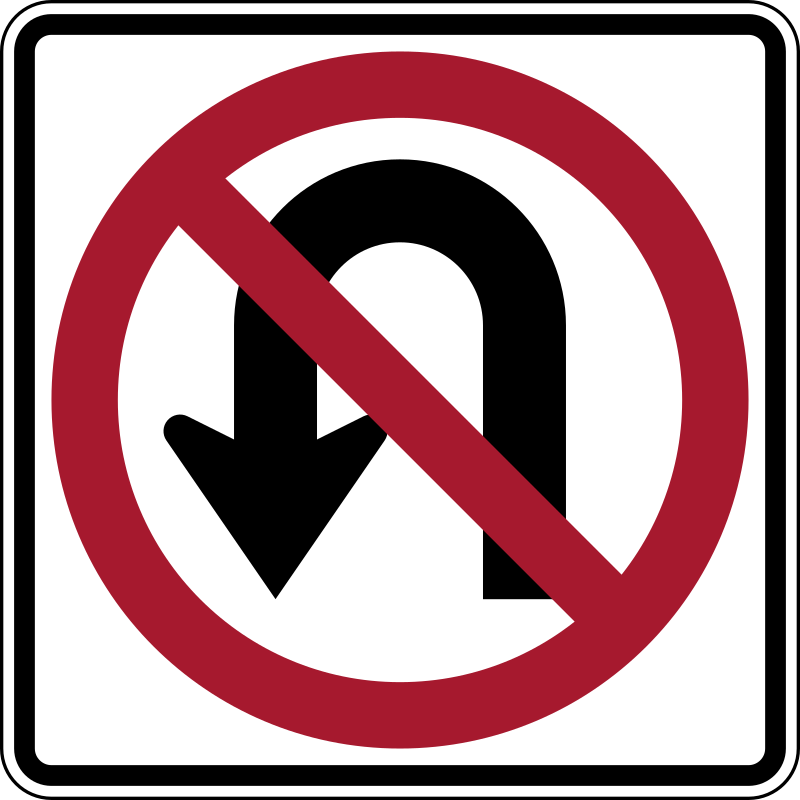 This road sign means:
A
No left turn
B
No U-turn
C
Detour ahead
No explanation available.
Question 11:
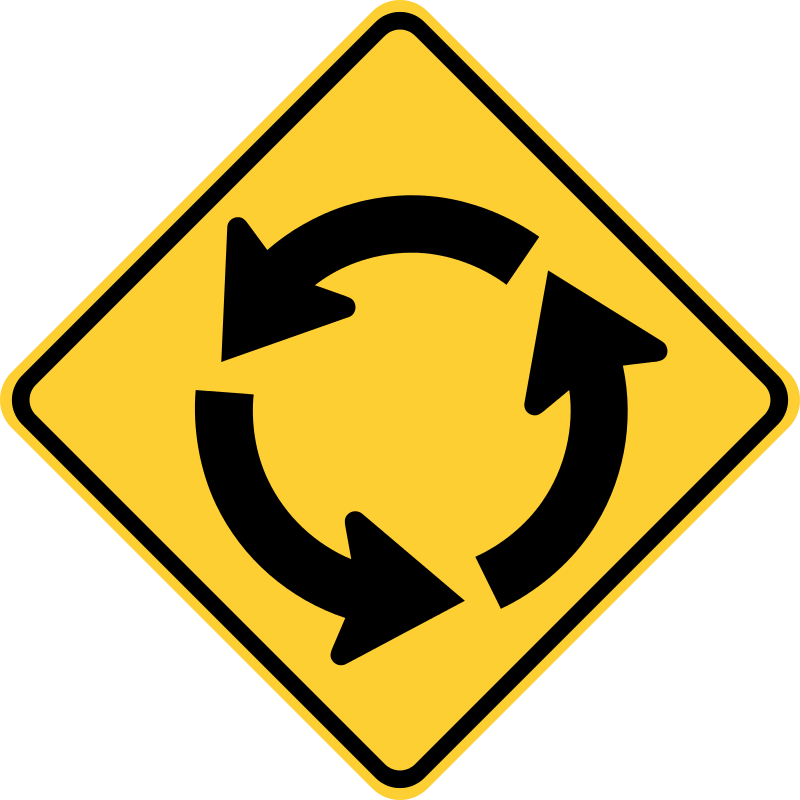 This road sign:
A
warns drivers of a sharp turn left. Drivers should slow their speed and keep to the left.
B
provides an advance notice of a roundabout.
C
warns drivers that U-turns are not permitted.
D
is a no-right-turns sign.
No explanation available.
Question 12:
 This road sign warns drivers that:
A
the road surface ahead changes to a low-type surface or earth road.
B
vehicles must leave the pavement immediately.
C
the dirt on the side of the road is soft.
No explanation available.
Question 13:
The yield sign is ___ and white, with ___ letters.
A
yellow; black
B
red; red
C
red; white
No explanation available.
Question 14:
 This yellow sign means:
A
Lane ends ahead
B
Undivided highway ahead
C
Merging traffic ahead
No explanation available.
Question 15:
What is the meaning of blue traffic signs?
A
A blue background indicates a regulatory sign.
B
They give directional information.
C
Blue indicates road user services.
No explanation available.
Question 16:
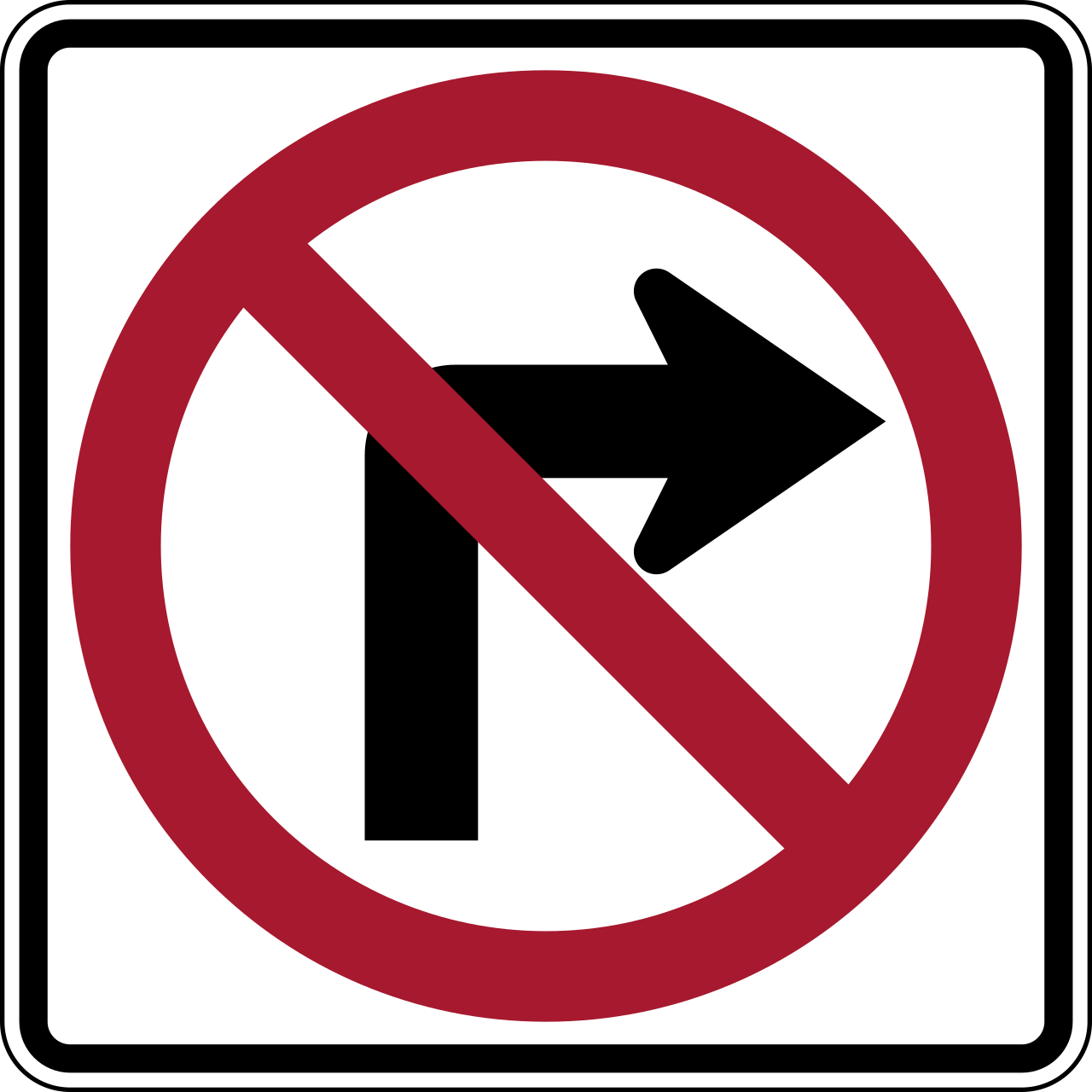 This road sign means:
A
No left turn
B
No right turn
C
No U-turns
No explanation available.
Question 17:
You should always travel:
A
at the speed of the vehicle behind.
B
according to weather and road conditions.
C
at the speed limit.
No explanation available.
Question 18:
 The yield sign means:
A
Go. The light will soon be red.
B
If the way is clear, you may move forward slowly without stopping.
C
Stop if you can.
No explanation available.
Question 19:
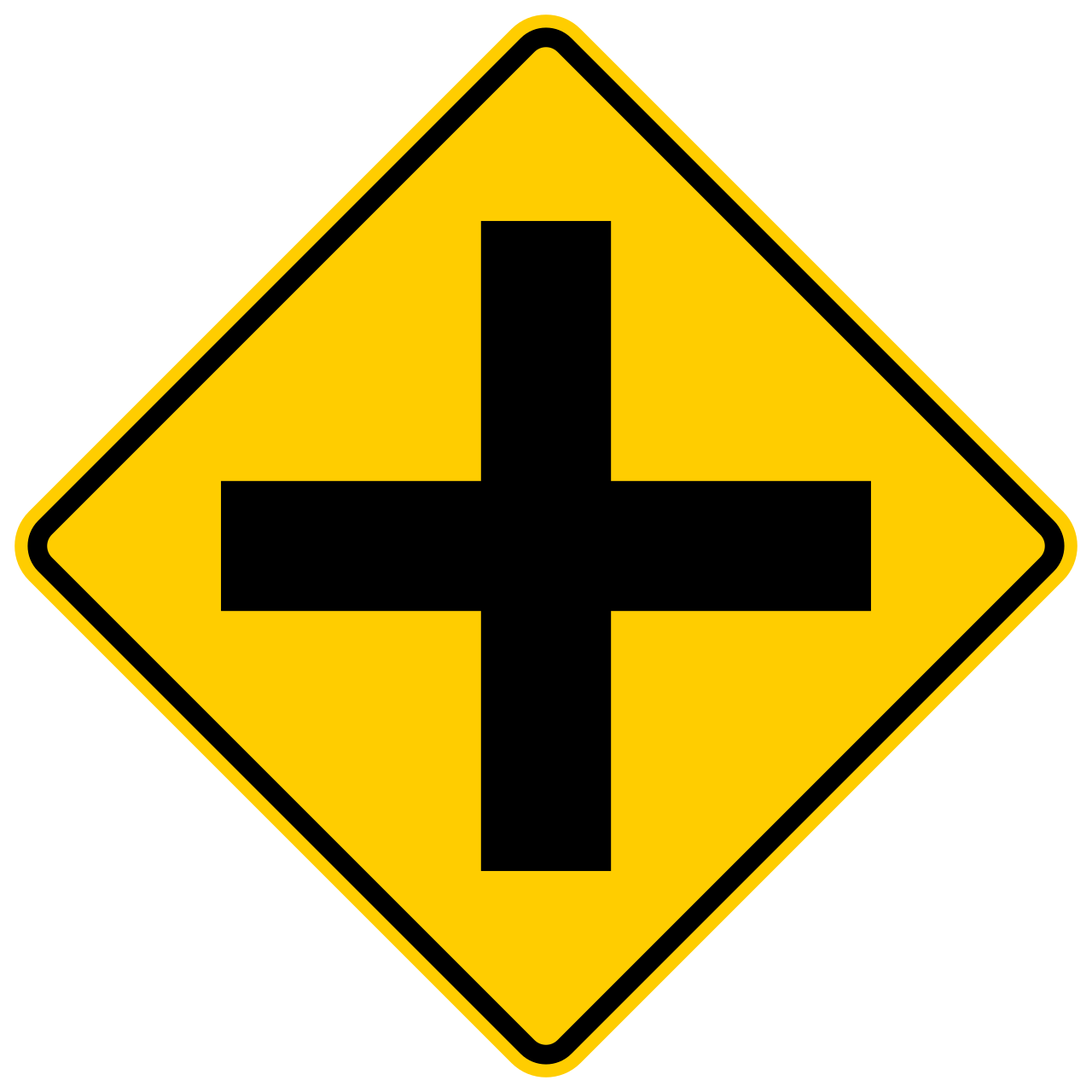 This road sign means:
A
A four-way intersection is ahead
B
Do not pass
C
A steep grade is ahead
No explanation available.
Question 20:
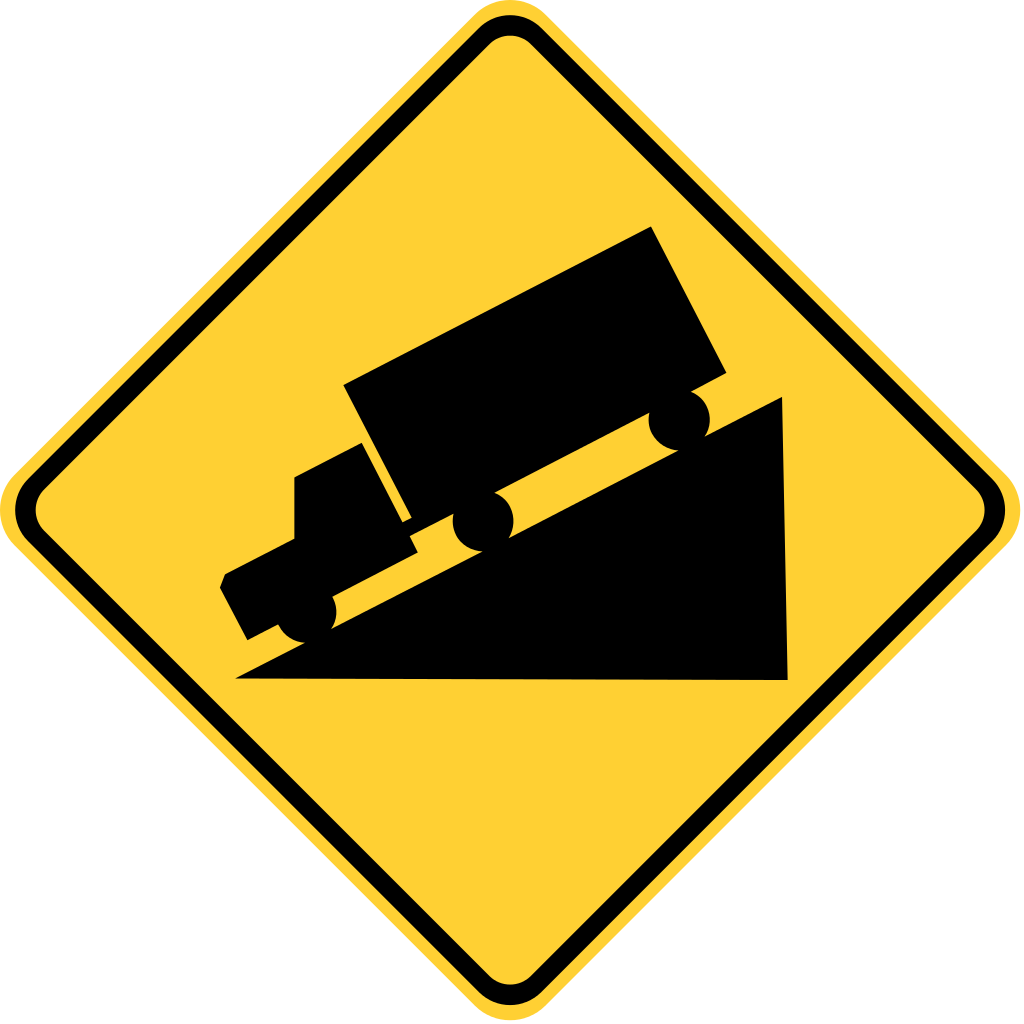 This sign indicates that:
A
there is a steep hill ahead.
B
trucks are merging from the right
C
there's a side road ahead
No explanation available.
Question 21:
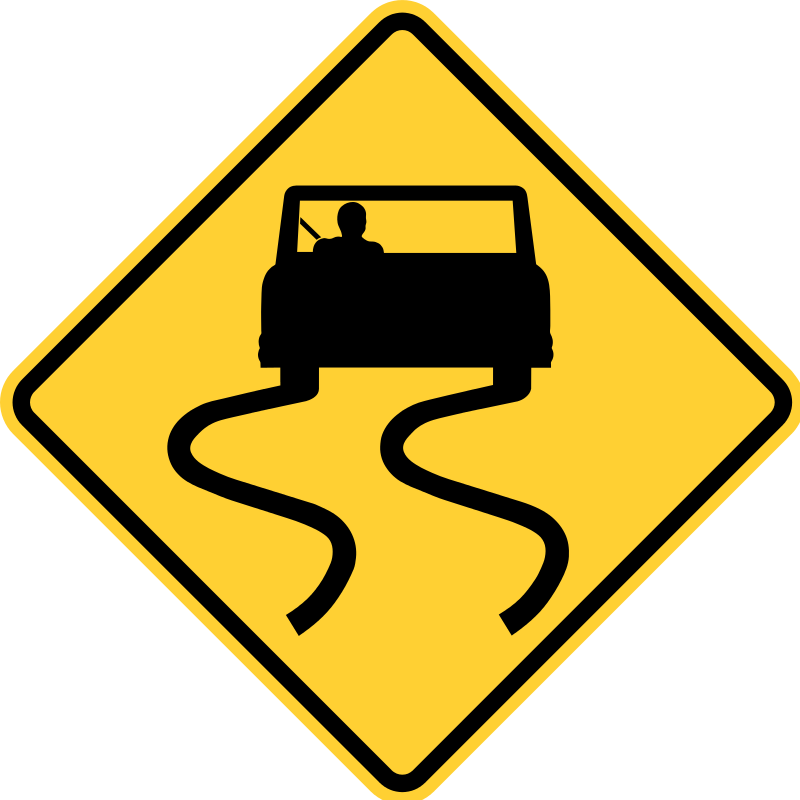 This road sign means:
A
Winding road
B
Side road ahead
C
Slippery when wet
No explanation available.
Question 22:
When approaching an intersection with a traffic control signal that is not working, drivers should:
A
stop as you would if there were stop signs in all directions, yield the right-of-way, then enter the intersection.
B
speed up and proceed through the intersection.
C
try not to stop if the intersection is clear.
No explanation available.
Question 23:
While driving, you see a flooded roadway ahead. You should:
A
stop your vehicle on the roadway.
B
proceed through the flooded area with caution.
C
turn around and find another route to get to your destination.
No explanation available.
Question 24:
If you meet a stopped school bus with the lights flashing and the signal arm extended, you should:
A
proceed at 15 MPH or less, if no children are present.
B
stop.
C
watch for children and proceed at normal speed.
No explanation available.
Question 25:
If you get on a wrong expressway exit, you must:
A
get off at the next exit and look for signs that tell you how to return to the expressway.
B
use the the exit ramp to accelerate to expressway speed and blend with traffic.
C
drive in reverse to return to the expressway.
No explanation available.
Question 26:
Which of the following must you obey over the others?
A
Red light
B
Stop sign
C
Police officer
No explanation available.
Question 27:
 This sign tells drivers:
A
they must wait for the traffic signal to turn green before turning right or left.
B
they may not turn right or left during the red light.
C
All of the above.
No explanation available.
Question 28:
Driving at excessive speed:
A
improves your reaction time.
B
often leads to high-risk decision-making.
C
does not increase the chance of a crash.
No explanation available.
Question 29:
Unlike passenger cars, trucks have blind spots:
A
on the right.
B
directly behind them.
C
on the front.
No explanation available.
Question 30:
 This sign warns drivers of:
A
a reduction of lanes.
B
a dip in the road. Drivers should be ready to stop if the dip is filled with water.
C
a bridge ahead, wide enough to accommodate two lanes of traffic, but with very little clearance.
No explanation available.
Question 31:
Your BAC depends on:
A
how much alcohol you drink.
B
how much time passes between drinks.
C
All of the above.
No explanation available.
Question 32:
Vehicles stopped behind a school bus when the red lights are flashing must remain stopped until:
A
the flashing lights turn green.
B
the stop arm is retracted and the bus begins moving.
C
all students are off the bus.
No explanation available.
Question 33:
When dust is blowing across the roadway making it difficult to see other vehicles, you should drive slower and turn on your:
A
headlights.
B
parking lights.
C
emergency flashers.
No explanation available.
Question 34:
This road sign means:
A
Slow down, slippery when wet
B
Detour ahead
C
Road curves ahead
No explanation available.
Question 35:
Roads are most slippery:
A
just before it rains.
B
when it stops raining.
C
when it first starts to rain.
No explanation available.
Question 36:
When turning left at an intersection:
A
you should never yield to oncoming traffic and pedestrians.
B
oncoming traffic and pedestrians should yield to you.
C
you should always yield to oncoming traffic and pedestrians.
No explanation available.
Question 37:
Bicyclists must:
A
ride in a bicycle lane, if available.
B
remain to the right when they prepare for a left turn.
C
remain near the left edge of the road.
No explanation available.
Question 38:
When you cannot see any farther than 100 feet ahead due to rain, snow, smoke, fog or blowing dust, you cannot safely drive faster than:
A
40 MPH
B
30 MPH
C
20 MPH
No explanation available.
Question 39:
A crosswalk is:
A
a special type of 4-way intersection.
B
an area designated for blind persons.
C
the area where pedestrians may cross the road.
No explanation available.
Question 40:
To see vehicles in your blind spots, you must look:
A
in your outside rearview mirror.
B
over your shoulders.
C
in your side mirrors.
No explanation available.