Question 1:
To avoid becoming an aggressive driver, you should:
A
Adjust your schedule to drive during times with the most highway traffic.
B
Allow enough travel time to reach your destination on schedule.
C
Listen to heavy metal music.
The correct driving rule is: allow enough travel time to reach your destination on schedule. Following standard DMV road rules and practicing defensive driving ensures safety for all road users.
Question 2:
 This sign warns drivers that:
A
there is a one lane bridge ahead.
B
the right lane ends.
C
the road ahead is narrow.
This traffic sign indicates: the right lane ends. Observing and obeying all roadway signs ensures safe traffic flow and legal driving.
Question 3:
 This sign means:
A
A road crosses the main highway ahead.
B
The divided highway on which drivers are traveling ends ahead.
C
Drivers are coming to a point where another traffic lane joins the one they are on.
This traffic sign indicates: drivers are coming to a point where another traffic lane joins the one they are on. Observing and obeying all roadway signs ensures safe traffic flow and legal driving.
Question 4:
 This road sign means:
A
Yield
B
Look both ways before crossing the intersection
C
Crossroads ahead
A triangular Yield sign requires drivers to slow down and give right-of-way to other traffic: yield. Proceed only when there is a safe opening.
Question 5:
When is it safe to pass another vehicle?
A
Whenever signs and/or markings permit passing other vehicles.
B
When you are entering a curve and there are no oncoming vehicles.
C
When you are driving through an intersection and there are no oncoming vehicles.
The correct driving rule is: Whenever signs and/or markings permit passing other vehicles. Following standard DMV road rules and practicing defensive driving ensures safety for all road users.
Question 6:
Regulatory signs are:
A
Suggestions
B
Warnings
C
Law
The correct driving rule is: Law. Following standard DMV road rules and practicing defensive driving ensures safety for all road users.
Question 7:
You are considered to be driving under the influence when your blood alcohol concentration (BAC) is ____ or more.
A
0.05%
B
0.08%
C
0.8%
In nearly all US states, drivers age 21 and older are legally intoxicated with a Blood Alcohol Concentration (BAC) of 0.08% or higher.
Question 8:
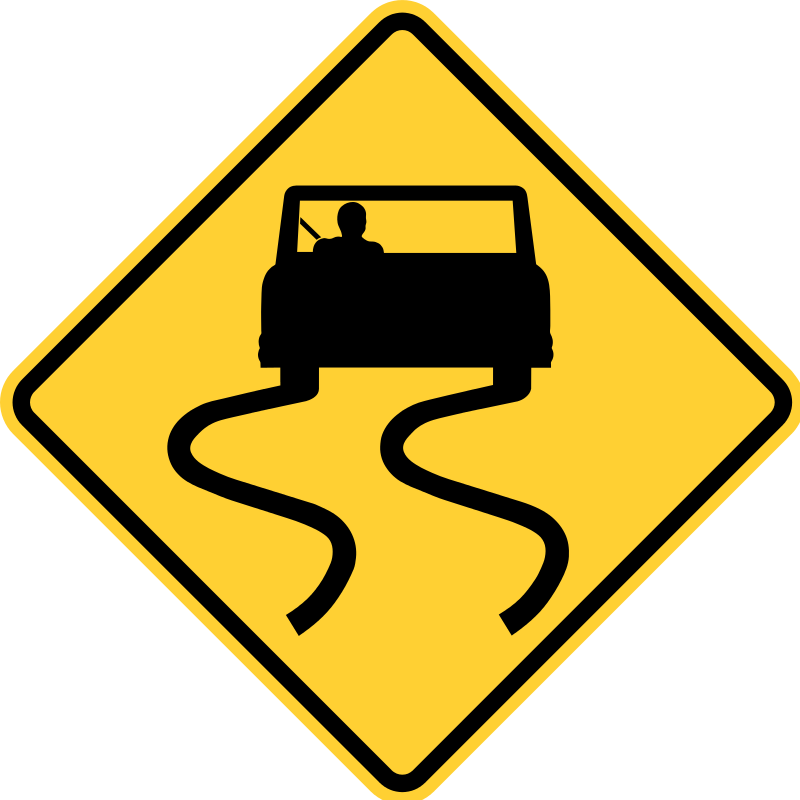 This road sign means:
A
Winding road
B
Side road ahead
C
Slippery when wet
This traffic sign indicates: Slippery when wet. Observing and obeying all roadway signs ensures safe traffic flow and legal driving.
Question 9:
Speed limit signs are:
A
service signs
B
regulation signs (regulatory signs)
C
warning signs
For safe speed and stopping control: regulation signs (regulatory signs). Adjusting speed to match visibility and road traction prevents loss of steering grip.
Question 10:
Drivers can not pass a vehicle on the left if:
A
they approach the top of a hill on a two-way road and can not see over it.
B
they can not safely return to the right lane before they reach a solid yellow center line for the right lane.
C
All of the above.
All of the listed points are essential driving requirements: they approach the top of a hill on a two-way road and can not see over it; they can not safely return to the right lane before they reach a solid yellow center line for the right lane. Practicing each ensures compliance with DMV safety laws.
Question 11:
What is the meaning of orange traffic signs?
A
Yield.
B
Warning of school, pedestrian, and bicycling activity.
C
Construction and maintenance warning.
The correct driving rule is: Construction and maintenance warning. Following standard DMV road rules and practicing defensive driving ensures safety for all road users.
Question 12:
If there is no crosswalk and you see a pedestrian crossing your lane, you should:
A
stop and let the pedestrian finish crossing.
B
make sure the pedestrian can see you before proceeding.
C
honk your horn and proceed with caution.
Drivers must always yield the right-of-way to pedestrians crossing at intersections and crosswalks: stop and let the pedestrian finish crossing. Stop and allow them to clear the lane safely.
Question 13:
This road sign means:
A
Slow down, slippery when wet
B
Detour ahead
C
Road curves ahead
This traffic sign indicates: slow down, slippery when wet. Observing and obeying all roadway signs ensures safe traffic flow and legal driving.
Question 14:
Two drivers reach an uncontrolled intersection at the same time. Who has the right of way?
A
The driver on the left.
B
No one.
C
The driver on the right.
At an uncontrolled intersection or 4-way stop where vehicles arrive at the same time: The driver on the right. The driver on the left must always yield to the driver on the right.
Question 15:
 A four-way stop sign means:
A
traffic from all four directions must stop.
B
if two vehicles reach the intersection at the same time, the driver on the left yields to the driver on the right.
C
All of the above.
This sign alerts drivers to several mandatory requirements: traffic from all four directions must stop, if two vehicles reach the intersection at the same time, the driver on the left yields to the driver on the right. Obeying all posted traffic control instructions is required by law.
Question 16:
You reach an intersection that is not controlled at the same time as a driver on your right, and both of you prepare to go straight. Who has the right-of-way?
A
You.
B
No one.
C
The other driver.
According to standard right-of-way regulations: The other driver. Yielding appropriately prevents intersection collisions and maintains safe traffic flow.
Question 17:
Your Driver’s License will:
A
expire on your birthday.
B
expire after five years of issuance.
C
never expire.
The correct driving rule is: expire on your birthday. Following standard DMV road rules and practicing defensive driving ensures safety for all road users.
Question 18:
If your car becomes disabled on a highway, you should:
A
stop in the right lane.
B
park with all four wheels off the highway, if possible.
C
stop where you are.
Defensive driving guidelines state that: park with all four wheels off the highway, if possible. Anticipating road hazards and communicating maneuvers keeps traffic predictable and safe.
Question 19:
What should drivers do in case of a brake failure?
A
Shift to a lower gear.
B
Tie a white cloth on the left door handle.
C
Brake lightly.
The correct driving rule is: shift to a lower gear. Following standard DMV road rules and practicing defensive driving ensures safety for all road users.
Question 20:
A broken yellow line on your side of the roadway only means:
A
Passing is permitted on both sides.
B
Passing is permitted on your side of the roadway.
C
Passing is not permitted on either side.
The correct driving rule is: Passing is permitted on your side of the roadway. Following standard DMV road rules and practicing defensive driving ensures safety for all road users.
Question 21:
While driving, you see a flooded roadway ahead. You should:
A
stop your vehicle on the roadway.
B
proceed through the flooded area with caution.
C
turn around and find another route to get to your destination.
The correct driving rule is: turn around and find another route to get to your destination. Following standard DMV road rules and practicing defensive driving ensures safety for all road users.
Question 22:
Your license can be suspended if you are under 21 and drive with a BAC of:
A
0.15% or more.
B
any amount.
C
0.08% or more.
Under state DUI and traffic safety laws: any amount. Alcohol degrades judgment, slows reaction times, and distorts depth perception.
Question 23:
 This road sign warns drivers that:
A
left turns are not allowed at the intersection.
B
the road will make a sharp turn to the right.
C
another road enters the highway from the direction shown.
This traffic sign indicates: another road enters the highway from the direction shown. Observing and obeying all roadway signs ensures safe traffic flow and legal driving.
Question 24:
 This road sign means:
A
Curves ahead
B
Divided highway ahead
C
Divided highway ends
This traffic sign indicates: Divided highway ends. Observing and obeying all roadway signs ensures safe traffic flow and legal driving.
Question 25:
Drivers should use high beam headlights when:
A
following another vehicle.
B
when they come within 50 feet of an oncoming vehicle.
C
there are no oncoming vehicles approaching.
The correct driving rule is: there are no oncoming vehicles approaching. Following standard DMV road rules and practicing defensive driving ensures safety for all road users.