Question 1:
If one of your tires blows out while driving, you should:
A
apply the brakes firmly and steer toward the right edge of the road.
B
pump the brakes.
C
hold the steering wheel firmly, slow down, and steer smoothly.
The correct driving rule is: hold the steering wheel firmly, slow down, and steer smoothly. Following standard DMV road rules and practicing defensive driving ensures safety for all road users.
Question 2:
 This sign means:
A
Narrow bridge ahead. Slow down and drive with caution.
B
Do not to enter if your vehicle is taller than the height listed on the sign.
C
No passing zone ahead.
This traffic sign indicates: Do not to enter if your vehicle is taller than the height listed on the sign. Observing and obeying all roadway signs ensures safe traffic flow and legal driving.
Question 3:
In a vehicle equipped with air bags a child under 12 years old should be placed:
A
In the back seat.
B
In either the front or back seat.
C
In the front seat.
The correct driving rule is: In the back seat. Following standard DMV road rules and practicing defensive driving ensures safety for all road users.
Question 4:
 A 4-way stop sign means:
A
The first vehicle to reach the intersection should move forward first.
B
Traffic from all four directions must stop.
C
There are four stop signs at the intersection.
D
All of the above.
This sign alerts drivers to several mandatory requirements: The first vehicle to reach the intersection should move forward first, Traffic from all four directions must stop, There are four stop signs at the intersection. Obeying all posted traffic control instructions is required by law.
Question 5:
 This road sign means:
A
Pavement ends
B
Winding road
C
Double curve ahead
This traffic sign indicates: Winding road. Observing and obeying all roadway signs ensures safe traffic flow and legal driving.
Question 6:
What is the first thing you should do if your wheels move off the pavement?
A
Pull the steering wheel back.
B
Pull over to the right and sound your horn to warn the other drivers.
C
Ease your foot off the gas pedal and brake gently.
The correct driving rule is: Ease your foot off the gas pedal and brake gently. Following standard DMV road rules and practicing defensive driving ensures safety for all road users.
Question 7:
When you are angry or upset you should:
A
listen to loud music while driving.
B
take a few minutes to cool off before you drive.
C
drive fast to let off steam.
The correct driving rule is: take a few minutes to cool off before you drive. Following standard DMV road rules and practicing defensive driving ensures safety for all road users.
Question 8:
Drivers should check their rearview mirrors:
A
often to see how traffic is moving behind them.
B
only when slowing down.
C
to see if a truck is in their blind spot.
The correct driving rule is: often to see how traffic is moving behind them. Following standard DMV road rules and practicing defensive driving ensures safety for all road users.
Question 9:
Examples of proper glass maintenance include:
A
Replacing worn wiper blades.
B
Keeping your windows clean and clear.
C
All of the above.
All of the listed points are essential driving requirements: Replacing worn wiper blades; Keeping your windows clean and clear. Practicing each ensures compliance with DMV safety laws.
Question 10:
Before stopping your vehicle on the roadway, drivers should:
A
check their mirrors for traffic.
B
place their foot on the accelerator.
C
pump the brakes to check if they work properly.
The correct driving rule is: check their mirrors for traffic. Following standard DMV road rules and practicing defensive driving ensures safety for all road users.
Question 11:
When a school bus is picking up or dropping off children, you must:
A
slow down and pass the bus with caution.
B
stop if you are driving in the same direction.
C
stop regardless of your direction of travel.
When a school bus displays flashing red lights and extended stop sign: stop regardless of your direction of travel. Traffic in both directions must come to a full stop on undivided roads until children are clear.
Question 12:
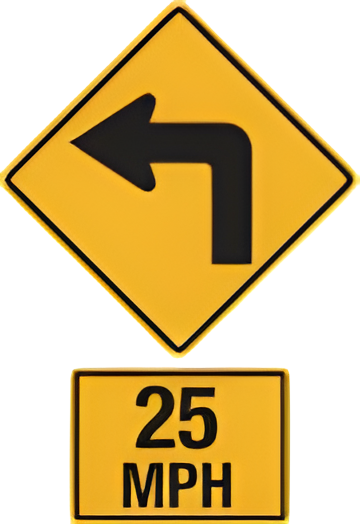 This sign means:
A
If you are driving at 40 MPH or less you must stay in the right-hand lane
B
Curve ahead, drive at 40 MPH ot more around the curve ahead
C
Curve ahead, the recommended speed is 40 MPH or less
This traffic sign indicates: Curve ahead, the recommended speed is 40 MPH or less. Observing and obeying all roadway signs ensures safe traffic flow and legal driving.
Question 13:
Driving at excessive speed:
A
improves your reaction time.
B
often leads to high-risk decision-making.
C
does not increase the chance of a crash.
For safe speed and stopping control: often leads to high-risk decision-making. Adjusting speed to match visibility and road traction prevents loss of steering grip.
Question 14:
Hydroplaning is usually caused by:
A
excessive rain.
B
excessive stops.
C
excessive speed.
D
sudden turns.
The correct driving rule is: excessive speed. Following standard DMV road rules and practicing defensive driving ensures safety for all road users.
Question 15:
When driving on gravel roads:
A
your tires do not have as much traction.
B
you should use cruise control to increase traction.
C
you should keep your eyes moving.
The correct driving rule is: your tires do not have as much traction. Following standard DMV road rules and practicing defensive driving ensures safety for all road users.
Question 16:
When you cannot see any farther than 100 feet ahead due to rain, snow, smoke, fog or blowing dust, you cannot safely drive faster than:
A
40 MPH
B
30 MPH
C
20 MPH
For safe speed and stopping control: 30 MPH. Adjusting speed to match visibility and road traction prevents loss of steering grip.
Question 17:
If a tire suddenly blows out while you are driving, you should:
A
apply the brakes firmly.
B
slow down gradually and brake lightly.
C
pump the brakes rapidly.
The correct driving rule is: slow down gradually and brake lightly. Following standard DMV road rules and practicing defensive driving ensures safety for all road users.
Question 18:
Don't be afraid to sound a sharp blast on your horn when:
A
when a child is about to run into the street.
B
another vehicle is in danger of hitting you.
C
All of the above.
All of the listed points are essential driving requirements: when a child is about to run into the street; another vehicle is in danger of hitting you. Practicing each ensures compliance with DMV safety laws.
Question 19:
You should never depend on your mirrors when you prepare to change lanes. Why?
A
You should look over your shoulder instead.
B
Mirrors are useless.
C
Mirrors need to be adjusted.
D
Mirrors leave 'blind spots' behind both sides of vehicles.
The correct driving rule is: Mirrors leave 'blind spots' behind both sides of vehicles. Following standard DMV road rules and practicing defensive driving ensures safety for all road users.
Question 20:
When you are facing a green light and there are pedestrians in the intersection:
A
you must signal your intention to cross the intersection at least 100 feet before yielding the right-of-way.
B
you must yield the right-of-way to pedestrians.
C
you have the right-of-way over pedestrians.
Drivers must always yield the right-of-way to pedestrians crossing at intersections and crosswalks: you must yield the right-of-way to pedestrians. Stop and allow them to clear the lane safely.
Question 21:
Parking is not allowed:
A
on the road side of a parked vehicle.
B
in a tunnel.
C
All of the above.
Under standard parking and curb regulations: All of the above. Following parking distance clearances keeps roadways unobstructed and emergency lanes accessible.
Question 22:
To reduce road rage, you should:
A
always signal your intention when changing lanes.
B
use your horn frequently to warn other drivers.
C
talk on your cell phone while driving.
The correct driving rule is: always signal your intention when changing lanes. Following standard DMV road rules and practicing defensive driving ensures safety for all road users.
Question 23:
 This sign means:
A
U-turns are not allowed.
B
Parking is not allowed.
C
No parking on pavement.
This traffic sign indicates: Parking is not allowed. Observing and obeying all roadway signs ensures safe traffic flow and legal driving.
Question 24:
A vehicle is stopped at a crosswalk to permit a pedestrian to cross the roadway. The driver of the vehicle approaching from the rear should:
A
sound the horn.
B
overtake and pass the stopped vehicle.
C
not overtake and pass the stopped vehicle.
Drivers must always yield the right-of-way to pedestrians crossing at intersections and crosswalks: not overtake and pass the stopped vehicle. Stop and allow them to clear the lane safely.
Question 25:
While inside the roundabout, you should:
A
remain in your lane until you are ready to exit.
B
change lanes before you check for vehicles behind you.
C
use your left turn signal if you are in position to exit now.
Vehicles entering a roundabout must yield right-of-way to circulating traffic already inside: remain in your lane until you are ready to exit. Wait for a safe gap before entering.