DriveQuiz drivequiz.com

ID DMV PERMİT PRACTİCE TEST 11

Idaho
Duration: 36 min
|
Questions: 40
Student Name:
Date:
Correct:      Incorrect:      Score:      
1.
When approaching a railroad crossing drivers should:
A) slow down.
B) be ready to stop.
C) look for a train.
D) All of the above.
2.
__________ limit(s) your concentration, perception, judgment, and memory.
A) Even the smallest amount of alcohol
B) Only a blood alcohol level greater than .05
C) Alcohol does not
D) Only a blood alcohol level greater than the legal limit
3.
Treat the flashing red signal exactly like a STOP sign: come to a complete stop, yield to cross traffic and pedestrians, then proceed when safe.
What does a flashing red light mean?
A) NO TURN ON RED.
B) The same thing as a stop sign.
C) Drivers may move forward with caution.
4.
Approximately one-half of all motorcycle crashes:
A) are minor crashes with no injuries.
B) involve motorcyclists riding in a staggered formation.
C) involve another vehicle.
D) involve expert riders.
5.
What do warning signs mean?
A) Danger ahead.
B) Drivers are approaching a location where there is a special rule.
C) All of the above.
6.
What is the meaning of red traffic signs?
A) High emphasis warning.
B) Stop, do not enter or wrong way.
C) Regulatory.
7.
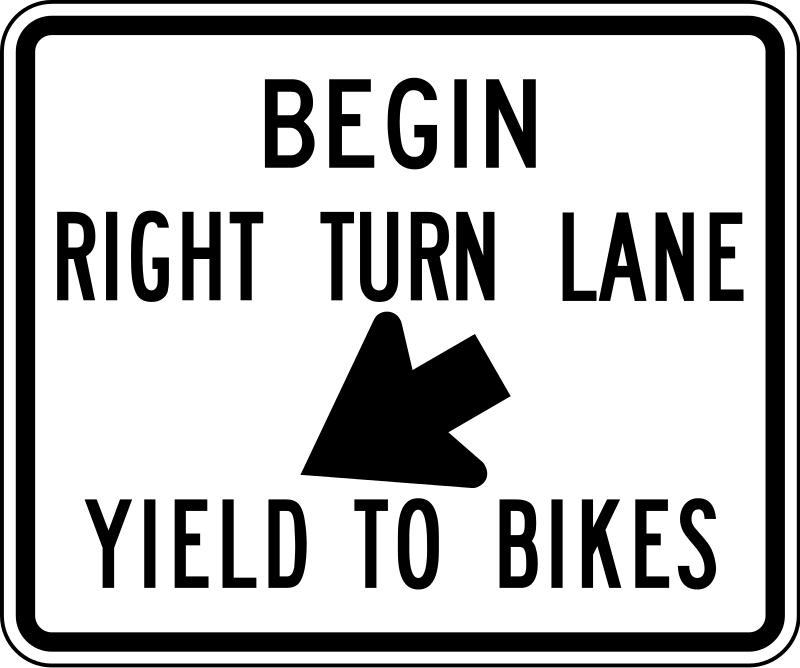
Drivers turning right must merge into the bike lane before turning, first checking mirrors and blind spots and yielding to all cyclists.
What does this road sign indicate?
A) Drivers have the right of way over bikes turning left.
B) Vehicles turning left must yield to bikes entering a right turn lane.
C) Motor vehicles entering an exclusive right-turn lane must weave across bicycle traffic in bicycle lanes.
8.
Prohibits drivers from making a 180-degree turn to travel in the opposite direction at this intersection or stretch of road.
This road sign means:
A) No left turn
B) No U-turn
C) Detour ahead
9.
A vehicle that enters a road from a driveway:
A) has the right-of-way.
B) must yield to traffic approaching from the right, while it has the right-of-way over vehicles approaching from the left.
C) must stop and yield the right-of-way to traffic on the roadway and to pedestrians.
10.
In the following situations, drivers should increase their following interval:
A) When following vehicles that are required to come to a stop at railroad crossings.
B) When it is hard to see ahead because of bad weather.
C) All of the above.
11.
A side road enters the highway from the right or left. Watch for traffic turning onto or crossing your lane.
This road sign warns drivers that:
A) left turns are not allowed at the intersection.
B) the road will make a sharp turn to the right.
C) another road enters the highway from the direction shown.
12.
When a driver is turning and a pedestrian is crossing without a traffic light, __________ must yield the right-of-way.
A) the pedestrian
B) the driver
C) both
D) whoever is slower
13.
When coming to a place where you cannot see what is ahead - like a steep hill or a sharp curve, you should:
A) accelerate slightly before entering the curve.
B) give your horn a light tap, proceed slowly and stay close to the right edge of the road.
C) come to a complete stop and wait until visibility improves.
D) speed up to increase your visibility quickly.
14.
Parking, standing, or stopping is prohibited at all times in this designated zone except for emergency vehicles.
This road sign means:
A) No parking
B) Yield
C) No left turn
D) Divided highway
15.
If you remain in the back blind spot of a large vehicle:
A) you increase the chance of a crash.
B) the large vehicle will take much longer to stop.
C) you can reduce fuel consumption.
16.
What should drivers do when the red lights begin to flash?
A) Stop.
B) Yield.
C) Slow down.
17.
Posted on the far side of a sharp curve or T-intersection to indicate a sharp change in direction of travel.
This sign means:
A) Not enter
B) Detour to the right
C) The road to the right is for one-way traffic only
18.
To drive defensively, you must:
A) avoid scanning the road ahead.
B) keep one hand on the steering wheel.
C) keep your eyes moving.
19.
If your vehicle starts to hydroplane you should:
A) apply the brakes firmly to prevent your vehicle from sliding.
B) slow down gradually and do not apply the brakes.
C) maintain your current speed to gain better traction.
D) All of the above.
20.
What should you do if your rear wheels start to skid?
A) Steer left if your rear wheels slide right.
B) If the vehicle has ABS, pump the pedal carefully.
C) Turn the steering wheel in the direction the vehicle is trying to go.
21.
Where must you position your vehicle when you prepare to make a left turn from a two-way roadway into a one-way roadway?
A) As far to the right as possible.
B) On the right curb.
C) As close as possible to the center line.
22.
Slow down and give right-of-way to all oncoming vehicles, cyclists, and pedestrians. Stop completely if necessary before entering the intersection or merging.
This road sign means:
A) Slow down and be prepared to stop if necessary
B) You must come to a complete stop
C) You may proceed at regular speed through the intersection
D) Wrong Way
23.
Drivers may continue carefully through a yellow light if:
A) there are no pedestrians crossing.
B) they are turning right.
C) they already are within the intersection.
D) an emergency vehicle is crossing your lane.
24.
Which shape is a warning sign?
A) Diamond
B) Triangle
C) Pennant
25.
When children are close, what should you do before you back out of a driveway?
A) Rely on your mirrors.
B) Get out of the car and check behind the car.
C) Look through your back window for children.
26.
Drinking alcohol while taking drugs:
A) reduces the effects of the alcohol.
B) reduces the effects of the drug or medicine.
C) has no effect, they are different substances.
D) could multiply the effects of the alcohol.
27.
Following another vehicle too closely is known as:
A) speedgating.
B) closetailing.
C) tailgating.
28.
What should you do if one of your tires blows out?
A) Hold the steering wheel tight and brake immediately to avoid the risk of skidding.
B) Leave the road immediately.
C) Hold the steering wheel tight and slowly take your foot off the gas pedal.
29.
What is the meaning of orange traffic signs?
A) Yield.
B) Warning of school, pedestrian, and bicycling activity.
C) Construction and maintenance warning.
30.
If your car breaks down on the highway, you should:
A) use your four-way flashers to warn other drivers.
B) sound your horn to warn passing vehicles.
C) flash your headlights at oncoming traffic.
D) stop in the right lane.
31.
Come to a complete stop before the stop line, crosswalk, or intersection. Look left, right, and left again, and proceed only when it is safe and right-of-way is clear.
This road sign means:
A) Drive with caution and be ready to stop
B) Slow down or stop
C) You must come to a complete stop
32.
Right turns are strictly prohibited at this intersection under all circumstances.
This sign tells drivers that:
A) they must make a left turn at the intersection.
B) U-turns are not allowed.
C) they must not make a right turn.
D) None of the above.
33.
Slower-moving vehicles must stay in the right-hand lane to allow faster traffic to pass safely on multi-lane highways.
This regulatory road sign indicates that:
A) Vehicles must slow down and stay in the right lane.
B) The right hand lane is reserved for buses and car-pool vehicles.
C) Slower vehicles traveling on multiple lane highways must stay in the right hand lane.
34.
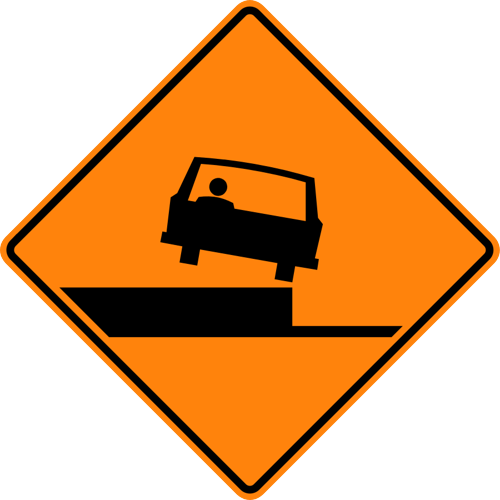
The unpaved shoulder of the road is significantly lower than the paved travel lane. Maintain a firm grip on the steering wheel if tires drift off.
This road sign means:
A) Low shoulder
B) Stop ahead
C) Tow away zone
D) Buggy warning
35.
If you drink alcohol socially, what helps insure safe driving?
A) Stop drinking one hour before driving.
B) Drink coffee before driving.
C) Take a cold shower before driving.
D) Ride home with a friend who has not been drinking.
36.
You want to turn left at an intersection ahead. A car reaches the intersection from the opposite direction and moves straight ahead. You:
A) can turn left. You have the right of way.
B) must wait for the car to go through before you turn.
C) may not enter the intersection to prepare for your left turn if the light is green.
37.
Road signs that point out scenic areas and parks are:
A) brown and white.
B) black and orange.
C) green and white.
38.
To avoid the risk of being involved in an alcohol-related crash, you should:
A) decide before you start drinking that you are not going to drive.
B) say 'No, thanks' if someone offers you alcohol.
C) call a taxi if you've been drinking.
D) All of the above.
39.
The median divider ends ahead, and you are returning to a two-way, two-lane undivided roadway. Watch for oncoming traffic on your left.
This sign means:
A) Reversible lane ahead.
B) The divided highway ends ahead.
C) Drivers are coming to a point where another traffic lane joins the one they are on.
40.
If you see a pedestrian using a guide dog or carrying a white cane:
A) the pedestrian must yield the right-of-way.
B) you must yield the right-of-way to them.
C) sound your horn to warn them.
ANSWER KEY Check answers after completing the test.
1 D
2 A
3 B
4 C
5 C
6 B
7 C
8 B
9 C
10 C
11 C
12 B
13 B
14 A
15 A
16 A
17 B
18 C
19 B
20 C
21 C
22 A
23 C
24 A
25 B
26 D
27 C
28 C
29 C
30 A
31 C
32 C
33 C
34 A
35 D
36 B
37 A
38 D
39 B
40 B