Question 1:
If there is no crosswalk and you see a pedestrian crossing your lane, you should:
A
stop and let the pedestrian finish crossing.
B
make sure the pedestrian can see you before proceeding.
C
honk your horn and proceed with caution.
Drivers must always yield the right-of-way to pedestrians crossing at intersections and crosswalks: stop and let the pedestrian finish crossing. Stop and allow them to clear the lane safely.
Question 2:
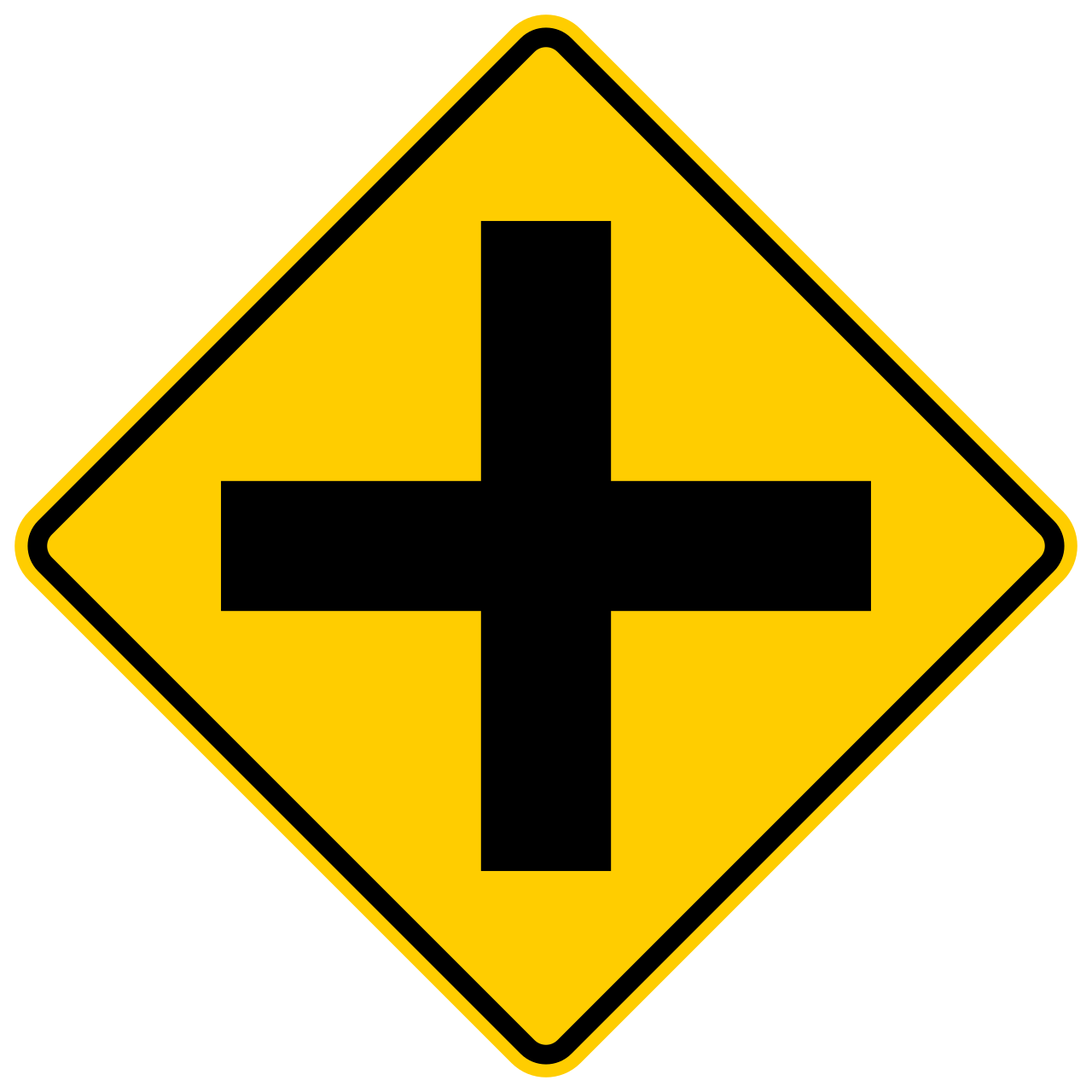 This road sign means:
A
Crossroads ahead
B
Side Road
C
Turn right or go through
D
Flagger ahead
This traffic sign indicates: Crossroads ahead. Observing and obeying all roadway signs ensures safe traffic flow and legal driving.
Question 3:
 A 4-way stop sign means:
A
The first vehicle to reach the intersection should move forward first.
B
Traffic from all four directions must stop.
C
There are four stop signs at the intersection.
D
All of the above.
This sign alerts drivers to several mandatory requirements: The first vehicle to reach the intersection should move forward first, Traffic from all four directions must stop, There are four stop signs at the intersection. Obeying all posted traffic control instructions is required by law.
Question 4:
You should increase your following distance:
A
at night or if it is raining.
B
when the roads are slippery.
C
All of the above.
Defensive driving best practices include: at night or if it is raining; when the roads are slippery. Staying alert and maintaining spacing prevents unexpected hazards.
Question 5:
A broken yellow line alongside a solid yellow line means:
A
Passing is permitted on the side of the broken yellow line
B
Passing is not permitted in either direction
C
Passing on the right is permitted in either direction
The correct driving rule is: Passing is permitted on the side of the broken yellow line. Following standard DMV road rules and practicing defensive driving ensures safety for all road users.
Question 6:
A flashing red light means:
A
The same as a STOP sign.
B
The light will soon change to steady red.
C
Drive with caution.
When an emergency vehicle approaches with flashing lights or sirens, you must safely pull over to the right curb and stop completely until it passes.
Question 7:
Before you change lanes, you should:
A
look for other traffic by turning your head and looking behind you for oncoming traffic.
B
check your left mirror.
C
keep other vehicles out of your blind spots.
The correct driving rule is: look for other traffic by turning your head and looking behind you for oncoming traffic. Following standard DMV road rules and practicing defensive driving ensures safety for all road users.
Question 8:
If the rear of your car is skidding to the left:
A
do not turn your steering wheel until you are through skidding.
B
steer to the left to correct the skid.
C
steer to the right to correct the skid.
The correct driving rule is: steer to the left to correct the skid. Following standard DMV road rules and practicing defensive driving ensures safety for all road users.
Question 9:
 This sign means:
A
Narrow bridge ahead. Slow down and drive with caution.
B
Do not to enter if your vehicle is taller than the height listed on the sign.
C
No passing zone ahead.
This traffic sign indicates: Do not to enter if your vehicle is taller than the height listed on the sign. Observing and obeying all roadway signs ensures safe traffic flow and legal driving.
Question 10:
 The sign in the picture:
A
is a Construction and Maintenance Traffic Control sign.
B
is found at most intersections and indicates that drivers must yield to other vehicles.
C
is displayed on the rear of slow moving vehicles.
The correct driving rule is: is displayed on the rear of slow moving vehicles. Following standard DMV road rules and practicing defensive driving ensures safety for all road users.
Question 11:
 This road sign means:
A
Truck stop ahead
B
No trucks allowed
C
Hill or downgrade up ahead
This traffic sign indicates: Hill or downgrade up ahead. Observing and obeying all roadway signs ensures safe traffic flow and legal driving.
Question 12:
When is the pavement most slippery?
A
If it's been raining several hours.
B
When it has just begun to rain.
C
When it's been raining from at least one hour.
For safe speed and stopping control: When it has just begun to rain. Adjusting speed to match visibility and road traction prevents loss of steering grip.
Question 13:
A vehicle that enters a road from a driveway:
A
has the right-of-way.
B
must yield to traffic approaching from the right, while it has the right-of-way over vehicles approaching from the left.
C
must stop and yield the right-of-way to traffic on the roadway and to pedestrians.
The correct driving rule is: must stop and yield the right-of-way to traffic on the roadway and to pedestrians. Following standard DMV road rules and practicing defensive driving ensures safety for all road users.
Question 14:
At intersections, crosswalks, and railroad crossings, drivers should always:
A
look to the sides of their vehicle to see what is coming.
B
slowly pass vehicles the vehicles ahead.
C
stop, listen for oncoming traffic, and proceed with caution.
The correct driving rule is: look to the sides of their vehicle to see what is coming. Following standard DMV road rules and practicing defensive driving ensures safety for all road users.
Question 15:
When a school bus is picking up or dropping off children, you must:
A
slow down and pass the bus with caution.
B
stop if you are driving in the same direction.
C
stop regardless of your direction of travel.
When a school bus displays flashing red lights and extended stop sign: stop regardless of your direction of travel. Traffic in both directions must come to a full stop on undivided roads until children are clear.
Question 16:
BAC is:
A
the acronym for Beer ACcumulation.
B
the number of ounces of alcohol in your blood.
C
the percentage of alcohol in your blood.
Under state DUI and traffic safety laws: the percentage of alcohol in your blood. Alcohol degrades judgment, slows reaction times, and distorts depth perception.
Question 17:
Bicyclists must:
A
ride in a bicycle lane, if available.
B
remain to the right when they prepare for a left turn.
C
remain near the left edge of the road.
The correct driving rule is: ride in a bicycle lane, if available. Following standard DMV road rules and practicing defensive driving ensures safety for all road users.
Question 18:
What should you do when an aggressive driver confronts you?
A
Avoid eye contact with the aggressive driver.
B
Make eye contact.
C
Challenge the aggressive driver with increased speed.
The correct driving rule is: avoid eye contact with the aggressive driver. Following standard DMV road rules and practicing defensive driving ensures safety for all road users.
Question 19:
If an approaching driver does not dim the headlights, you should:
A
move your eyes to the left to help avoid the glare of approaching high beams.
B
move your eyes to the right and avoid looking directly at the bright lights.
C
flash your headlights to low beam for a second, then return to high beam.
The correct driving rule is: move your eyes to the right and avoid looking directly at the bright lights. Following standard DMV road rules and practicing defensive driving ensures safety for all road users.
Question 20:
Which of the following drugs could affect your ability to drive?
A
A cold remedy.
B
Marijuana.
C
All of the above.
Alcohol and impairing substances degrade all critical driving functions: A cold remedy; Marijuana. Driving while impaired carries severe criminal and safety penalties.
Question 21:
If another car has stopped in an adjacent lane in the same direction of travel, you should:
A
speed up and pass the vehicle on the right.
B
pass the car on the left.
C
be careful in case the other vehicle has stopped for a pedestrian.
D
tap your horn to let the other driver know you are passing.
The correct driving rule is: be careful in case the other vehicle has stopped for a pedestrian. Following standard DMV road rules and practicing defensive driving ensures safety for all road users.
Question 22:
 This road sign means:
A
No left turn
B
No U-turn
C
Detour ahead
This traffic sign indicates: No U-turn. Observing and obeying all roadway signs ensures safe traffic flow and legal driving.
Question 23:
If an aggressive driver is behind you:
A
sound your horn and move to the left lane.
B
slow down and confront the aggressive driver.
C
try to get out of the aggressive driver’s way.
D
increase you speed and flash your brake lights.
The correct driving rule is: try to get out of the aggressive driver’s way. Following standard DMV road rules and practicing defensive driving ensures safety for all road users.
Question 24:
You can pass on the right:
A
when a vehicle ahead makes a right turn.
B
when a vehicle ahead makes a left turn.
C
when a vehicle that is approaching from the opposite direction is prepared to turn left.
The correct driving rule is: when a vehicle ahead makes a left turn. Following standard DMV road rules and practicing defensive driving ensures safety for all road users.
Question 25:
 This road sign means:
A
No left turn
B
No right turn
C
No U-turns
This traffic sign indicates: No right turn. Observing and obeying all roadway signs ensures safe traffic flow and legal driving.
Question 26:
This road sign means:
A
Warning, crossroad ahead
B
All traffic must turn
C
Yield sign ahead
This traffic sign indicates: Warning, crossroad ahead. Observing and obeying all roadway signs ensures safe traffic flow and legal driving.
Question 27:
 This road sign means:
A
Winding road
B
Side road ahead
C
Slippery when wet
This traffic sign indicates: Slippery when wet. Observing and obeying all roadway signs ensures safe traffic flow and legal driving.
Question 28:
When you meet an oncoming school bus displaying flashing amber lights, you must immediately come to a complete stop.
A
True
B
False
When a school bus displays flashing red lights and extended stop sign: False. Traffic in both directions must come to a full stop on undivided roads until children are clear.
Question 29:
Which of the following is a common cause of traffic collisions?
A
Scanning the road ahead and staying focused on the driving task.
B
Driving too fast for conditions.
C
Pedestrians being key participants in the transportation system.
The correct driving rule is: Driving too fast for conditions. Following standard DMV road rules and practicing defensive driving ensures safety for all road users.
Question 30:
The minimum drinking age in this State is ____ years.
A
20
B
21
C
9
D
18
The correct driving rule is: 21. Following standard DMV road rules and practicing defensive driving ensures safety for all road users.
Question 31:
 This sign warns drivers that:
A
they cannot go straight ahead.
B
they will soon be facing oncoming traffic.
C
a shared lane starts ahead.
This traffic sign indicates: they will soon be facing oncoming traffic. Observing and obeying all roadway signs ensures safe traffic flow and legal driving.
Question 32:
Drivers who have been drinking are more likely to:
A
keep a safe following distance.
B
yield right-of-way to oncoming vehicles.
C
be less reactive.
The correct driving rule is: be less reactive. Following standard DMV road rules and practicing defensive driving ensures safety for all road users.
Question 33:
 What does this sign indicate?
A
The highway ahead is divided into two one-way roadways.
B
Winding road ahead. Drive with caution.
C
Drivers will soon be on a roadway with two-way traffic.
This traffic sign indicates: drivers will soon be on a roadway with two-way traffic. Observing and obeying all roadway signs ensures safe traffic flow and legal driving.
Question 34:
A red arrow on a traffic light means:
A
You may not turn in the direction of the arrow until a green light or arrow light goes on.
B
You may turn in in the direction of the arrow after coming to a complete stop.
C
You must stop and then proceed when the way is clear.
The correct driving rule is: you may not turn in the direction of the arrow until a green light or arrow light goes on. Following standard DMV road rules and practicing defensive driving ensures safety for all road users.
Question 35:
To pass a bicyclist traveling in the same direction on a two-lane road without bicycle lanes, you should:
A
continue driving straight, it is the bicyclist’s responsibility to get out of your way.
B
slow down and wait until there is no oncoming traffic, then pass the bicyclist leaving him or her sufficient space.
C
honk at the bicyclist to let him or her know you are about to pass.
D
not pass the bicyclist until you come to a traffic signal or stop sign.
State laws require motorists to provide a safe clearance buffer: slow down and wait until there is no oncoming traffic, then pass the bicyclist leaving him or her sufficient space. Allow at least 3 feet of space when overtaking a bicyclist.