DriveQuiz drivequiz.com

HI DMV PERMİT PRACTİCE TEST 7

Hawaii
Duration: 27 min
|
Questions: 30
Student Name:
Date:
Correct:      Incorrect:      Score:      
1.
Unless a sign states otherwise, a stopped vehicle facing a circular red traffic light may:
A) turn right at any time.
B) turn right after yielding to other traffic and pedestrians that were there first.
C) None of the other answers are correct.
D) turn right after the red light has turned to yellow.
2.
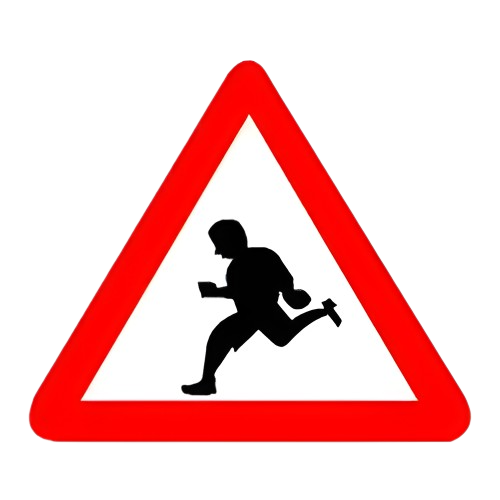
Caution for unexpected pedestrian activity, parks, or playground areas nearby. Slow down and maintain high vigilance.
This road sign means:
A) Pedestrian crossing
B) Yield sign ahead
C) Do not enter
D) School ahead
3.
You are coming to an intersection and have a green light. Pedestrians are crossing against the red. You should:
A) claim your right-of-way and proceed with caution.
B) honk your horn.
C) speed up and pass in front of the pedestrians.
D) stop to let pedestrians cross safely.
4.
Indicates the maximum bridge or underpass vertical clearance. Vehicles taller than the posted height must not proceed.
This sign means:
A) Narrow bridge ahead. Slow down and drive with caution.
B) Do not to enter if your vehicle is taller than the height listed on the sign.
C) No passing zone ahead.
5.
When are you allowed to drink alcoholic beverages in a vehicle on a public highway?
A) As long as you don’t drive.
B) Only if you ride in the back seat.
C) Only if you ride in the back of a pick-up truck.
D) Never.
6.
When driving to an unfamiliar area you:
A) should plan your trip.
B) only have to know generally where your destination is.
C) can depend on road signs to find your way.
D) should always choose the most direct route.
7.
When approaching someone using a white cane, you should proceed with caution because:
A) the pedestrian might be using a guide dog.
B) the pedestrian might be blind.
C) the pedestrian is deaf.
D) the pedestrian is blind.
8.
When the road is slippery, you should:
A) brake suddenly carefully.
B) pump your brakes.
C) press your brakes in slow, steady strokes.
9.
When turning or changing lanes, drivers must:
A) always signal their intentions even when there are no vehicles.
B) signal only when driving in traffic at night.
C) signal only if there is traffic.
D) signal only when driving at night.
10.
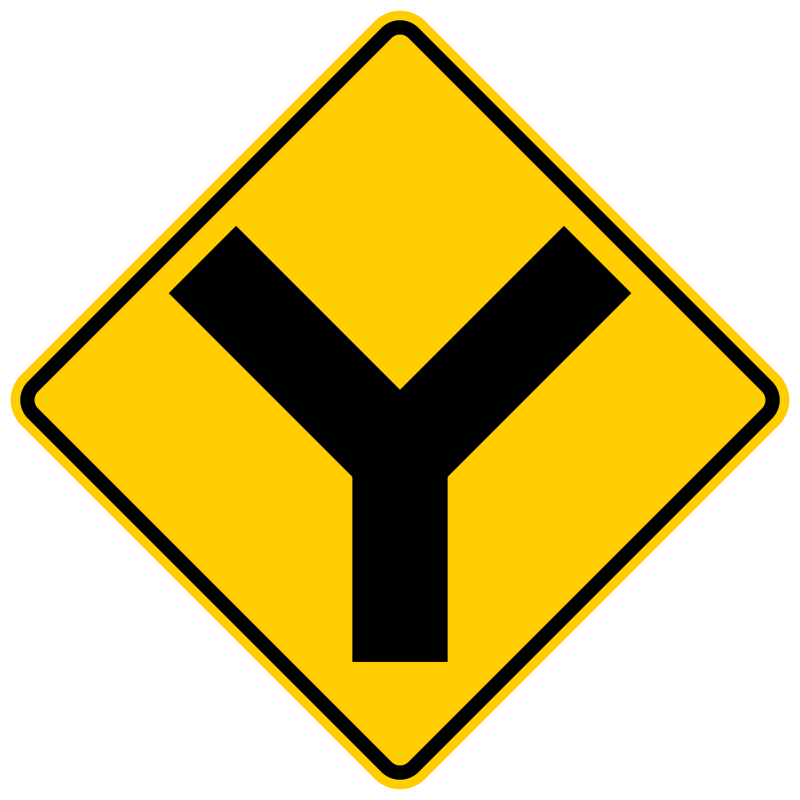
The road splits into a Y configuration ahead. Bear left or right depending on your destination and yield where marked.
This road sign means:
A) The road ends ahead
B) A road joins from the right
C) A four-way intersection is ahead
D) 'Y' intersection ahead
11.
What is the purpose of minimum speed limits?
A) To keep a smooth traffic flow.
B) To halt the traffic flow.
C) To allow emergency vehicles with red flashing lights to safely pass other vehicles.
12.
Large trucks:
A) have large blind spots.
B) can stop quicker than passenger vehicles.
C) do not need more room to maneuver.
D) All of the above.
13.
When they see a crossbuck sign, drivers:
A) must slow down and wait for the red lights to flash.
B) must always come to a complete stop.
C) are legally required to yield the right of way to trains.
14.
The driver of an emergency vehicle that uses lights and a siren can legally:
A) pass red lights.
B) exceed the speed limit
C) All of the above.
15.
If another vehicle is approaching you head-on in your lane, you should _______, sound your horn and brake.
A) steer right
B) None of the other answers is correct.
C) steer left
D) stay in the center of your lane
16.
What happens if two vehicles reach at the same time an intersection with four-way stop signs?
A) The driver on the right yields to the driver on the left.
B) The driver on the left yields to the driver on the right.
C) The first vehicle to reach the intersection must yield.
17.
You are approaching a railroad crossing and the crossing signals are flashing. You should:
A) look for a train, then speed up.
B) slow down and look for a train.
C) do what the approaching vehicle does.
D) stop and look for a train.
18.
A vehicle is stopped at a crosswalk to permit a pedestrian to cross the roadway. The driver of the vehicle approaching from the rear should:
A) sound the horn.
B) overtake and pass the stopped vehicle.
C) not overtake and pass the stopped vehicle.
19.
What does a red arrow on a traffic light mean?
A) You may proceed slowly through the intersection.
B) You must stop and then proceed when the way is clear.
C) You may turn in the direction of the arrow.
D) You must stop. Do not go in the direction of the arrow until a green light or arrow light goes on.
20.
If you are continually being passed on the right, you should:
A) move into the right lane and allow other vehicles to pass you on the left.
B) move into the left lane and allow other vehicles to pass you on the right.
C) increase your speed immediately.
21.
Road signs that point out scenic areas and parks are:
A) brown and white.
B) black and orange.
C) green and white.
22.
The brake warning lamp:
A) None of the other answers is correct.
B) indicates that the brake lights are operational.
C) should never illuminate unless there is a malfunction.
D) should come on when the parking brake is released.
23.
When parking on a public road, drivers should:
A) move as far away from traffic as possible.
B) always park on the left side of the roadway.
C) All of the above.
24.
The most important thing in any driving situation is:
A) the environment (the highway and traffic).
B) the driver (you).
C) the time of day.
D) the vehicle.
25.
When towing a loaded trailer the weight of which is more than one-half of the towing vehicle’s weight, or is 3,000 pounds or more, the trailer must be equipped with:
A) brakes and breakaway protection.
B) hub caps.
C) brakes.
D) breakaway protection.
26.
What does it mean If an oncoming driver flashes headlights at you during a period of low visibility?
A) Your headlights are too bright. You should turn them off.
B) Your vehicle was difficult to see. You should turn on your headlights.
C) Your headlights are too bright. You should use parking lights instead.
27.
The road curves gradually to the right ahead. Reduce speed before entering the curve.
This sign is used to warn drivers about:
A) road construction.
B) changes in traffic lanes.
C) curves ahead.
D) drowsy driving.
28.
You should increase your following distance when:
A) exiting a freeway.
B) following a motorcycle.
C) driving behind a large vehicle that blocks your vision.
D) All of the above.
29.
Blind spots are:
A) Dangerous intersection where the maximum speed limit is 15 MPH or less.
B) At night, the darkest areas of a road, where emergency flashers should be used.
C) Areas to the side or rear of a vehicle that the driver cannot see with use of mirrors.
30.
Prohibits drivers from making a 180-degree turn to travel in the opposite direction at this intersection or stretch of road.
This road sign means:
A) No left turn
B) No U-turn
C) Detour ahead
ANSWER KEY Check answers after completing the test.
1 B
2 D
3 D
4 B
5 D
6 A
7 D
8 C
9 A
10 D
11 A
12 A
13 C
14 C
15 A
16 B
17 D
18 C
19 D
20 A
21 A
22 D
23 A
24 B
25 A
26 B
27 C
28 D
29 C
30 B