Question 1:
Unless a sign states otherwise, a stopped vehicle facing a circular red traffic light may:
A
turn right at any time.
B
turn right after yielding to other traffic and pedestrians that were there first.
C
None of the other answers are correct.
D
turn right after the red light has turned to yellow.
The correct driving rule is: turn right after yielding to other traffic and pedestrians that were there first. Following standard DMV road rules and practicing defensive driving ensures safety for all road users.
Question 2:
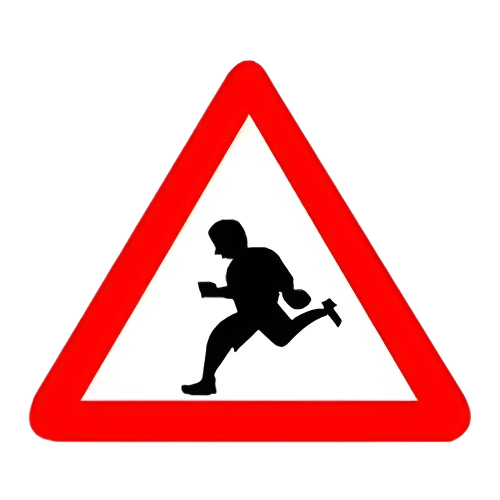 This road sign means:
A
Pedestrian crossing
B
Yield sign ahead
C
Do not enter
D
School ahead
Pentagonal (5-sided) signs are exclusively reserved for school zones and school crossings: School ahead. Drivers must reduce speed and yield right-of-way to all crossing children.
Question 3:
You are coming to an intersection and have a green light. Pedestrians are crossing against the red. You should:
A
claim your right-of-way and proceed with caution.
B
honk your horn.
C
speed up and pass in front of the pedestrians.
D
stop to let pedestrians cross safely.
Drivers must always yield the right-of-way to pedestrians crossing at intersections and crosswalks: stop to let pedestrians cross safely. Stop and allow them to clear the lane safely.
Question 4:
 This sign means:
A
Narrow bridge ahead. Slow down and drive with caution.
B
Do not to enter if your vehicle is taller than the height listed on the sign.
C
No passing zone ahead.
This traffic sign indicates: Do not to enter if your vehicle is taller than the height listed on the sign. Observing and obeying all roadway signs ensures safe traffic flow and legal driving.
Question 5:
When are you allowed to drink alcoholic beverages in a vehicle on a public highway?
A
As long as you don’t drive.
B
Only if you ride in the back seat.
C
Only if you ride in the back of a pick-up truck.
D
Never.
Defensive driving guidelines state that: Never. Anticipating road hazards and communicating maneuvers keeps traffic predictable and safe.
Question 6:
When driving to an unfamiliar area you:
A
should plan your trip.
B
only have to know generally where your destination is.
C
can depend on road signs to find your way.
D
should always choose the most direct route.
The correct driving rule is: should plan your trip. Following standard DMV road rules and practicing defensive driving ensures safety for all road users.
Question 7:
When approaching someone using a white cane, you should proceed with caution because:
A
the pedestrian might be using a guide dog.
B
the pedestrian might be blind.
C
the pedestrian is deaf.
D
the pedestrian is blind.
The correct driving rule is: the pedestrian is blind. Following standard DMV road rules and practicing defensive driving ensures safety for all road users.
Question 8:
When the road is slippery, you should:
A
brake suddenly carefully.
B
pump your brakes.
C
press your brakes in slow, steady strokes.
For safe speed and stopping control: press your brakes in slow, steady strokes. Adjusting speed to match visibility and road traction prevents loss of steering grip.
Question 9:
When turning or changing lanes, drivers must:
A
always signal their intentions even when there are no vehicles.
B
signal only when driving in traffic at night.
C
signal only if there is traffic.
D
signal only when driving at night.
The correct driving rule is: always signal their intentions even when there are no vehicles. Following standard DMV road rules and practicing defensive driving ensures safety for all road users.
Question 10:
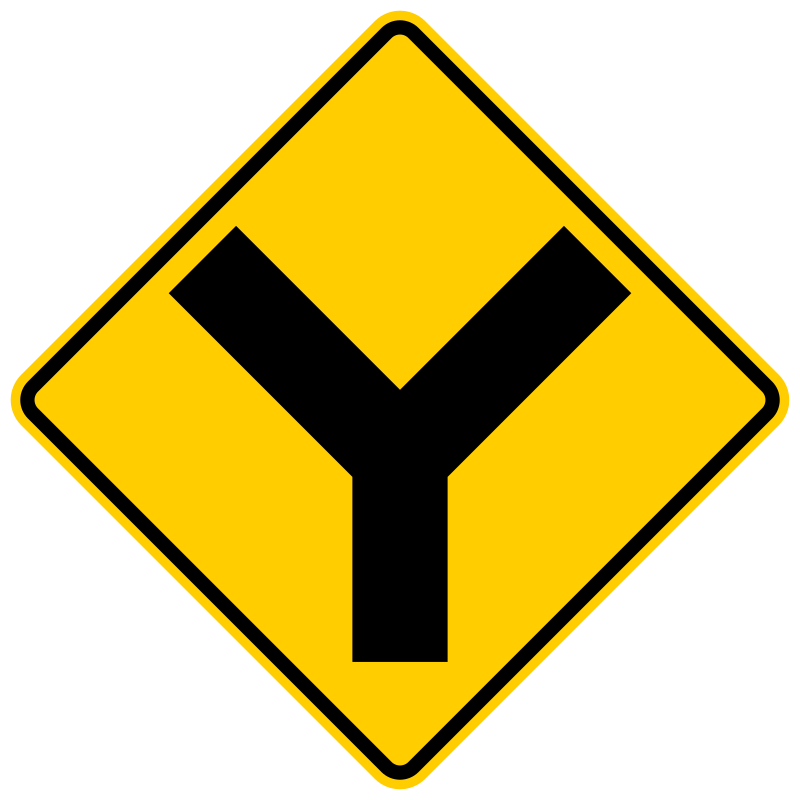 This road sign means:
A
The road ends ahead
B
A road joins from the right
C
A four-way intersection is ahead
D
'Y' intersection ahead
This traffic sign indicates: 'Y' intersection ahead. Observing and obeying all roadway signs ensures safe traffic flow and legal driving.
Question 11:
What is the purpose of minimum speed limits?
A
To keep a smooth traffic flow.
B
To halt the traffic flow.
C
To allow emergency vehicles with red flashing lights to safely pass other vehicles.
For safe speed and stopping control: To keep a smooth traffic flow. Adjusting speed to match visibility and road traction prevents loss of steering grip.
Question 12:
Large trucks:
A
have large blind spots.
B
can stop quicker than passenger vehicles.
C
do not need more room to maneuver.
D
All of the above.
The correct driving rule is: have large blind spots. Following standard DMV road rules and practicing defensive driving ensures safety for all road users.
Question 13:
When they see a crossbuck sign, drivers:
A
must slow down and wait for the red lights to flash.
B
must always come to a complete stop.
C
are legally required to yield the right of way to trains.
The correct driving rule is: are legally required to yield the right of way to trains. Following standard DMV road rules and practicing defensive driving ensures safety for all road users.
Question 14:
The driver of an emergency vehicle that uses lights and a siren can legally:
A
pass red lights.
B
exceed the speed limit
C
All of the above.
Sharing the road safely requires mutual awareness and respect: pass red lights; exceed the speed limit. Maintaining safe space cushions protects all roadway users.
Question 15:
If another vehicle is approaching you head-on in your lane, you should _______, sound your horn and brake.
A
steer right
B
None of the other answers is correct.
C
steer left
D
stay in the center of your lane
The correct driving rule is: steer right. Following standard DMV road rules and practicing defensive driving ensures safety for all road users.
Question 16:
What happens if two vehicles reach at the same time an intersection with four-way stop signs?
A
The driver on the right yields to the driver on the left.
B
The driver on the left yields to the driver on the right.
C
The first vehicle to reach the intersection must yield.
At an uncontrolled intersection or 4-way stop where vehicles arrive at the same time: The driver on the left yields to the driver on the right. The driver on the left must always yield to the driver on the right.
Question 17:
You are approaching a railroad crossing and the crossing signals are flashing. You should:
A
look for a train, then speed up.
B
slow down and look for a train.
C
do what the approaching vehicle does.
D
stop and look for a train.
The correct driving rule is: stop and look for a train. Following standard DMV road rules and practicing defensive driving ensures safety for all road users.
Question 18:
A vehicle is stopped at a crosswalk to permit a pedestrian to cross the roadway. The driver of the vehicle approaching from the rear should:
A
sound the horn.
B
overtake and pass the stopped vehicle.
C
not overtake and pass the stopped vehicle.
Drivers must always yield the right-of-way to pedestrians crossing at intersections and crosswalks: not overtake and pass the stopped vehicle. Stop and allow them to clear the lane safely.
Question 19:
What does a red arrow on a traffic light mean?
A
You may proceed slowly through the intersection.
B
You must stop and then proceed when the way is clear.
C
You may turn in the direction of the arrow.
D
You must stop. Do not go in the direction of the arrow until a green light or arrow light goes on.
The correct driving rule is: you must stop. Do not go in the direction of the arrow until a green light or arrow light goes on. Following standard DMV road rules and practicing defensive driving ensures safety for all road users.
Question 20:
If you are continually being passed on the right, you should:
A
move into the right lane and allow other vehicles to pass you on the left.
B
move into the left lane and allow other vehicles to pass you on the right.
C
increase your speed immediately.
The correct driving rule is: move into the right lane and allow other vehicles to pass you on the left. Following standard DMV road rules and practicing defensive driving ensures safety for all road users.
Question 21:
Road signs that point out scenic areas and parks are:
A
brown and white.
B
black and orange.
C
green and white.
The correct driving rule is: brown and white. Following standard DMV road rules and practicing defensive driving ensures safety for all road users.
Question 22:
The brake warning lamp:
A
None of the other answers is correct.
B
indicates that the brake lights are operational.
C
should never illuminate unless there is a malfunction.
D
should come on when the parking brake is released.
The correct driving rule is: should come on when the parking brake is released. Following standard DMV road rules and practicing defensive driving ensures safety for all road users.
Question 23:
When parking on a public road, drivers should:
A
move as far away from traffic as possible.
B
always park on the left side of the roadway.
C
All of the above.
Under standard parking and curb regulations: move as far away from traffic as possible. Following parking distance clearances keeps roadways unobstructed and emergency lanes accessible.
Question 24:
The most important thing in any driving situation is:
A
the environment (the highway and traffic).
B
the driver (you).
C
the time of day.
D
the vehicle.
The correct driving rule is: the driver (you). Following standard DMV road rules and practicing defensive driving ensures safety for all road users.
Question 25:
When towing a loaded trailer the weight of which is more than one-half of the towing vehicle’s weight, or is 3,000 pounds or more, the trailer must be equipped with:
A
brakes and breakaway protection.
B
hub caps.
C
brakes.
D
breakaway protection.
The correct driving rule is: brakes and breakaway protection. Following standard DMV road rules and practicing defensive driving ensures safety for all road users.
Question 26:
What does it mean If an oncoming driver flashes headlights at you during a period of low visibility?
A
Your headlights are too bright. You should turn them off.
B
Your vehicle was difficult to see. You should turn on your headlights.
C
Your headlights are too bright. You should use parking lights instead.
The correct driving rule is: Your vehicle was difficult to see. You should turn on your headlights. Following standard DMV road rules and practicing defensive driving ensures safety for all road users.
Question 27:
 This sign is used to warn drivers about:
A
road construction.
B
changes in traffic lanes.
C
curves ahead.
D
drowsy driving.
This traffic sign indicates: curves ahead. Observing and obeying all roadway signs ensures safe traffic flow and legal driving.
Question 28:
You should increase your following distance when:
A
exiting a freeway.
B
following a motorcycle.
C
driving behind a large vehicle that blocks your vision.
D
All of the above.
Defensive driving best practices include: exiting a freeway; following a motorcycle; driving behind a large vehicle that blocks your vision. Staying alert and maintaining spacing prevents unexpected hazards.
Question 29:
Blind spots are:
A
Dangerous intersection where the maximum speed limit is 15 MPH or less.
B
At night, the darkest areas of a road, where emergency flashers should be used.
C
Areas to the side or rear of a vehicle that the driver cannot see with use of mirrors.
The correct driving rule is: Areas to the side or rear of a vehicle that the driver cannot see with use of mirrors. Following standard DMV road rules and practicing defensive driving ensures safety for all road users.
Question 30:
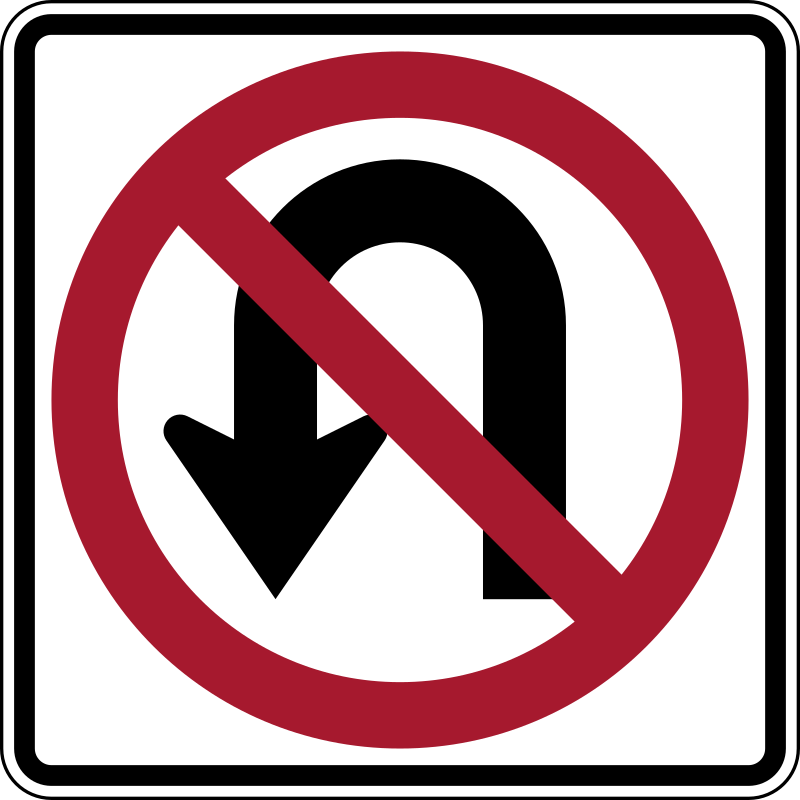 This road sign means:
A
No left turn
B
No U-turn
C
Detour ahead
This traffic sign indicates: No U-turn. Observing and obeying all roadway signs ensures safe traffic flow and legal driving.