Question 1:
 This sign indicates:
A
Winding road
B
Merging traffic
C
Divided highway ends
No explanation available.
Question 2:
You reach an intersection that is not controlled at the same time as a driver on your right, and both of you prepare to go straight. Who has the right-of-way?
A
You.
B
No one.
C
The other driver.
No explanation available.
Question 3:
 This sign warns that:
A
traffic must merge left.
B
the bridge ahead is wide enough for only one vehicle at a time.
C
traffic must merge right.
No explanation available.
Question 4:
When your wheels slip off the road edge, you should:
A
slow down using the brakes gently. When at a safe speed, turn the steering wheel to return to the pavement.
B
speed up and steer back onto the pavement gradually.
C
jerk the steering wheel to force the vehicle back onto the pavement.
D
slam on your brakes and stop.
No explanation available.
Question 5:
If you stop along the road at night:
A
turn on your emergency flashers and leave your low beams on.
B
turn off your emergency lights and leave your high beams on.
C
turn on your headlights only.
D
turn off all your lights.
No explanation available.
Question 6:
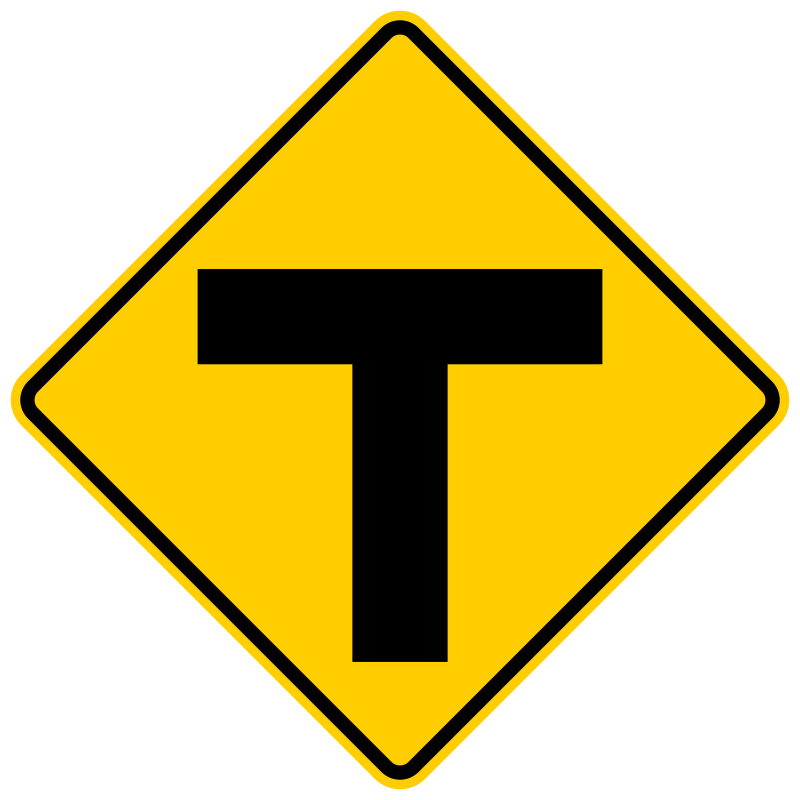 This road sign means:
A
Side road
B
T-intersection ahead
C
Keep right
D
Left lane must turn left
No explanation available.
Question 7:
When children are close, what should you do before you back out of a driveway?
A
Rely on your mirrors.
B
Get out of the car and check behind the car.
C
Look through your back window for children.
No explanation available.
Question 8:
 The sign in the picture:
A
is a Construction and Maintenance Traffic Control sign.
B
is found at most intersections and indicates that drivers must yield to other vehicles.
C
is displayed on the rear of slow moving vehicles.
No explanation available.
Question 9:
Signs and markings requiring that you obey the indicated instruction are known as _____ signs.
A
warning
B
guide
C
regulatory
D
information
No explanation available.
Question 10:
Drivers may install on their private vehicle:
A
a siren.
B
a muffler cutout, bypass, or similar device.
C
a blue light visible outside of the vehicle.
D
None of the above.
No explanation available.
Question 11:
For protection, motorcyclists are required to:
A
keep their headlights and taillights on at all times.
B
signal turns, lane changes and stops.
C
wear approved helmets.
No explanation available.
Question 12:
When changing lanes, you should not:
A
signal your intentions early.
B
check your side and rear view mirrors.
C
use the inside rearview mirror to check for blind spots
D
check to see if other drivers are moving into the same lane.
No explanation available.
Question 13:
When towing a trailer, drivers must make sure that:
A
about 50% to 70% of the trailer weight is on the vehicle’s trailer hitch.
B
the trailer has a safety chain which is connected to a part of the trailer hitch.
C
the trailer is equipped with a safety chain that is attached to the frame of the towing vehicle.
D
the trailer has a safety chain which is securely attached to the vehicle’s bumper.
No explanation available.
Question 14:
Your blind spot is the area of the road:
A
you see in your rearview mirror.
B
directly behind your vehicle.
C
you cannot see without moving your head.
D
you see in your side mirror.
No explanation available.
Question 15:
You are approaching an intersection with a yellow flashing light. You should:
A
stop and wait for the light to change.
B
speed up to beat the red light.
C
prepare to stop; the light is about to turn red.
D
proceed with caution through the intersection.
No explanation available.
Question 16:
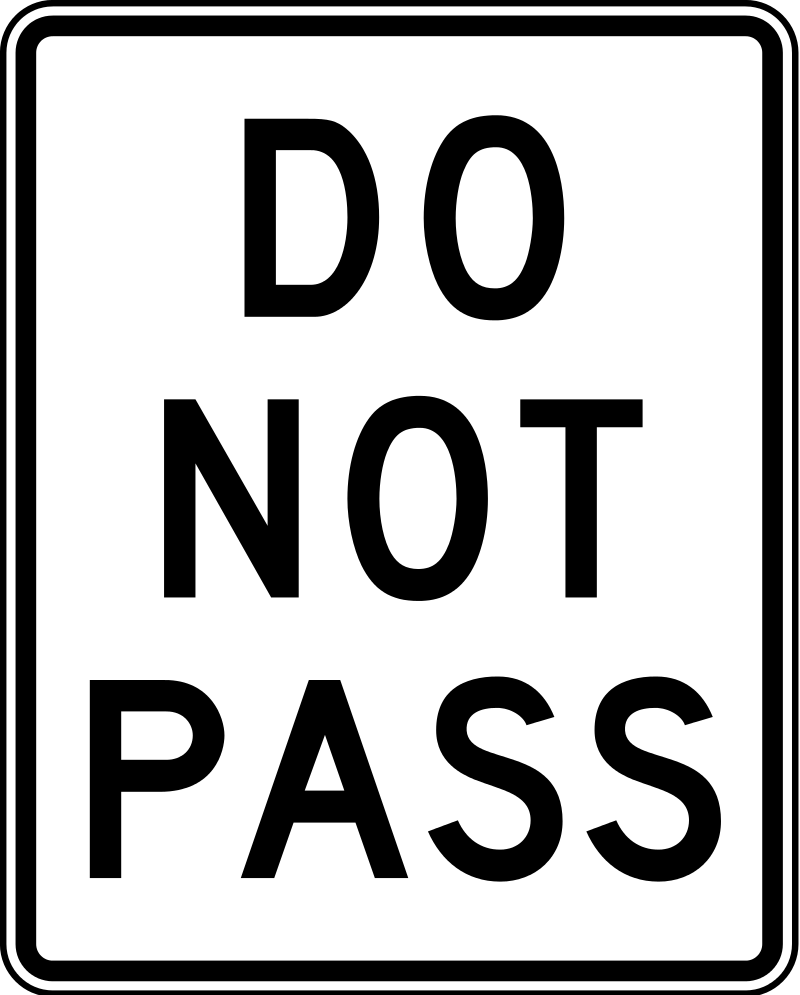 This sign means drivers must not pass other vehicles:
A
unless it is safe to do so.
B
within 250 feet of this sign.
C
when it's dark.
D
for any reason.
No explanation available.
Question 17:
What should you do if one of your tires blows out?
A
Hold the steering wheel tight and brake immediately to avoid the risk of skidding.
B
Leave the road immediately.
C
Hold the steering wheel tight and slowly take your foot off the gas pedal.
No explanation available.
Question 18:
When a ‘Road Closed’ sign is displayed, drivers must:
A
make a U-turn.
B
look for a detour or another route.
C
come to a complete stop and wait for the lights to turn green.
No explanation available.
Question 19:
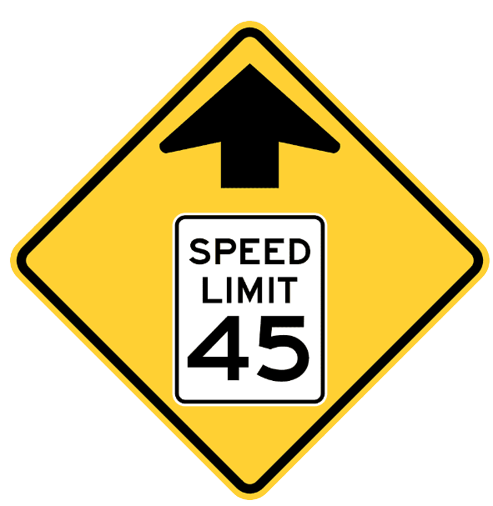 This warning sign:
A
provides advance notice to upcoming speed limit change.
B
shows the current speed limit that all vehicles traveling in the direction of the arrow must not exceed.
C
indicates the suggested highest safe speed.
No explanation available.
Question 20:
Yellow traffic signs:
A
guide drivers.
B
when combined with an octagonal shape, tell drivers they must come to a complete stop at the marked stop line.
C
warn drivers.
No explanation available.
Question 21:
In heavy rain, tires can begin to ride on the water that is on top of the road pavement. This is called:
A
rideplaning.
B
hydroplaning.
C
pavement-planing.
D
waterplaning.
No explanation available.
Question 22:
When you see an emergency vehicle with flashing lights behind you, you must:
A
slow down and keep moving.
B
drive to the right edge of the road and slow down.
C
pull over to the right and stop.
D
stop as quickly as you can.
No explanation available.
Question 23:
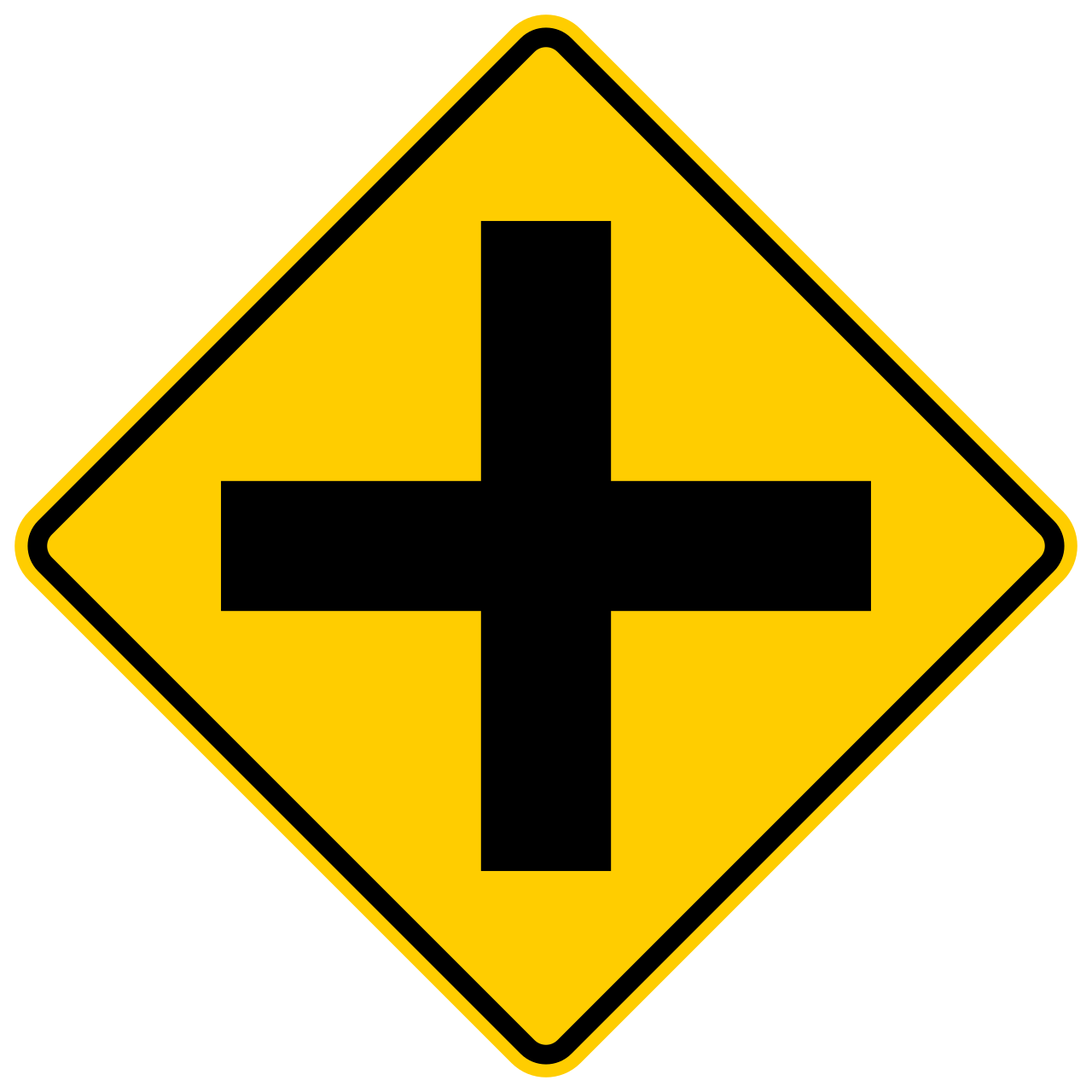 This road sign means:
A
Railroad Crossing
B
Side Road
C
Intersection
D
No Passing Zone
No explanation available.
Question 24:
 A 4-way stop sign means:
A
The first vehicle to reach the intersection should move forward first.
B
Traffic from all four directions must stop.
C
There are four stop signs at the intersection.
D
All of the above.
No explanation available.
Question 25:
What is the main reason night driving is more difficult than daytime driving?
A
The use of headlight is required by law.
B
Reduced visibility.
C
Driving within the range.
No explanation available.
Question 26:
When driving a vehicle upon any public street or highway, you must:
A
show your driver’s license upon demand.
B
carry your license with you.
C
have a valid driver’s license.
D
All of the above.
No explanation available.
Question 27:
Keeping a space cushion between you and the other vehicles around you is important because it:
A
gives you time to react to situations.
B
prevents distractions from other vehicles.
C
keeps other drivers alert.
D
keeps traffic flowing at a safe pace.
No explanation available.
Question 28:
What should drivers do when the red lights begin to flash?
A
Stop.
B
Yield.
C
Slow down.
No explanation available.
Question 29:
The traffic light is green and you want to drive straight through an intersection. If a car is already in the intersection and is making a turn, you must:
A
enter the intersection and then stop.
B
drive through the intersection. You have the right-of-way.
C
let that car complete its turn before you enter the intersection.
No explanation available.
Question 30:
Because many crashes happen when a vehicle is turning left, drivers should:
A
slow down gradually while checking the rear view mirror.
B
move into the left lane of a multilane road.
C
yield to oncoming vehicles, bicyclists and pedestrians.
D
All of the above.
No explanation available.