Question 1:
Who is required to wear a bicycle helmet in Florida?
A
Bicyclists owning a professional riding license.
B
All bicyclists.
C
Bicyclists and passengers under age 18.
D
Bicyclists and passengers under age 16.
State laws require motorists to provide a safe clearance buffer: Bicyclists and passengers under age 16. Allow at least 3 feet of space when overtaking a bicyclist.
Question 2:
At 50 MPH, on dry pavement with good brakes, the average braking distance is about:
A
101 feet
B
66 feet
C
158 feet
D
359 feet
For safe speed and stopping control: 158 feet. Adjusting speed to match visibility and road traction prevents loss of steering grip.
Question 3:
Parking is not allowed:
A
on the road side of a parked vehicle.
B
in a tunnel.
C
All of the above.
Under standard parking and curb regulations: All of the above. Following parking distance clearances keeps roadways unobstructed and emergency lanes accessible.
Question 4:
Which of the following is a possible sign of aggressive driving?
A
Keeping a cool head.
B
Texting while driving.
C
Throwing objects from a moving vehicle.
D
Avoiding confrontation.
The correct driving rule is: Throwing objects from a moving vehicle. Following standard DMV road rules and practicing defensive driving ensures safety for all road users.
Question 5:
Which of the following is true about a double solid white line?
A
It marks the edge of the pavement on most roads.
B
It prohibit vehicles moving in either direction from crossing the line.
C
It separates two lanes of traffic going in the same direction.
D
None of the above.
The correct driving rule is: it separates two lanes of traffic going in the same direction. Following standard DMV road rules and practicing defensive driving ensures safety for all road users.
Question 6:
Which of the following is NOT safe when passing:
A
Checking your blind spots.
B
Getting close to the vehicle you want to pass.
C
On a two-lane road, tapping your horn to let the other driver know you are passing.
D
All of the above.
Defensive driving guidelines state that: Getting close to the vehicle you want to pass. Anticipating road hazards and communicating maneuvers keeps traffic predictable and safe.
Question 7:
If you are in a crash while driving, you must:
A
attain vehicle, witness and driver information.
B
remain calm.
C
help the injured.
D
All of the above.
All of the listed points are essential driving requirements: attain vehicle, witness and driver information; remain calm; help the injured. Practicing each ensures compliance with DMV safety laws.
Question 8:
Green traffic signs:
A
give drivers directional information.
B
are used to identify parking spaces for disabled drivers.
C
are used at school crossings.
D
warn drivers of unexpected roadway conditions.
The correct driving rule is: give drivers directional information. Following standard DMV road rules and practicing defensive driving ensures safety for all road users.
Question 9:
Unlike passenger cars, trucks have blind spots:
A
on the right.
B
directly behind them.
C
on the front.
The correct driving rule is: directly behind them. Following standard DMV road rules and practicing defensive driving ensures safety for all road users.
Question 10:
Before making a left or right turn, you should signal for at least:
A
500 feet.
B
100 feet.
C
50 feet.
D
150 feet.
State laws require signaling your intention: 100 feet. Signal at least 100 feet before making a turn or changing lanes.
Question 11:
 This sign indicates:
A
Winding road
B
Merging traffic
C
Divided highway ends
This traffic sign indicates: Merging traffic. Observing and obeying all roadway signs ensures safe traffic flow and legal driving.
Question 12:
 What does a flashing red light mean?
A
NO TURN ON RED.
B
The same thing as a stop sign.
C
Drivers may move forward with caution.
When an emergency vehicle approaches with flashing lights or sirens, you must safely pull over to the right curb and stop completely until it passes.
Question 13:
Which of the following is true about roundabouts?
A
They slow vehicle speed.
B
They enhance the driving experience.
C
Roundabouts are also called 'open intersections' or 'uncontrolled intersections'.
D
They give drivers less time to judge.
The correct driving rule is: they slow vehicle speed. Following standard DMV road rules and practicing defensive driving ensures safety for all road users.
Question 14:
When an animal suddenly runs in front of your vehicle, you should:
A
swerve off the roadway.
B
concentrate on regaining control of the vehicle before, during, and after the collision with the animal.
C
Be patient.
D
swerve into oncoming traffic to avoid the collision.
The correct driving rule is: concentrate on regaining control of the vehicle before, during, and after the collision with the animal. Following standard DMV road rules and practicing defensive driving ensures safety for all road users.
Question 15:
It is against the law to:
A
use hand signals.
B
make three-point turns.
C
use directional signals when changing lane.
D
use your directional signals to tell drivers behind you that they can pass.
The correct driving rule is: use your directional signals to tell drivers behind you that they can pass. Following standard DMV road rules and practicing defensive driving ensures safety for all road users.
Question 16:
If a passenger who is 18 years of age or older fails to wear a seat belt when required by law:
A
he/she is violating the Seat Belt Law.
B
a seat belt violation will be charged to the passenger.
C
a seat belt violation will be charged to the driver.
D
there is no violation. Only passengers who are under 18 must wear safety belts.
The correct driving rule is: a seat belt violation will be charged to the passenger. Following standard DMV road rules and practicing defensive driving ensures safety for all road users.
Question 17:
Which of the following is NOT correct? Drivers entering a road from a driveway should:
A
yield to bicyclists and pedestrians on the sidewalk or bike lanes.
B
use their emergency lights to indicate their intention to turn.
C
yield to vehicles already on the main road.
D
All of the above.
The correct driving rule is: use their emergency lights to indicate their intention to turn. Following standard DMV road rules and practicing defensive driving ensures safety for all road users.
Question 18:
Which of the following is a possible sign of road rage?
A
Smiling to other drivers.
B
Getting out of the left lane for other fast moving vehicles.
C
Hand gestures.
D
Avoiding eye contact with other drivers.
The correct driving rule is: Hand gestures. Following standard DMV road rules and practicing defensive driving ensures safety for all road users.
Question 19:
Which of the following is NOT true about roundabouts:
A
Drivers entering the roundabout have the right-of-way.
B
They give drivers more time to judge.
C
Trucks are not allowed to enter roundabouts.
D
They reduce traffic crashes.
The correct driving rule is: drivers entering the roundabout have the right-of-way. Following standard DMV road rules and practicing defensive driving ensures safety for all road users.
Question 20:
Directions given by traffic officers ___________ signs, signals or pavement markings.
A
take precedence over
B
are less important than
C
must obey
The correct driving rule is: take precedence over. Following standard DMV road rules and practicing defensive driving ensures safety for all road users.
Question 21:
A stopped school bus is picking up children on a two way street. All drivers moving ____________________ must stop.
A
away from the bus
B
in either direction
C
in the same direction as the bus
D
in the opposite direction of the bus
When a school bus displays flashing red lights and extended stop sign: in either direction. Traffic in both directions must come to a full stop on undivided roads until children are clear.
Question 22:
What should drivers do in case of a tire blowout?
A
Slow down gradually.
B
Sound their horn.
C
Brake sharply.
D
Swerve off the roadway.
The correct driving rule is: slow down gradually. Following standard DMV road rules and practicing defensive driving ensures safety for all road users.
Question 23:
If a law enforcement officer is directing traffic where there are signal lights, drivers should:
A
follow the other drivers.
B
obey the officer - not the signals.
C
keep calm and carry on.
D
obey the signals - not the officer.
State laws require signaling your intention: obey the officer - not the signals. Signal at least 100 feet before making a turn or changing lanes.
Question 24:
When driving in fog at night, you should use:
A
parking lights.
B
high beam headlights.
C
low beam headlights.
D
None of the above.
Always use low-beam headlights in fog, heavy rain, or snow. High beams reflect off moisture droplets and bounce glare back into your eyes.
Question 25:
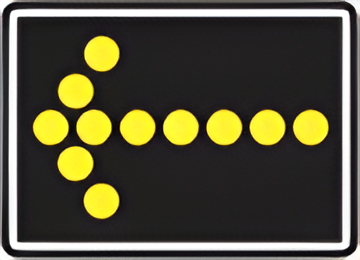 What are flashing arrow panels used for?
A
To tell drivers that they should not turn in the direction shown by the panel.
B
To give advance warning and directional information to drivers.
C
They are regulatory signs used to indicate that there will be fewer lanes ahead.
D
All of the above.
The correct driving rule is: To give advance warning and directional information to drivers. Following standard DMV road rules and practicing defensive driving ensures safety for all road users.
Question 26:
Which lane is the acceleration lane?
A
The exit lane
B
The center lane
C
The right lane
D
The left lane
The correct driving rule is: The left lane. Following standard DMV road rules and practicing defensive driving ensures safety for all road users.
Question 27:
 This sign means:
A
The road will curve to the right, then to the left.
B
Road slippery when wet. Drive slowly.
C
Winding road ahead. Drive with caution.
This traffic sign indicates: Road slippery when wet. Drive slowly. Observing and obeying all roadway signs ensures safe traffic flow and legal driving.
Question 28:
If moving to the curb to stop your vehicle, you should:
A
check mirrors for traffic to the rear and signal your intention.
B
use your ABS system.
C
stop suddenly and move to within 12 inches of the curb.
D
stop at the next gas station.
Under standard parking and curb regulations: check mirrors for traffic to the rear and signal your intention. Following parking distance clearances keeps roadways unobstructed and emergency lanes accessible.
Question 29:
 This sign means:
A
The road will curve to the right.
B
Left turns are not allowed at the intersection.
C
Do not turn right.
This traffic sign indicates: The road will curve to the right. Observing and obeying all roadway signs ensures safe traffic flow and legal driving.
Question 30:
 The octagonal shape is used:
A
for stop signs and railroad advance warning signs.
B
exclusively for stop signs.
C
to warn drivers of existing or possible hazards on roadways.
An octagonal Stop sign requires a full and complete stop before the stop line or crosswalk: exclusively for stop signs. Proceed only after yielding to all cross traffic and pedestrians.
Question 31:
When driving in low visibility, drivers should:
A
use emergency flashers.
B
slow down before entering a patch of fog.
C
use high beam headlights.
D
turn on the radio.
The correct driving rule is: slow down before entering a patch of fog. Following standard DMV road rules and practicing defensive driving ensures safety for all road users.
Question 32:
With conventional brakes, the correct way to stop in an emergency situation where traction is lost and the car slides is:
A
the “Push In” System.
B
the Anti-Slide System (ASS).
C
the ASB System.
D
by pumping the brakes.
The correct driving rule is: by pumping the brakes. Following standard DMV road rules and practicing defensive driving ensures safety for all road users.
Question 33:
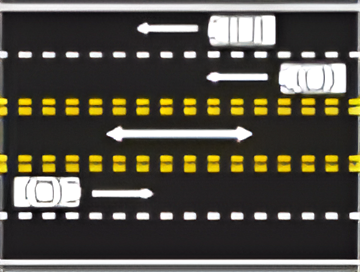 The arrow in the center lane indicates that:
A
vehicles must use the lane to make a U-turn.
B
vehicles may pass only when it is safe to do so.
C
vehicles in the center lane can travel in both directions.
D
traffic in this lane can be reversed to help handle rush-hour traffic.
The correct driving rule is: traffic in this lane can be reversed to help handle rush-hour traffic. Following standard DMV road rules and practicing defensive driving ensures safety for all road users.
Question 34:
The seat belt law exempts the following from the seat belt requirements:
A
Trucks of a net weight of more than 26,000 pounds.
B
Farm equipment.
C
Mopeds.
D
All of the above.
All of the listed points are essential driving requirements: Trucks of a net weight of more than 26,000 pounds; Farm equipment; Mopeds. Practicing each ensures compliance with DMV safety laws.
Question 35:
Golf carts may be operated only on state roads that have a posted speed limit of __ MPH or less.
A
70
B
55
C
30
D
20
For safe speed and stopping control: 30. Adjusting speed to match visibility and road traction prevents loss of steering grip.
Question 36:
What should drivers do when the red lights begin to flash?
A
Stop.
B
Yield.
C
Slow down.
The correct driving rule is: stop. Following standard DMV road rules and practicing defensive driving ensures safety for all road users.
Question 37:
Every car must have a white light that makes the license plate visible from how many feet away?
A
300
B
500
C
100
D
50
The correct driving rule is: 50. Following standard DMV road rules and practicing defensive driving ensures safety for all road users.
Question 38:
A car is parked 10 feet from a fire hydrant. Is it legally parked?
A
Yes, but only if the fire hydrant is within 20 feet of an intersection.
B
No. Parking is not allowed within 15 feet of a fire hydrant.
C
No. Parking is never allowed when there is a fire hydrant.
D
Yes, parking is allowed within 10 feet from a fire hydrant.
State and municipal laws prohibit parking within 15 feet of a fire hydrant to ensure emergency fire crews have clear, unobstructed access.
Question 39:
When parking downhill, drivers should:
A
turn wheels from the curb.
B
turn the wheels so that if their car starts to move, it will roll away from the curb.
C
shift manual gears to reverse.
D
All of the above.
When parking downhill (with or without a curb): shift manual gears to reverse. Turn front wheels toward the curb or road edge (right) so the vehicle rolls safely off the roadway if it slips.
Question 40:
A DUI conviction will remain on your driving record for:
A
25 years.
B
5 years.
C
75 years.
D
2 years.
Under state DUI and traffic safety laws: 75 years. Alcohol degrades judgment, slows reaction times, and distorts depth perception.
Question 41:
 A four-way stop sign means:
A
traffic from all four directions must stop.
B
if two vehicles reach the intersection at the same time, the driver on the left yields to the driver on the right.
C
All of the above.
This sign alerts drivers to several mandatory requirements: traffic from all four directions must stop, if two vehicles reach the intersection at the same time, the driver on the left yields to the driver on the right. Obeying all posted traffic control instructions is required by law.
Question 42:
Vehicles with Specialty License Plates that display the International Symbol of Access:
A
may access any international parking area.
B
may legally park anywhere.
C
may legally park in spaces reserved for people with disabilities.
D
are reserved for foreign people with disabilities.
The correct driving rule is: may legally park in spaces reserved for people with disabilities. Following standard DMV road rules and practicing defensive driving ensures safety for all road users.
Question 43:
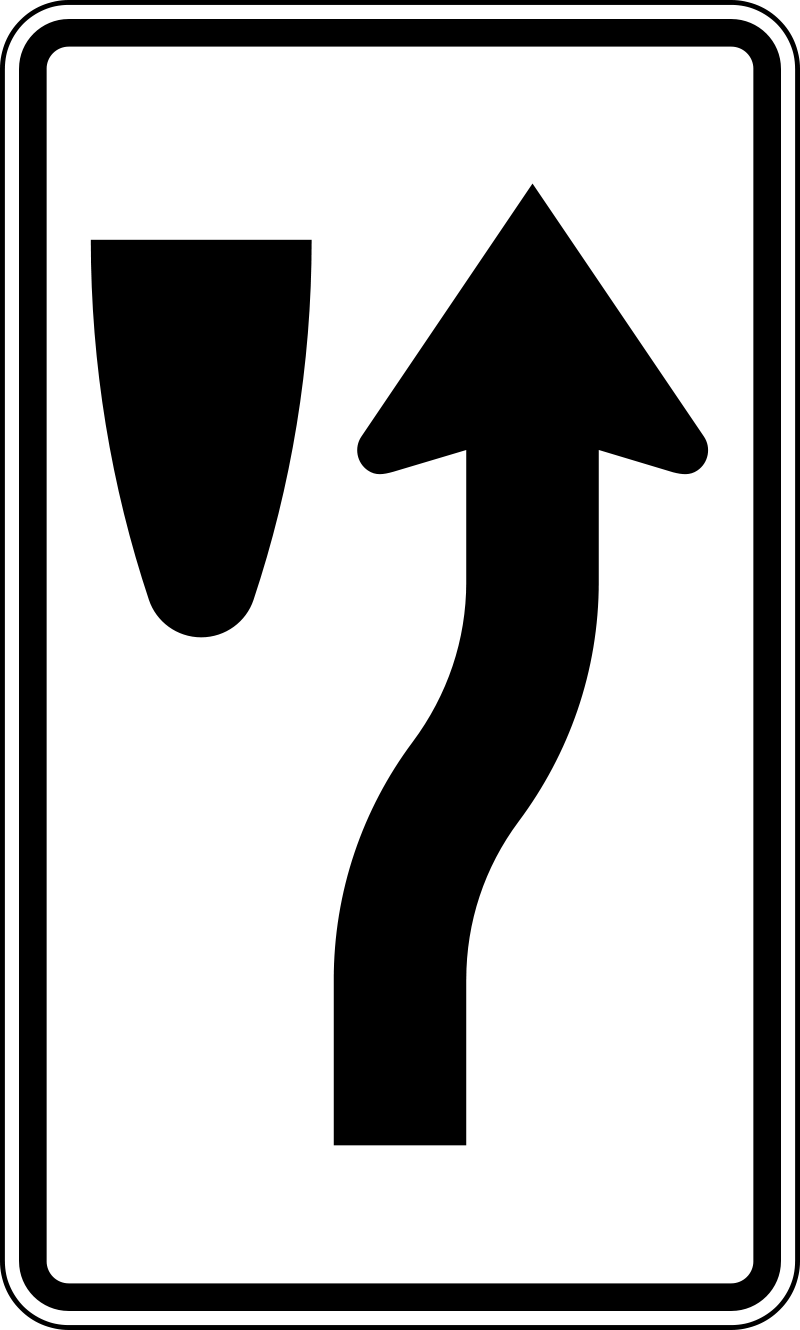 This sign tells drivers that:
A
there is a right turn ahead.
B
they must stay on the right side of the divider
C
a divided highway ends ahead.
This traffic sign indicates: they must stay on the right side of the divider. Observing and obeying all roadway signs ensures safe traffic flow and legal driving.
Question 44:
Which of the following is NOT correct? Before you start your engine you should:
A
put on your safety belts.
B
adjust the seat so you can reach all controls.
C
make sure your car is in first gear.
D
All of the above.
The correct driving rule is: make sure your car is in first gear. Following standard DMV road rules and practicing defensive driving ensures safety for all road users.
Question 45:
 What does this sign indicate?
A
The highway ahead is divided into two one-way roadways.
B
Winding road ahead. Drive with caution.
C
Drivers will soon be on a roadway with two-way traffic.
This traffic sign indicates: drivers will soon be on a roadway with two-way traffic. Observing and obeying all roadway signs ensures safe traffic flow and legal driving.
Question 46:
To steer the vehicle away from hazards while braking, drivers with ABS should:
A
turn off the engine.
B
keep firm and constant pressure on the brake pedal while stopping.
C
disengage the ABS immediately.
D
pump the brakes and turn the steering wheel hard in one direction.
The correct driving rule is: keep firm and constant pressure on the brake pedal while stopping. Following standard DMV road rules and practicing defensive driving ensures safety for all road users.
Question 47:
This sign indicates:
A
Warning: drunk drivers.
B
Winding road. Drive with caution.
C
The road may be slippery when wet. Drive slowly.
This traffic sign indicates: The road may be slippery when wet. Drive slowly. Observing and obeying all roadway signs ensures safe traffic flow and legal driving.
Question 48:
Seat belts on buses are exempt on buses purchased new prior to:
A
December 31, 2010.
B
December 31, 2015.
C
December 31, 2000.
D
October 31, 2002.
The correct driving rule is: December 31, 2000. Following standard DMV road rules and practicing defensive driving ensures safety for all road users.
Question 49:
The average reaction distance at 60 MPH is:
A
33 feet
B
158 feet
C
66 feet
D
359 feet
For safe speed and stopping control: 66 feet. Adjusting speed to match visibility and road traction prevents loss of steering grip.
Question 50:
When passing another vehicle, you should:
A
give your signal before you move into the left lane.
B
stay on the left side of the road until you come within 50 feet of any vehicle coming from the opposite direction.
C
return to the right side of the road before you can see the tires of the vehicle you passed in your rearview mirror.
D
All of the above.
Defensive driving guidelines state that: give your signal before you move into the left lane. Anticipating road hazards and communicating maneuvers keeps traffic predictable and safe.