Question 1:
Any driver under 21 years of age who is stopped by law enforcement and has a blood alcohol level of __ or higher will automatically have their driving privilege suspended.
A
0.2
B
0.02
C
0.5
D
0.05
Under state DUI and traffic safety laws: 0.02. Alcohol degrades judgment, slows reaction times, and distorts depth perception.
Question 2:
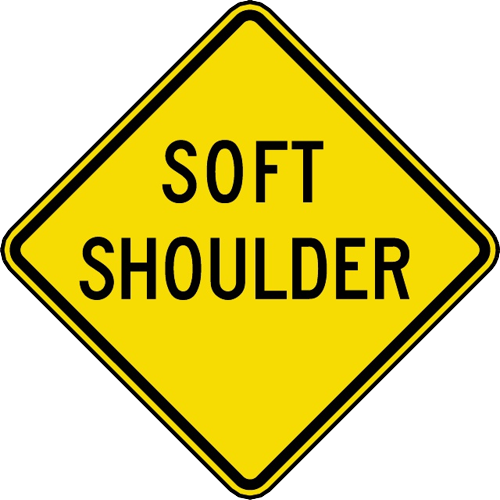 What does this ‘Soft Shoulder’ sign indicate?
A
The dirt on the side of the road is soft.
B
Drivers should leave the pavement immediately.
C
Drive on the shoulder if you have soft tyres.
D
None of the above.
The correct driving rule is: The dirt on the side of the road is soft. Following standard DMV road rules and practicing defensive driving ensures safety for all road users.
Question 3:
When entering an interstate highway, you must:
A
turn right and stop.
B
slow down immediately after leaving the acceleration lane.
C
enter the freeway at a sharp angle if possible.
D
adjust to freeway speed in the acceleration lane, then signal and move carefully into the freeway lane.
Defensive driving guidelines state that: adjust to freeway speed in the acceleration lane, then signal and move carefully into the freeway lane. Anticipating road hazards and communicating maneuvers keeps traffic predictable and safe.
Question 4:
When parking on a public road, drivers should NOT:
A
set the parking brake and shift to reverse with a manual transmission.
B
always check traffic behind them before getting out of the car.
C
make sure their vehicle cannot move.
D
leave the keys in their vehicle before leaving it.
Under standard parking and curb regulations: leave the keys in their vehicle before leaving it. Following parking distance clearances keeps roadways unobstructed and emergency lanes accessible.
Question 5:
When they see a pedestrian with a white cane crossing the street ahead of them, drivers must:
A
Look for a trained guide dog.
B
Call the police.
C
Get out of the car and help that person.
D
Come to a complete stop.
Drivers must always yield the right-of-way to pedestrians crossing at intersections and crosswalks: come to a complete stop. Stop and allow them to clear the lane safely.
Question 6:
Two drivers reach an uncontrolled intersection at the same time. Who has the right of way?
A
The driver on the left.
B
No one.
C
The driver on the right.
At an uncontrolled intersection or 4-way stop where vehicles arrive at the same time: The driver on the right. The driver on the left must always yield to the driver on the right.
Question 7:
When leaving an interstate highway, you must:
A
make a last minute turn if possible.
B
slow down before turning into the deceleration lane, and check the posted safe speed for the ramp.
C
increase your speed after turning into the deceleration lane.
D
slow down as soon as you are off the expressway.
Defensive driving guidelines state that: slow down as soon as you are off the expressway. Anticipating road hazards and communicating maneuvers keeps traffic predictable and safe.
Question 8:
Crossbucks are:
A
used to indicate railroad crossings.
B
generally used for regulatory signs.
C
used to indicate nearby cafes.
D
pentagonal signs used to indicate school crossings.
The correct driving rule is: used to indicate railroad crossings. Following standard DMV road rules and practicing defensive driving ensures safety for all road users.
Question 9:
Sharrows:
A
indicate to bicyclists where to ride.
B
alert drivers that bicyclists may be on the road.
C
discourage bicycling in the wrong direction.
D
All of the above.
All of the listed points are essential driving requirements: indicate to bicyclists where to ride; alert drivers that bicyclists may be on the road; discourage bicycling in the wrong direction. Practicing each ensures compliance with DMV safety laws.
Question 10:
In Florida, vehicle license plates and registrations must be renewed each year or biennially:
A
on or before the birthday of the first owner listed on the registration form.
B
on the day the license plate was obtained.
C
on or before the day the vehicle was purchased.
D
on the first day of the year.
The correct driving rule is: on or before the birthday of the first owner listed on the registration form. Following standard DMV road rules and practicing defensive driving ensures safety for all road users.
Question 11:
 The picture shows:
A
a sign alerting drivers that bicycles may be ahead.
B
a bike lane.
C
a pavement marking telling bicyclists that they must go straight.
D
a motorcyle lane.
The correct driving rule is: a bike lane. Following standard DMV road rules and practicing defensive driving ensures safety for all road users.
Question 12:
If you are found guilty of racing on the highway, your license must be:
A
revoked.
B
cancelled.
C
terminated.
D
suspended.
Defensive driving guidelines state that: revoked. Anticipating road hazards and communicating maneuvers keeps traffic predictable and safe.
Question 13:
How can you prevent fatigue on a long trip?
A
Plan to drive long trips with a companion.
B
Get enough sleep.
C
All of the above.
Alcohol and impairing substances degrade all critical driving functions: Plan to drive long trips with a companion; Get enough sleep. Driving while impaired carries severe criminal and safety penalties.
Question 14:
On a two-lane road, you should:
A
yield to trucks.
B
overtake and pass other vehicles only when a solid yellow line is painted on your side of the center line.
C
overtake and pass another vehicle only to the left of the vehicle.
D
keep a minimum following distance of 30 seconds.
The correct driving rule is: overtake and pass another vehicle only to the left of the vehicle. Following standard DMV road rules and practicing defensive driving ensures safety for all road users.
Question 15:
At a railroad crossing, if your car stalls on the tracks you should:
A
keep your seat belt fastened and use your horn if you see a train approaching.
B
use four-way emergency flashers and call the emergency number.
C
immediately get yourself and the other passengers out and away from the car.
D
call the police.
The correct driving rule is: immediately get yourself and the other passengers out and away from the car. Following standard DMV road rules and practicing defensive driving ensures safety for all road users.
Question 16:
You are driving a vehicle with automatic transmission. When you park on a hill you should:
A
shift the transmission into park before setting the parking brake.
B
turn your wheels so that if your car starts to move, it will roll away from the curb.
C
set the parking brake before you place automatic gear shift in park.
D
None of the above.
Under standard parking and curb regulations: set the parking brake before you place automatic gear shift in park. Following parking distance clearances keeps roadways unobstructed and emergency lanes accessible.
Question 17:
Tailgating trucks is particularly dangerous because:
A
unlike passenger cars, trucks have blind spots directly behind them.
B
trucks go slower than cars.
C
truck need to swing wide to the left in order to safely negotiate a right turn.
D
most trucks have several rearview mirrors.
The correct driving rule is: unlike passenger cars, trucks have blind spots directly behind them. Following standard DMV road rules and practicing defensive driving ensures safety for all road users.
Question 18:
What should you do when the gas pedal is jammed?
A
Get all passengers out on the side away from traffic.
B
Any of the above.
C
Keep your eyes on the road.
D
Brake sharply.
The correct driving rule is: keep your eyes on the road. Following standard DMV road rules and practicing defensive driving ensures safety for all road users.
Question 19:
Parking lights must __________ on any vehicle parked on a roadway outside of cities and towns.
A
be used at night
B
be avoided
C
always be turned off
D
always be used
Under standard parking and curb regulations: be used at night. Following parking distance clearances keeps roadways unobstructed and emergency lanes accessible.
Question 20:
In case of skidding, drivers should NOT:
A
take their foot off the gas pedal.
B
pump the brakes gently if they are about to hit something.
C
tap the gas pedal with their foot.
The correct driving rule is: tap the gas pedal with their foot. Following standard DMV road rules and practicing defensive driving ensures safety for all road users.
Question 21:
Drivers convicted of running a red light:
A
need to stop at green lights for 90 days.
B
are required to complete a basic driver improvement course.
C
will automatically have their driving privilege suspended for 6 months.
D
need to spend 15 days in jail.
According to standard right-of-way regulations: are required to complete a basic driver improvement course. Yielding appropriately prevents intersection collisions and maintains safe traffic flow.
Question 22:
Controlled substances do NOT include:
A
Depressants
B
Prescription drugs
C
Alcohol
D
Stimulants
The correct driving rule is: Alcohol. Following standard DMV road rules and practicing defensive driving ensures safety for all road users.
Question 23:
 The yield sign means:
A
Go. The light will soon be red.
B
If the way is clear, you may move forward slowly without stopping.
C
Stop if you can.
A triangular Yield sign requires drivers to slow down and give right-of-way to other traffic: If the way is clear, you may move forward slowly without stopping. Proceed only when there is a safe opening.
Question 24:
If another vehicle is passing you on the left-hand side of the road, you should:
A
honk your horn.
B
increase your speed.
C
move to the rightmost lane.
D
allow the other vehicle to pass safely.
Defensive driving guidelines state that: allow the other vehicle to pass safely. Anticipating road hazards and communicating maneuvers keeps traffic predictable and safe.
Question 25:
Under the The No-Fault Law, you must maintain insurance coverage:
A
for 5 years.
B
until the insurance coverage expires.
C
throughout the vehicle registration period.
D
for 10 years.
The correct driving rule is: throughout the vehicle registration period. Following standard DMV road rules and practicing defensive driving ensures safety for all road users.
Question 26:
 What does this ‘DIP’ sign indicate?
A
Downgrade ahead. Drivers should go slowly.
B
Police DIPartment ahead.
C
There is a Drive-In Parking ahead.
D
There is a low place in the road.
The correct driving rule is: There is a low place in the road. Following standard DMV road rules and practicing defensive driving ensures safety for all road users.
Question 27:
The inside temperature of a vehicle can rise almost __ degrees within the first __ minutes with no ventilation.
A
10; 20
B
5; 30
C
20; 10
D
20; 30
The correct driving rule is: 20; 10. Following standard DMV road rules and practicing defensive driving ensures safety for all road users.
Question 28:
When driving at night with no other vehicles ahead, a driver should use:
A
high beam lights.
B
low-beam lights.
C
parking lights.
The correct driving rule is: high beam lights. Following standard DMV road rules and practicing defensive driving ensures safety for all road users.
Question 29:
 This sign warns drivers of:
A
a reduction of lanes.
B
a dip in the road. Drivers should be ready to stop if the dip is filled with water.
C
a bridge ahead, wide enough to accommodate two lanes of traffic, but with very little clearance.
This traffic sign indicates: a bridge ahead, wide enough to accommodate two lanes of traffic, but with very little clearance. Observing and obeying all roadway signs ensures safe traffic flow and legal driving.
Question 30:
Aggressive driving includes:
A
quick lane changes without a signal.
B
chasing or challenging other drivers.
C
All of the above.
All of the listed points are essential driving requirements: quick lane changes without a signal; chasing or challenging other drivers. Practicing each ensures compliance with DMV safety laws.
Question 31:
At an open intersection, drivers have the right-of-way if:
A
they are driving faster than the other vehicles.
B
they are already in the intersection.
C
they enter a paved road from an unpaved road.
D
All of the above.
According to standard right-of-way regulations: they are already in the intersection. Yielding appropriately prevents intersection collisions and maintains safe traffic flow.
Question 32:
What is the maximum speed limit in a residential area if there is no speed limit sign?
A
20 MPH.
B
55 MPH
C
35 MPH
D
30 MPH
For safe speed and stopping control: 30 MPH. Adjusting speed to match visibility and road traction prevents loss of steering grip.
Question 33:
Drivers often fail to see a motorcycle headed toward them. Why?
A
It is difficult to judge a motorcycle's speed.
B
Motorcycles are hard to see.
C
All of the above.
Sharing the road safely requires mutual awareness and respect: It is difficult to judge a motorcycle's speed; Motorcycles are hard to see. Maintaining safe space cushions protects all roadway users.
Question 34:
If an officer thinks that you are under the influence of alcohol or drugs:
A
your license will automatically be suspended for 1 year.
B
you have the right to you refuse to take any test.
C
he may send you to jail.
D
you will be asked to take a blood test, a urine test, or a breath test.
Under state DUI and traffic safety laws: you will be asked to take a blood test, a urine test, or a breath test. Alcohol degrades judgment, slows reaction times, and distorts depth perception.
Question 35:
 What does the flashing signal in the picture indicate?
A
The same thing as a stop sign.
B
Pedestrians should finish crossing the street if started.
C
Pedestrians should start crossing the street.
State laws require signaling your intention: pedestrians should finish crossing the street if started. Signal at least 100 feet before making a turn or changing lanes.
Question 36:
Vehicles must have at least one rearview mirror which gives a view of the highway at least ___ feet to the rear.
A
500
B
50
C
1000
D
200
Defensive driving guidelines state that: 200. Anticipating road hazards and communicating maneuvers keeps traffic predictable and safe.
Question 37:
Which of the following is NOT true about ABS?
A
It improves the vehicle stability.
B
It helps increase your stopping distance.
C
It improves the steering ability.
The correct driving rule is: it helps increase your stopping distance. Following standard DMV road rules and practicing defensive driving ensures safety for all road users.
Question 38:
Which of the following is true about double solid yellow lines?
A
Drivers may travel in the same direction on both sides of this line.
B
Vehicles may cross these lines temporarily when passing is safe.
C
Drivers may not cross these lines unless turning left when it’s safe to do so.
D
All of the above.
The correct driving rule is: drivers may not cross these lines unless turning left when it’s safe to do so. Following standard DMV road rules and practicing defensive driving ensures safety for all road users.
Question 39:
Yellow traffic signs:
A
guide drivers.
B
when combined with an octagonal shape, tell drivers they must come to a complete stop at the marked stop line.
C
warn drivers.
The correct driving rule is: warn drivers. Following standard DMV road rules and practicing defensive driving ensures safety for all road users.
Question 40:
Parking is not allowed within __ feet of the entrance to an ambulance station
A
35
B
20
C
75
D
50
Under standard parking and curb regulations: 20. Following parking distance clearances keeps roadways unobstructed and emergency lanes accessible.
Question 41:
Lane signals are used:
A
to show when pedestrians may begin crossing the street.
B
to alert drivers to a warning sign.
C
to show which lanes are opened or closed.
D
None of the above.
The correct driving rule is: to show which lanes are opened or closed. Following standard DMV road rules and practicing defensive driving ensures safety for all road users.
Question 42:
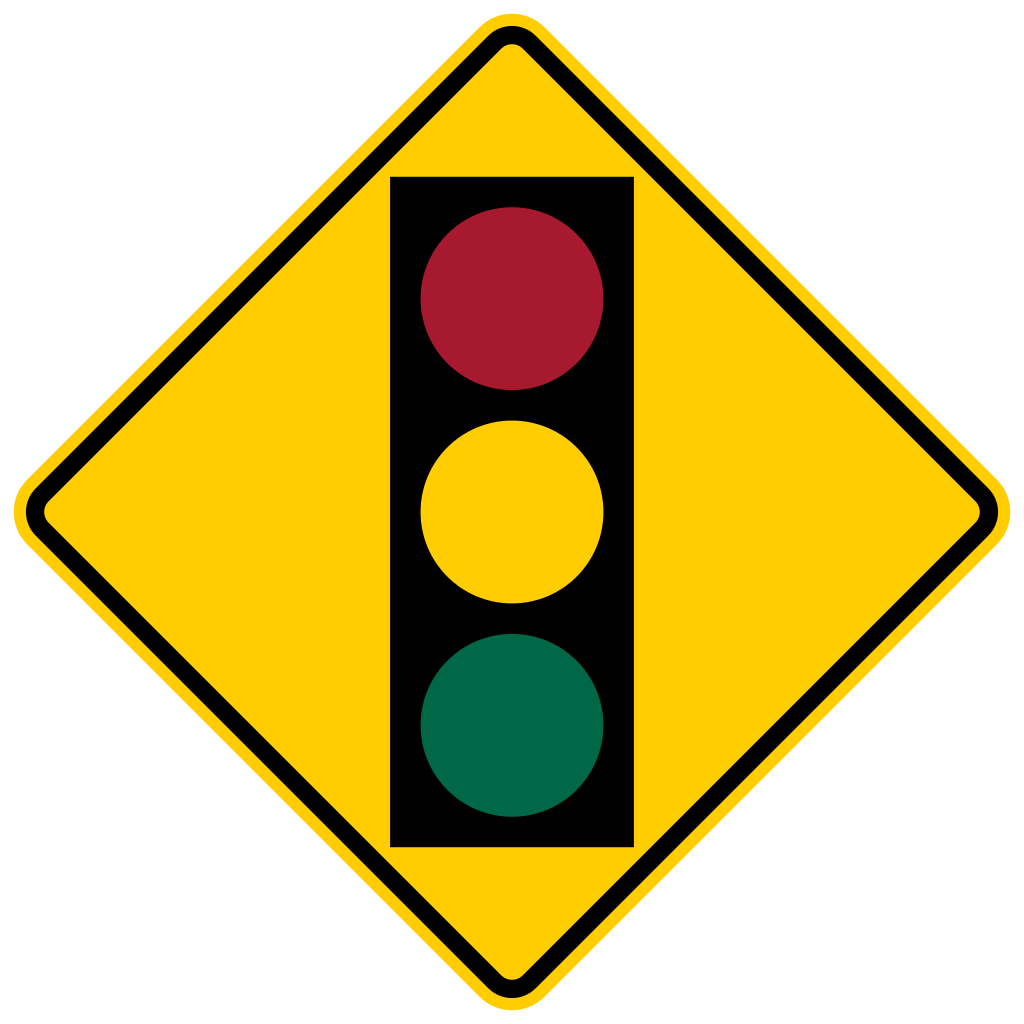 This sign means:
A
No traffic signal ahead
B
Traffic signal ahead
C
Open intersection ahead
This traffic sign indicates: traffic signal ahead. Observing and obeying all roadway signs ensures safe traffic flow and legal driving.
Question 43:
The seat belt law applies to passenger cars manufactured beginning with the ____ model year.
A
1968
B
2008
C
1978
D
1986
The correct driving rule is: 1968. Following standard DMV road rules and practicing defensive driving ensures safety for all road users.
Question 44:
What should you do in case of a brake failure?
A
Pull off the road into an open space, if available.
B
Apply the parking brake slowly.
C
All of the above.
All of the listed points are essential driving requirements: Pull off the road into an open space, if available; Apply the parking brake slowly. Practicing each ensures compliance with DMV safety laws.
Question 45:
 This road sign is:
A
a speed reduction sign.
B
a warning sign.
C
a regulatory sign.
This traffic sign indicates: a regulatory sign. Observing and obeying all roadway signs ensures safe traffic flow and legal driving.
Question 46:
Controlled substances include:
A
marijuana
B
prescription drugs
C
alcoholic beverages
D
All of the above.
The correct driving rule is: prescription drugs. Following standard DMV road rules and practicing defensive driving ensures safety for all road users.
Question 47:
Can you pass a school bus when it displays a stopped signal?
A
Yes, but you must slow down and prepare to stop.
B
Yes, but you cannot exceed 30 MPH.
C
No, you must come to a complete stop.
D
Yes, but you need to signal your intention to pass.
When a school bus displays flashing red lights and extended stop sign: No, you must come to a complete stop. Traffic in both directions must come to a full stop on undivided roads until children are clear.
Question 48:
 Vertical rectangles tell drivers:
A
the law.
B
what is not allowed.
C
the direction they should travel.
The correct driving rule is: the law. Following standard DMV road rules and practicing defensive driving ensures safety for all road users.
Question 49:
Left lanes on some interstate roads are reserved for:
A
pedestrians.
B
car pool vehicles.
C
large trucks.
D
vans.
The correct driving rule is: car pool vehicles. Following standard DMV road rules and practicing defensive driving ensures safety for all road users.
Question 50:
More than one vehicle is approaching a four-way stop sign. Who has the right of way?
A
The first driver to reach the intersection and stop.
B
The driver on the left.
C
The last driver to reach the intersection.
At an uncontrolled intersection or 4-way stop where vehicles arrive at the same time: The first driver to reach the intersection and stop. The driver on the left must always yield to the driver on the right.