Question 1:
Which shape is a warning sign?
A
Diamond
B
Triangle
C
Pennant
No explanation available.
Question 2:
Which signs have black letters on a yellow or orange background?
A
Warning signs (diamond)
B
Regulatory signs (vertical rectangle)
C
Railroad advance warning signs (round)
No explanation available.
Question 3:
Does a vehicle prepared to enter a traffic circle or rotary have right-of-way over vehicles in the circle?
A
Yes, but only if they are entering the rotary from the right lane.
B
No. Vehicles already in the circle have the right-of-way.
C
Only if the light is green.
D
Yes.
No explanation available.
Question 4:
No Zones are areas around trucks where cars:
A
disappear into blind spots or are so close to the truck that the driver's ability to stop or maneuver safely is restricted.
B
can turn safely because several car lengths have been left between the truck and car.
C
can travel behind trucks at constant speed and have no risks of being involved in a collision.
No explanation available.
Question 5:
 This sign means:
A
Narrow bridge ahead. Slow down and drive with caution.
B
Do not to enter if your vehicle is taller than the height listed on the sign.
C
No passing zone ahead.
No explanation available.
Question 6:
 This road sign warns drivers that:
A
left turns are not allowed at the intersection.
B
the road will make a sharp turn to the right.
C
another road enters the highway from the direction shown.
No explanation available.
Question 7:
When driving in work zones, drivers should:
A
tailgate the vehicle ahead while reducing their speed.
B
pass the vehicle ahead when safe.
C
keep a safe following distance.
No explanation available.
Question 8:
A green arrow on a traffic light means:
A
You must turn in that direction after coming to a complete stop.
B
You can turn in the direction of the arrow.
C
You may not turn in the direction of the arrow.
No explanation available.
Question 9:
 The sign in the picture:
A
is a Construction and Maintenance Traffic Control sign.
B
is found at most intersections and indicates that drivers must yield to other vehicles.
C
is displayed on the rear of slow moving vehicles.
No explanation available.
Question 10:
 When you see this sign you should:
A
turn right.
B
merge left.
C
watch for traffic to the right.
No explanation available.
Question 11:
Drivers may legally block an intersection:
A
under no circumstances.
B
only during rush hour traffic.
C
only after entering the intersection on a green light.
No explanation available.
Question 12:
On the highway, you should look well down the road:
A
in order to avoid emergency braking or steering.
B
because it usually takes 500 feet or more to come to a complete stop on the highway.
C
because it helps you keep up with traffic.
No explanation available.
Question 13:
If a driver follows you too closely, you should:
A
move to another lane if possible.
B
activate your stop lights.
C
brake suddenly.
No explanation available.
Question 14:
When driving in a construction zone you should:
A
slightly increase your speed.
B
come to a complete stop and check road conditions.
C
expect the unexpected.
No explanation available.
Question 15:
The speed limit in school zones is:
A
25 MPH
B
only enforced when kids are leaving school.
C
20 MPH
D
35 MPH
No explanation available.
Question 16:
When changing lanes, you should remember that:
A
vehicles with two outside mirrors have no blind spots.
B
You only need to turn and look over your right shoulder for lane changes to the right or left.
C
you should look over your left shoulder for a left lane change and your right shoulder for a right lane change.
No explanation available.
Question 17:
When approaching someone using a white cane or guide dog, drivers should:
A
carefully drive around them.
B
stop until the person is well away from the roadway or path of travel.
C
honk their horn as they proceed past them.
No explanation available.
Question 18:
Your driving ability can be affected by:
A
just one drink.
B
three drinks or more.
C
at least two drinks.
No explanation available.
Question 19:
The only effective way to reduce your blood alcohol content (BAC) is:
A
drinking coffee.
B
fresh air.
C
not to drink over a period of time.
No explanation available.
Question 20:
When driving in work zones, drivers should:
A
closely follow the driver in front of them.
B
reduce their speed and be prepared to stop.
C
maintain their speed through the work zone.
No explanation available.
Question 21:
You want to turn left at an intersection ahead. A car reaches the intersection from the opposite direction and moves straight ahead. You:
A
can turn left. You have the right of way.
B
must wait for the car to go through before you turn.
C
may not enter the intersection to prepare for your left turn if the light is green.
No explanation available.
Question 22:
Driver distractions include:
A
Avoiding unnecessary lane changes.
B
Slowing down to look at crash scene.
C
turning your headlights on when rain and fog make it hard to see.
No explanation available.
Question 23:
Signs that indicate a No Passing Zone tell drivers that:
A
it is not safe to pass.
B
passing is only permitted in daylight hours.
C
not passing other vehicles is prohibited.
No explanation available.
Question 24:
 This road sign means:
A
Divided highway ahead
B
Two-way traffic ahead
C
Four-lane traffic ahead
No explanation available.
Question 25:
As they approach the top of a hill, drivers should:
A
prepare to stop if needed.
B
keep a steady speed.
C
speed up slightly.
No explanation available.
Question 26:
This road sign means:
A
Merge
B
Side Road
C
Merging Traffic
D
All traffic must go straight ahead
No explanation available.
Question 27:
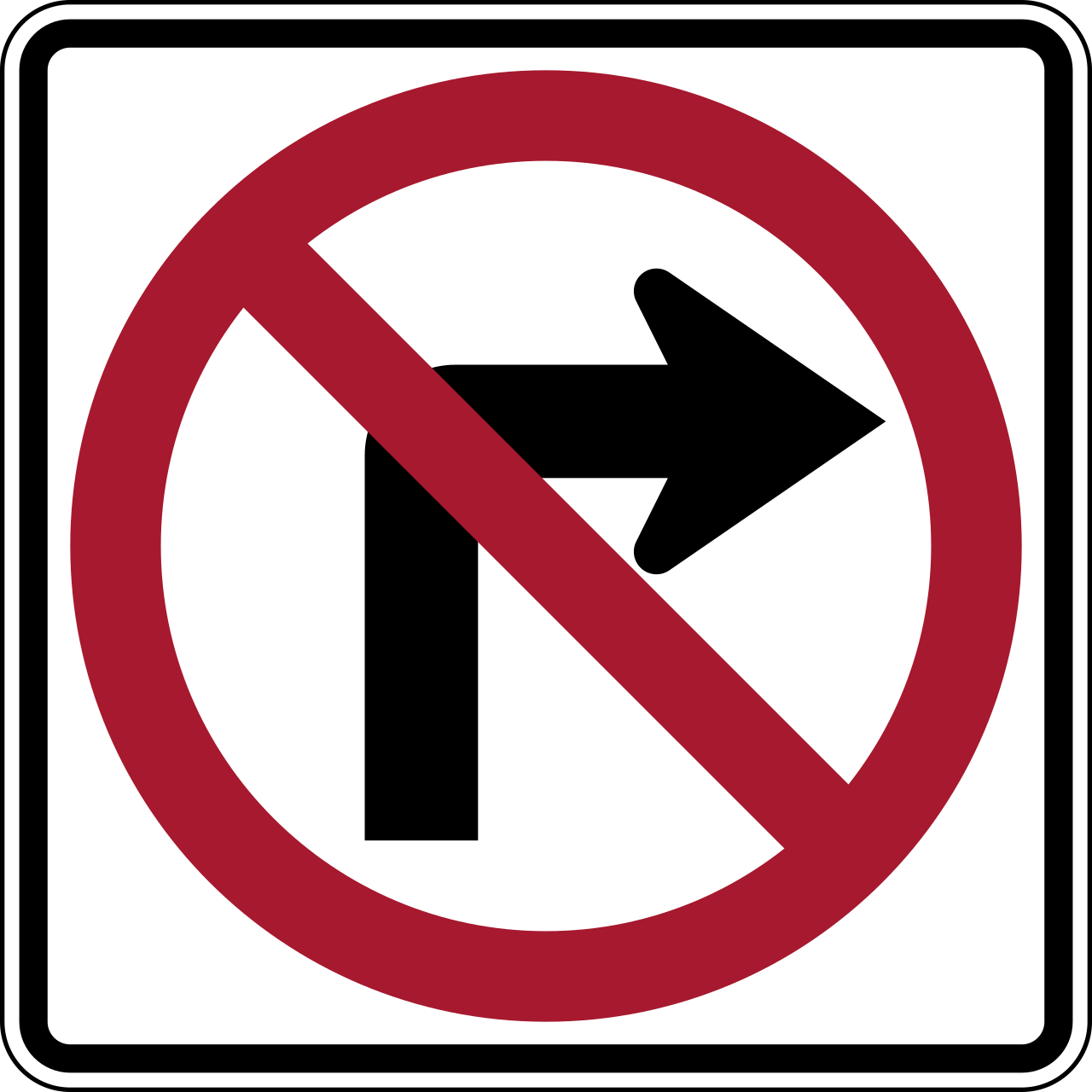 This road sign means:
A
Right turn is not permitted
B
Left turns are permitted
C
You may turn right after yielding the right-of-way to oncoming traffic
No explanation available.
Question 28:
Before a school bus stops to load passengers, the driver will usually flash:
A
yellow warning lights.
B
red warning lights.
C
red lights.
No explanation available.
Question 29:
 What does this sign indicate?
A
The highway ahead is divided into two one-way roadways.
B
Winding road ahead. Drive with caution.
C
Drivers will soon be on a roadway with two-way traffic.
No explanation available.
Question 30:
When changing lanes:
A
slow down and check your left mirror.
B
look over your shoulder to make sure no one is in the blind spot.
C
change lane before checking the inside rearview mirror.
No explanation available.