Question 1:
Destination signs are ______ with ____ letters and symbols.
A
green; white
B
blue; white
C
white; black
The correct driving rule is: green; white. Following standard DMV road rules and practicing defensive driving ensures safety for all road users.
Question 2:
What is the meaning of blue traffic signs?
A
A blue background indicates a regulatory sign.
B
They give directional information.
C
Blue indicates road user services.
The correct driving rule is: Blue indicates road user services. Following standard DMV road rules and practicing defensive driving ensures safety for all road users.
Question 3:
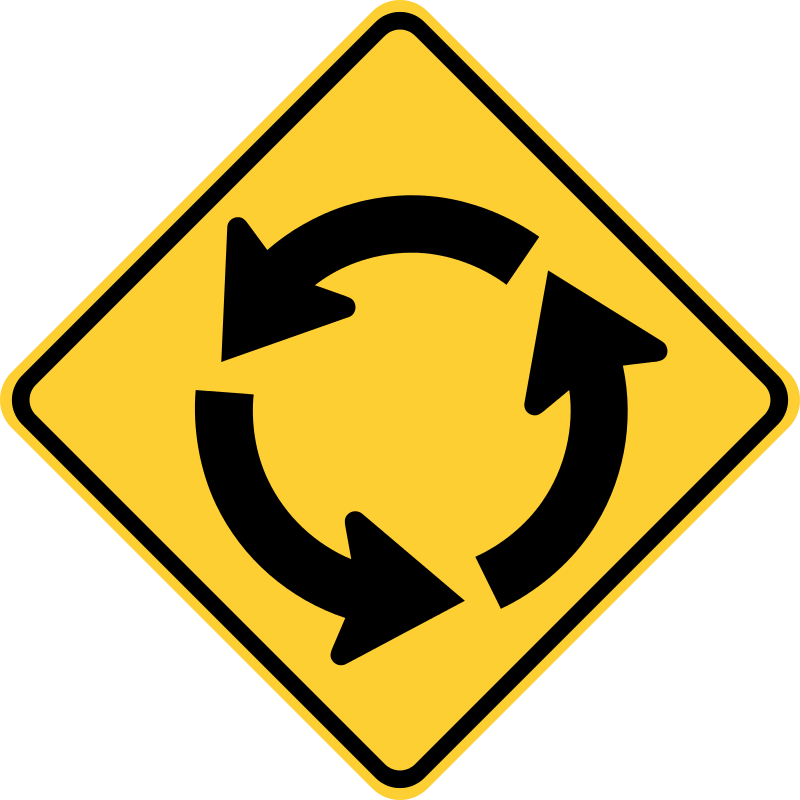 This road sign:
A
warns drivers of a sharp turn left. Drivers should slow their speed and keep to the left.
B
provides an advance notice of a roundabout.
C
warns drivers that U-turns are not permitted.
D
is a no-right-turns sign.
This traffic sign indicates: provides an advance notice of a roundabout. Observing and obeying all roadway signs ensures safe traffic flow and legal driving.
Question 4:
When you make a left turn from a one-way road into a one-way road, if the road you enter has two lanes, you:
A
must turn into its right lane.
B
can not turn left.
C
must turn into its left lane.
The correct driving rule is: must turn into its left lane. Following standard DMV road rules and practicing defensive driving ensures safety for all road users.
Question 5:
 This road sign means:
A
School zone ahead
B
Keep right
C
Two-way Traffic
This traffic sign indicates: Two-way Traffic. Observing and obeying all roadway signs ensures safe traffic flow and legal driving.
Question 6:
If a driver follows you too closely, you should:
A
move to another lane if possible.
B
activate your stop lights.
C
brake suddenly.
The correct driving rule is: move to another lane if possible. Following standard DMV road rules and practicing defensive driving ensures safety for all road users.
Question 7:
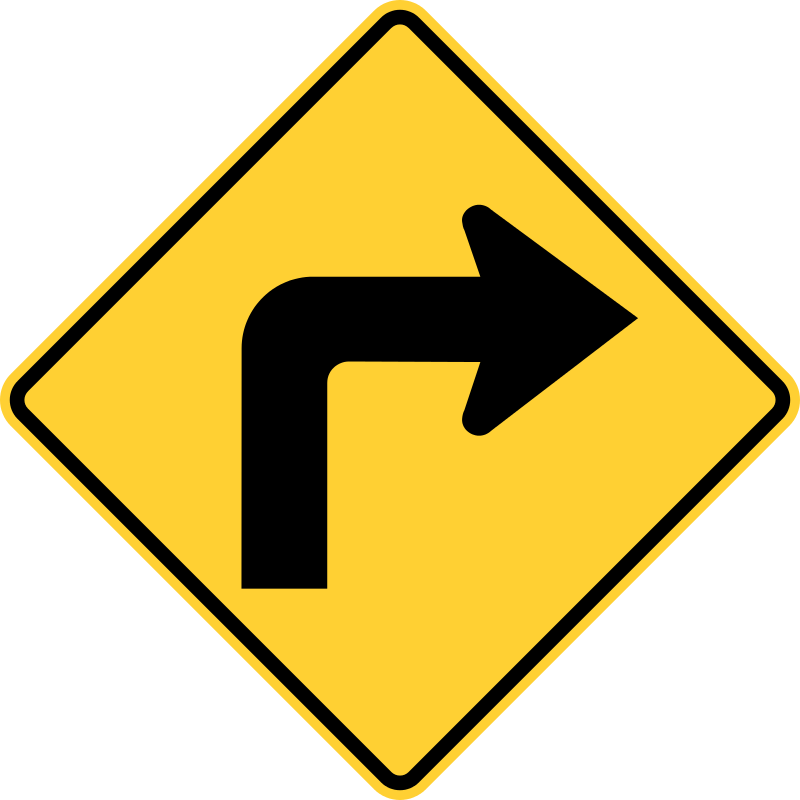 This road sign means:
A
One way
B
No right turn
C
Exit
D
Sharp right turn ahead
This traffic sign indicates: Sharp right turn ahead. Observing and obeying all roadway signs ensures safe traffic flow and legal driving.
Question 8:
You arrive at an intersection where you have a green light, but the path ahead is blocked, you should:
A
turn left and find another route.
B
stay out of the intersection until traffic clears.
C
enter the intersection and wait until traffic clears.
According to standard right-of-way regulations: stay out of the intersection until traffic clears. Yielding appropriately prevents intersection collisions and maintains safe traffic flow.
Question 9:
A bad car suspension can cause:
A
pumping brakes.
B
vehicle control problems.
C
squealing brakes.
The correct driving rule is: vehicle control problems. Following standard DMV road rules and practicing defensive driving ensures safety for all road users.
Question 10:
 This road sign means:
A
No Passing Zone
B
Railroad Warning
C
One-way street ahead
D
Two way left turn
Circular signs with an 'X' and 'RR' designate a Railroad Advance Warning: Railroad Warning. Drivers must slow down, look both ways, listen for trains, and be prepared to stop.
Question 11:
Alcohol:
A
makes you less aware of what is happening to your driving abilities.
B
makes it easier to make correct decisions.
C
improves your reaction time.
Under state DUI and traffic safety laws: makes you less aware of what is happening to your driving abilities. Alcohol degrades judgment, slows reaction times, and distorts depth perception.
Question 12:
When you prepare to make a left turn from a one-way road into a one-way road, you must:
A
move into the right lane, or to the left side of a single lane.
B
move into the right lane, or to the right side of a single lane.
C
move into the left lane, or to the left side of a single lane.
The correct driving rule is: move into the left lane, or to the left side of a single lane. Following standard DMV road rules and practicing defensive driving ensures safety for all road users.
Question 13:
After passing a vehicle, it is safe to return to your lane when:
A
the driver you passed slows down to let you return to your lane.
B
you can see both headlights of the vehicle you just passed in your rearview mirror.
C
you are at least 100 feet ahead of the vehicle you passed.
Defensive driving guidelines state that: you can see both headlights of the vehicle you just passed in your rearview mirror. Anticipating road hazards and communicating maneuvers keeps traffic predictable and safe.
Question 14:
When changing lanes, __________ to be sure no one is in the 'blind spot'.
A
check your right mirror
B
slow down gradually
C
check your left mirror
D
glance over your shoulder
Large commercial trucks have extensive blind spots on all four sides called the 'No-Zone': glance over your shoulder. If you cannot see the truck driver in their side mirrors, they cannot see you.
Question 15:
It is important for drivers to know that trucks:
A
are easier for the driver to operate.
B
require more space for turning movements.
C
take longer than cars to stop.
D
require less time to pass on an incline than cars.
The correct driving rule is: take longer than cars to stop. Following standard DMV road rules and practicing defensive driving ensures safety for all road users.
Question 16:
_________________ your mirrors when you prepare to change lanes.
A
Never depend on
B
Never use
C
Always rely on
The correct driving rule is: Never depend on. Following standard DMV road rules and practicing defensive driving ensures safety for all road users.
Question 17:
Before turning left, it is important to:
A
swing to the right side of your lane.
B
sound your horn to warn the other drivers.
C
yield to oncoming vehicles.
D
flash your headlights to alert the other drivers.
The correct driving rule is: yield to oncoming vehicles. Following standard DMV road rules and practicing defensive driving ensures safety for all road users.
Question 18:
 This road sign means:
A
Curves ahead
B
Divided highway ahead
C
Divided highway ends
This traffic sign indicates: Divided highway ends. Observing and obeying all roadway signs ensures safe traffic flow and legal driving.
Question 19:
If you have to wait for a space to enter a freeway, you should:
A
slow down on the ramp and search ahead for a gap in traffic on the freeway.
B
stop at the end of the ramp to wait for a gap in traffic.
C
maintain speed and signal other drivers to make a gap.
Defensive driving guidelines state that: slow down on the ramp and search ahead for a gap in traffic on the freeway. Anticipating road hazards and communicating maneuvers keeps traffic predictable and safe.
Question 20:
If you approach a flashing red traffic light, you should treat the intersection the same as:
A
a yield sign.
B
a stop sign.
C
a warning sign.
When an emergency vehicle approaches with flashing lights or sirens, you must safely pull over to the right curb and stop completely until it passes.
Question 21:
___________ normally are white rectangles with black letters or symbols.
A
Warning signs
B
Destination signs (guide signs)
C
Regulation signs (regulatory signs)
The correct driving rule is: Regulation signs (regulatory signs). Following standard DMV road rules and practicing defensive driving ensures safety for all road users.
Question 22:
Which of the following road surfaces freezes first when wet?
A
Bridges and overpasses.
B
Roundabouts.
C
Tunnels.
The correct driving rule is: Bridges and overpasses. Following standard DMV road rules and practicing defensive driving ensures safety for all road users.
Question 23:
If driving in foggy weather, drivers should turn on their high-beams to increase the field of vision.
A
True
B
False
The correct driving rule is: False. Following standard DMV road rules and practicing defensive driving ensures safety for all road users.
Question 24:
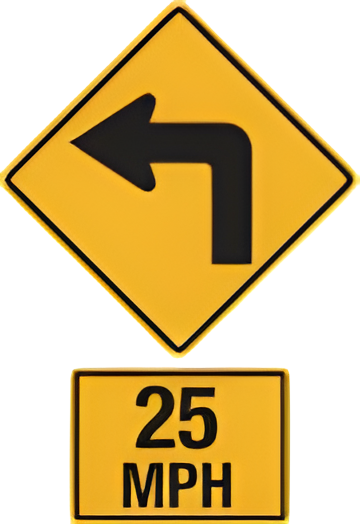 This sign means:
A
If you are driving at 40 MPH or less you must stay in the right-hand lane
B
Curve ahead, drive at 40 MPH ot more around the curve ahead
C
Curve ahead, the recommended speed is 40 MPH or less
This traffic sign indicates: Curve ahead, the recommended speed is 40 MPH or less. Observing and obeying all roadway signs ensures safe traffic flow and legal driving.
Question 25:
If cars approaching from opposite directions reach an intersection at the same time:
A
a car that moves straight must yield to cars that turn left.
B
a car that turns left must yield to cars that move straight or turn right.
C
a car that turns right must yield to cars that move straight or turn left.
According to standard right-of-way regulations: a car that turns left must yield to cars that move straight or turn right. Yielding appropriately prevents intersection collisions and maintains safe traffic flow.