←
Back to Test
Hide Answer Key
Print / Save as PDF
Print / PDF
drive
quiz
.com
CT DMV PERMİT PRACTİCE TEST 10
Connecticut
Duration: 23 min
|
Questions: 25
Student Name:
Date:
Correct:
Incorrect:
Score:
1.

This sign indicates:
A)
Warning: drunk drivers.
B)
Winding road. Drive with caution.
C)
The road may be slippery when wet. Drive slowly.
2.
Large trucks:
A)
have high-tech air brakes which allow them to stop quickly.
B)
take longer to stop than passenger vehicles.
C)
are more maneuverable than passenger vehicles.
3.
Drinking alcohol:
A)
has no effect on either judgement or driving ability.
B)
has no effect on driving ability but affects your judgement.
C)
harms both judgement and driving skills.
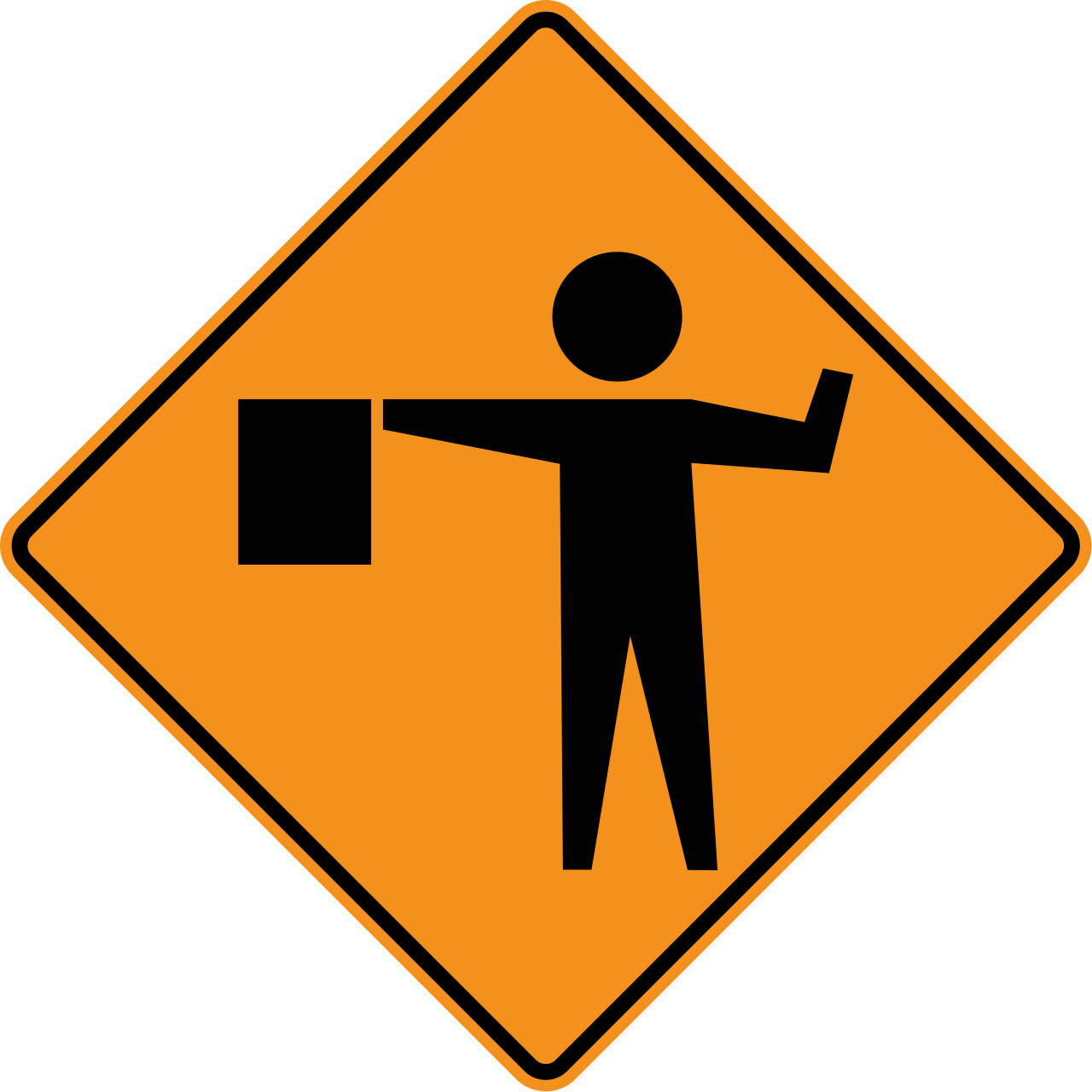
4.
This road sign means:
A)
Right lane closed
B)
Do not block intersection
C)
Flagger ahead
5.
To avoid merging traffic from the right, drivers should:
A)
change lanes to the left.
B)
slow down.
C)
maintain speed and position.
6.
A broken yellow line between two lanes of traffic means:
A)
Passing is permitted when safe.
B)
Passing is not permitted.
C)
Passing on the right is permitted in either direction
7.
Parking is not allowed:
A)
on the road side of a parked vehicle.
B)
in a tunnel.
C)
All of the above.
8.
This sign warns drivers that:
A)
they cannot go straight ahead.
B)
they will soon be facing oncoming traffic.
C)
a shared lane starts ahead.
9.
Drivers may legally block an intersection:
A)
under no circumstances.
B)
only during rush hour traffic.
C)
only after entering the intersection on a green light.
10.
Drivers can not pass a vehicle on the left if:
A)
they approach the top of a hill on a two-way road and can not see over it.
B)
they can not safely return to the right lane before they reach a solid yellow center line for the right lane.
C)
All of the above.
11.
To avoid becoming an aggressive driver, you should:
A)
drive above the posted speed limit.
B)
tailgate the driver in front of you.
C)
relax and concentrate on driving.
12.
You are considered to be driving under the influence when your blood alcohol concentration (BAC) is ____ or more.
A)
0.05%
B)
0.08%
C)
0.8%
13.
The shape of a route sign tells you:
A)
the type of route you are on.
B)
the speed limit on that route.
C)
that the route you are on might be dangerous.
14.
To see vehicles in your blind spots, you must look:
A)
in your outside rearview mirror.
B)
over your shoulders.
C)
in your side mirrors.
15.
What do warning signs mean?
A)
Danger ahead.
B)
Drivers are approaching a location where there is a special rule.
C)
All of the above.
16.
This sign means:
A)
Not enter
B)
Detour to the right
C)
The road to the right is for one-way traffic only
17.
An approved rear-facing child restraint system is required for any child:
A)
under 1 year of age weighing 20 pounds or less.
B)
weighing 30 pounds or less.
C)
under 2 years of age weighing 35 pounds or less.
18.
Regardless of age, if you refuse to take a blood alcohol test, your operator’s license will be suspended for at least:
A)
45 days.
B)
9 months.
C)
6 months.
19.
If you see a distracted driver, you should maintain a safe following distance of:
A)
1-2 seconds.
B)
2-3 seconds.
C)
3-4 seconds.
20.
More than one vehicle is approaching a four-way stop sign. Who has the right of way?
A)
The first driver to reach the intersection and stop.
B)
The driver on the left.
C)
The last driver to reach the intersection.
21.
This road sign means:
A)
Crossroad
B)
Hospital parking ahead
C)
Merge
22.
Which of the following is a defensive driving skill/technique?
A)
Maintain the correct speed.
B)
Do not drive if you are very weary.
C)
All of the above.
23.
Speed limit signs are:
A)
service signs
B)
regulation signs (regulatory signs)
C)
warning signs
24.
At intersections, crosswalks, and railroad crossings, drivers should always:
A)
look to the sides of their vehicle to see what is coming.
B)
slowly pass vehicles the vehicles ahead.
C)
stop, listen for oncoming traffic, and proceed with caution.
25.
In work zones, barriers such as drums, panels and cones are used to:
A)
reduce the flow of traffic.
B)
keep traffic out of hazardous work zones.
C)
keep workers out of the work zone.
ANSWER KEY
Check answers after completing the test.
1
C
2
B
3
C
4
C
5
A
6
A
7
C
8
B
9
A
10
C
11
C
12
B
13
A
14
B
15
C
16
B
17
A
18
A
19
C
20
A
21
A
22
C
23
B
24
A
25
B