Question 1:
When driving in a construction zone you should:
A
slightly increase your speed.
B
come to a complete stop and check road conditions.
C
expect the unexpected.
The correct driving rule is: expect the unexpected. Following standard DMV road rules and practicing defensive driving ensures safety for all road users.
Question 2:
The driver of an emergency vehicle that uses lights and a siren can legally:
A
pass red lights.
B
exceed the speed limit
C
All of the above.
Sharing the road safely requires mutual awareness and respect: pass red lights; exceed the speed limit. Maintaining safe space cushions protects all roadway users.
Question 3:
 This road sign means:
A
Low clearance
B
Do not enter
C
A steep grade is ahead
This traffic sign indicates: Low clearance. Observing and obeying all roadway signs ensures safe traffic flow and legal driving.
Question 4:
If no reduced speed limit signs are clearly posted within a work zone, you should:
A
drive faster than the posted speed limit.
B
obey the normal posted speed limit.
C
drive slower than the posted speed limit.
For safe speed and stopping control: obey the normal posted speed limit. Adjusting speed to match visibility and road traction prevents loss of steering grip.
Question 5:
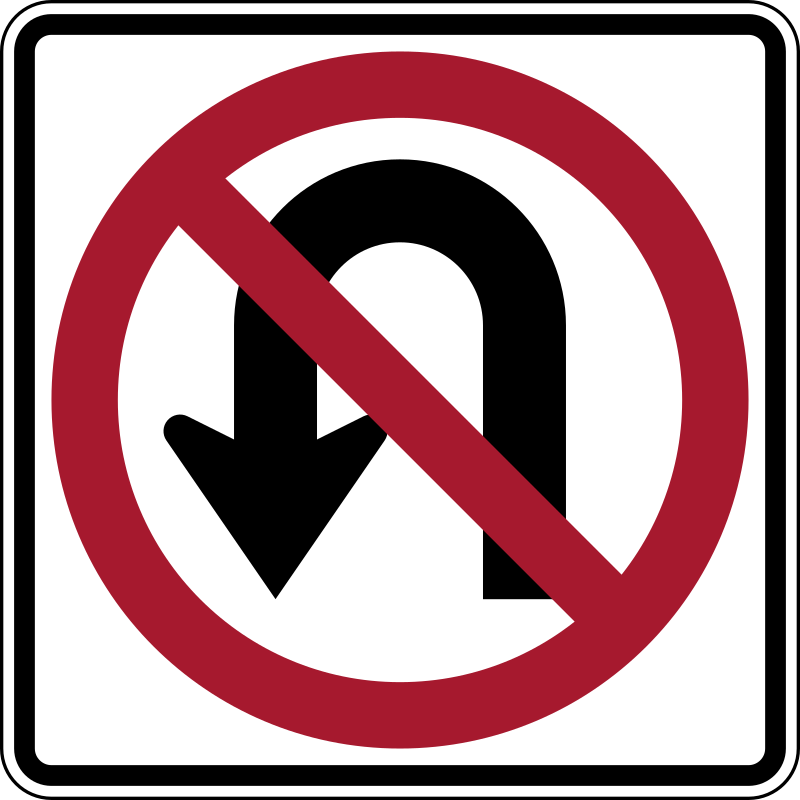 The picture shows a _________ sign.
A
no U-turn
B
no left turn
C
sharp turn
The correct driving rule is: no U-turn. Following standard DMV road rules and practicing defensive driving ensures safety for all road users.
Question 6:
When dust is blowing across the roadway making it difficult to see other vehicles, you should drive slower and turn on your:
A
headlights.
B
parking lights.
C
emergency flashers.
The correct driving rule is: headlights. Following standard DMV road rules and practicing defensive driving ensures safety for all road users.
Question 7:
When approaching a construction site, drivers should:
A
accelerate to get out of the way quickly.
B
slow down and adjust their driving manner.
C
honk their horn to alert construction workers of their presence.
The correct driving rule is: slow down and adjust their driving manner. Following standard DMV road rules and practicing defensive driving ensures safety for all road users.
Question 8:
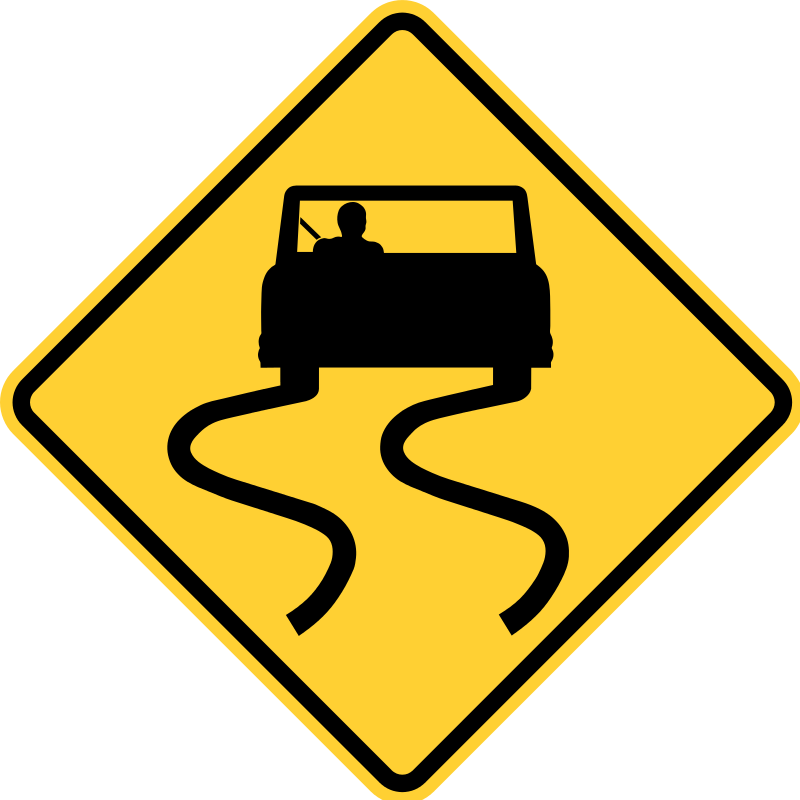 This road sign means:
A
Slow down, slippery when wet
B
Detour ahead
C
Road curves ahead
This traffic sign indicates: slow down, slippery when wet. Observing and obeying all roadway signs ensures safe traffic flow and legal driving.
Question 9:
Blocking an intersection during rush hour traffic is not permitted:
A
under any circumstances.
B
unless you entered the intersection on a green light.
C
unless you have the right-of-way.
According to standard right-of-way regulations: under any circumstances. Yielding appropriately prevents intersection collisions and maintains safe traffic flow.
Question 10:
Where must a pedestrian walk when there are no sidewalks?
A
On the side of the road, in the same direction of traffic.
B
In the middle of the road, facing oncoming traffic.
C
On the side of the road, facing the traffic.
Drivers must always yield the right-of-way to pedestrians crossing at intersections and crosswalks: On the side of the road, facing the traffic. Stop and allow them to clear the lane safely.
Question 11:
Where are yield signs usually placed?
A
At intersections, if there is no marked stop line.
B
Where auxiliary roads lead into major roads.
C
Where major roads lead into auxiliary roads.
The correct driving rule is: Where auxiliary roads lead into major roads. Following standard DMV road rules and practicing defensive driving ensures safety for all road users.
Question 12:
 The yield sign means:
A
Go. The light will soon be red.
B
If the way is clear, you may move forward slowly without stopping.
C
Stop if you can.
A triangular Yield sign requires drivers to slow down and give right-of-way to other traffic: If the way is clear, you may move forward slowly without stopping. Proceed only when there is a safe opening.
Question 13:
Motorcycles are harder to see than cars, therefore you should:
A
slow down when driving.
B
make constant visual checks.
C
share your lane with motorcycles.
The correct driving rule is: make constant visual checks. Following standard DMV road rules and practicing defensive driving ensures safety for all road users.
Question 14:
Unlike passenger cars, trucks have blind spots:
A
on the right.
B
directly behind them.
C
on the front.
The correct driving rule is: directly behind them. Following standard DMV road rules and practicing defensive driving ensures safety for all road users.
Question 15:
You reach an intersection that is not controlled at the same time as a driver on your right, and both of you prepare to go straight. Who has the right-of-way?
A
You.
B
No one.
C
The other driver.
According to standard right-of-way regulations: The other driver. Yielding appropriately prevents intersection collisions and maintains safe traffic flow.
Question 16:
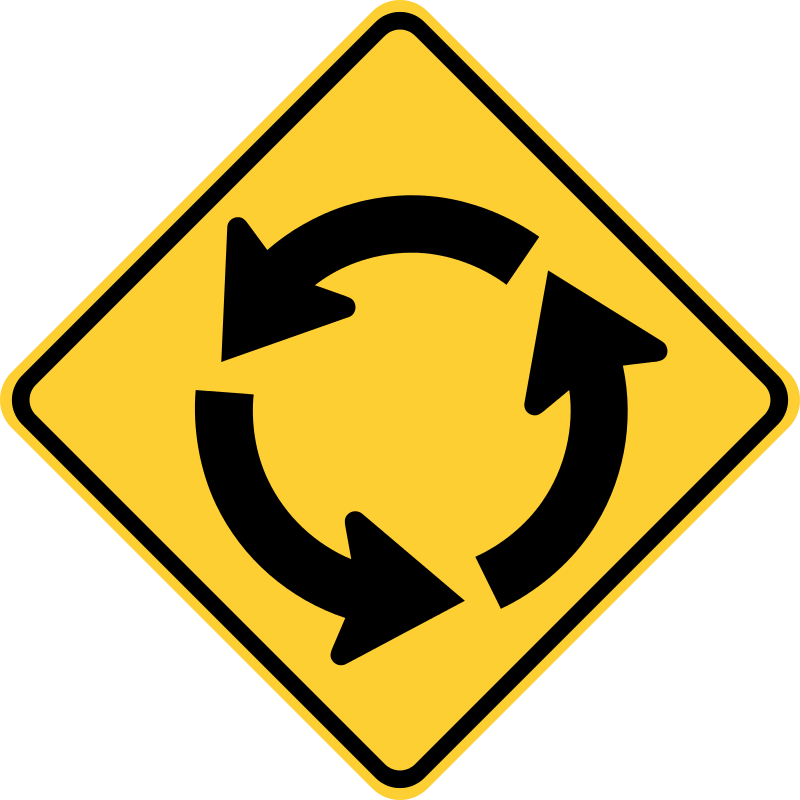 This road sign:
A
warns drivers of a sharp turn left. Drivers should slow their speed and keep to the left.
B
provides an advance notice of a roundabout.
C
warns drivers that U-turns are not permitted.
D
is a no-right-turns sign.
This traffic sign indicates: provides an advance notice of a roundabout. Observing and obeying all roadway signs ensures safe traffic flow and legal driving.
Question 17:
To make a right turn, drivers should:
A
turn from the right lane.
B
turn right from any lane.
C
swing to the left before turning right.
The correct driving rule is: turn from the right lane. Following standard DMV road rules and practicing defensive driving ensures safety for all road users.
Question 18:
When driving on the freeway behind large trucks, you should:
A
move to the right of the truck and pass it quickly.
B
drive closer behind the truck than for a passenger vehicle.
C
increase your following distance.
Defensive driving guidelines state that: increase your following distance. Anticipating road hazards and communicating maneuvers keeps traffic predictable and safe.
Question 19:
Warning signs normally are:
A
rectangles.
B
triangles.
C
diamond-shaped.
The correct driving rule is: diamond-shaped. Following standard DMV road rules and practicing defensive driving ensures safety for all road users.
Question 20:
 This sign means:
A
Reversible lane ahead.
B
The divided highway ends ahead.
C
Drivers are coming to a point where another traffic lane joins the one they are on.
This traffic sign indicates: The divided highway ends ahead. Observing and obeying all roadway signs ensures safe traffic flow and legal driving.
Question 21:
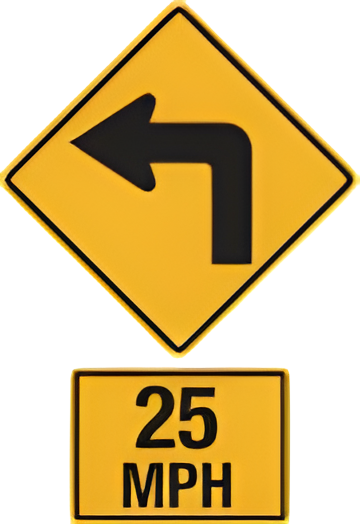 This sign means:
A
If you are driving at 40 MPH or less you must stay in the right-hand lane
B
Curve ahead, drive at 40 MPH ot more around the curve ahead
C
Curve ahead, the recommended speed is 40 MPH or less
This traffic sign indicates: Curve ahead, the recommended speed is 40 MPH or less. Observing and obeying all roadway signs ensures safe traffic flow and legal driving.
Question 22:
 When you see this sign you should:
A
increase your speed and try to pass other vehicles.
B
slow your speed and be prepared to stop.
C
slow your speed and do not pass other vehicles.
This traffic sign indicates: slow your speed and do not pass other vehicles. Observing and obeying all roadway signs ensures safe traffic flow and legal driving.
Question 23:
 This sign warns drivers of:
A
low clearance.
B
a narrow bridge ahead.
C
a low place in the road.
This traffic sign indicates: a narrow bridge ahead. Observing and obeying all roadway signs ensures safe traffic flow and legal driving.
Question 24:
A person walking with a white cane or guide dog is likely to be:
A
a deaf person.
B
a traffic enforcement officer.
C
a blind person.
The correct driving rule is: a blind person. Following standard DMV road rules and practicing defensive driving ensures safety for all road users.
Question 25:
A solid yellow line next to a broken yellow line means that vehicles:
A
next to the solid line may pass.
B
in both directions may pass.
C
next to the broken line may pass.
The correct driving rule is: next to the broken line may pass. Following standard DMV road rules and practicing defensive driving ensures safety for all road users.