Question 1:
A flashing red traffic light:
A
has the same meaning as a yield sign.
B
is used to indicate a pedestrian crossing.
C
has the same meaning as a stop sign.
D
indicates that you should drive with caution.
The correct driving rule is: has the same meaning as a stop sign. Following standard DMV road rules and practicing defensive driving ensures safety for all road users.
Question 2:
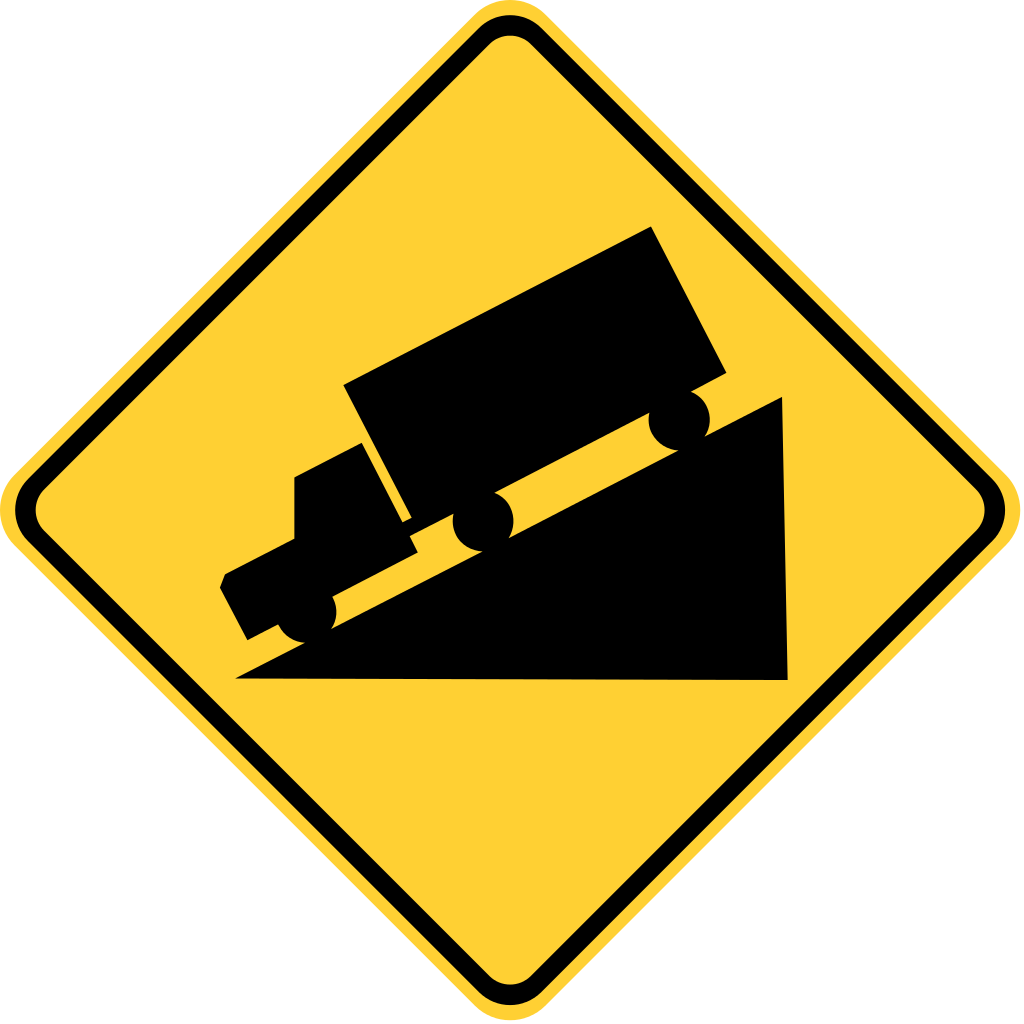 This road sign means:
A
Do not pass trucks
B
Truck must back up
C
Steep downgrade ahead
This traffic sign indicates: Steep downgrade ahead. Observing and obeying all roadway signs ensures safe traffic flow and legal driving.
Question 3:
When driving on a wet road:
A
as you drive faster, your tires may lose traction.
B
you must be aware that the pavement gets even more slippery when it's been raining for long periods of time.
C
you should follow the vehicle ahead of you more closely.
D
as you decrease your speed, the road becomes more slippery.
For safe speed and stopping control: as you drive faster, your tires may lose traction. Adjusting speed to match visibility and road traction prevents loss of steering grip.
Question 4:
 This road sign means:
A
No Passing Zone
B
Railroad Warning
C
One-way street ahead
D
Two way left turn
Circular signs with an 'X' and 'RR' designate a Railroad Advance Warning: Railroad Warning. Drivers must slow down, look both ways, listen for trains, and be prepared to stop.
Question 5:
 This road sign means:
A
Slow down and yield to traffic on main road when merging
B
Always come to a complete stop
C
Lane reduction ahead
D
You must come to a complete stop and yield right-of-way
A triangular Yield sign requires drivers to slow down and give right-of-way to other traffic: slow down and yield to traffic on main road when merging. Proceed only when there is a safe opening.
Question 6:
Drivers must yield for emergency vehicles:
A
Never.
B
only when other vehicles yield.
C
when they see a flashing red or blue light or hear a siren.
D
None of the above.
The correct driving rule is: when they see a flashing red or blue light or hear a siren. Following standard DMV road rules and practicing defensive driving ensures safety for all road users.
Question 7:
The amount of space you need to cross traffic depends on the:
A
road and weather conditions and oncoming traffic.
B
number of cars behind you.
C
presence of a yield sign.
D
number of cars in front of you.
The correct driving rule is: road and weather conditions and oncoming traffic. Following standard DMV road rules and practicing defensive driving ensures safety for all road users.
Question 8:
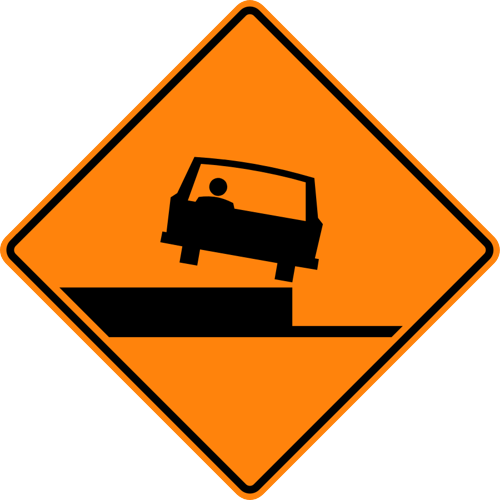 This road sign means:
A
Low shoulder
B
Stop ahead
C
Tow away zone
D
Buggy warning
This traffic sign indicates: Low shoulder. Observing and obeying all roadway signs ensures safe traffic flow and legal driving.
Question 9:
A driver should be extra alert for motorcyclists, bicycles and pedestrians. Why?
A
They obey specific traffic laws.
B
They always have the right-of-way.
C
They are hard to see in traffic.
D
They don’t have rearview mirrors.
The correct driving rule is: they are hard to see in traffic. Following standard DMV road rules and practicing defensive driving ensures safety for all road users.
Question 10:
Drinking alcohol while taking drugs can:
A
have a less pronounced effect than either taken separately.
B
have a more pronounced effect than either taken separately.
C
improves concentration.
D
improve your driving performance.
Under state DUI and traffic safety laws: have a more pronounced effect than either taken separately. Alcohol degrades judgment, slows reaction times, and distorts depth perception.
Question 11:
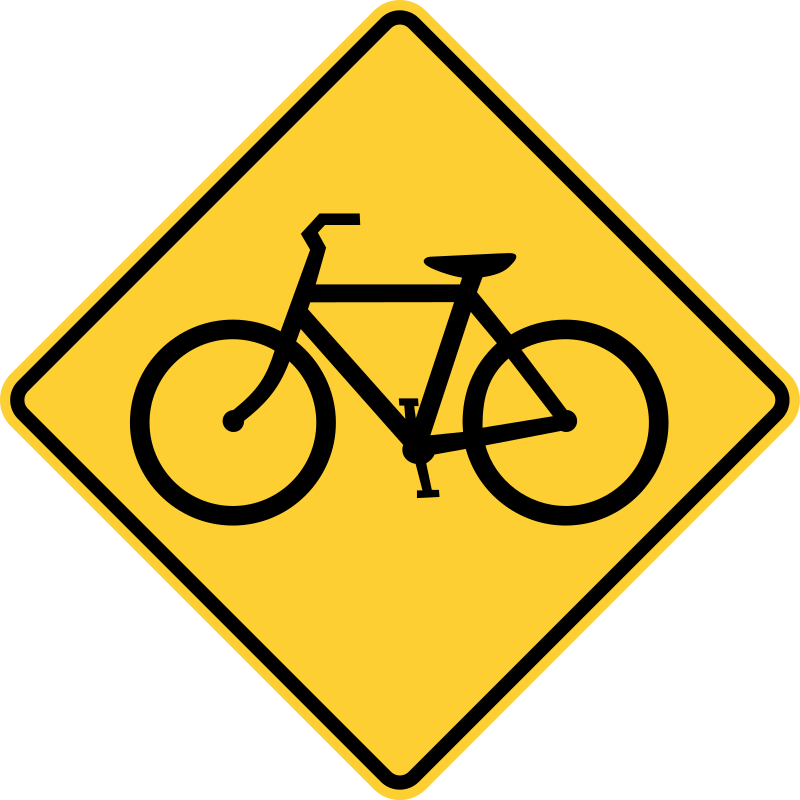 This sign means:
A
Bicycles should yield to vehicles ahead.
B
Warning: a bikeway crosses the roadway ahead.
C
The lane ahead is reserved for bicycles.
This traffic sign indicates: Warning: a bikeway crosses the roadway ahead. Observing and obeying all roadway signs ensures safe traffic flow and legal driving.
Question 12:
If an aggressive driver is behind you:
A
sound your horn and move to the left lane.
B
slow down and confront the aggressive driver.
C
try to get out of the aggressive driver’s way.
D
increase you speed and flash your brake lights.
The correct driving rule is: try to get out of the aggressive driver’s way. Following standard DMV road rules and practicing defensive driving ensures safety for all road users.
Question 13:
Unlike passenger cars, trucks have blind spots:
A
on the right.
B
directly behind them.
C
on the front.
The correct driving rule is: directly behind them. Following standard DMV road rules and practicing defensive driving ensures safety for all road users.
Question 14:
What are some telltale signs of a drunk driver?
A
Sudden stops.
B
Weaving between lanes.
C
Driving slower than the normal flow of traffic.
D
All of the above.
Alcohol and impairing substances degrade all critical driving functions: Sudden stops; Weaving between lanes; Driving slower than the normal flow of traffic. Driving while impaired carries severe criminal and safety penalties.
Question 15:
 This road sign means:
A
A road joins from the left
B
The road ahead turns sharply right then sharply left
C
Sharp right turn
D
Winding road ahead
This traffic sign indicates: The road ahead turns sharply right then sharply left. Observing and obeying all roadway signs ensures safe traffic flow and legal driving.
Question 16:
Green and white signs:
A
give information about directions and distances.
B
are mainly used at intersections and driveways.
C
warn drivers of unexpected road conditions.
The correct driving rule is: give information about directions and distances. Following standard DMV road rules and practicing defensive driving ensures safety for all road users.
Question 17:
What is the most important rule to remember in any emergency?
A
Do not panic.
B
Run away.
C
Call the police.
The correct driving rule is: Do not panic. Following standard DMV road rules and practicing defensive driving ensures safety for all road users.
Question 18:
A driver approaching a flashing red traffic signal must:
A
merge to the left.
B
stop before the intersection.
C
carefully drive through the intersection without stopping.
D
slow down at the traffic signal.
This traffic sign indicates: stop before the intersection. Observing and obeying all roadway signs ensures safe traffic flow and legal driving.
Question 19:
Where there is no bicycle lane, where on the road must a bicyclist ride?
A
on the left shoulder of the road.
B
near the right curb or edge of the road.
C
near the left edge of the road.
State laws require motorists to provide a safe clearance buffer: near the right curb or edge of the road. Allow at least 3 feet of space when overtaking a bicyclist.
Question 20:
A traffic sign with a red circle around and a slash over a symbol means:
A
the maneuver shown by the symbol is not allowed.
B
Do not drive faster than the posted speed limit.
C
the maneuver shown on the sign should be executed with extreme caution.
This traffic sign indicates: the maneuver shown by the symbol is not allowed. Observing and obeying all roadway signs ensures safe traffic flow and legal driving.
Question 21:
Work zone signs:
A
mean that road conditions will improve soon.
B
mean that drivers must come to a complete stop and back up.
C
provide information on road work or other temporary road conditions.
D
mean that drivers should drive faster to get out of the work zone.
The correct driving rule is: provide information on road work or other temporary road conditions. Following standard DMV road rules and practicing defensive driving ensures safety for all road users.
Question 22:
What should you do when an aggressive driver confronts you?
A
Avoid eye contact with the aggressive driver.
B
Make eye contact.
C
Challenge the aggressive driver with increased speed.
The correct driving rule is: avoid eye contact with the aggressive driver. Following standard DMV road rules and practicing defensive driving ensures safety for all road users.
Question 23:
You want to turn left at an intersection ahead. A car reaches the intersection from the opposite direction and moves straight ahead. You:
A
can turn left. You have the right of way.
B
must wait for the car to go through before you turn.
C
may not enter the intersection to prepare for your left turn if the light is green.
According to standard right-of-way regulations: must wait for the car to go through before you turn. Yielding appropriately prevents intersection collisions and maintains safe traffic flow.
Question 24:
If another car has stopped in an adjacent lane in the same direction of travel, you should:
A
speed up and pass the vehicle on the right.
B
pass the car on the left.
C
be careful in case the other vehicle has stopped for a pedestrian.
D
tap your horn to let the other driver know you are passing.
The correct driving rule is: be careful in case the other vehicle has stopped for a pedestrian. Following standard DMV road rules and practicing defensive driving ensures safety for all road users.
Question 25:
When driving in travel lanes on the roadway:
A
you may make a U-turn if you get on the wrong entrance ramp of the freeway.
B
you may stop to let out passengers.
C
do not stop for any reason, keep moving until you can safely pull off the road.
D
you may make back up quickly if there are no vehicles behind.
The correct driving rule is: do not stop for any reason, keep moving until you can safely pull off the road. Following standard DMV road rules and practicing defensive driving ensures safety for all road users.