Question 1:
It is against the law to enter an intersection when:
A
the light is yellow and you can stop safely.
B
you can’t get all the way across before the light turns red.
C
the light is flashing yellow and you didn’t stop first.
According to standard right-of-way regulations: you can’t get all the way across before the light turns red. Yielding appropriately prevents intersection collisions and maintains safe traffic flow.
Question 2:
If your vehicle starts to lose traction because of water on the road:
A
maintain your current speed to gain better traction.
B
apply the brakes firmly to prevent your vehicle from sliding.
C
slow down gradually and do not apply the brakes.
The correct driving rule is: slow down gradually and do not apply the brakes. Following standard DMV road rules and practicing defensive driving ensures safety for all road users.
Question 3:
What should drivers do when the red lights begin to flash?
A
Stop.
B
Yield.
C
Slow down.
The correct driving rule is: stop. Following standard DMV road rules and practicing defensive driving ensures safety for all road users.
Question 4:
Unlike passenger cars, trucks have blind spots:
A
on the right.
B
directly behind them.
C
on the front.
The correct driving rule is: directly behind them. Following standard DMV road rules and practicing defensive driving ensures safety for all road users.
Question 5:
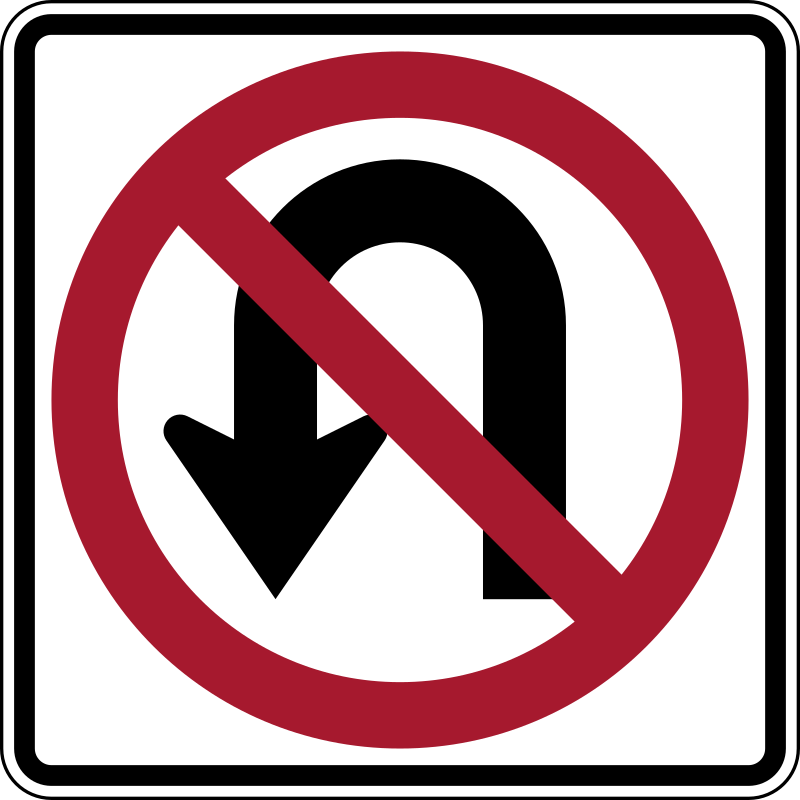 This road sign means:
A
Left turns are not allowed where this sign is displayed.
B
Drivers cannot make a complete turn to go in the opposite direction.
C
Vehicles turning left must make a U-turn.
This traffic sign indicates: drivers cannot make a complete turn to go in the opposite direction. Observing and obeying all roadway signs ensures safe traffic flow and legal driving.
Question 6:
Which of the following is true about large trucks:
A
Trucks often appear to travel slower because of their large size.
B
It is best to pass trucks very slowly and on the right side.
C
Trucks have fewer blind spots due to the vehicle’s height.
The correct driving rule is: Trucks often appear to travel slower because of their large size. Following standard DMV road rules and practicing defensive driving ensures safety for all road users.
Question 7:
 This sign warns drivers that:
A
they cannot go straight ahead.
B
they will soon be facing oncoming traffic.
C
a shared lane starts ahead.
This traffic sign indicates: they will soon be facing oncoming traffic. Observing and obeying all roadway signs ensures safe traffic flow and legal driving.
Question 8:
What is the most important rule to remember in any emergency?
A
Do not panic.
B
Run away.
C
Call the police.
The correct driving rule is: Do not panic. Following standard DMV road rules and practicing defensive driving ensures safety for all road users.
Question 9:
 What does this road sign indicate?
A
Hospital service
B
Area reserved for people with disabilities
C
Interstate highway
This traffic sign indicates: Hospital service. Observing and obeying all roadway signs ensures safe traffic flow and legal driving.
Question 10:
A thumping sound can be a warning:
A
that a tire blowout is about to occur.
B
of a steering failure.
C
of a brake failure.
The correct driving rule is: that a tire blowout is about to occur. Following standard DMV road rules and practicing defensive driving ensures safety for all road users.
Question 11:
 The octagonal shape is used:
A
for stop signs and railroad advance warning signs.
B
exclusively for stop signs.
C
to warn drivers of existing or possible hazards on roadways.
An octagonal Stop sign requires a full and complete stop before the stop line or crosswalk: exclusively for stop signs. Proceed only after yielding to all cross traffic and pedestrians.
Question 12:
When children are close, what should you do before you back out of a driveway?
A
Rely on your mirrors.
B
Get out of the car and check behind the car.
C
Look through your back window for children.
The correct driving rule is: Get out of the car and check behind the car. Following standard DMV road rules and practicing defensive driving ensures safety for all road users.
Question 13:
Regulation signs normally are:
A
white triangles.
B
green rectangles.
C
white rectangles.
The correct driving rule is: white rectangles. Following standard DMV road rules and practicing defensive driving ensures safety for all road users.
Question 14:
 This sign tells drivers:
A
they must wait for the traffic signal to turn green before turning right or left.
B
they may not turn right or left during the red light.
C
All of the above.
This sign alerts drivers to several mandatory requirements: they must wait for the traffic signal to turn green before turning right or left, they may not turn right or left during the red light. Obeying all posted traffic control instructions is required by law.
Question 15:
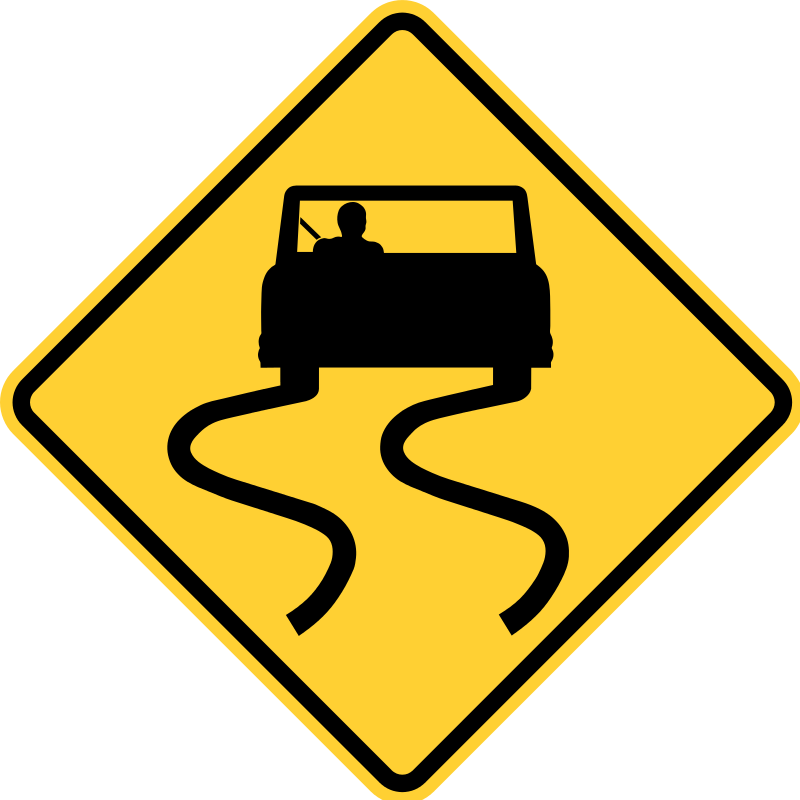 This sign means:
A
The road will curve to the right, then to the left.
B
Road slippery when wet. Drive slowly.
C
Winding road ahead. Drive with caution.
This traffic sign indicates: Road slippery when wet. Drive slowly. Observing and obeying all roadway signs ensures safe traffic flow and legal driving.
Question 16:
If you are blinded by headlights on an approaching vehicle, you should:
A
avoid looking directly at the bright lights.
B
glance toward the side of the road, then look quickly ahead to determine the other vehicle’s position.
C
All of the above.
All of the listed points are essential driving requirements: avoid looking directly at the bright lights; glance toward the side of the road, then look quickly ahead to determine the other vehicle’s position. Practicing each ensures compliance with DMV safety laws.
Question 17:
Where are yield signs usually placed?
A
At intersections, if there is no marked stop line.
B
Where auxiliary roads lead into major roads.
C
Where major roads lead into auxiliary roads.
The correct driving rule is: Where auxiliary roads lead into major roads. Following standard DMV road rules and practicing defensive driving ensures safety for all road users.
Question 18:
You are getting ready to make a right turn. You should:
A
signal during the last 100 feet before you turn.
B
always stop before making a right turn.
C
slow down and signal as you start your turn.
The correct driving rule is: signal during the last 100 feet before you turn. Following standard DMV road rules and practicing defensive driving ensures safety for all road users.
Question 19:
When should you use hand-over-hand steering?
A
When performing sharp right turns.
B
When parking.
C
All of the above.
All of the listed points are essential driving requirements: When performing sharp right turns; When parking. Practicing each ensures compliance with DMV safety laws.
Question 20:
 The yellow sign means:
A
You are approaching a railroad crossing.
B
Stop at the railroad tracks and wait for a signal before crossing.
C
Railroad crossing is controlled - continue at your regular speed.
Circular signs with an 'X' and 'RR' designate a Railroad Advance Warning: you are approaching a railroad crossing. Drivers must slow down, look both ways, listen for trains, and be prepared to stop.
Question 21:
You hear a siren close by but can not see where the emergency vehicle is. What do you do?
A
Keep driving until you are sure the emergency vehicle is headed toward you.
B
Stop immediately and activate your emergency flashers.
C
Pull over to the right side of the road and stop until you are sure the emergency vehicle is not headed toward you.
When sharing the road with other vehicles: pull over to the right side of the road and stop until you are sure the emergency vehicle is not headed toward you. Giving large vehicles and vulnerable users adequate clearance prevents dangerous accidents.
Question 22:
To pass a bicyclist in a narrow traffic lane when an oncoming vehicle is approaching:
A
wait until the oncoming vehicle passes the bicyclist.
B
sound your horn, then pass the bicyclist.
C
slow down and let the vehicle pass before passing the bicyclist.
The correct driving rule is: slow down and let the vehicle pass before passing the bicyclist. Following standard DMV road rules and practicing defensive driving ensures safety for all road users.
Question 23:
Which shape is a speed limit sign?
A
Round
B
Pentagon
C
Vertical rectangle
For safe speed and stopping control: Vertical rectangle. Adjusting speed to match visibility and road traction prevents loss of steering grip.
Question 24:
You must show proof of insurance to law enforcement:
A
if you are involved in a collision or stopped for a citation.
B
only if you are involved in a collision.
C
only if you are stopped and cited.
The correct driving rule is: if you are involved in a collision or stopped for a citation. Following standard DMV road rules and practicing defensive driving ensures safety for all road users.
Question 25:
You are driving 55 MPH on a two-lane highway, one lane in each direction, and want to pass the vehicle ahead of you. To pass safely, you need to:
A
wait until solid double, yellow lines separate the lanes.
B
have a large enough gap in the oncoming traffic.
C
increase your speed to at least 60 MPH.
Defensive driving guidelines state that: have a large enough gap in the oncoming traffic. Anticipating road hazards and communicating maneuvers keeps traffic predictable and safe.
Question 26:
You may legally drive in any freeway carpool lane if:
A
all other lanes are stopped with heavy traffic.
B
you carry the minimum number of persons shown on the sign.
C
it is between the hours of 7pm and 7am.
Defensive driving guidelines state that: you carry the minimum number of persons shown on the sign. Anticipating road hazards and communicating maneuvers keeps traffic predictable and safe.
Question 27:
To eliminate or reduce air bag risk, drivers should ride at least ________ from the air bag cover.
A
20 inches
B
10 inches
C
2 inches
The correct driving rule is: 10 inches. Following standard DMV road rules and practicing defensive driving ensures safety for all road users.
Question 28:
Left turns on a red light are allowed:
A
from a one-way street into a one-way street.
B
Never.
C
at intersections, after stopping, if the way is clear.
When turning left across traffic lanes: from a one-way street into a one-way street. You must yield to all oncoming vehicles and crossing pedestrians before completing the turn.
Question 29:
When they see a crossbuck sign, drivers:
A
must slow down and wait for the red lights to flash.
B
must always come to a complete stop.
C
are legally required to yield the right of way to trains.
The correct driving rule is: are legally required to yield the right of way to trains. Following standard DMV road rules and practicing defensive driving ensures safety for all road users.
Question 30:
It is extremely foggy. Based on the Basic Speed Law, if you are driving 45 MPH in a 55 MPH speed, you could be cited for:
A
driving “too fast for conditions.”
B
driving below the posted Basic Speed Limit.
C
driving too slow.
The Basic Speed Law states that you must never drive faster than is safe for existing weather, road, and traffic conditions, regardless of posted speed limits.
Question 31:
You are driving on a freeway posted for 65 MPH. Traffic is heavy and moving at 35 MPH. The best speed for your vehicle is most likely:
A
30 MPH
B
65 MPH
C
35 MPH
For safe speed and stopping control: 35 MPH. Adjusting speed to match visibility and road traction prevents loss of steering grip.
Question 32:
Pentagonal signs are used to indicate:
A
possible hazards on roadways.
B
no passing zones.
C
school crossings.
The correct driving rule is: school crossings. Following standard DMV road rules and practicing defensive driving ensures safety for all road users.
Question 33:
You may make a left turn on a red light only from a:
A
two-way street onto a one-way street.
B
one-way street onto a two-way street.
C
one-way street onto a one-way street.
When turning left across traffic lanes: one-way street onto a one-way street. You must yield to all oncoming vehicles and crossing pedestrians before completing the turn.
Question 34:
Before driving into an intersection from a stop, you should look:
A
left, right, and left again.
B
straight ahead and to the left.
C
left and right.
According to standard right-of-way regulations: left, right, and left again. Yielding appropriately prevents intersection collisions and maintains safe traffic flow.
Question 35:
You should dim your lights for oncoming vehicles or when you are within 300 feet of a vehicle:
A
you have already passed.
B
approaching you from behind.
C
you are approaching from behind.
The correct driving rule is: you are approaching from behind. Following standard DMV road rules and practicing defensive driving ensures safety for all road users.
Question 36:
 The sign in the picture:
A
is a Construction and Maintenance Traffic Control sign.
B
is found at most intersections and indicates that drivers must yield to other vehicles.
C
is displayed on the rear of slow moving vehicles.
The correct driving rule is: is displayed on the rear of slow moving vehicles. Following standard DMV road rules and practicing defensive driving ensures safety for all road users.