DriveQuiz drivequiz.com

CA DMV PERMİT PRACTİCE TEST 18

California
Duration: 33 min
|
Questions: 36
Student Name:
Date:
Correct:      Incorrect:      Score:      
1.
Near streetcars, trolleys, or buses, the passing speed limit, when safe to pass, is:
A) 10 MPH
B) 20 MPH
C) 15 MPH
2.
Collisions tend to happen when:
A) one lane of traffic is traveling much slower than the others.
B) all vehicles are travelling near or at the same speed.
C) one vehicle is traveling faster or slower than the flow of traffic.
3.
What is the best advice for driving when heavy fog or dust occurs?
A) Consider postponing your trip until the conditions improve.
B) Slow down and come to a complete stop.
C) Do not drive too slowly, because other drivers may hit you.
4.
You are driving on a city street and see an emergency vehicle with flashing lights behind you. What should you do?
A) Drive to the edge of the road and slow down.
B) Driver to the right edge of the road and stop.
C) Stay in your lane, slow down, and let it pass.
5.
If you cannot stop safely at a yellow traffic light, you should:
A) stop your vehicle in the intersection, then back up carefully.
B) stop your vehicle before entering the intersection.
C) enter the intersection with caution and continue across.
6.
You may drive off of the paved roadway to pass another vehicle:
A) Under no circumstances
B) If the vehicle ahead of you is turning left.
C) If the shoulder is wide enough to accommodate your vehicle
7.
If another driver does not dim his or her lights, you should:
A) look directly into the oncoming headlights.
B) watch the oncoming vehicle out of the corner of your eye.
C) look toward the left edge of your lane.
8.
Yellow diamond warning that pedestrians may be crossing ahead. Exercise caution and yield.
This sign means:
A) Pedestrian sidewalk ahead.
B) Pedestrians must yield the right-of-way ahead.
C) Pedestrian crossing ahead.
9.
Flashing Upraised Hand signal indicates pedestrians should finish crossing if already in the crosswalk, but not start crossing.
A pedestrian in the crosswalk when the 'DON’T WALK' signal begins flashing must:
A) stop immediately.
B) go back and wait the “WALK” light
C) finish crossing the street.
10.
Alerts drivers to an upcoming crosswalk where pedestrians frequently cross. Slow down and yield right-of-way to anyone in or about to enter the roadway.
When you see this sign you:
A) always stop at the upcoming railroad crossing.
B) are approaching a railroad crossing: prepare to stop.
C) stop and wait for a signal before crossing the railroad tracks.
11.
Warns of an extremely sharp 180-degree curve ahead. Decelerate significantly before entering the turn.
This sign means:
A) Hairpin corner ahead.
B) Warning: U-turn ahead.
C) Sharp right turn ahead.
12.
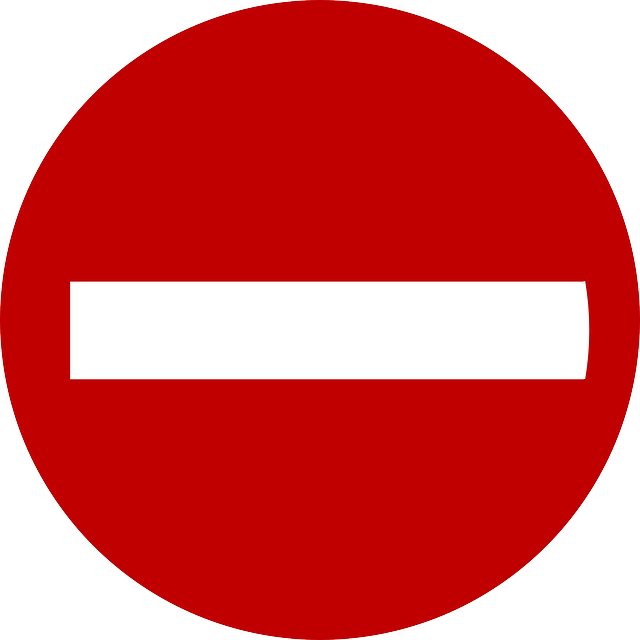
Indicates you have entered an exit ramp or one-way street in the incorrect direction. Stop immediately and safely turn around.
The picture represents a _________ sign:
A) Do Not Pass
B) Do Not Enter
C) Wrong Way
13.
Slow down and give right-of-way to all oncoming vehicles, cyclists, and pedestrians. Stop completely if necessary before entering the intersection or merging.
The yield sign means:
A) Go. The light will soon be red.
B) If the way is clear, you may move forward slowly without stopping.
C) Stop if you can.
14.
If a driver follows you too closely, you should:
A) move to another lane if possible.
B) activate your stop lights.
C) brake suddenly.
15.
You should allow a four-second or more cushion when:
A) The driver behind you wants to pass.
B) Being crowded by a tailgater.
C) All of the above.
16.
A sharp curve is ahead with a recommended safe speed plate. Slow down before entering the curve to prevent vehicle rollover.
This sign indicates that:
A) the highest safe speed drivers should travel around the curve ahead is 25 MPH.
B) the safe speed around the curve ahead is at least 25 MPH.
C) drivers may not turn right if traveling at 25 MPH or less.
17.
Even if you know your vehicle can maneuver a sharp curve at the legal speed limit, you should still slow down because:
A) there may be a stalled vehicle or collision ahead that you can’t see.
B) the strong inward pull on your vehicle can be dangerous.
C) you must legally drive below the speed limit on sharp curves.
18.
Are bicyclists required to obey traffic laws and signs?
A) No, bicyclists are considered pedestrians when it comes to the rules of the road.
B) Yes.
C) Yes, but only if they are riding in a bicycle lane.
19.
You were parked and have been waiting a long time with your turn signal on to re-enter traffic. However, traffic is heavy. You should:
A) drive on the shoulder until a gap in traffic appears.
B) slowly inch your vehicle into the traffic lane.
C) continue waiting and yielding to traffic in the lane.
20.
You may cross double yellow lines to pass another vehicle if the:
A) yellow line next to the other side of the road is broken.
B) yellow line next to your side of the road is broken.
C) vehicle in front of you moves to the right to let you pass.
21.
Backing your vehicle is:
A) dangerous if you have a helper.
B) always dangerous to do.
C) only dangerous in large vehicles.
22.
You should never depend on your mirrors when you prepare to change lanes. Why?
A) Mirrors leave “blind spots” behind both sides of vehicles.
B) Mirrors need to be adjusted.
C) Mirrors are useless.
23.
If the road is wet from a heavy rain, you should:
A) drive one vehicle-length behind the vehicle ahead.
B) increase the distance between your vehicle and the vehicle ahead.
C) use the “two second” following distance rule.
24.
You are driving on a divided street with multiple lanes in your direction. If you need to make a U-turn, where should you start?
A) On the shoulder.
B) In the left lane.
C) In the median.
25.
If you have trouble seeing other vehicles because of dust or smoke blowing across the roadway, you should drive slower and turn on your:
A) emergency flashers.
B) parking lights.
C) headlights.
26.
Drivers can not pass a vehicle on the left if:
A) they approach the top of a hill on a two-way road and can not see over it.
B) they can not safely return to the right lane before they reach a solid yellow center line for the right lane.
C) All of the above.
27.
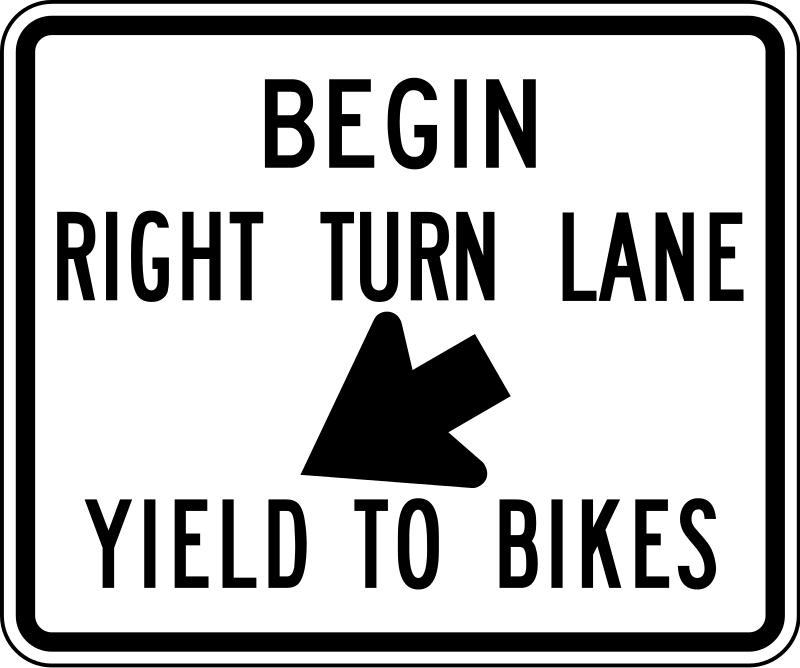
Drivers turning right must merge into the bike lane before turning, first checking mirrors and blind spots and yielding to all cyclists.
What does this road sign indicate?
A) Drivers have the right of way over bikes turning left.
B) Vehicles turning left must yield to bikes entering a right turn lane.
C) Motor vehicles entering an exclusive right-turn lane must weave across bicycle traffic in bicycle lanes.
28.
Which of the following is NOT true about safety belts?
A) They can trap you inside a vehicle.
B) They can keep you from being thrown into the path of another vehicle.
C) They can reduce injuries.
29.
When two vehicles meet on a steep road where neither vehicle can pass, which one must yield the right-of-way?
A) The vehicle facing downhill
B) The vehicle with the most passengers.
C) The vehicle going uphill
30.
While inside the roundabout, you should:
A) remain in your lane until you are ready to exit.
B) change lanes before you check for vehicles behind you.
C) use your left turn signal if you are in position to exit now.
31.
If a traffic officer signals you to drive through a red light:
A) you must do it.
B) you must wait for the red light to turn green.
C) you must not obey the officer. Signs and signals take precedence over directions given by traffic officers.
32.
You are driving and there are oncoming vehicles on your left and a row of parked vehicles on your right. You should steer:
A) a middle course between the oncoming and parked vehicles.
B) closer to the oncoming vehicles than the parked vehicles.
C) closer to the parked vehicles than the oncoming vehicles.
33.
Which of the following is true about roadways on bridges and overpasses in cold, wet weather?
A) They do not freeze because they are made of concrete.
B) They tend to freeze before the rest of the road does.
C) They tend to freeze after the rest of the road does.
34.
On average, how long does it take your body to remove the alcohol contained in 5 ounces of wine?
A) one hour.
B) 30 minutes.
C) 3 hours.
35.
Alcohol:
A) makes drivers more prone to take chances.
B) increases reaction time.
C) All of the above.
36.
Which signs have black letters on a yellow or orange background?
A) Warning signs (diamond)
B) Regulatory signs (vertical rectangle)
C) Railroad advance warning signs (round)
ANSWER KEY Check answers after completing the test.
1 A
2 C
3 A
4 B
5 C
6 A
7 B
8 C
9 C
10 B
11 A
12 B
13 B
14 A
15 C
16 A
17 A
18 B
19 C
20 B
21 B
22 A
23 B
24 B
25 C
26 C
27 C
28 A
29 A
30 A
31 A
32 A
33 B
34 A
35 C
36 A