Question 1:
Never make a U-turn from:
A
the lane you’re in.
B
the right lane.
C
the left part of the lane nearest to the centerline of the roadway.
According to standard right-of-way regulations: the right lane. Yielding appropriately prevents intersection collisions and maintains safe traffic flow.
Question 2:
An edge line that angles toward the center of the road indicates that:
A
the road is narrower ahead.
B
there’s a narrow bridge ahead.
C
you must turn right.
The correct driving rule is: the road is narrower ahead. Following standard DMV road rules and practicing defensive driving ensures safety for all road users.
Question 3:
When you make a left turn from a one-way road into a two-way road, you must:
A
enter the two-way road to the left of its center line.
B
make a U-turn into the two-way road.
C
enter the two-way road to the right of its center line.
The correct driving rule is: enter the two-way road to the right of its center line. Following standard DMV road rules and practicing defensive driving ensures safety for all road users.
Question 4:
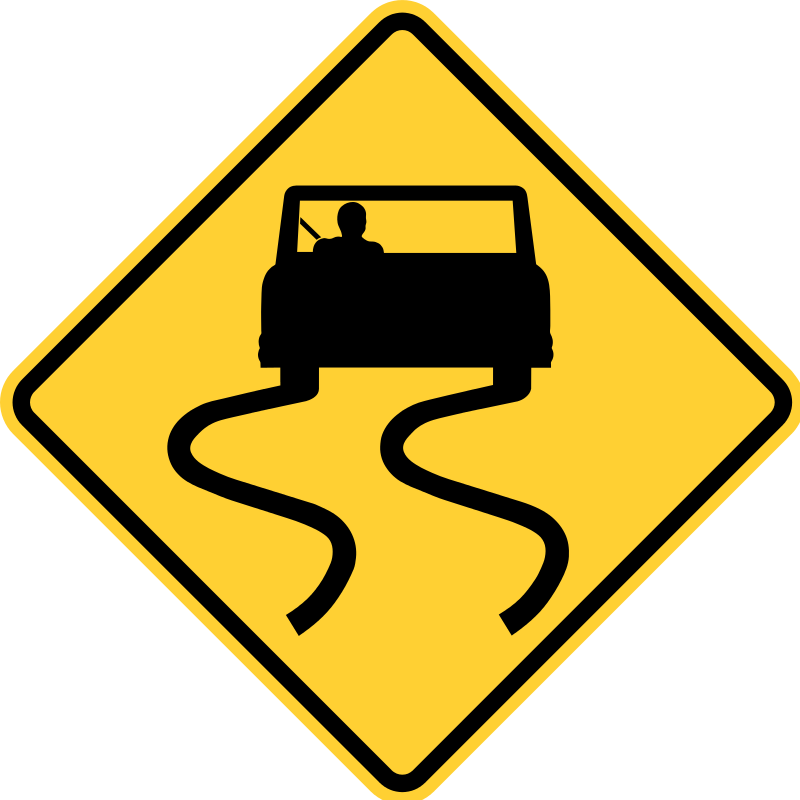 This yellow sign means:
A
there is a sharp curve in the road ahead.
B
the road ahead has many curves.
C
the road ahead may be slippery.
This traffic sign indicates: the road ahead may be slippery. Observing and obeying all roadway signs ensures safe traffic flow and legal driving.
Question 5:
The maximum speed limit for ideal driving conditions is:
A
the posted speed.
B
the speed of other vehicles traveling in your direction.
C
the speed of oncoming vehicles.
For safe speed and stopping control: the posted speed. Adjusting speed to match visibility and road traction prevents loss of steering grip.
Question 6:
A law enforcement officer notices that one of your passengers is not wearing a seat belt and writes a citation. Which of the following is true?
A
Your passenger will receive a citation, regardless of his or her age.
B
Both you and your passenger will receive a citation.
C
You can receive the citation if the passenger is younger than 16.
The correct driving rule is: you can receive the citation if the passenger is younger than 16. Following standard DMV road rules and practicing defensive driving ensures safety for all road users.
Question 7:
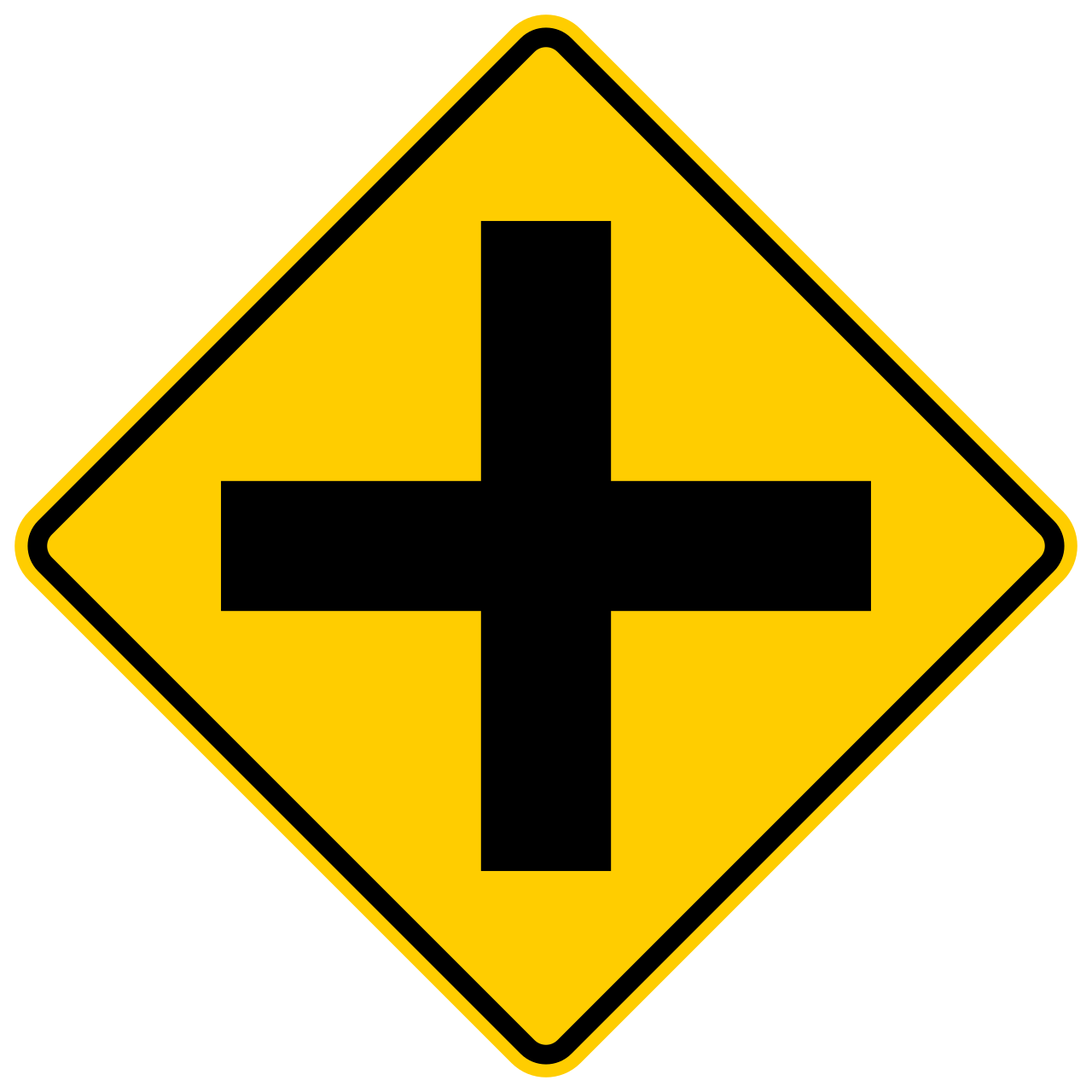 This yellow sign means:
A
another road crosses yours ahead.
B
there is a T-intersection ahead.
C
ambulance zone ahead.
This traffic sign indicates: another road crosses yours ahead. Observing and obeying all roadway signs ensures safe traffic flow and legal driving.
Question 8:
Large trucks are most likely to lose speed and cause a hazard:
A
going up long or steep hills.
B
going down long gradual hills.
C
on long, gradual curves.
For safe speed and stopping control: going up long or steep hills. Adjusting speed to match visibility and road traction prevents loss of steering grip.
Question 9:
Where must a pedestrian walk when there are no sidewalks?
A
On the side of the road, in the same direction of traffic.
B
In the middle of the road, facing oncoming traffic.
C
On the side of the road, facing the traffic.
Drivers must always yield the right-of-way to pedestrians crossing at intersections and crosswalks: On the side of the road, facing the traffic. Stop and allow them to clear the lane safely.
Question 10:
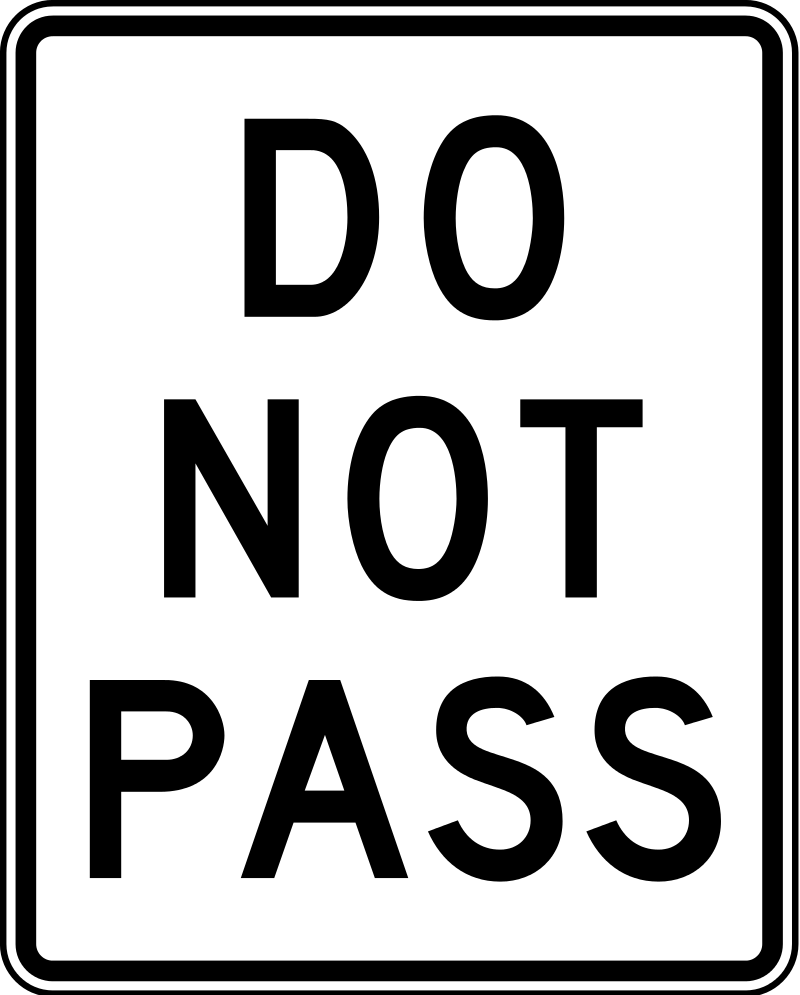 This white sign means don’t pass:
A
unless it is safe to do so.
B
other vehicles for any reason.
C
until after you pass the sign.
This traffic sign indicates: other vehicles for any reason. Observing and obeying all roadway signs ensures safe traffic flow and legal driving.
Question 11:
You just sold your vehicle. You must notify the DMV within ___ days.
A
5
B
15
C
10
The correct driving rule is: 5. Following standard DMV road rules and practicing defensive driving ensures safety for all road users.
Question 12:
What does it mean If an oncoming driver flashes headlights at you during a period of low visibility?
A
Your headlights are too bright. You should turn them off.
B
Your vehicle was difficult to see. You should turn on your headlights.
C
Your headlights are too bright. You should use parking lights instead.
The correct driving rule is: Your vehicle was difficult to see. You should turn on your headlights. Following standard DMV road rules and practicing defensive driving ensures safety for all road users.
Question 13:
You are driving on a one-way street. You may turn left onto another one-way street:
A
if traffic on the street is moving to the right.
B
only if a sign permits the turn.
C
if traffic on the street is moving to the left.
According to standard right-of-way regulations: if traffic on the street is moving to the left. Yielding appropriately prevents intersection collisions and maintains safe traffic flow.
Question 14:
It is very important to check behind you before you:
A
Reduce your speed.
B
Change lanes.
C
All of the above.
All of the listed points are essential driving requirements: Reduce your speed; Change lanes. Practicing each ensures compliance with DMV safety laws.
Question 15:
You must carefully watch for bicycles in traffic lanes because they:
A
usually have the right-of-way.
B
must ride facing oncoming traffic.
C
could be hidden in your blind spots.
The correct driving rule is: could be hidden in your blind spots. Following standard DMV road rules and practicing defensive driving ensures safety for all road users.
Question 16:
 When they see a yellow X signal, drivers should:
A
come to a complete stop at the marked stop line.
B
turn off the ignition.
C
prepare to leave the lane safely.
State laws require signaling your intention: prepare to leave the lane safely. Signal at least 100 feet before making a turn or changing lanes.
Question 17:
Your car stalls on the tracks at a railroad crossing, and a collision with a train is imminent. After getting yourself and your passengers out of the car, you should:
A
run toward the train but stay off the tracks.
B
signal the train to stop.
C
cross the tracks.
The correct driving rule is: run toward the train but stay off the tracks. Following standard DMV road rules and practicing defensive driving ensures safety for all road users.
Question 18:
What do warning signs mean?
A
Danger ahead.
B
Drivers are approaching a location where there is a special rule.
C
All of the above.
All of the listed points are essential driving requirements: Danger ahead; Drivers are approaching a location where there is a special rule. Practicing each ensures compliance with DMV safety laws.
Question 19:
Which of these is true about other drivers?
A
Drivers always obey traffic signs and signals.
B
Drivers using turn signals always turn in the direction indicated.
C
Never assume other drivers will give you the right-of-way.
The correct driving rule is: Never assume other drivers will give you the right-of-way. Following standard DMV road rules and practicing defensive driving ensures safety for all road users.
Question 20:
If you are arrested for driving with a blood alcohol concentration (BAC) above the legal limit:
A
you will be sentenced to up to six months in jail.
B
DMV can take an administrative action against your driving privilege.
C
you'll be required to take an alcohol-test every 3 months for up to 2 years.
In nearly all US states, drivers age 21 and older are legally intoxicated with a Blood Alcohol Concentration (BAC) of 0.08% or higher.
Question 21:
 When they see this sign, drivers should:
A
increase their speed and keep well to the right.
B
slow down and keep well to the right.
C
slow down and keep well to the left.
This traffic sign indicates: slow down and keep well to the left. Observing and obeying all roadway signs ensures safe traffic flow and legal driving.
Question 22:
Drivers can not pass a vehicle on the left if:
A
they approach the top of a hill on a two-way road and can not see over it.
B
they can not safely return to the right lane before they reach a solid yellow center line for the right lane.
C
All of the above.
All of the listed points are essential driving requirements: they approach the top of a hill on a two-way road and can not see over it; they can not safely return to the right lane before they reach a solid yellow center line for the right lane. Practicing each ensures compliance with DMV safety laws.
Question 23:
Which of these statements is true about driving and taking medications:
A
Medications are safe to take at any time if prescribed by a doctor.
B
Most cold medications can make a person drowsy.
C
Over-the-counter medications cannot impair driving ability if taken in the recommended dosages.
The correct driving rule is: Most cold medications can make a person drowsy. Following standard DMV road rules and practicing defensive driving ensures safety for all road users.
Question 24:
Always stop before you cross railroad tracks when:
A
you are not wearing safety belts.
B
you are following a bicyclist or motorcyclist across railroad tracks.
C
you don't have room on the other side to completely cross the tracks.
The correct driving rule is: you don't have room on the other side to completely cross the tracks. Following standard DMV road rules and practicing defensive driving ensures safety for all road users.
Question 25:
Based on the DMV handbook, you should never park your vehicle within __ feet of a railroad track.
A
7 ½
B
15
C
20
Under standard parking and curb regulations: 7 ½. Following parking distance clearances keeps roadways unobstructed and emergency lanes accessible.
Question 26:
 This yellow sign means:
A
merging traffic ahead.
B
lane ends ahead.
C
one-lane road ahead.
This traffic sign indicates: merging traffic ahead. Observing and obeying all roadway signs ensures safe traffic flow and legal driving.
Question 27:
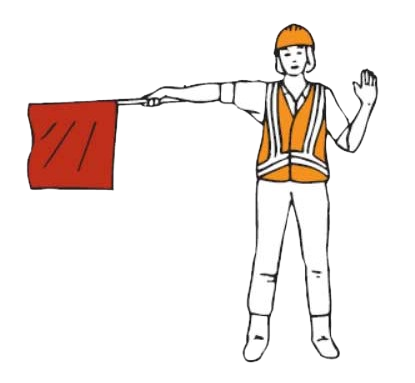 This signal means:
A
Stop
B
Move to the left
C
Slow down
D
Proceed
State laws require signaling your intention: stop. Signal at least 100 feet before making a turn or changing lanes.
Question 28:
Which of the following is NOT true? When driving near pedestrians:
A
If a pedestrian makes eye contact with you, he or she is inviting you to cross the intersection.
B
Always stop for any pedestrian crossing at corners.
C
Do not drive on a sidewalk.
The correct driving rule is: If a pedestrian makes eye contact with you, he or she is inviting you to cross the intersection. Following standard DMV road rules and practicing defensive driving ensures safety for all road users.
Question 29:
__________ are blue with white letters and symbols.
A
Warning signs
B
Service signs
C
Destination signs (guide signs)
The correct driving rule is: Service signs. Following standard DMV road rules and practicing defensive driving ensures safety for all road users.
Question 30:
Before getting out of your parked vehicle on the traffic side of the street, you should:
A
look for passing vehicles, bicyclists, and motorcyclists.
B
give arm signal that you are exiting your vehicle.
C
turn on your left turn signal.
The correct driving rule is: look for passing vehicles, bicyclists, and motorcyclists. Following standard DMV road rules and practicing defensive driving ensures safety for all road users.
Question 31:
If you approach an intersection without a stop sign or signal, you:
A
should slow down and be ready to stop, if necessary.
B
should always stop before driving through the intersection.
C
must yield the right-of-way to all other vehicles.
According to standard right-of-way regulations: should slow down and be ready to stop, if necessary. Yielding appropriately prevents intersection collisions and maintains safe traffic flow.
Question 32:
You wheels should be pointed straight ahead, unless you are:
A
parked on the side of a level roadway and there is no curb.
B
parked on a hill or sloping driveway.
C
waiting to make a left turn at a traffic light.
The correct driving rule is: parked on a hill or sloping driveway. Following standard DMV road rules and practicing defensive driving ensures safety for all road users.
Question 33:
Where should you stop your vehicle if there is no crosswalk or limit line?
A
Twenty feet before the corner.
B
Just pass the corner.
C
At the corner.
Drivers must always yield the right-of-way to pedestrians crossing at intersections and crosswalks: At the corner. Stop and allow them to clear the lane safely.
Question 34:
What should you do when an aggressive driver confronts you?
A
Avoid eye contact with the aggressive driver.
B
Make eye contact.
C
Challenge the aggressive driver with increased speed.
The correct driving rule is: avoid eye contact with the aggressive driver. Following standard DMV road rules and practicing defensive driving ensures safety for all road users.
Question 35:
You want to park downhill on a two-way road and there is no curb. Which way do you turn your front wheels?
A
So they face straight ahead.
B
Left - towards the center of the road.
C
Right - towards the side of the road.
When parking downhill (with or without a curb): Right - towards the side of the road. Turn front wheels toward the curb or road edge (right) so the vehicle rolls safely off the roadway if it slips.
Question 36:
You should adjust your rearview and side mirrors:
A
before you get into the vehicle.
B
before you start driving.
C
after you start driving.
The correct driving rule is: before you start driving. Following standard DMV road rules and practicing defensive driving ensures safety for all road users.