Question 1:
When looking ahead of your vehicle while driving, you should:
A
scan your surroundings.
B
look only at the vehicles ahead of you.
C
look straight ahead at all time.
The correct driving rule is: scan your surroundings. Following standard DMV road rules and practicing defensive driving ensures safety for all road users.
Question 2:
When parking uphill on a two-way street with no curb, your front wheels should be:
A
turned to the left (toward the street).
B
parallel with the pavement.
C
turned to the right (away from the street).
When parking uphill with a curb: turned to the right (away from the street). Turn wheels away from the curb (left) so the back of the front tire catches the curb if brakes slip.
Question 3:
 This sign warns drivers that:
A
they must turn either to the right or left.
B
there is a double curve ahead.
C
there is a winding road ahead.
This traffic sign indicates: there is a winding road ahead. Observing and obeying all roadway signs ensures safe traffic flow and legal driving.
Question 4:
On rainy, snowy or foggy days, you should turn on your windshield wipers and:
A
pump your brakes when driving on wet pavement.
B
come to a complete stop.
C
use your headlights so other drivers can see you.
The correct driving rule is: use your headlights so other drivers can see you. Following standard DMV road rules and practicing defensive driving ensures safety for all road users.
Question 5:
When a school bus flashes yellow lights:
A
you must follow the directions of the school crossing guard.
B
you must stop immediately.
C
the bus is preparing to stop to let children off the bus.
When a school bus displays flashing red lights and extended stop sign: the bus is preparing to stop to let children off the bus. Traffic in both directions must come to a full stop on undivided roads until children are clear.
Question 6:
Before you change lanes, you should:
A
glance over your shoulder into the lane you want to enter.
B
always turn your head and look over your right shoulder.
C
look into your outside mirror only.
The correct driving rule is: glance over your shoulder into the lane you want to enter. Following standard DMV road rules and practicing defensive driving ensures safety for all road users.
Question 7:
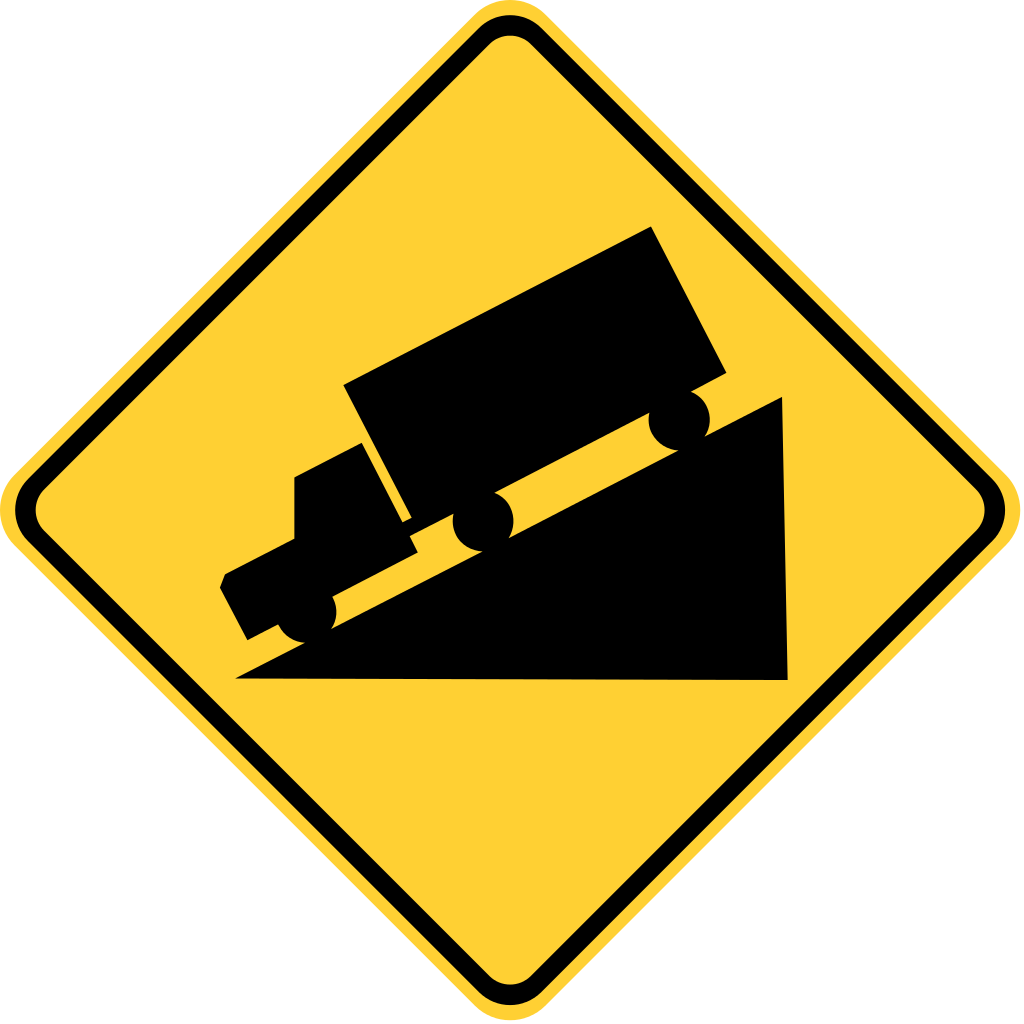 This sign warns of a ________ ahead.
A
hill
B
no passing zone
C
soft shoulder
This traffic sign indicates: hill. Observing and obeying all roadway signs ensures safe traffic flow and legal driving.
Question 8:
If you want to reduce the risk of skidding on slippery surfaces, it is advisable to:
A
Drive close to the vehicle ahead being ready for a sudden stop.
B
shift to a lower gear after starting down a steep hill.
C
slow down before entering curves and intersections.
For safe speed and stopping control: slow down before entering curves and intersections. Adjusting speed to match visibility and road traction prevents loss of steering grip.
Question 9:
You must use your seat belt:
A
unless you are riding in a vehicle built before 1978.
B
and failure to do so will result in a traffic ticket.
C
unless you are riding in a limousine.
The correct driving rule is: and failure to do so will result in a traffic ticket. Following standard DMV road rules and practicing defensive driving ensures safety for all road users.
Question 10:
 This red and white sign means you should:
A
stop and check traffic both ways before proceeding.
B
keep a steady speed and check traffic both ways.
C
give the right-of-way to traffic on the road you wish to enter or cross.
This traffic sign indicates: give the right-of-way to traffic on the road you wish to enter or cross. Observing and obeying all roadway signs ensures safe traffic flow and legal driving.
Question 11:
At intersections where two or more drivers stop at STOP signs at the same time and they are at right angles:
A
the driver on the left must yield to the driver on the right.
B
the driver who is late for work has the right-of-way.
C
the driver on the right must yield to the driver on the left.
The correct driving rule is: the driver on the left must yield to the driver on the right. Following standard DMV road rules and practicing defensive driving ensures safety for all road users.
Question 12:
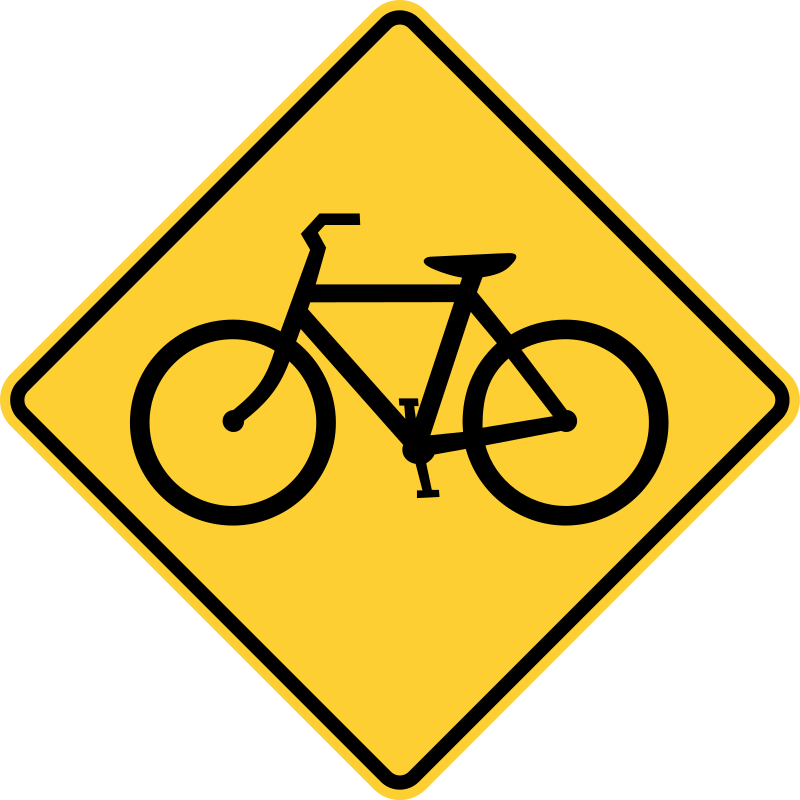 This sign means:
A
Bicycles should yield to vehicles ahead.
B
Warning: a bikeway crosses the roadway ahead.
C
The lane ahead is reserved for bicycles.
This traffic sign indicates: Warning: a bikeway crosses the roadway ahead. Observing and obeying all roadway signs ensures safe traffic flow and legal driving.
Question 13:
Most signs used in street work areas are:
A
round.
B
diamond shaped.
C
rectangle shaped.
The correct driving rule is: diamond shaped. Following standard DMV road rules and practicing defensive driving ensures safety for all road users.
Question 14:
A yellow arrow means:
A
Do not go in the direction of the arrow.
B
If you intend to turn in the direction of the arrow, be prepared to stop.
C
The same as a steady yellow light.
The correct driving rule is: If you intend to turn in the direction of the arrow, be prepared to stop. Following standard DMV road rules and practicing defensive driving ensures safety for all road users.
Question 15:
There are two traffic lanes in your direction. You are driving in the left lane and many vehicles are passing you on the right, and the driver behind you wishes to drive faster. You should:
A
stay in your lane and maintain your current speed.
B
drive onto the left shoulder to let the other driver pass.
C
move over into the right lane when safe to do so.
Defensive driving guidelines state that: move over into the right lane when safe to do so. Anticipating road hazards and communicating maneuvers keeps traffic predictable and safe.
Question 16:
Directions given by traffic officers ___________ signs, signals or pavement markings.
A
take precedence over
B
are less important than
C
must obey
The correct driving rule is: take precedence over. Following standard DMV road rules and practicing defensive driving ensures safety for all road users.
Question 17:
Road signs that point out scenic areas and parks are:
A
brown and white.
B
black and orange.
C
green and white.
The correct driving rule is: brown and white. Following standard DMV road rules and practicing defensive driving ensures safety for all road users.
Question 18:
When stopped at railroad tracks with multiple tracks, cross:
A
as soon as the train has passed your roadway.
B
only when other vehicles begin crossing.
C
only when you can see clearly in both directions.
The correct driving rule is: only when you can see clearly in both directions. Following standard DMV road rules and practicing defensive driving ensures safety for all road users.
Question 19:
Following another vehicle too closely is known as:
A
speedgating.
B
closetailing.
C
tailgating.
The correct driving rule is: tailgating. Following standard DMV road rules and practicing defensive driving ensures safety for all road users.
Question 20:
Generally speaking, you are in a large truck’s blind spot if you:
A
cannot see the truck driver in the truck’s side mirror.
B
drive close to the large truck’s left front wheel.
C
follow no closer than ten feet behind the large truck.
Large commercial trucks have extensive blind spots on all four sides called the 'No-Zone': cannot see the truck driver in the truck’s side mirror. If you cannot see the truck driver in their side mirrors, they cannot see you.
Question 21:
Who has the right-of-way at an intersection with no crosswalks?
A
Pedestrians, but only with the green “WALK” signal.
B
Pedestrian always have the right-of-way.
C
Vehicles, but they should slow down and be careful.
Drivers must always yield the right-of-way to pedestrians crossing at intersections and crosswalks: Pedestrian always have the right-of-way. Stop and allow them to clear the lane safely.
Question 22:
What should you do if your brakes fail?
A
Hook your shoe under the pedal and see if you can free it.
B
Turn on your cruise control.
C
Try pumping the brake pedal to increase pressure.
The correct driving rule is: Try pumping the brake pedal to increase pressure. Following standard DMV road rules and practicing defensive driving ensures safety for all road users.
Question 23:
When changing lanes on a freeway, you should:
A
signal for at least five seconds.
B
slow down before you start to change lanes.
C
assume there is enough space for your vehicle, if you signal first.
Defensive driving guidelines state that: signal for at least five seconds. Anticipating road hazards and communicating maneuvers keeps traffic predictable and safe.
Question 24:
Always driving slower than other traffic:
A
is a good defensive driving technique.
B
is always safer than driving faster than other traffic.
C
can block traffic.
The correct driving rule is: can block traffic. Following standard DMV road rules and practicing defensive driving ensures safety for all road users.
Question 25:
You reach an intersection that is not controlled at the same time as a driver on your right, and both of you prepare to go straight. Who has the right-of-way?
A
You.
B
No one.
C
The other driver.
According to standard right-of-way regulations: The other driver. Yielding appropriately prevents intersection collisions and maintains safe traffic flow.
Question 26:
You must yield the right-of-way to an emergency vehicle by:
A
moving into the right lane and driving slowly until it has passed.
B
stopping immediately, even if you are in an intersection.
C
driving as near to the right edge of the road as possible and stopping.
When an emergency vehicle approaches with flashing lights or sirens, you must safely pull over to the right curb and stop completely until it passes.
Question 27:
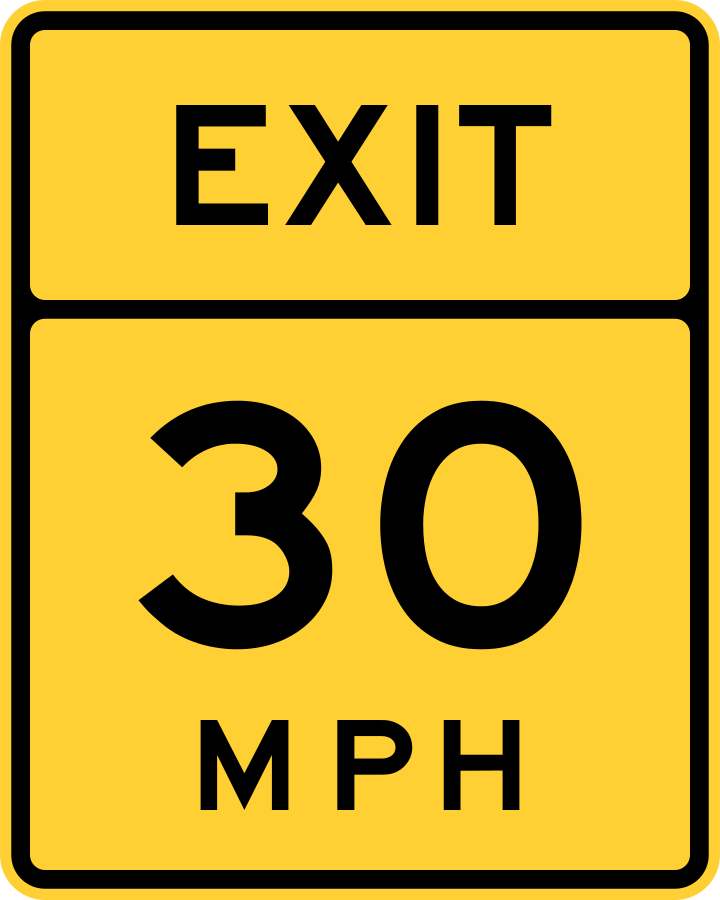 The sign in the picture:
A
shows the highest speed drivers can travel at the exit of the intersection.
B
is used to advise motorists of the appropriate ramp speed at the highway exit point.
C
indicates the minimum ramp speed at the highway exit point.
The correct driving rule is: is used to advise motorists of the appropriate ramp speed at the highway exit point. Following standard DMV road rules and practicing defensive driving ensures safety for all road users.
Question 28:
You are being chased by a police vehicle with its lights and sirens activated. You ignore the warning to stop and speed away. During the chase, a person is seriously injured. You are subject to:
A
Attending an anger-management class.
B
Imprisonment in a state prison for up to seven years.
C
A fine not less than $5,000.
For safe speed and stopping control: Imprisonment in a state prison for up to seven years. Adjusting speed to match visibility and road traction prevents loss of steering grip.
Question 29:
 This road sign warns drivers that:
A
they are coming to a point where another traffic lane joins the one they are on.
B
a divided highway is ahead.
C
the one-way street or roadway is about to change to two-way traffic.
This traffic sign indicates: the one-way street or roadway is about to change to two-way traffic. Observing and obeying all roadway signs ensures safe traffic flow and legal driving.
Question 30:
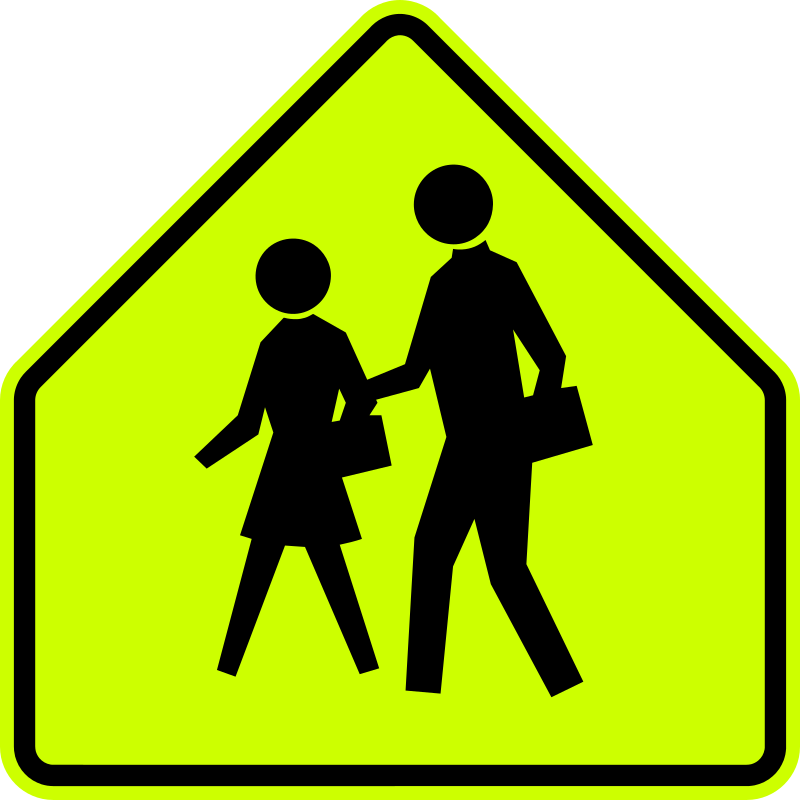 When you see this yellow sign, you should:
A
always stop at the crosswalk
B
stop at the crosswalk until a crossing guard signals you to go.
C
be prepared to stop if children are in the crosswalk.
The correct driving rule is: be prepared to stop if children are in the crosswalk. Following standard DMV road rules and practicing defensive driving ensures safety for all road users.
Question 31:
Two sets of solid double yellow lines spaced 2 feet or more apart:
A
may not be crossed for any reason.
B
separate traffic lanes on roads with two or more lanes in the same direction.
C
may only be crossed to make a U-turn when it is safe to do so.
The correct driving rule is: may not be crossed for any reason. Following standard DMV road rules and practicing defensive driving ensures safety for all road users.
Question 32:
At a stop sign there is no stop line, you must stop:
A
before you enter the intersection.
B
before you enter the crosswalk.
C
after you enter the crosswalk.
The correct driving rule is: before you enter the crosswalk. Following standard DMV road rules and practicing defensive driving ensures safety for all road users.
Question 33:
A crosshatched area adjacent to a designated disabled parking space means:
A
Stop no longer than the time posted to load or unload passengers.
B
Park for a limited time.
C
No parking area
Under standard parking and curb regulations: No parking area. Following parking distance clearances keeps roadways unobstructed and emergency lanes accessible.
Question 34:
It is legal to drive with an alcoholic beverage container that has been opened if the container is:
A
in the glove compartment.
B
in the trunk.
C
under the front seat.
The correct driving rule is: in the trunk. Following standard DMV road rules and practicing defensive driving ensures safety for all road users.
Question 35:
At dawn or dusk, or in rain or snow, it can be hard to see and be seen. A good way to let other drivers know you are there is to turn:
A
up the instrumental panel lights.
B
on your parking light.
C
on your headlights.
For safe speed and stopping control: on your headlights. Adjusting speed to match visibility and road traction prevents loss of steering grip.
Question 36:
What should you do in case of a steering failure?
A
Pump your gas pedal a few times to increase the pressure.
B
Don't panic. Turn on your emergency lights to let other drivers know you are having car problems. Move toward the side of the road and bring the car to a gradual stop.
C
Leave the road immediately.
The correct driving rule is: Don't panic. Turn on your emergency lights to let other drivers know you are having car problems. Move toward the side of the road and bring the car to a gradual stop. Following standard DMV road rules and practicing defensive driving ensures safety for all road users.