Question 1:
If you continually pass the other vehicles on a road with one lane in each direction, you will:
A
help prevent the chances of a crash occurring due to traffic congestion.
B
get to your destination much faster.
C
increase your chances of being involved in an accident.
The correct driving rule is: increase your chances of being involved in an accident. Following standard DMV road rules and practicing defensive driving ensures safety for all road users.
Question 2:
Vehicles entering or exiting a roundabout:
A
must slow down.
B
must yield to all traffic.
C
have the right-of-way.
Vehicles entering a roundabout must yield right-of-way to circulating traffic already inside: must yield to all traffic. Wait for a safe gap before entering.
Question 3:
Which of the following is true about railroad crossings?
A
Trains cannot swerve out of the way. Never stop on the railroad tracks.
B
Flashing red lights indicate you must stop and wait.
C
All of the above.
All of the listed points are essential driving requirements: Trains cannot swerve out of the way. Never stop on the railroad tracks; Flashing red lights indicate you must stop and wait. Practicing each ensures compliance with DMV safety laws.
Question 4:
If you see orange construction signs or cones on a freeway, you must:
A
make a U-turn because the lane ends ahead.
B
be prepared for workers and equipment ahead.
C
maintain your current speed while changing lanes.
Defensive driving guidelines state that: be prepared for workers and equipment ahead. Anticipating road hazards and communicating maneuvers keeps traffic predictable and safe.
Question 5:
When making a right turn from a highway with two lanes in your direction, you may turn from:
A
the lane closest to the center of the road.
B
the lane nearest the curb or edge of the roadway.
C
either lane, depending on oncoming traffic.
Defensive driving guidelines state that: the lane nearest the curb or edge of the roadway. Anticipating road hazards and communicating maneuvers keeps traffic predictable and safe.
Question 6:
What should you do when you see a Wrong Way sign?
A
Come to a complete stop and call law enforcement.
B
Immediately make a U-turn.
C
Drive to the side of the road and stop. When safe, back out or turn around and return to the road you were on.
The correct driving rule is: drive to the side of the road and stop. When safe, back out or turn around and return to the road you were on. Following standard DMV road rules and practicing defensive driving ensures safety for all road users.
Question 7:
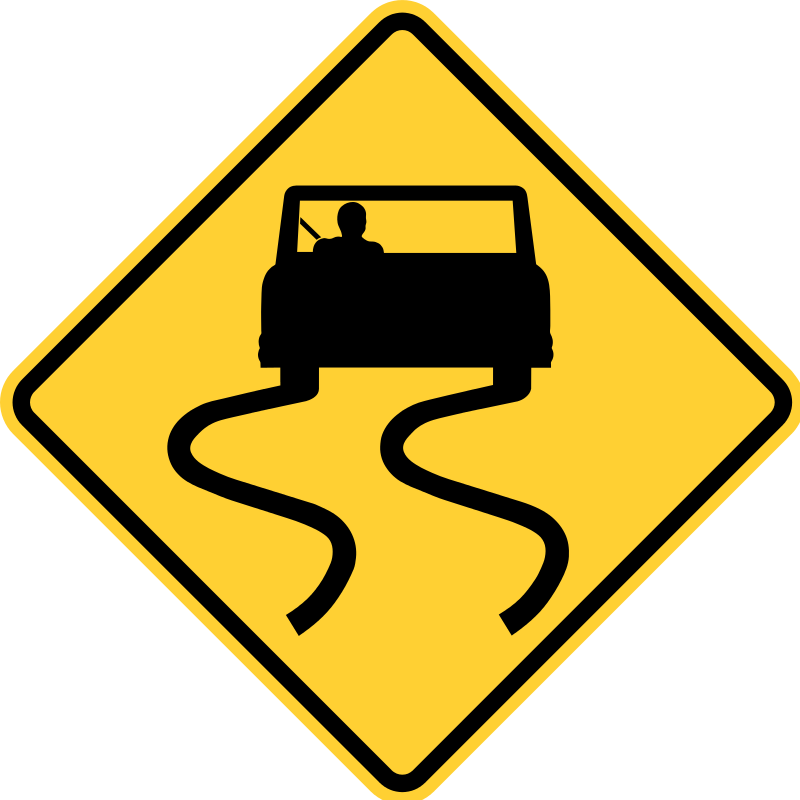 When they see this sign, drivers:
A
should be prepared to make sharp turns at a high speed.
B
need to be prepared to turn right and then left quickly.
C
should not speed up or brake quickly.
This traffic sign indicates: should not speed up or brake quickly. Observing and obeying all roadway signs ensures safe traffic flow and legal driving.
Question 8:
California’s “Basic Speed Law” says you must:
A
keep your speed close to that of other traffic.
B
always drive at the posted speed limit.
C
never drive faster than is safe for current conditions.
The Basic Speed Law states that you must never drive faster than is safe for existing weather, road, and traffic conditions, regardless of posted speed limits.
Question 9:
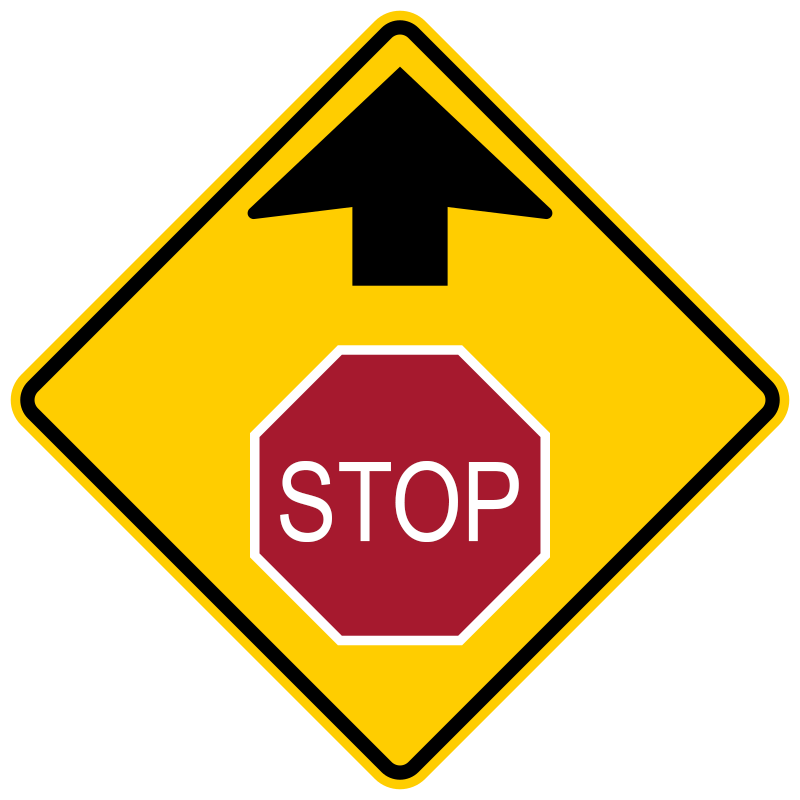 When drivers come to this sign, they must:
A
be ready to stop at the stop sign.
B
warn other drivers that a stop sign is ahead.
C
brake sharply and come to a complete stop.
This traffic sign indicates: be ready to stop at the stop sign. Observing and obeying all roadway signs ensures safe traffic flow and legal driving.
Question 10:
It is night. A vehicle coming towards you has its high beams on, which makes it hard to see the road ahead. You should:
A
look straight ahead in your lane.
B
look ahead towards the right edge of your lane.
C
look ahead towards the left edge of your lane.
The correct driving rule is: look ahead towards the right edge of your lane. Following standard DMV road rules and practicing defensive driving ensures safety for all road users.
Question 11:
Whose responsibility is it to know how your medications affect your driving?
A
Yours
B
Your physician’s
C
Your pharmacist’s
The correct driving rule is: Yours. Following standard DMV road rules and practicing defensive driving ensures safety for all road users.
Question 12:
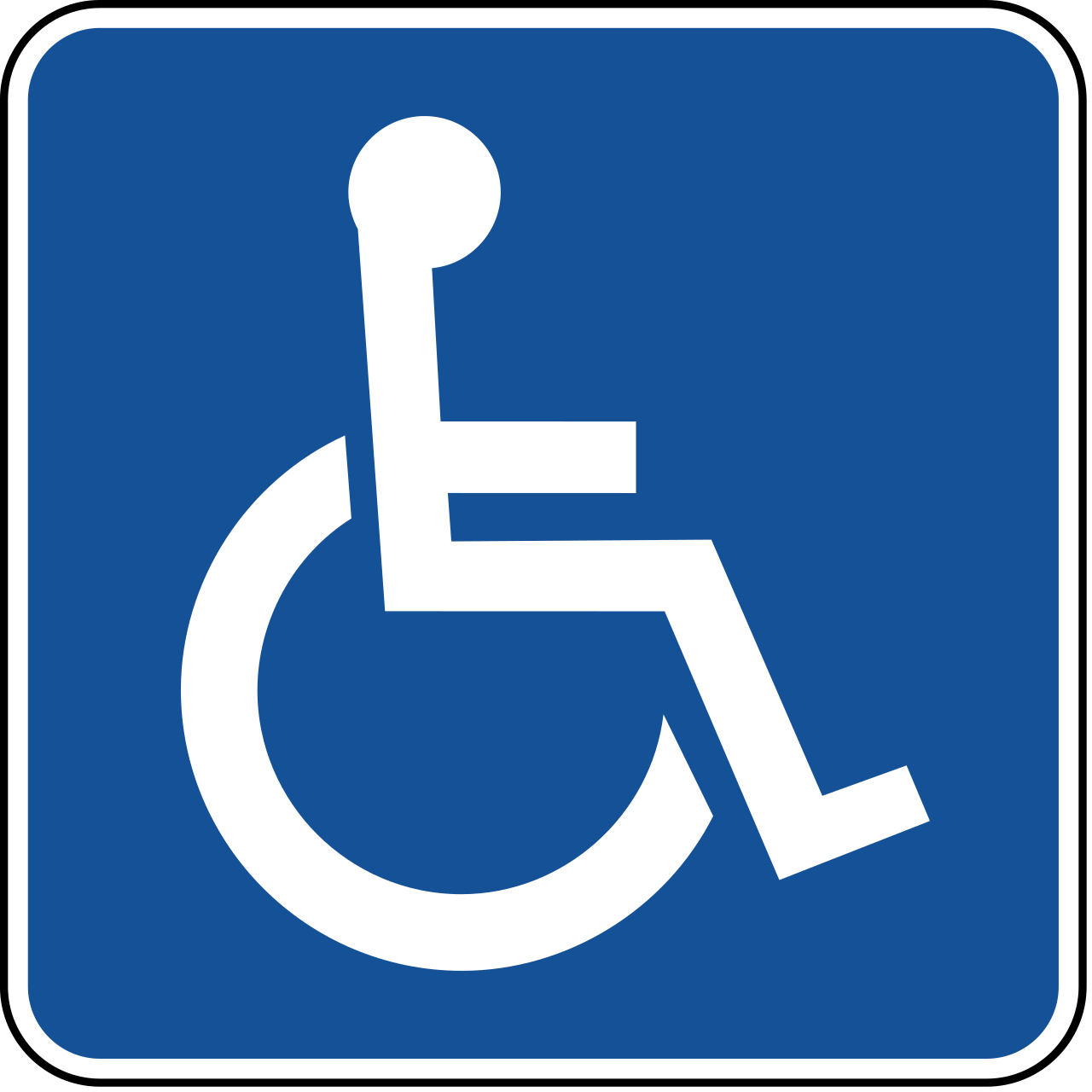 This blue sign means parking is allowed:
A
for disabled persons without a special placard or plate.
B
only for persons in wheelchairs.
C
only for disabled persons with a special placard or plate.
This traffic sign indicates: only for disabled persons with a special placard or plate. Observing and obeying all roadway signs ensures safe traffic flow and legal driving.
Question 13:
You may cross a double yellow line to pass another vehicle, if the yellow line next to:
A
your side of the road is a broken line.
B
the other side of the road is a solid line.
C
the other side of the road is a broken line.
The correct driving rule is: your side of the road is a broken line. Following standard DMV road rules and practicing defensive driving ensures safety for all road users.
Question 14:
While driving, it is important to slow down:
A
when the road is slippery.
B
at railroad crossings.
C
The other answers are correct.
The correct driving rule is: The other answers are correct. Following standard DMV road rules and practicing defensive driving ensures safety for all road users.
Question 15:
When an aggressive driver confronts you, you should:
A
Try to move away safely.
B
Remain calm and relaxed.
C
All of the above.
All of the listed points are essential driving requirements: Try to move away safely; Remain calm and relaxed. Practicing each ensures compliance with DMV safety laws.
Question 16:
Do not cross double solid yellow lines in the center of the roadway to:
A
make a left turn.
B
enter a private driveway.
C
pass other vehicles.
The correct driving rule is: pass other vehicles. Following standard DMV road rules and practicing defensive driving ensures safety for all road users.
Question 17:
The maximum speed limit on most California highways is:
A
55 MPH
B
70 MPH
C
65 MPH
For safe speed and stopping control: 65 MPH. Adjusting speed to match visibility and road traction prevents loss of steering grip.
Question 18:
When passing another vehicle, it is safe to return to your lane if you:
A
have passed the the other vehicle’s front bumper.
B
cannot see the vehicle directly to your right.
C
see the vehicle’s headlights in your rearview mirror.
Defensive driving guidelines state that: see the vehicle’s headlights in your rearview mirror. Anticipating road hazards and communicating maneuvers keeps traffic predictable and safe.
Question 19:
When should you use your headlights?
A
one hour before sunset until one hour after sunrise.
B
any time you can’t see at least two miles ahead.
C
any time you have trouble seeing others or being seen.
The correct driving rule is: any time you have trouble seeing others or being seen. Following standard DMV road rules and practicing defensive driving ensures safety for all road users.
Question 20:
Which way do you turn your front wheels to park downhill next to a curb?
A
Away from the curb
B
Parallel to the curb.
C
Into the curb
When parking downhill (with or without a curb): Into the curb. Turn front wheels toward the curb or road edge (right) so the vehicle rolls safely off the roadway if it slips.
Question 21:
When may you legally go around or under a railroad crossing gate?
A
Under no circumstances.
B
When the warning lights are not flashing.
C
When you can see clearly in both directions.
The correct driving rule is: Under no circumstances. Following standard DMV road rules and practicing defensive driving ensures safety for all road users.
Question 22:
Diamond-shaped signs:
A
are used to warn of hazards on roadways.
B
indicate no pass zones.
C
typically provide guidance to drivers.
The correct driving rule is: are used to warn of hazards on roadways. Following standard DMV road rules and practicing defensive driving ensures safety for all road users.
Question 23:
California has a Basic Speed Law, which means that:
A
drivers must always drive the standard (basic) speed limit.
B
weather and road conditions should never affect the speed at which you drive.
C
drivers may never drive faster than is safe for the prevailing road and weather conditions.
The Basic Speed Law states that you must never drive faster than is safe for existing weather, road, and traffic conditions, regardless of posted speed limits.
Question 24:
 This sign warns that:
A
traffic must merge left.
B
the bridge ahead is wide enough for only one vehicle at a time.
C
traffic must merge right.
This traffic sign indicates: traffic must merge left. Observing and obeying all roadway signs ensures safe traffic flow and legal driving.
Question 25:
Which shape is a warning sign?
A
Diamond
B
Triangle
C
Pennant
This traffic sign indicates: Diamond. Observing and obeying all roadway signs ensures safe traffic flow and legal driving.
Question 26:
At night, if an oncoming vehicle fails to dim its high beams, look:
A
toward the center of the roadway.
B
toward the right edge of the roadway.
C
straight ahead in your lane.
The correct driving rule is: toward the right edge of the roadway. Following standard DMV road rules and practicing defensive driving ensures safety for all road users.
Question 27:
If a pedestrian is in a crosswalk in the middle of a block:
A
The pedestrian must yield the right-of-way.
B
The pedestrian has the right-of-way.
C
Vehicles have the right-of-way, but drivers must legally take care for the pedestrian’s safety.
Drivers must always yield the right-of-way to pedestrians crossing at intersections and crosswalks: The pedestrian has the right-of-way. Stop and allow them to clear the lane safely.
Question 28:
Regulation signs normally are ____ rectangles with ____ letters or symbols.
A
yellow; black
B
white; black
C
green; white
The correct driving rule is: white; black. Following standard DMV road rules and practicing defensive driving ensures safety for all road users.
Question 29:
The speed limit for a school zone where children are present is ____, unless otherwise posted.
A
15 MPH
B
25 MPH
C
20 MPH
For safe speed and stopping control: 25 MPH. Adjusting speed to match visibility and road traction prevents loss of steering grip.
Question 30:
You are required to wear your safety belt in a moving vehicle:
A
and failure to do so will result in a traffic ticket.
B
unless you are riding the back of a pickup/camper.
C
unless the vehicle was manufactured before 1975.
The correct driving rule is: and failure to do so will result in a traffic ticket. Following standard DMV road rules and practicing defensive driving ensures safety for all road users.
Question 31:
When the road is slippery, you should:
A
pump your brakes to test the traction of your tires.
B
decrease the distance that you look ahead of your vehicle.
C
avoid making fast turns and fast stops.
For safe speed and stopping control: avoid making fast turns and fast stops. Adjusting speed to match visibility and road traction prevents loss of steering grip.
Question 32:
If there is no crosswalk and you see a pedestrian crossing your lane, you should:
A
Make sure the pedestrian can see you before proceeding.
B
Cautiously drive around the pedestrian.
C
Stop and let the pedestrian finish.
Drivers must always yield the right-of-way to pedestrians crossing at intersections and crosswalks: stop and let the pedestrian finish. Stop and allow them to clear the lane safely.
Question 33:
To assist the officer in conducting a traffic break, you should:
A
activate your emergency flashers to warn other drivers there is a hazard ahead.
B
attempt to drive past the patrol vehicle.
C
accelerate until the patrol vehicle has turned off its emergency lights
The correct driving rule is: activate your emergency flashers to warn other drivers there is a hazard ahead. Following standard DMV road rules and practicing defensive driving ensures safety for all road users.
Question 34:
You are approaching an intersection at the posted speed limit when the signal light turns yellow. You should:
A
stop before entering the intersection, if you can do so safely.
B
slow down and proceed through the intersection without caution.
C
speed up to cross the intersection before the light turns red.
According to standard right-of-way regulations: stop before entering the intersection, if you can do so safely. Yielding appropriately prevents intersection collisions and maintains safe traffic flow.
Question 35:
At an intersection with a flashing yellow signal light, you should:
A
Slow down and cross carefully.
B
Watch for other vehicles and maintain your current speed.
C
Stop before crossing the intersection.
According to standard right-of-way regulations: slow down and cross carefully. Yielding appropriately prevents intersection collisions and maintains safe traffic flow.
Question 36:
When merging onto a freeway, you should be driving:
A
at the legal freeway speed limit.
B
at or near the same speed as the freeway traffic.
C
slower than the freeway traffic.
Defensive driving guidelines state that: at or near the same speed as the freeway traffic. Anticipating road hazards and communicating maneuvers keeps traffic predictable and safe.