Question 1:
What is the slow moving vehicle symbol?
A
A reflective yellow diamond
B
A reflective white triangle
C
A reflective orange triangle
The correct driving rule is: A reflective orange triangle. Following standard DMV road rules and practicing defensive driving ensures safety for all road users.
Question 2:
If a vehicle is coming towards you at night with its high beams on, making it hard to see the road ahead, you should:
A
look straight ahead towards the middle of the lane.
B
look ahead towards the left edge of your lane.
C
look ahead towards the right edge of your lane.
The correct driving rule is: look ahead towards the right edge of your lane. Following standard DMV road rules and practicing defensive driving ensures safety for all road users.
Question 3:
 This road sign means:
A
Road construction ahead
B
The road ahead curves right, then left
C
Steep grade ahead
This traffic sign indicates: The road ahead curves right, then left. Observing and obeying all roadway signs ensures safe traffic flow and legal driving.
Question 4:
 This road sign means:
A
Yield sign ahead
B
Side road entering from the left
C
Side road
A triangular Yield sign requires drivers to slow down and give right-of-way to other traffic: yield sign ahead. Proceed only when there is a safe opening.
Question 5:
You should use turn signals to indicate your intention with sufficient time to allow other drivers to see the signal:
A
if it’s raining.
B
AFTER you move.
C
BEFORE you move.
State laws require signaling your intention: BEFORE you move. Signal at least 100 feet before making a turn or changing lanes.
Question 6:
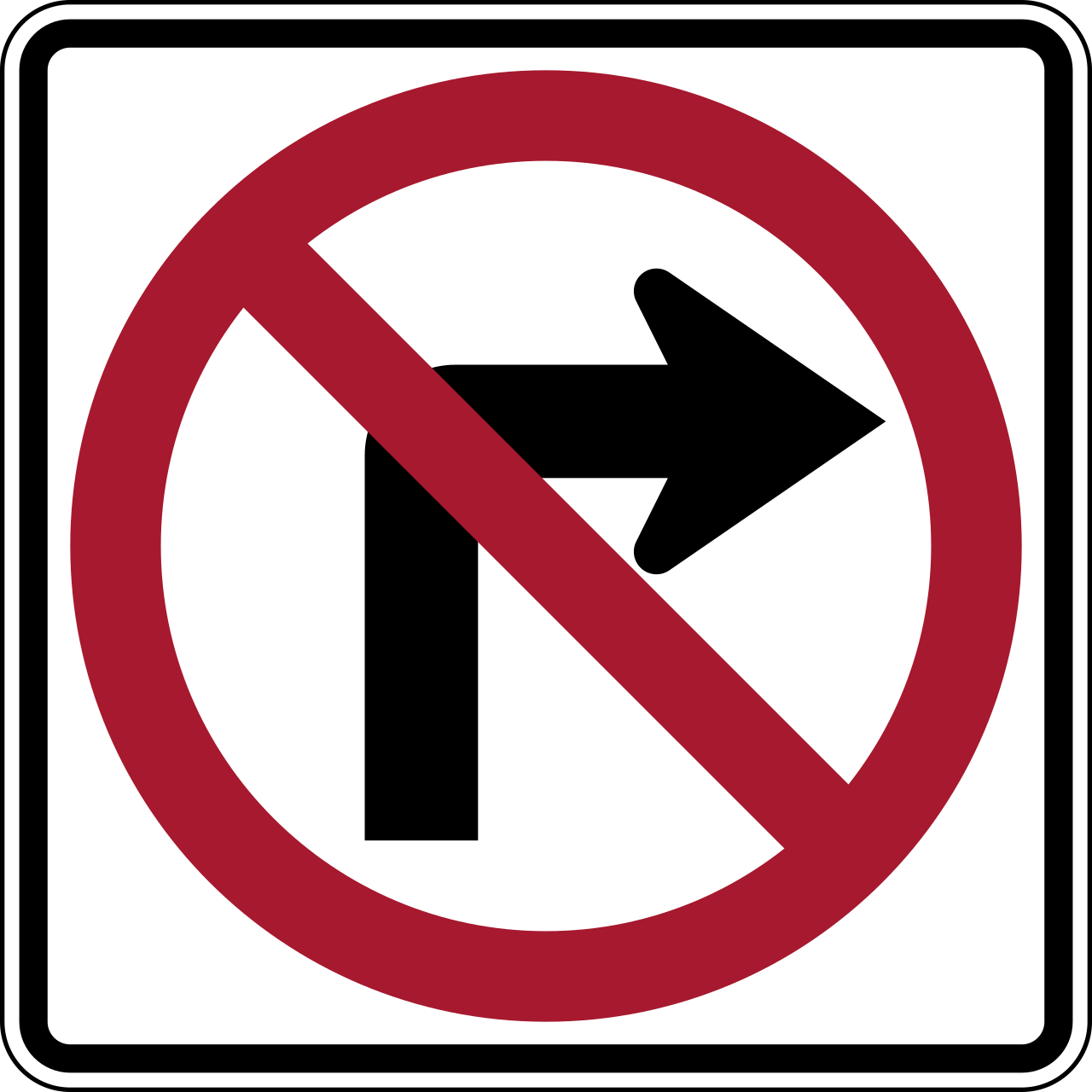 This road sign means:
A
No left turn
B
No right turn
C
No U-turns
This traffic sign indicates: No right turn. Observing and obeying all roadway signs ensures safe traffic flow and legal driving.
Question 7:
Which of the following must you obey over the others?
A
Red light
B
Stop sign
C
Police officer
The correct driving rule is: Police officer. Following standard DMV road rules and practicing defensive driving ensures safety for all road users.
Question 8:
Your driving ability can be affected by:
A
just one drink.
B
three drinks or more.
C
at least two drinks.
The correct driving rule is: just one drink. Following standard DMV road rules and practicing defensive driving ensures safety for all road users.
Question 9:
To avoid hydroplaning you should:
A
keep your tires properly inflated.
B
slow down when roads are wet.
C
All of the above.
All of the listed points are essential driving requirements: keep your tires properly inflated; slow down when roads are wet. Practicing each ensures compliance with DMV safety laws.
Question 10:
Does a vehicle prepared to enter a traffic circle or rotary have right-of-way over vehicles in the circle?
A
Yes, but only if they are entering the rotary from the right lane.
B
No. Vehicles already in the circle have the right-of-way.
C
Only if the light is green.
D
Yes.
Vehicles entering a roundabout must yield right-of-way to circulating traffic already inside: No. Vehicles already in the circle have the right-of-way. Wait for a safe gap before entering.
Question 11:
 The sign in the picture:
A
is a Construction and Maintenance Traffic Control sign.
B
is found at most intersections and indicates that drivers must yield to other vehicles.
C
is displayed on the rear of slow moving vehicles.
The correct driving rule is: is displayed on the rear of slow moving vehicles. Following standard DMV road rules and practicing defensive driving ensures safety for all road users.
Question 12:
A large vehicle is backing up to unload goods. You should:
A
enter one of the blind spots and wait.
B
try to pass close behind.
C
be patient and wait until the large vehicle has completed its backup maneuver.
The correct driving rule is: be patient and wait until the large vehicle has completed its backup maneuver. Following standard DMV road rules and practicing defensive driving ensures safety for all road users.
Question 13:
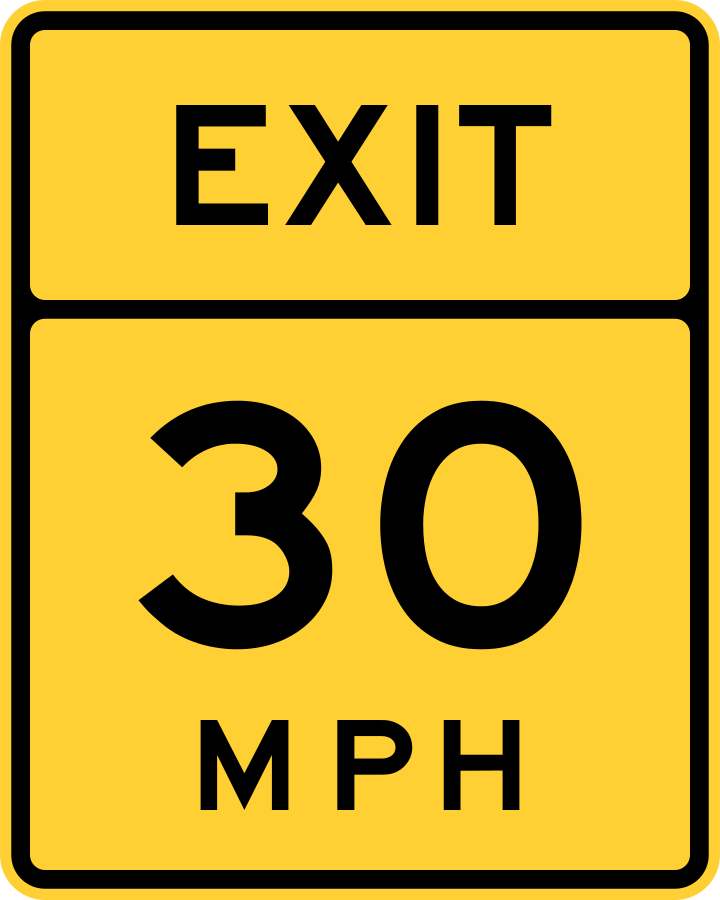 The sign in the picture:
A
shows the highest speed drivers can travel at the exit of the intersection.
B
is used to advise motorists of the appropriate ramp speed at the highway exit point.
C
indicates the minimum ramp speed at the highway exit point.
The correct driving rule is: is used to advise motorists of the appropriate ramp speed at the highway exit point. Following standard DMV road rules and practicing defensive driving ensures safety for all road users.
Question 14:
When turning, drivers should:
A
always move to the right lane.
B
check traffic in all directions.
C
increase their speed to improve stability.
The correct driving rule is: check traffic in all directions. Following standard DMV road rules and practicing defensive driving ensures safety for all road users.
Question 15:
To drive defensively you should:
A
always put one car length between you and the car ahead.
B
keep your eyes moving to look for possible hazards.
C
look only at the car in front of you while driving.
The correct driving rule is: keep your eyes moving to look for possible hazards. Following standard DMV road rules and practicing defensive driving ensures safety for all road users.
Question 16:
You are driving and you are feeling drowsy. You should:
A
avoid drinking coffee.
B
turn on the radio to keep you awake.
C
find a safe place to stop for a break.
Under state DUI and traffic safety laws: find a safe place to stop for a break. Alcohol degrades judgment, slows reaction times, and distorts depth perception.
Question 17:
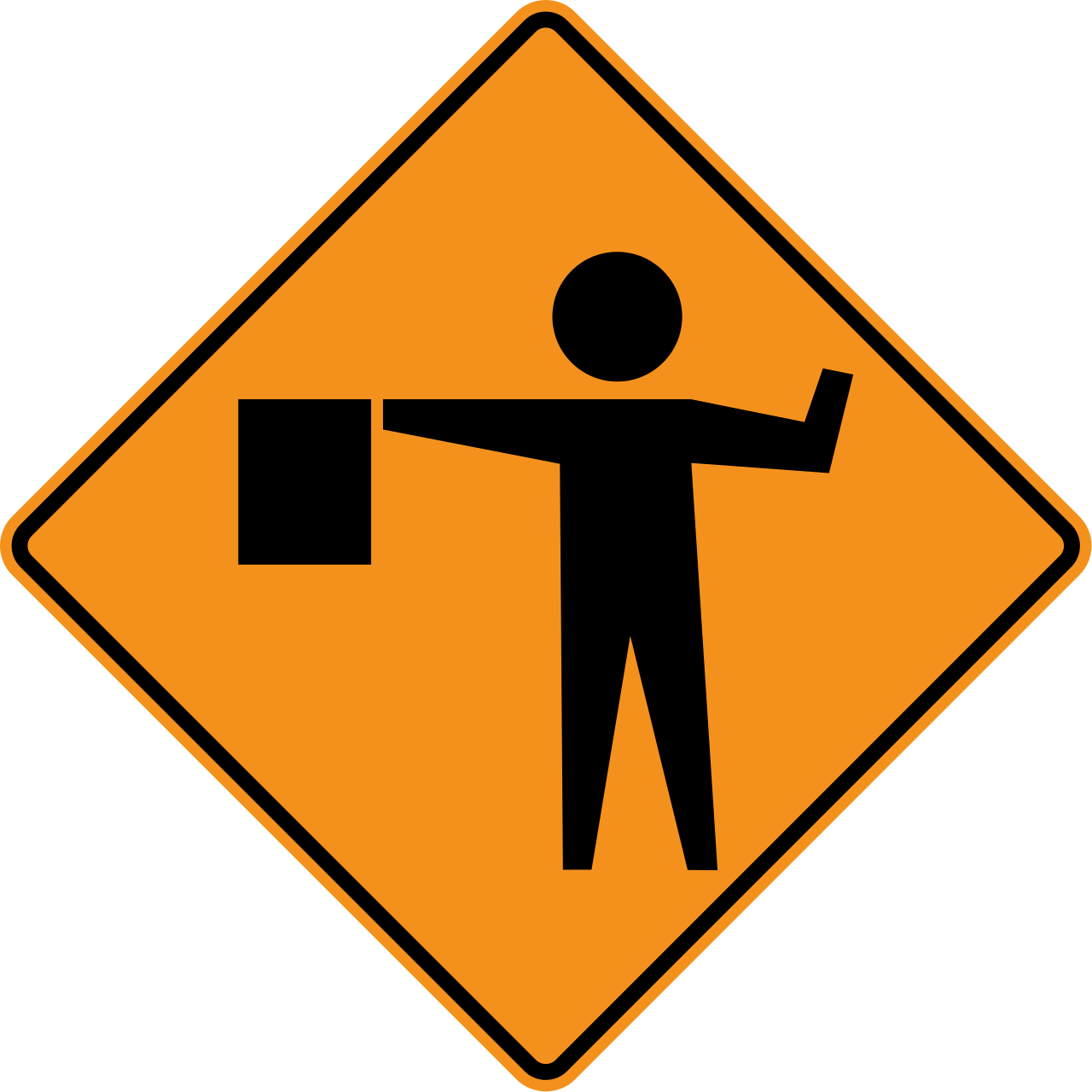 This road sign means:
A
Right lane closed
B
Do not block intersection
C
Flagger ahead
This traffic sign indicates: Flagger ahead. Observing and obeying all roadway signs ensures safe traffic flow and legal driving.
Question 18:
 This road sign means:
A
Yield
B
Look both ways before crossing the intersection
C
Crossroads ahead
A triangular Yield sign requires drivers to slow down and give right-of-way to other traffic: yield. Proceed only when there is a safe opening.
Question 19:
Slowing down just to look at collisions or anything else out of ordinary:
A
causes traffic congestion.
B
improves traffic flow.
C
helps prevent rear-end collisions.
The correct driving rule is: causes traffic congestion. Following standard DMV road rules and practicing defensive driving ensures safety for all road users.
Question 20:
If an intersection has crosswalk lines but no STOP line, where must you stop for a red light?
A
After the crosswalk.
B
Before the stop line.
C
Before the crosswalk.
Drivers must always yield the right-of-way to pedestrians crossing at intersections and crosswalks: Before the crosswalk. Stop and allow them to clear the lane safely.
Question 21:
At an intersection without stop or yield signs, you should:
A
yield to the vehicle to your left.
B
wait until there are no vehicles at the intersection.
C
yield to the vehicle to your right.
According to standard right-of-way regulations: yield to the vehicle to your right. Yielding appropriately prevents intersection collisions and maintains safe traffic flow.
Question 22:
What should you do if your rear wheels start to skid?
A
Steer left if your rear wheels slide right.
B
If the vehicle has ABS, pump the pedal carefully.
C
Turn the steering wheel in the direction the vehicle is trying to go.
The correct driving rule is: turn the steering wheel in the direction the vehicle is trying to go. Following standard DMV road rules and practicing defensive driving ensures safety for all road users.
Question 23:
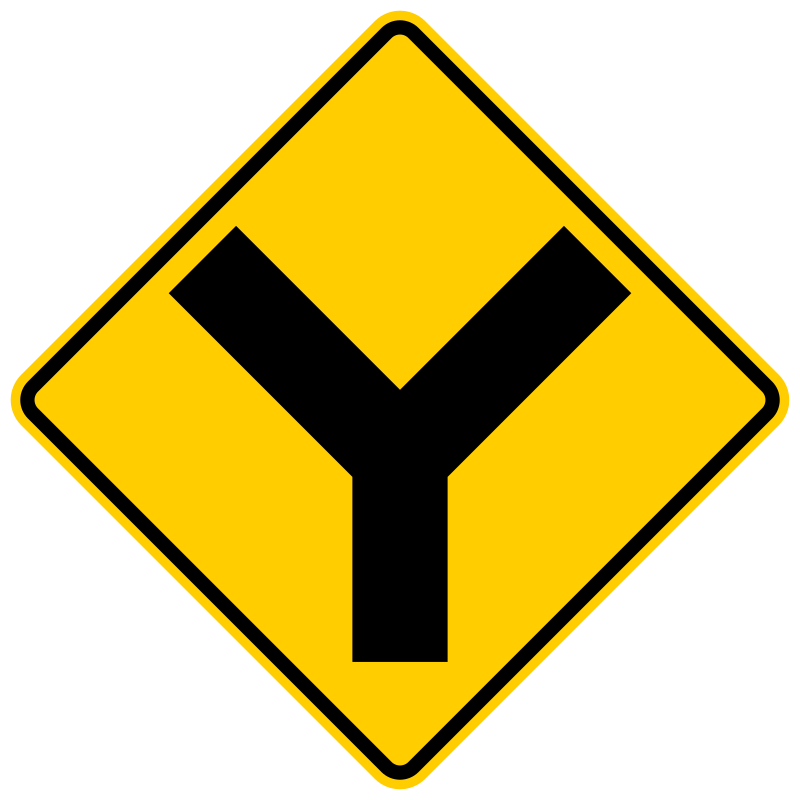 This road sign means:
A
A road joins from the left
B
You must bear either right or left
C
A 3-way intersection is ahead
This traffic sign indicates: you must bear either right or left. Observing and obeying all roadway signs ensures safe traffic flow and legal driving.
Question 24:
Which of the following factors affect the absorption of alcohol?
A
Your race.
B
Your weight.
C
Your height.
Under state DUI and traffic safety laws: Your weight. Alcohol degrades judgment, slows reaction times, and distorts depth perception.
Question 25:
Double solid lines on the roadway mean:
A
you cannot pass.
B
you can not go across the lines except to turn left to enter or leave the highway.
C
All of the above.
All of the listed points are essential driving requirements: you cannot pass; you can not go across the lines except to turn left to enter or leave the highway. Practicing each ensures compliance with DMV safety laws.