Question 1:
Drivers can not pass a vehicle on the left if:
A
they approach the top of a hill on a two-way road and can not see over it.
B
they can not safely return to the right lane before they reach a solid yellow center line for the right lane.
C
All of the above.
All of the listed points are essential driving requirements: they approach the top of a hill on a two-way road and can not see over it; they can not safely return to the right lane before they reach a solid yellow center line for the right lane. Practicing each ensures compliance with DMV safety laws.
Question 2:
When approaching a highway-rail intersection, the first sign drivers see is usually:
A
an RXR round sign on a yellow background.
B
a stop sign.
C
a yield sign.
According to standard right-of-way regulations: an RXR round sign on a yellow background. Yielding appropriately prevents intersection collisions and maintains safe traffic flow.
Question 3:
 This sign warns drivers that:
A
they cannot go straight ahead.
B
they will soon be facing oncoming traffic.
C
a shared lane starts ahead.
This traffic sign indicates: they will soon be facing oncoming traffic. Observing and obeying all roadway signs ensures safe traffic flow and legal driving.
Question 4:
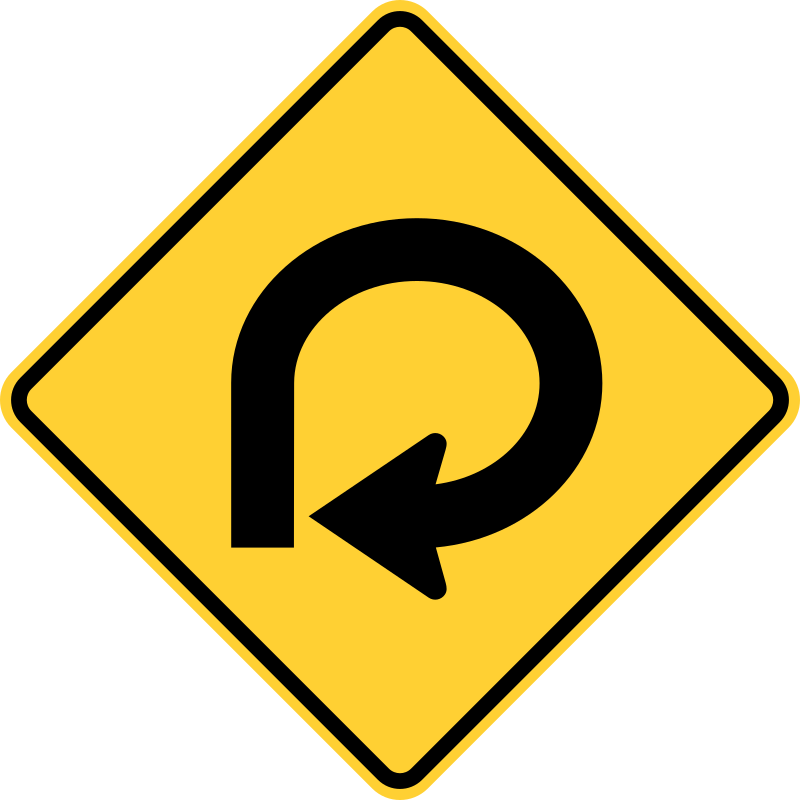 This sign means:
A
Roundabout ahead.
B
270 degree turn ahead.
C
Wrong way; Turn around immediately.
This traffic sign indicates: 270 degree turn ahead. Observing and obeying all roadway signs ensures safe traffic flow and legal driving.
Question 5:
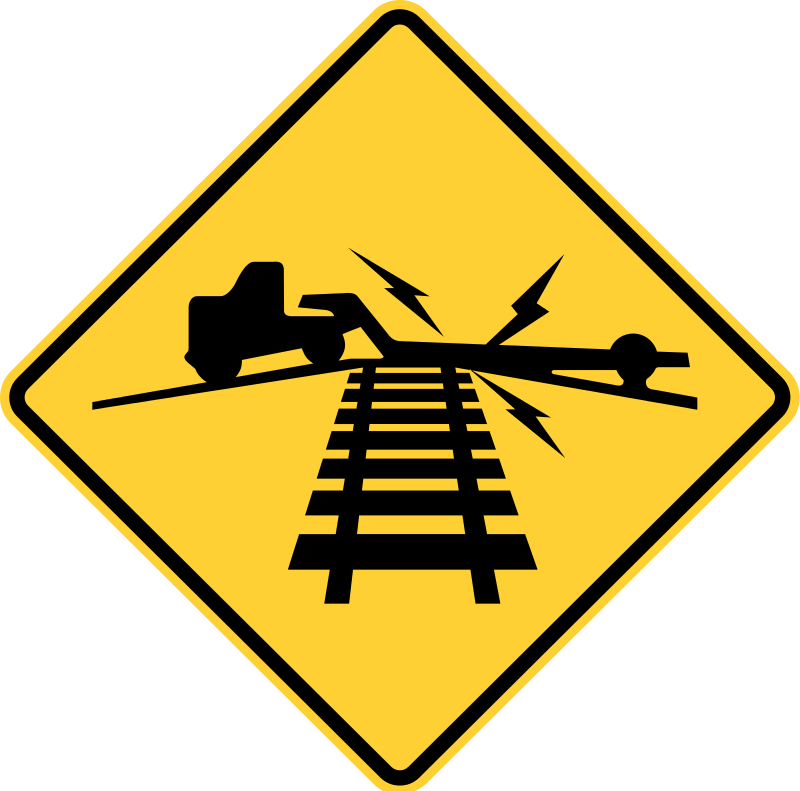 This road sign means:
A
Winding road ahead
B
Pedestrian crossing
C
Low ground railroad crossing
D
No-passing zone
Circular signs with an 'X' and 'RR' designate a Railroad Advance Warning: Low ground railroad crossing. Drivers must slow down, look both ways, listen for trains, and be prepared to stop.
Question 6:
This sign warns ____________ ahead.
A
of two-way traffic
B
of a reduction of lanes
C
that a divided highway ends
This traffic sign indicates: of two-way traffic. Observing and obeying all roadway signs ensures safe traffic flow and legal driving.
Question 7:
If the traffic lights are out of service when you approach an intersection, you:
A
must continue according to the rules of right-of-way.
B
must slow down and yield to oncoming traffic and pedestrians.
C
must come to a stop as you would for a stop sign.
D
must proceed with caution.
According to standard right-of-way regulations: must come to a stop as you would for a stop sign. Yielding appropriately prevents intersection collisions and maintains safe traffic flow.
Question 8:
 This road sign means:
A
Curves ahead
B
Divided highway ahead
C
Divided highway ends
This traffic sign indicates: Divided highway ends. Observing and obeying all roadway signs ensures safe traffic flow and legal driving.
Question 9:
What should you do as you prepare to turn right at an intersection?
A
Honk your horn.
B
Yield to bicyclists coming from the opposite direction.
C
Signal your turn, check for bicyclists, and do not turn directly in front of a bicyclist.
According to standard right-of-way regulations: signal your turn, check for bicyclists, and do not turn directly in front of a bicyclist. Yielding appropriately prevents intersection collisions and maintains safe traffic flow.
Question 10:
If traffic on the other side of an intersection is backed up and you cannot get completely through, you must:
A
enter the intersection and try to avoid blocking it.
B
enter the intersection and proceed with caution.
C
wait until traffic ahead is clear.
According to standard right-of-way regulations: wait until traffic ahead is clear. Yielding appropriately prevents intersection collisions and maintains safe traffic flow.
Question 11:
 This is:
A
a side road sign.
B
a merging traffic sign.
C
a right curve sign.
The correct driving rule is: a side road sign. Following standard DMV road rules and practicing defensive driving ensures safety for all road users.
Question 12:
When following motorcycles, drivers should:
A
reduce the minimum following distance.
B
try to pass them as they have different braking capabilities than other motor vehicles.
C
keep more space in front of their vehicle.
The correct driving rule is: keep more space in front of their vehicle. Following standard DMV road rules and practicing defensive driving ensures safety for all road users.
Question 13:
 The picture shows a _________ sign.
A
no U-turn
B
no left turn
C
sharp turn
The correct driving rule is: no U-turn. Following standard DMV road rules and practicing defensive driving ensures safety for all road users.
Question 14:
Drinking alcohol:
A
has no effect on either judgement or driving ability.
B
has no effect on driving ability but affects your judgement.
C
harms both judgement and driving skills.
Under state DUI and traffic safety laws: harms both judgement and driving skills. Alcohol degrades judgment, slows reaction times, and distorts depth perception.
Question 15:
What should drivers do in case of a brake failure?
A
Shift to a lower gear.
B
Tie a white cloth on the left door handle.
C
Brake lightly.
The correct driving rule is: shift to a lower gear. Following standard DMV road rules and practicing defensive driving ensures safety for all road users.
Question 16:
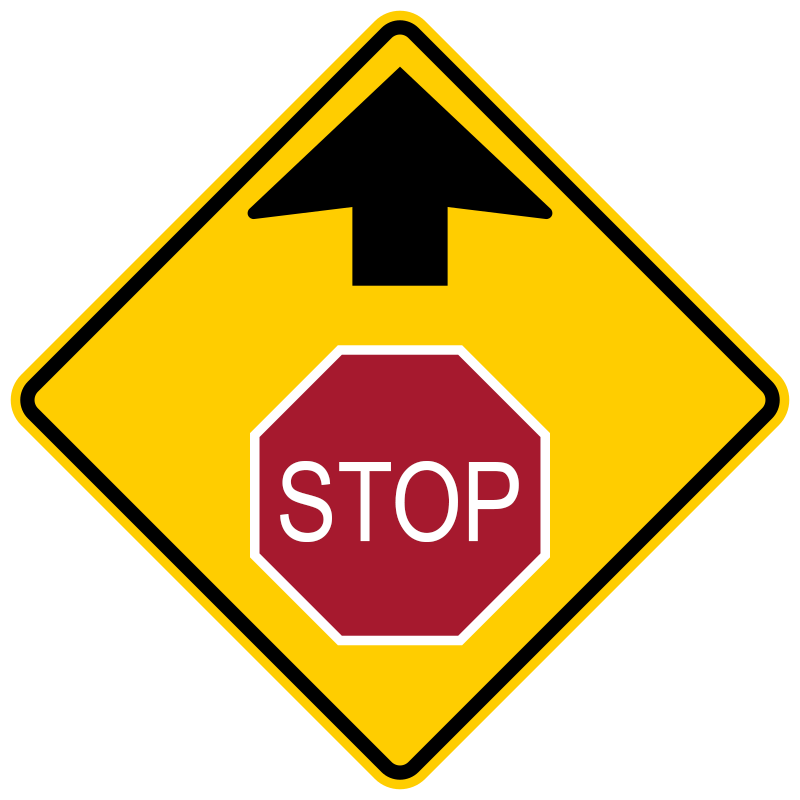 When drivers come to this sign, they must:
A
be ready to stop at the stop sign.
B
warn other drivers that a stop sign is ahead.
C
brake sharply and come to a complete stop.
This traffic sign indicates: be ready to stop at the stop sign. Observing and obeying all roadway signs ensures safe traffic flow and legal driving.
Question 17:
 This sign indicates:
A
A slow-moving vehicle
B
A no-passing zone
C
Yield
This traffic sign indicates: A slow-moving vehicle. Observing and obeying all roadway signs ensures safe traffic flow and legal driving.
Question 18:
You face a green light, but traffic on the other side of the intersection does not allow you to travel all the way through the intersection. What must you do?
A
Enter the intersection and wait until traffic ahead clears.
B
Wait for the next green light.
C
Wait until traffic ahead clears, so you do not block the intersection.
According to standard right-of-way regulations: wait until traffic ahead clears, so you do not block the intersection. Yielding appropriately prevents intersection collisions and maintains safe traffic flow.
Question 19:
Drivers can use drugs while driving only if:
A
they have been prescribed by your doctor.
B
they don't contain any controlled substances.
C
they are legal drugs.
D
None of the above.
Under state DUI and traffic safety laws: None of the above. Alcohol degrades judgment, slows reaction times, and distorts depth perception.
Question 20:
You should never depend on your mirrors when you prepare to change lanes. Why?
A
Mirrors leave “blind spots” behind both sides of vehicles.
B
Mirrors need to be adjusted.
C
Mirrors are useless.
The correct driving rule is: Mirrors leave “blind spots” behind both sides of vehicles. Following standard DMV road rules and practicing defensive driving ensures safety for all road users.