 drivequiz.com
 Question 1
When the road is slippery, drivers should _________ their following distance.
A
increase
B
maintain
C
decrease
No explanation available.
Question 2
Double solid lines on the roadway mean:
A
you cannot pass.
B
you can not go across the lines except to turn left to enter or leave the highway.
C
All of the above.
No explanation available.
Question 3
If your wheels drop off the pavement edge, you should:
A
stop.
B
turn back onto the roadway immediately.
C
turn gradually back onto the roadway when safe.
No explanation available.
Question 4
Just like alcohol and other drugs, drowsiness can:
A
help you to be a better driver.
B
make you feel better.
C
impair your judgment.
No explanation available.
Question 5
The following symptoms are associated with drowsy driving:
A
You continue to yawn.
B
You don’t remember driving the last few miles.
C
All of the above.
No explanation available.
Question 6
When following motorcycles, drivers should:
A
reduce the minimum following distance.
B
try to pass them as they have different braking capabilities than other motor vehicles.
C
keep more space in front of their vehicle.
No explanation available.
Question 7
To keep the driver behind you at a safe distance you should:
A
keep a steady speed.
B
drive 5 MPH faster than the car behind.
C
drive 5 MPH slower than the car behind.
No explanation available.
Question 8
What should you do if a vehicle is approaching head-on in your lane?
A
Pull over to the left and use your emergency lights to stop the other driver.
B
Decrease speed, pull over to the right and sound your horn to warn the other driver.
C
Turn off the ignition if your vehicle has power steering.
No explanation available.
Question 9
Drivers turning left must yield to:
A
None of the above.
B
oncoming vehicles going straight.
C
oncoming vehicles turning left.
No explanation available.
Question 10
Before passing a vehicle or changing lanes, remember to:
A
only pass or change lanes if the change can be completed without speeding.
B
signal your return to the left lane.
C
sound your horn as you pass.
No explanation available.
Question 11
If the entrance lane is too short to allow acceleration to expressway speed, you should:
A
stop and wait for a large space in traffic.
B
enter the expressway and accelerate quickly.
C
reduce your speed to 15 MPH or less and blend with traffic.
No explanation available.
Question 12
Which of the following is a common cause of traffic collisions?
A
Scanning the road ahead and staying focused on the driving task.
B
Driving too fast for conditions.
C
Pedestrians being key participants in the transportation system.
No explanation available.
Question 13
Blocking an intersection during rush hour traffic is not permitted:
A
under any circumstances.
B
unless you entered the intersection on a green light.
C
unless you have the right-of-way.
No explanation available.
Question 14
 This road sign means:
A
Drive with caution and be ready to stop
B
Slow down or stop
C
You must come to a complete stop
No explanation available.
Question 15
Which of the following road surfaces freezes first when wet?
A
Bridges and overpasses.
B
Roundabouts.
C
Tunnels.
No explanation available.
Question 16
 This regulatory road sign indicates that:
A
Vehicles must slow down and stay in the right lane.
B
The right hand lane is reserved for buses and car-pool vehicles.
C
Slower vehicles traveling on multiple lane highways must stay in the right hand lane.
No explanation available.
Question 17
 The yield sign means:
A
Drive with caution in wet weather.
B
You must come to a complete stop.
C
Slow down and give vehicles crossing your path the right-of-way.
No explanation available.
Question 18
You should never depend on your mirrors when you prepare to change lanes. Why?
A
Mirrors leave “blind spots” behind both sides of vehicles.
B
Mirrors need to be adjusted.
C
Mirrors are useless.
No explanation available.
Question 19
 When you see this sign you should:
A
increase your speed and try to pass other vehicles.
B
slow your speed and be prepared to stop.
C
slow your speed and do not pass other vehicles.
No explanation available.
Question 20
The traffic light is green and you want to drive straight through an intersection. If a car is already in the intersection and is making a turn, you must:
A
enter the intersection and then stop.
B
drive through the intersection. You have the right-of-way.
C
let that car complete its turn before you enter the intersection.
No explanation available.
Question 21
What can you do to prevent skids on snow and ice?
A
Allow the wheels to keep turning.
B
Brake early and gently.
C
All of the above.
No explanation available.
Question 22
This road sign means:
A
You have the right of way
B
No Passing Zone
C
Yield the right-of-way
No explanation available.
Question 23
Which shape is a yield sign?
A
Vertical rectangle
B
Upside-down triangle
C
Diamond
No explanation available.
Question 24
What is the first thing you should do if your wheels move off the pavement?
A
Pull the steering wheel back.
B
Pull over to the right and sound your horn to warn the other drivers.
C
Ease your foot off the gas pedal and brake gently.
No explanation available.
Question 25
To avoid glare from headlights of an approaching car:
A
stay focused on the center line on the road.
B
don't look directly into the oncoming headlights, look toward the right edge of your lane.
C
flash your high beams.
No explanation available.
Question 26
Following another vehicle too closely is known as:
A
speedgating.
B
closetailing.
C
tailgating.
No explanation available.
Question 27
To avoid panic stops, you should:
A
scan the road ahead for hazards.
B
drive with your window down.
C
pump your brakes to make sure they work.
No explanation available.
Question 28
Drivers should check their rearview mirrors:
A
often to see how traffic is moving behind them.
B
only when slowing down.
C
to see if a truck is in their blind spot.
No explanation available.
Question 29
To reduce their chances of colliding with an animal, drivers should:
A
scan the sides of the road to watch for the reflection of vehicle headlights in the eyes of animals.
B
look well down the road and far off to each side.
C
All of the above.
No explanation available.
Question 30
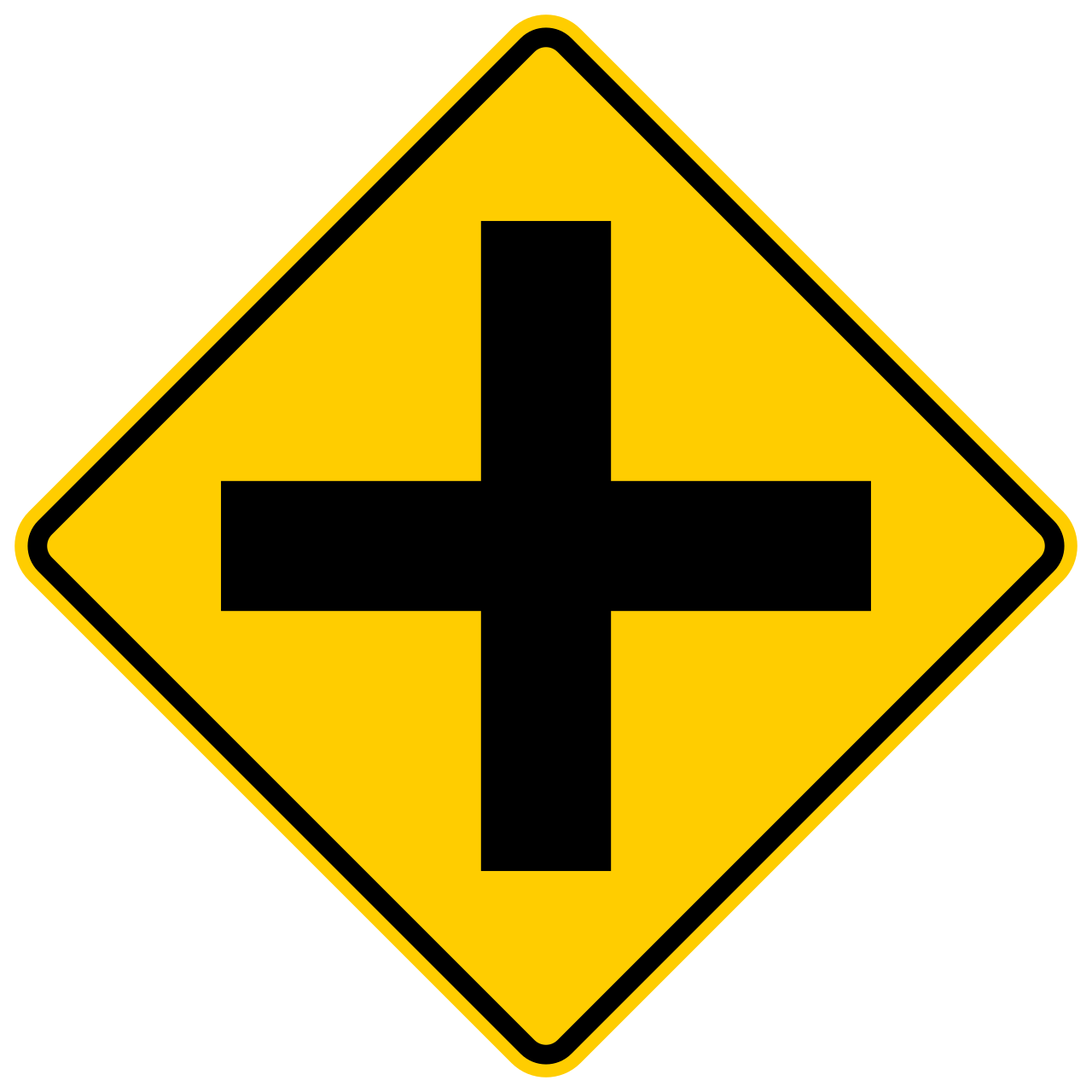 This road sign means:
A
A four-way intersection is ahead
B
Do not pass
C
A steep grade is ahead
No explanation available.
Question 31
A steady yellow light means:
A
Be prepared to stop for the red light.
B
Drive with caution.
C
Be prepared to go. The light will soon be green.
No explanation available.
Question 32
When another vehicle is passing you:
A
stay in your lane and reduce speed.
B
stay in your lane and maintain speed unless there is an emergency.
C
pull your vehicle as far to the right as possible without leaving the pavement.
No explanation available.
Question 33
If a vehicle suddenly cuts in front of you creating a hazard, which of these actions should you take first?
A
Sound your horn and step on the brake firmly.
B
Swerve into the lane next to you.
C
Take your foot off the gas pedal.
No explanation available.
Question 34
At intersections where two or more drivers stop at STOP signs at the same time and they are at right angles:
A
the driver on the left must yield to the driver on the right.
B
the driver who is late for work has the right-of-way.
C
the driver on the right must yield to the driver on the left.
No explanation available.
Question 35
When driving in a construction zone you should:
A
slightly increase your speed.
B
come to a complete stop and check road conditions.
C
expect the unexpected.
No explanation available.
Question 36
You should increase your following distance:
A
at night or if it is raining.
B
when the roads are slippery.
C
All of the above.
No explanation available.
Question 37
Where must you position your vehicle when you prepare to make a left turn from a two-way roadway into a one-way roadway?
A
As far to the right as possible.
B
On the right curb.
C
As close as possible to the center line.
No explanation available.
Question 38
Blind spots are:
A
Areas to the side or rear of a vehicle that are easy to spot.
B
areas of the road that cannot be seen even when looking into mirrors.
C
traffic control devices.
No explanation available.
Question 39
After passing a vehicle, it is safe to return to your lane when:
A
the driver you passed slows down to let you return to your lane.
B
you can see both headlights of the vehicle you just passed in your rearview mirror.
C
you are at least 100 feet ahead of the vehicle you passed.
No explanation available.
Question 40
 This sign is a warning that you are approaching:
A
a railroad crossing.
B
a crosswalk.
C
a dead-end street.
No explanation available.
Question 41
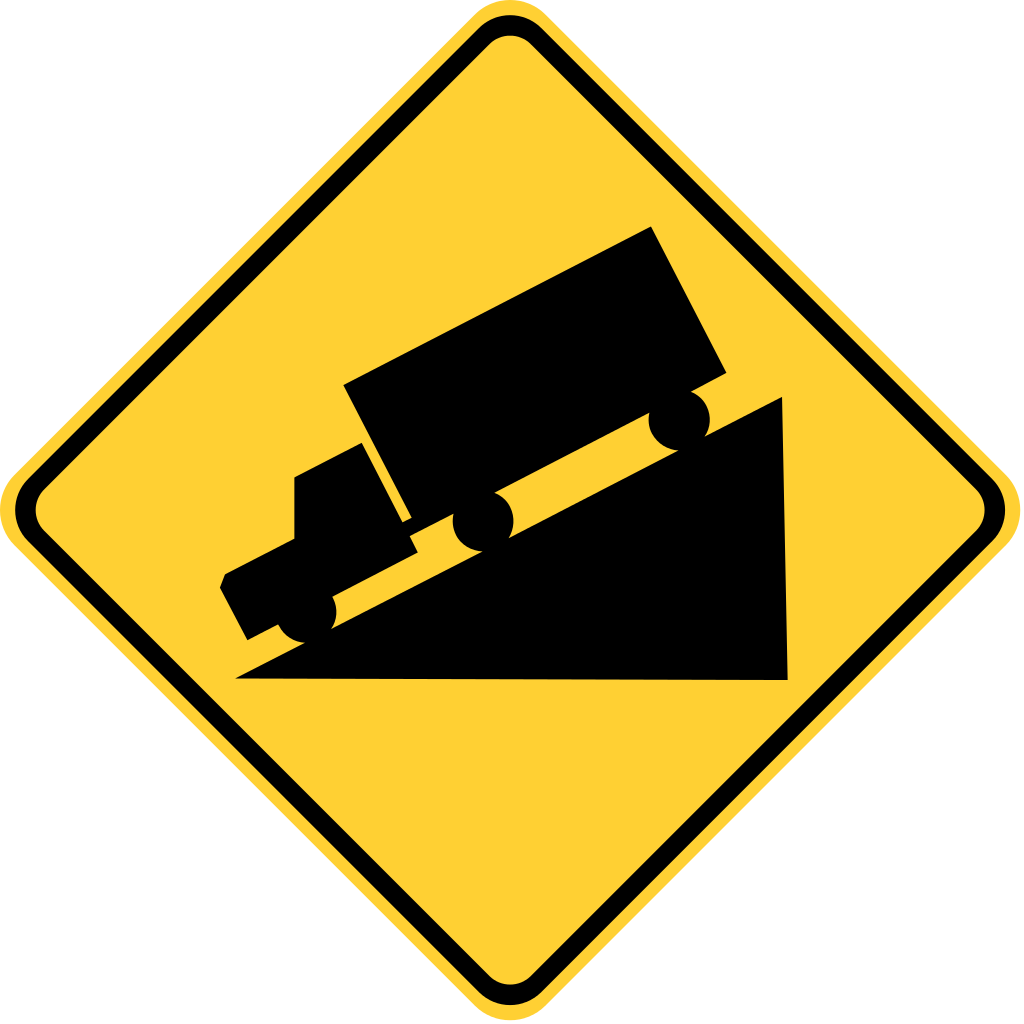 This sign indicates that:
A
there is a steep hill ahead.
B
trucks are merging from the right
C
there's a side road ahead
No explanation available.
Question 42
Regulatory signs are:
A
white.
B
yellow.
C
green.
No explanation available.
Question 43
Drivers should use high beam headlights when:
A
following another vehicle.
B
when they come within 50 feet of an oncoming vehicle.
C
there are no oncoming vehicles approaching.
No explanation available.
Question 44
Speed limit signs are:
A
service signs
B
regulation signs (regulatory signs)
C
warning signs
No explanation available.
Question 45
When you pass another vehicle, before you return to the right lane, you must:
A
look at your interior rear-view mirror.
B
signal.
C
All of the above.
No explanation available.
Question 46
Drivers may cross a double yellow line to pass another vehicle if:
A
the yellow line next to the other side of the road is broken.
B
the vehicle ahead moves to the right to let them pass.
C
the yellow line next to their side of the road is broken.
No explanation available.
Question 47
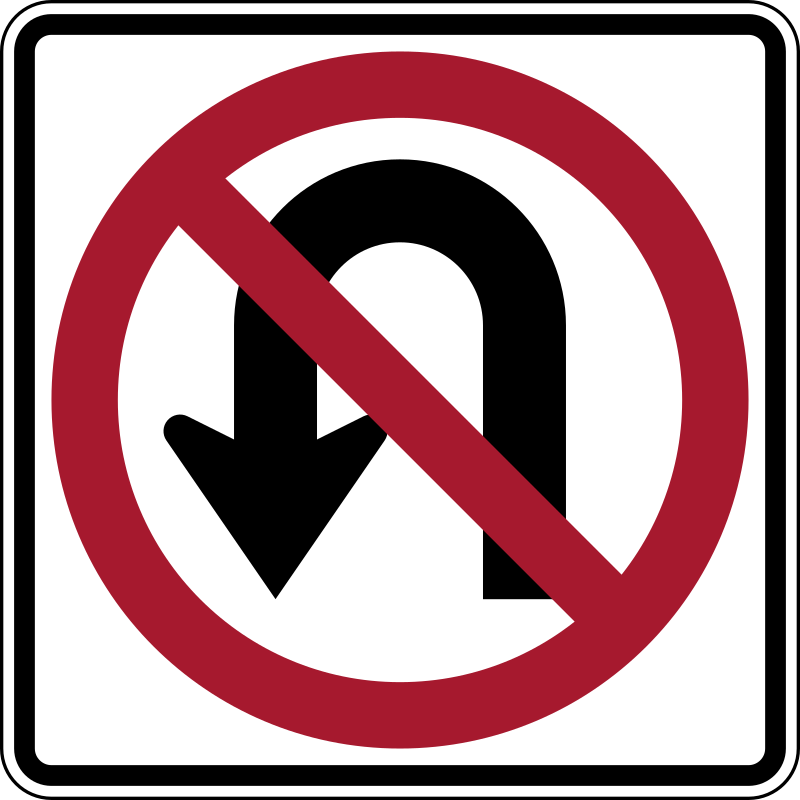 This road sign means:
A
No left turn
B
No U-turn
C
Detour ahead
No explanation available.
Question 48
What should you do if you see smoke come from under the hood?
A
Call the fire department and then pull off the road and park your vehicle.
B
Pull off the road and park your vehicle. Turn off the ignition, get away from the car and call the fire department.
C
Try to fight the fire yourself.
No explanation available.
Question 49
What do warning signs mean?
A
Danger ahead.
B
Drivers are approaching a location where there is a special rule.
C
All of the above.
No explanation available.
Question 50
When they see a crossbuck sign, drivers:
A
must slow down and wait for the red lights to flash.
B
must always come to a complete stop.
C
are legally required to yield the right of way to trains.
No explanation available.