Question 1:
Drivers should use the horn:
A
if a driver is moving slowly, and you want them to drive faster.
B
only when necessary, to avoid collisions.
C
when feeling angry or upset.
D
to alert other drivers that they made a mistake.
The correct driving rule is: only when necessary, to avoid collisions. Following standard DMV road rules and practicing defensive driving ensures safety for all road users.
Question 2:
___________ are green with white letters and symbols.
A
Warning signs
B
Destination signs (guide signs)
C
Regulation signs (regulatory signs)
The correct driving rule is: Destination signs (guide signs). Following standard DMV road rules and practicing defensive driving ensures safety for all road users.
Question 3:
BAC is:
A
the acronym for Beer ACcumulation.
B
the number of ounces of alcohol in your blood.
C
the percentage of alcohol in your blood.
Under state DUI and traffic safety laws: the percentage of alcohol in your blood. Alcohol degrades judgment, slows reaction times, and distorts depth perception.
Question 4:
In heavy rain, tires can begin to ride on the water that is on top of the road pavement. This is called:
A
rideplaning.
B
hydroplaning.
C
pavement-planing.
D
waterplaning.
When hydroplaning on water: hydroplaning. Gently ease off the accelerator and hold the steering wheel straight without sudden braking.
Question 5:
On what three conditions does your blood alcohol content (BAC) depend?
A
Your weight. How much alcohol you drink. How much time passes between drinks.
B
Your weight. The type of beverage you drink. How fit you are.
C
Your height. How much alcohol you drink. The type of beverage you drink.
Under state DUI and traffic safety laws: Your weight. How much alcohol you drink. How much time passes between drinks. Alcohol degrades judgment, slows reaction times, and distorts depth perception.
Question 6:
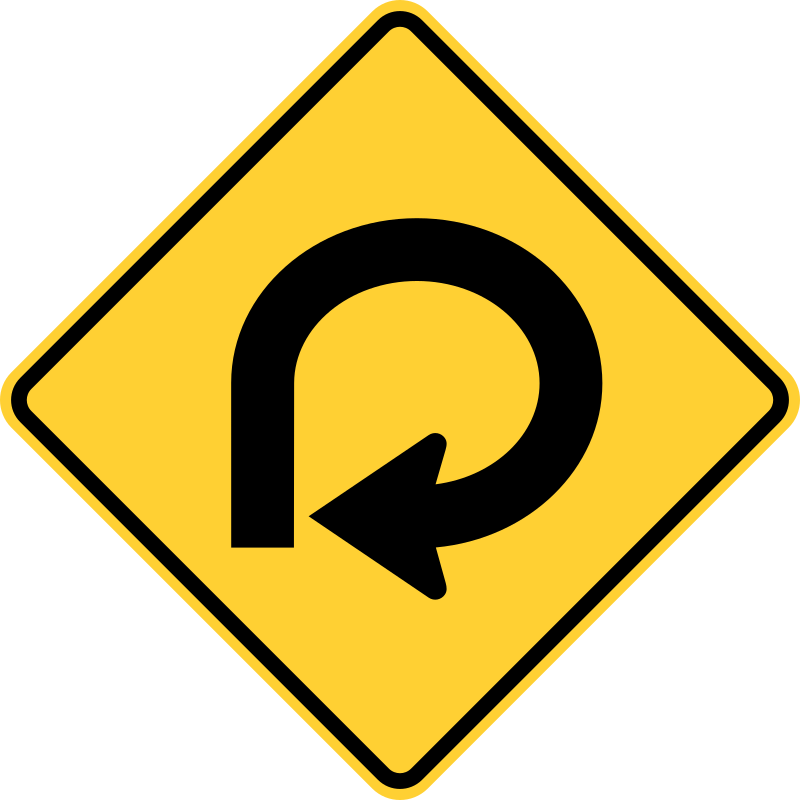 This sign means:
A
Roundabout ahead.
B
270 degree turn ahead.
C
Wrong way; Turn around immediately.
This traffic sign indicates: 270 degree turn ahead. Observing and obeying all roadway signs ensures safe traffic flow and legal driving.
Question 7:
Who is most at risk?
A
Drivers who have overslept.
B
Drivers who are driving long distances without rest breaks.
C
Experienced drivers.
The correct driving rule is: drivers who are driving long distances without rest breaks. Following standard DMV road rules and practicing defensive driving ensures safety for all road users.
Question 8:
Which shape is a stop sign?
A
Diamond
B
Octagon
C
Upside-down triangle
The correct driving rule is: Octagon. Following standard DMV road rules and practicing defensive driving ensures safety for all road users.
Question 9:
If your car goes into water, you should:
A
wait for water to rush in and let it out in small breaths through your nose.
B
call the fire department immediately.
C
remove yourself before it starts to sink.
The correct driving rule is: remove yourself before it starts to sink. Following standard DMV road rules and practicing defensive driving ensures safety for all road users.
Question 10:
A solid yellow line to the right of a broken yellow center line means:
A
vehicles may cross these lines when changing lanes.
B
passing or crossing is prohibited in that lane, except when turning left.
C
shared lane ahead.
D
HOV lane.
The correct driving rule is: passing or crossing is prohibited in that lane, except when turning left. Following standard DMV road rules and practicing defensive driving ensures safety for all road users.
Question 11:
When the road is slippery, you should:
A
brake suddenly carefully.
B
pump your brakes.
C
press your brakes in slow, steady strokes.
For safe speed and stopping control: press your brakes in slow, steady strokes. Adjusting speed to match visibility and road traction prevents loss of steering grip.
Question 12:
Under 'Zero Tolerance' laws across the United States, drivers under the age of 21 can be charged with DUI if their BAC is:
A
0.08% or higher
B
Any measurable amount (0.01% to 0.02% depending on state)
C
0.10% or higher
D
Only if they cause an accident
Zero Tolerance laws make it illegal for anyone under 21 to drive with any detectable amount of alcohol in their system.
Question 13:
What do warning signs mean?
A
Danger ahead.
B
Drivers are approaching a location where there is a special rule.
C
All of the above.
All of the listed points are essential driving requirements: Danger ahead; Drivers are approaching a location where there is a special rule. Practicing each ensures compliance with DMV safety laws.
Question 14:
A blue painted curb or blue pavement marking indicates parking is reserved for:
A
Police cruisers only
B
Individuals with valid disabled person placards or license plates
C
Electric vehicles only
D
Delivery trucks between 8 AM and 5 PM
Blue curb zones and parking spaces are legally reserved exclusively for individuals with disabled placards or plates.
Question 15:
How long does it take the average human body to process and eliminate the alcohol in one standard drink?
A
About 15 minutes
B
About 1 hour to 1.5 hours
C
About 5 hours
D
Instantly if drinking water
The human liver eliminates alcohol at an average rate of approximately one standard drink (12 oz beer, 5 oz wine, 1.5 oz liquor) per hour.
Question 16:
If you are blinded by headlights on an approaching vehicle, you should:
A
avoid looking directly at the bright lights.
B
glance toward the side of the road, then look quickly ahead to determine the other vehicle’s position.
C
All of the above.
All of the listed points are essential driving requirements: avoid looking directly at the bright lights; glance toward the side of the road, then look quickly ahead to determine the other vehicle’s position. Practicing each ensures compliance with DMV safety laws.
Question 17:
Drivers should be aware that a motorcyclist may:
A
decrease speed and rise off the seat when approaching a railroad crossing.
B
quickly change speed or lane position.
C
All of the above.
All of the listed points are essential driving requirements: decrease speed and rise off the seat when approaching a railroad crossing; quickly change speed or lane position. Practicing each ensures compliance with DMV safety laws.
Question 18:
What should you do when an aggressive driver confronts you?
A
Avoid eye contact with the aggressive driver.
B
Make eye contact.
C
Challenge the aggressive driver with increased speed.
The correct driving rule is: avoid eye contact with the aggressive driver. Following standard DMV road rules and practicing defensive driving ensures safety for all road users.
Question 19:
An emergency vehicle that uses lights and a siren can be unpredictable. Why?
A
The driver can legally pass red lights.
B
Emergency vehicles must go faster than the posted speed limit when it is safe to do so.
C
Emergency vehicle drivers are not required to be careful.
When sharing the road with other vehicles: The driver can legally pass red lights. Giving large vehicles and vulnerable users adequate clearance prevents dangerous accidents.
Question 20:
A red painted curb signifies:
A
Short-term parking
B
No stopping, standing, or parking at any time (except emergency vehicles)
C
Disabled parking space
D
Bus stop during evening hours
Red curbs are strict fire lanes or safety zones where stopping, standing, or parking is illegal at all times.
Question 21:
 This is:
A
a side road sign.
B
a merging traffic sign.
C
a right curve sign.
The correct driving rule is: a side road sign. Following standard DMV road rules and practicing defensive driving ensures safety for all road users.
Question 22:
A flashing red light means:
A
The same as a STOP sign.
B
The light will soon change to steady red.
C
Drive with caution.
When an emergency vehicle approaches with flashing lights or sirens, you must safely pull over to the right curb and stop completely until it passes.
Question 23:
You ________ traffic headed toward you when you turn left.
A
must not yield to
B
must interrupt
C
must yield to
According to standard right-of-way regulations: must yield to. Yielding appropriately prevents intersection collisions and maintains safe traffic flow.
Question 24:
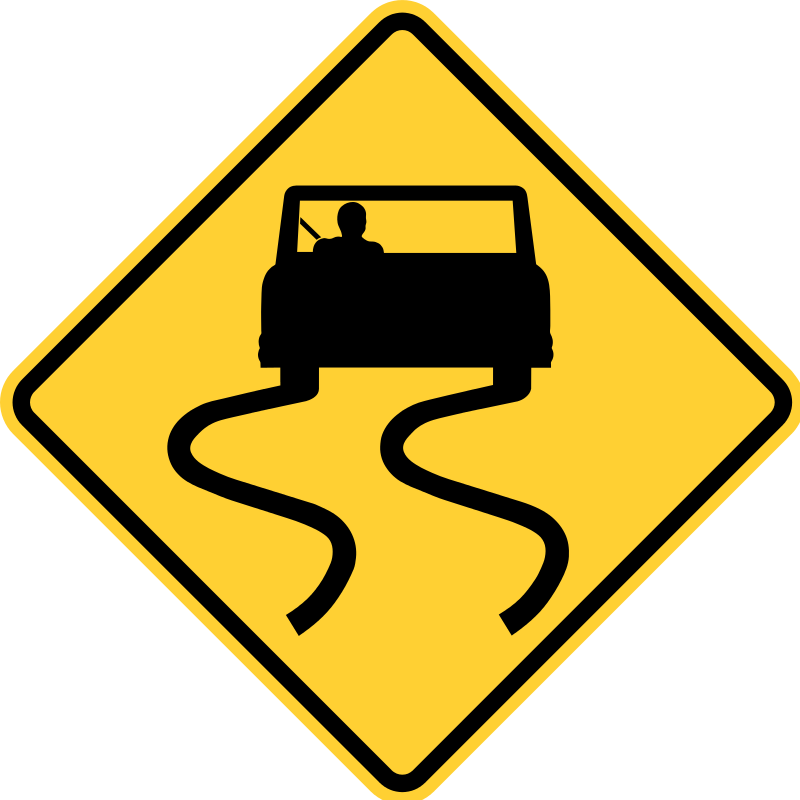 This sign means:
A
The road will curve to the right, then to the left.
B
Road slippery when wet. Drive slowly.
C
Winding road ahead. Drive with caution.
This traffic sign indicates: Road slippery when wet. Drive slowly. Observing and obeying all roadway signs ensures safe traffic flow and legal driving.
Question 25:
When parking on a public road, drivers should:
A
move as far away from traffic as possible.
B
always park on the left side of the roadway.
C
All of the above.
Under standard parking and curb regulations: move as far away from traffic as possible. Following parking distance clearances keeps roadways unobstructed and emergency lanes accessible.
Question 26:
Under child safety seat laws in most states, infants and young toddlers must ride in a rear-facing car seat until at least:
A
Age 2 (or until reaching the car seat's height/weight limit)
B
6 months of age
C
Age 6
D
Age 10
Safety guidelines and state laws recommend or require keeping children in rear-facing child restraint seats until at least age 2.
Question 27:
Which of the following drugs could affect your ability to drive?
A
A cold remedy.
B
Marijuana.
C
All of the above.
Alcohol and impairing substances degrade all critical driving functions: A cold remedy; Marijuana. Driving while impaired carries severe criminal and safety penalties.
Question 28:
 This sign means:
A
A road crosses the main highway ahead.
B
The divided highway on which drivers are traveling ends ahead.
C
Drivers are coming to a point where another traffic lane joins the one they are on.
This traffic sign indicates: drivers are coming to a point where another traffic lane joins the one they are on. Observing and obeying all roadway signs ensures safe traffic flow and legal driving.
Question 29:
A good indication that it is safe to return to the right lane after passing a vehicle is when the vehicle that was passed:
A
is in your blind spot.
B
is on your left.
C
is not visible in the rearview mirror.
D
is visible in the rearview mirror.
Defensive driving guidelines state that: is visible in the rearview mirror. Anticipating road hazards and communicating maneuvers keeps traffic predictable and safe.
Question 30:
 This road sign means:
A
Pavement ends
B
Winding road
C
Double curve ahead
This traffic sign indicates: Winding road. Observing and obeying all roadway signs ensures safe traffic flow and legal driving.
Question 31:
Which of the following is NOT true about ABS?
A
It improves the vehicle stability.
B
It helps increase your stopping distance.
C
It improves the steering ability.
The correct driving rule is: it helps increase your stopping distance. Following standard DMV road rules and practicing defensive driving ensures safety for all road users.
Question 32:
Which shape is a yield sign?
A
Vertical rectangle
B
Upside-down triangle
C
Diamond
The correct driving rule is: Upside-down triangle. Following standard DMV road rules and practicing defensive driving ensures safety for all road users.
Question 33:
An octagonal sign means that drivers must:
A
respect the posted speed limit.
B
come to a complete stop at the marked stop line.
C
be aware possible hazards ahead.
An octagonal Stop sign requires a full and complete stop before the stop line or crosswalk: come to a complete stop at the marked stop line. Proceed only after yielding to all cross traffic and pedestrians.
Question 34:
When parking alongside a curb on a level street, your tires must be within ____ inches of the curb.
A
12 to 18 inches
B
36 inches
C
24 to 30 inches
D
Touching the curb firmly
When parallel parking along a street curb, tires must be parallel and within 12 to 18 inches (depending on state) of the curb.
Question 35:
Before crossing any railroad tracks, you must:
A
look and listen for trains.
B
make sure there is room for your vehicle on the other side.
C
All of the above.
All of the listed points are essential driving requirements: look and listen for trains; make sure there is room for your vehicle on the other side. Practicing each ensures compliance with DMV safety laws.
Question 36:
When following motorcycles, drivers should:
A
reduce the minimum following distance.
B
try to pass them as they have different braking capabilities than other motor vehicles.
C
keep more space in front of their vehicle.
The correct driving rule is: keep more space in front of their vehicle. Following standard DMV road rules and practicing defensive driving ensures safety for all road users.
Question 37:
When driving through a curve, when should you reduce your vehicle's speed?
A
Before entering the curve
B
Hard braking in the middle of the curve
C
Only after you begin sliding
D
Accelerate hard through the entire curve
Always brake and slow down before entering a curve. Braking inside a curve can cause tires to lose lateral grip and skid.
Question 38:
This sign warns drivers that:
A
they must turn either to the right or left.
B
there is a double curve ahead.
C
there is a winding road ahead.
This traffic sign indicates: there is a winding road ahead. Observing and obeying all roadway signs ensures safe traffic flow and legal driving.
Question 39:
When the traffic light is green, to make a left turn you should:
A
wait for the red light and make a turn on red.
B
yield to oncoming traffic and turn when safe to do so.
C
signal other drivers to stop so you can turn.
D
wait for another driver to signal that it's your turn.
The correct driving rule is: yield to oncoming traffic and turn when safe to do so. Following standard DMV road rules and practicing defensive driving ensures safety for all road users.
Question 40:
Blind spots are:
A
Dangerous intersection where the maximum speed limit is 15 MPH or less.
B
At night, the darkest areas of a road, where emergency flashers should be used.
C
Areas to the side or rear of a vehicle that the driver cannot see with use of mirrors.
The correct driving rule is: Areas to the side or rear of a vehicle that the driver cannot see with use of mirrors. Following standard DMV road rules and practicing defensive driving ensures safety for all road users.
Question 41:
If you must drive during ice or snow storms, you should:
A
All the other answers are correct.
B
clear the ice and snow from your vehicle.
C
make sure the windshield washer reservoir is filled with a cleaning solution that resists freezing.
D
drive slowly.
For safe speed and stopping control: All the other answers are correct. Adjusting speed to match visibility and road traction prevents loss of steering grip.
Question 42:
To drive defensively, you must:
A
avoid scanning the road ahead.
B
keep one hand on the steering wheel.
C
keep your eyes moving.
The correct driving rule is: keep your eyes moving. Following standard DMV road rules and practicing defensive driving ensures safety for all road users.
Question 43:
 What does this road sign indicate?
A
Hospital service
B
Area reserved for people with disabilities
C
Interstate highway
This traffic sign indicates: Hospital service. Observing and obeying all roadway signs ensures safe traffic flow and legal driving.
Question 44:
Does a vehicle prepared to enter a traffic circle or rotary have right-of-way over vehicles in the circle?
A
Yes, but only if they are entering the rotary from the right lane.
B
No. Vehicles already in the circle have the right-of-way.
C
Only if the light is green.
D
Yes.
Vehicles entering a roundabout must yield right-of-way to circulating traffic already inside: No. Vehicles already in the circle have the right-of-way. Wait for a safe gap before entering.
Question 45:
Any time a driver wants to merge with other traffic, they should:
A
always wait until their lane is ending and then merge.
B
merge only when other drivers have stopped their vehicles.
C
allow a space cushion of about 4 seconds.
D
merge as fast as they can.
The correct driving rule is: allow a space cushion of about 4 seconds. Following standard DMV road rules and practicing defensive driving ensures safety for all road users.
Question 46:
Which of the following is true about the Anti-Locking Brake System?
A
It prevents skidding.
B
It allows drivers to steer during an emergency braking situation.
C
All of the above.
All of the listed points are essential driving requirements: It prevents skidding; It allows drivers to steer during an emergency braking situation. Practicing each ensures compliance with DMV safety laws.
Question 47:
When passing a large truck on the highway, you should:
A
Linger alongside the truck's trailer
B
Pass quickly on the left and return to the lane only when you see both of the truck's headlights in your rearview mirror
C
Cut closely in front of the truck's front bumper
D
Honk repeatedly while passing
Never linger in a truck's blind spot. Complete your pass promptly and pull back in only after seeing both truck headlights in your rearview mirror.
Question 48:
As you drive on the expressway, make sure:
A
you cut off vehicles behind you when you change lanes.
B
to signal all lane changes.
C
your directional signal goes off before you change lanes.
The correct driving rule is: to signal all lane changes. Following standard DMV road rules and practicing defensive driving ensures safety for all road users.
Question 49:
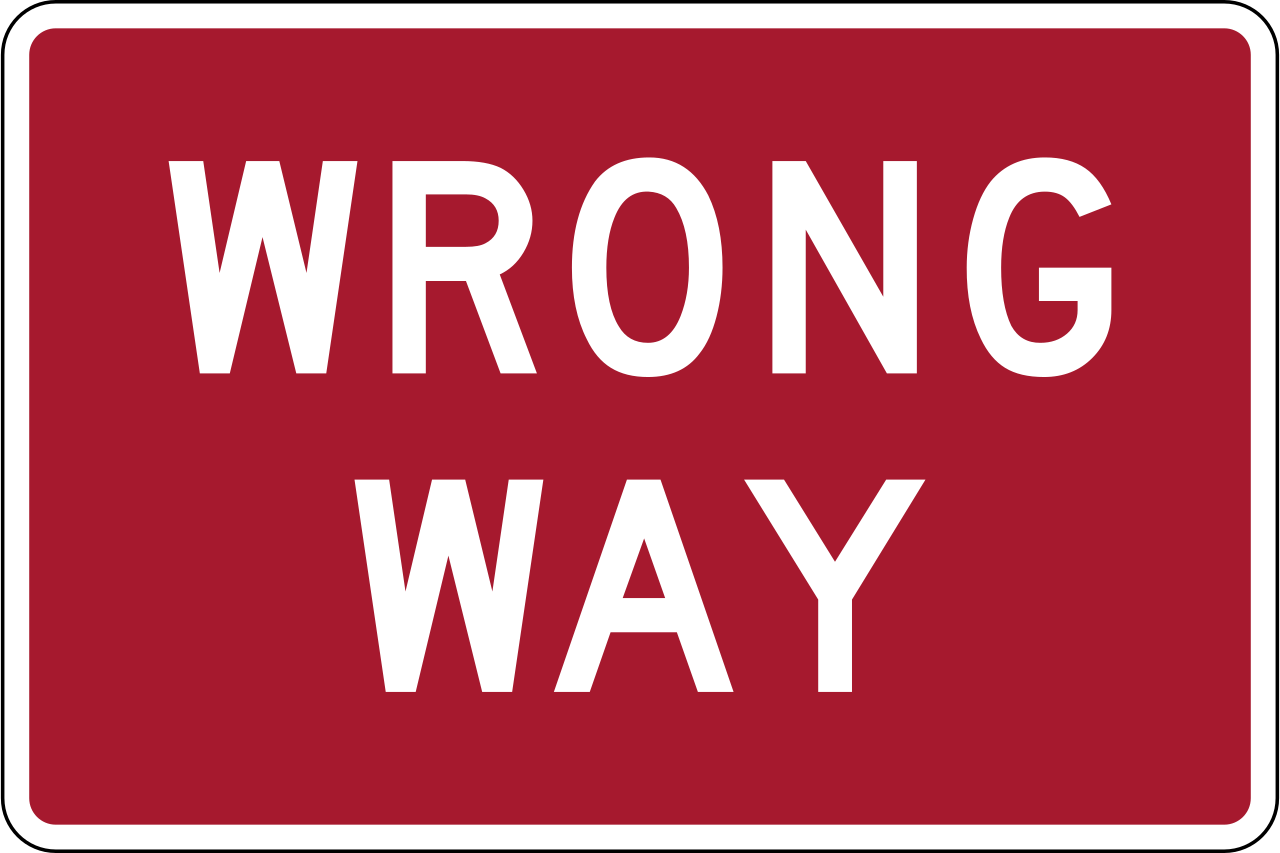 When drivers see this road sign:
A
they must come to a complete stop and call the police.
B
they must not drive past this sign.
C
they must turn around immediately.
This traffic sign indicates: they must turn around immediately. Observing and obeying all roadway signs ensures safe traffic flow and legal driving.
Question 50:
This sign indicates:
A
Warning: drunk drivers.
B
Winding road. Drive with caution.
C
The road may be slippery when wet. Drive slowly.
This traffic sign indicates: The road may be slippery when wet. Drive slowly. Observing and obeying all roadway signs ensures safe traffic flow and legal driving.