Question 1:
Where must a pedestrian walk when there are no sidewalks?
A
On the side of the road, in the same direction of traffic.
B
In the middle of the road, facing oncoming traffic.
C
On the side of the road, facing the traffic.
Drivers must always yield the right-of-way to pedestrians crossing at intersections and crosswalks: On the side of the road, facing the traffic. Stop and allow them to clear the lane safely.
Question 2:
When approaching a stopped school bus with its red lights flashing and its stop arm extended, you must:
A
stop 15 feet away from the bus.
B
stop only if children are present.
C
stop and remain stopped until the red lights stop flashing and the stop arm has been withdrawn.
D
stop and remain stopped until it appears safe to proceed.
When a school bus displays flashing red lights and extended stop sign: stop and remain stopped until the red lights stop flashing and the stop arm has been withdrawn. Traffic in both directions must come to a full stop on undivided roads until children are clear.
Question 3:
 What does a flashing yellow light mean?
A
The same thing as a stop sign.
B
Drivers may move forward with caution.
C
All of the above.
According to standard right-of-way regulations: drivers may move forward with caution. Yielding appropriately prevents intersection collisions and maintains safe traffic flow.
Question 4:
A steady yellow light means:
A
Be prepared to stop for the red light.
B
Drive with caution.
C
Be prepared to go. The light will soon be green.
According to standard right-of-way regulations: Be prepared to stop for the red light. Yielding appropriately prevents intersection collisions and maintains safe traffic flow.
Question 5:
For protection, motorcyclists are required by law to:
A
signal turns, lane changes and stops.
B
wear approved helmets.
C
keep their headlights and taillights on at all times.
D
None of the above.
The correct driving rule is: keep their headlights and taillights on at all times. Following standard DMV road rules and practicing defensive driving ensures safety for all road users.
Question 6:
You hear a siren close by but can not see where the emergency vehicle is. What do you do?
A
Keep driving until you are sure the emergency vehicle is headed toward you.
B
Stop immediately and activate your emergency flashers.
C
Pull over to the right side of the road and stop until you are sure the emergency vehicle is not headed toward you.
When sharing the road with other vehicles: pull over to the right side of the road and stop until you are sure the emergency vehicle is not headed toward you. Giving large vehicles and vulnerable users adequate clearance prevents dangerous accidents.
Question 7:
When driving on ice or hard-packed snow, you should reduce your speed by:
A
At least one-half or slow to a crawl
B
Only 5 mph
C
No reduction if you have all-wheel drive
D
10% of the posted limit
On packed snow you should cut speed in half; on icy surfaces you should slow to a crawl because stopping distances increase up to 9 times.
Question 8:
When sharing the road with a commercial bus or city transit bus that is signaling to re-enter traffic from a stop, you should:
A
Speed up to block the bus from entering
B
Yield and allow the bus to merge back into traffic safely
C
Honk loudly and pass on the right shoulder
D
Tailgate closely behind the bus
Many states enforce 'Yield to Bus' laws, requiring motorists to yield to transit buses signaling to merge back into traffic lanes.
Question 9:
Where must you position your vehicle when you prepare to make a left turn from a two-way roadway into a one-way roadway?
A
As far to the right as possible.
B
On the right curb.
C
As close as possible to the center line.
The correct driving rule is: As close as possible to the center line. Following standard DMV road rules and practicing defensive driving ensures safety for all road users.
Question 10:
When driving on slick roads, drivers should:
A
accelerate quickly.
B
take turns more slowly.
C
use alternate routes.
D
drive as they would on dry roads.
The correct driving rule is: take turns more slowly. Following standard DMV road rules and practicing defensive driving ensures safety for all road users.
Question 11:
How long does it take the average human body to process and eliminate the alcohol in one standard drink?
A
About 15 minutes
B
About 1 hour to 1.5 hours
C
About 5 hours
D
Instantly if drinking water
The human liver eliminates alcohol at an average rate of approximately one standard drink (12 oz beer, 5 oz wine, 1.5 oz liquor) per hour.
Question 12:
If a vehicle using high beams comes toward you, look towards __________ of the road.
A
either side
B
the center
C
the right side
D
the left side
The correct driving rule is: the right side. Following standard DMV road rules and practicing defensive driving ensures safety for all road users.
Question 13:
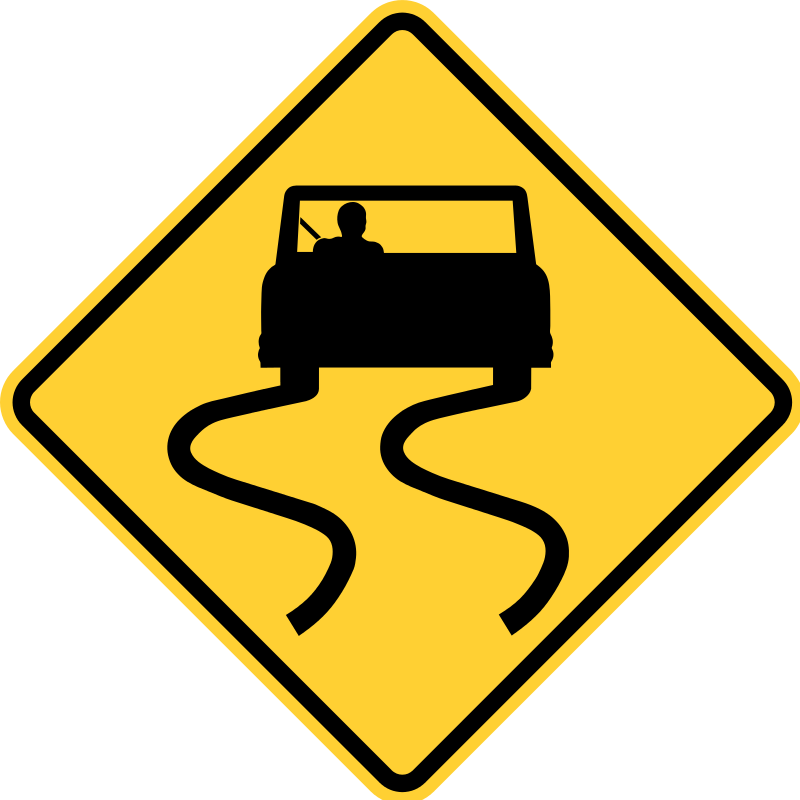 This road sign means:
A
Winding road
B
Side road ahead
C
Slippery when wet
This traffic sign indicates: Slippery when wet. Observing and obeying all roadway signs ensures safe traffic flow and legal driving.
Question 14:
Destination signs are ______ with ____ letters and symbols.
A
green; white
B
blue; white
C
white; black
The correct driving rule is: green; white. Following standard DMV road rules and practicing defensive driving ensures safety for all road users.
Question 15:
Drivers should be aware that a motorcyclist may:
A
decrease speed and rise off the seat when approaching a railroad crossing.
B
quickly change speed or lane position.
C
All of the above.
All of the listed points are essential driving requirements: decrease speed and rise off the seat when approaching a railroad crossing; quickly change speed or lane position. Practicing each ensures compliance with DMV safety laws.
Question 16:
The amount of space you need to cross traffic depends on the:
A
road and weather conditions and oncoming traffic.
B
number of cars behind you.
C
presence of a yield sign.
D
number of cars in front of you.
The correct driving rule is: road and weather conditions and oncoming traffic. Following standard DMV road rules and practicing defensive driving ensures safety for all road users.
Question 17:
Your BAC depends on:
A
how fit you are.
B
the type of beverage you drink.
C
the amount of alcohol you drink.
Under state DUI and traffic safety laws: the amount of alcohol you drink. Alcohol degrades judgment, slows reaction times, and distorts depth perception.
Question 18:
Drivers should allow a larger space cushion when stopping:
A
at a stop sign.
B
on an up-hill.
C
at an intersection.
D
at a yield sign.
The correct driving rule is: on an up-hill. Following standard DMV road rules and practicing defensive driving ensures safety for all road users.
Question 19:
To reduce your risk of being involved in a traffic crash, the most effective thing you can do is:
A
Only driving between 11:00 AM and 4:00 PM
B
Limiting your driving to week days.
C
Wearing your seat belt.
D
Driving in the right lane on multi-lane highways.
The correct driving rule is: Wearing your seat belt. Following standard DMV road rules and practicing defensive driving ensures safety for all road users.
Question 20:
Aggressive driving includes:
A
quick lane changes without a signal.
B
chasing or challenging other drivers.
C
All of the above.
All of the listed points are essential driving requirements: quick lane changes without a signal; chasing or challenging other drivers. Practicing each ensures compliance with DMV safety laws.
Question 21:
If another car is in danger of hitting you, you should:
A
flash your brake lights.
B
sound your horn.
C
use your emergency lights.
D
flash your headlights.
The correct driving rule is: sound your horn. Following standard DMV road rules and practicing defensive driving ensures safety for all road users.
Question 22:
If an emergency vehicle with flashing lights is traveling in the area where you are driving, you must:
A
drive to the right side of the road and stop.
B
proceed slowly and let the vehicle pass.
C
keep driving in your lane.
When sharing the road with other vehicles: drive to the right side of the road and stop. Giving large vehicles and vulnerable users adequate clearance prevents dangerous accidents.
Question 23:
When approaching a highway-rail intersection, the first sign drivers see is usually:
A
an RXR round sign on a yellow background.
B
a stop sign.
C
a yield sign.
According to standard right-of-way regulations: an RXR round sign on a yellow background. Yielding appropriately prevents intersection collisions and maintains safe traffic flow.
Question 24:
If your brakes are wet, you can dry them by:
A
riding the pedal lightly.
B
pull over to the right and wait until it stops raining.
C
having them checked by a mechanic.
The correct driving rule is: riding the pedal lightly. Following standard DMV road rules and practicing defensive driving ensures safety for all road users.
Question 25:
 This sign warns drivers that:
A
there is a one lane bridge ahead.
B
the right lane ends.
C
the road ahead is narrow.
This traffic sign indicates: the right lane ends. Observing and obeying all roadway signs ensures safe traffic flow and legal driving.
Question 26:
When you make a left turn from a two-way road into a four-lane highway, you must:
A
enter the left lane, to the right of the center line.
B
enter the right lane, to the left of the center line.
C
go straight through the intersection, and then make the turn.
Defensive driving guidelines state that: enter the left lane, to the right of the center line. Anticipating road hazards and communicating maneuvers keeps traffic predictable and safe.
Question 27:
Where are yield signs usually placed?
A
At intersections, if there is no marked stop line.
B
Where auxiliary roads lead into major roads.
C
Where major roads lead into auxiliary roads.
The correct driving rule is: Where auxiliary roads lead into major roads. Following standard DMV road rules and practicing defensive driving ensures safety for all road users.
Question 28:
When an aggressive driver confronts you, you should:
A
Try to move away safely.
B
Remain calm and relaxed.
C
All of the above.
All of the listed points are essential driving requirements: Try to move away safely; Remain calm and relaxed. Practicing each ensures compliance with DMV safety laws.
Question 29:
To drive defensively, you must:
A
avoid scanning the road ahead.
B
keep one hand on the steering wheel.
C
keep your eyes moving.
The correct driving rule is: keep your eyes moving. Following standard DMV road rules and practicing defensive driving ensures safety for all road users.
Question 30:
What should drivers do in case of a brake failure?
A
Shift to a lower gear.
B
Tie a white cloth on the left door handle.
C
Brake lightly.
The correct driving rule is: shift to a lower gear. Following standard DMV road rules and practicing defensive driving ensures safety for all road users.
Question 31:
Drivers who eat and drink while driving:
A
have no driving errors.
B
may have trouble controlling their vehicles.
C
must yield the right-of-way.
D
tend to be more aggressive.
The correct driving rule is: may have trouble controlling their vehicles. Following standard DMV road rules and practicing defensive driving ensures safety for all road users.
Question 32:
 This sign means:
A
Hairpin corner ahead.
B
Warning: U-turn ahead.
C
Sharp right turn ahead.
This traffic sign indicates: Hairpin corner ahead. Observing and obeying all roadway signs ensures safe traffic flow and legal driving.
Question 33:
If you experience brake failure while driving, what should be your first action?
A
Turn off the engine completely while driving
B
Rapidly pump the brake pedal to build hydraulic pressure
C
Jump out of the moving vehicle
D
Turn the steering wheel back and forth violently
Pumping the brake pedal rapidly may rebuild hydraulic pressure. If that fails, downshift to a lower gear and apply the emergency brake gently.
Question 34:
You must come to a full stop at a yield sign:
A
Always.
B
Never.
C
If traffic conditions require it.
The correct driving rule is: If traffic conditions require it. Following standard DMV road rules and practicing defensive driving ensures safety for all road users.
Question 35:
The road edge on the right side is marked by a ___________ line.
A
solid white
B
solid yellow
C
broken yellow
D
broken white
The correct driving rule is: solid white. Following standard DMV road rules and practicing defensive driving ensures safety for all road users.
Question 36:
When you park on the roadway, you should:
A
keep your turn signal on.
B
park at an angle.
C
use your four-way flashers.
D
turn your lights on.
Under standard parking and curb regulations: use your four-way flashers. Following parking distance clearances keeps roadways unobstructed and emergency lanes accessible.
Question 37:
Alcohol:
A
makes drivers more prone to take chances.
B
increases reaction time.
C
All of the above.
Alcohol and impairing substances degrade all critical driving functions: makes drivers more prone to take chances; increases reaction time. Driving while impaired carries severe criminal and safety penalties.
Question 38:
What is the universal hand signal for a right turn?
A
Left arm extended straight horizontally
B
Left arm bent upward at a 90-degree angle out the window
C
Left arm bent downward toward the road
D
Pointing right from inside the vehicle
To signal a right turn with hand signals, extend your left arm out the window and bend it upward at a 90-degree angle.
Question 39:
What are a vehicle's 'blind spots'?
A
Areas around your vehicle that cannot be seen using inside and outside mirrors alone
B
Spots on the windshield with rock chips
C
Areas illuminated only by fog lights
D
Sections of roadway without streetlights
Blind spots are side and rear areas obscured by vehicle pillars. Always turn your head to look over your shoulder before changing lanes.
Question 40:
What is the purpose of minimum speed limits?
A
To keep a smooth traffic flow.
B
To halt the traffic flow.
C
To allow emergency vehicles with red flashing lights to safely pass other vehicles.
For safe speed and stopping control: To keep a smooth traffic flow. Adjusting speed to match visibility and road traction prevents loss of steering grip.
Question 41:
Driving at night is _______ than driving during the day.
A
easier on your eyes
B
more dangerous
C
no more of less dangerous
D
less dangerous
The correct driving rule is: more dangerous. Following standard DMV road rules and practicing defensive driving ensures safety for all road users.
Question 42:
The yield sign is ___ and white, with ___ letters.
A
yellow; black
B
red; red
C
red; white
The correct driving rule is: red; red. Following standard DMV road rules and practicing defensive driving ensures safety for all road users.
Question 43:
When driving on a one way street and an emergency vehicle with flashing lights is behind your car, you should:
A
turn on emergency flashers.
B
speed up and take the next exit.
C
slow down until the vehicle passes you.
D
drive toward the nearest road side and stop.
When sharing the road with other vehicles: drive toward the nearest road side and stop. Giving large vehicles and vulnerable users adequate clearance prevents dangerous accidents.
Question 44:
A solid double yellow line down the center of a two-way street means:
A
Passing is permitted from both directions
B
Passing is strictly prohibited in both directions
C
Passing is allowed during daylight hours only
D
The lane is reserved for bicycles
Solid double yellow lines separate opposing lanes of traffic and prohibit passing in both directions (turning left across them into a driveway is allowed).
Question 45:
It is against the law for anyone under the age of 21 to ______ alcohol.
A
serve
B
wear clothing advertising
C
transport
D
be in the presence of
Under state DUI and traffic safety laws: transport. Alcohol degrades judgment, slows reaction times, and distorts depth perception.
Question 46:
A red traffic sign means?
A
Do not enter.
B
Stop.
C
All of the above.
This sign alerts drivers to several mandatory requirements: Do not enter, Stop. Obeying all posted traffic control instructions is required by law.
Question 47:
Crashes in work zones are most commonly caused by:
A
loss of steering control.
B
hydroplaning.
C
brake failure.
D
carelessness.
The correct driving rule is: carelessness. Following standard DMV road rules and practicing defensive driving ensures safety for all road users.
Question 48:
One broken line indicates:
A
You can pass other vehicles and change lanes, if it is safe.
B
You can not pass other vehicles or go across the line.
C
You can change lanes, but only when traffic conditions or obstructions in the road make it necessary.
The correct driving rule is: you can pass other vehicles and change lanes, if it is safe. Following standard DMV road rules and practicing defensive driving ensures safety for all road users.
Question 49:
What should you do if your rear wheels start to skid?
A
Steer left if your rear wheels slide right.
B
If the vehicle has ABS, pump the pedal carefully.
C
Turn the steering wheel in the direction the vehicle is trying to go.
The correct driving rule is: turn the steering wheel in the direction the vehicle is trying to go. Following standard DMV road rules and practicing defensive driving ensures safety for all road users.
Question 50:
How can you prevent fatigue on a long trip?
A
Plan to drive long trips with a companion.
B
Get enough sleep.
C
All of the above.
Alcohol and impairing substances degrade all critical driving functions: Plan to drive long trips with a companion; Get enough sleep. Driving while impaired carries severe criminal and safety penalties.