Question 1:
Two motorcyclists are allowed to:
A
ride side-by-side in a single lane.
B
share the lane with another vehicle.
C
race on empty roads.
Answer Explanation
The correct driving rule is: ride side-by-side in a single lane. Following standard DMV road rules and practicing defensive driving ensures safety for all road users.
The correct driving rule is: ride side-by-side in a single lane. Following standard DMV road rules and practicing defensive driving ensures safety for all road users.
Question 2:
If a driver follows you too closely, you should:
A
move to another lane if possible.
B
activate your stop lights.
C
brake suddenly.
Answer Explanation
The correct driving rule is: move to another lane if possible. Following standard DMV road rules and practicing defensive driving ensures safety for all road users.
The correct driving rule is: move to another lane if possible. Following standard DMV road rules and practicing defensive driving ensures safety for all road users.
Question 3:
Collisions can happen more often when one vehicle is traveling slower than the flow of traffic.
A
False
B
True
Answer Explanation
The correct driving rule is: True. Following standard DMV road rules and practicing defensive driving ensures safety for all road users.
The correct driving rule is: True. Following standard DMV road rules and practicing defensive driving ensures safety for all road users.
Question 4:
If you begin to feel drowsy while driving, you should:
A
open your window.
B
get some coffee.
C
get an energy drink.
D
stop driving.
Answer Explanation
Under state DUI and traffic safety laws: stop driving. Alcohol degrades judgment, slows reaction times, and distorts depth perception.
Under state DUI and traffic safety laws: stop driving. Alcohol degrades judgment, slows reaction times, and distorts depth perception.
Question 5:
What do flashing red lights on a school bus indicate?
A
The bus is stopped to load or discharge passengers.
B
Traffic that approaches from either direction may proceed.
C
The bus is about to stop.
Answer Explanation
When a school bus displays flashing red lights and extended stop sign: The bus is stopped to load or discharge passengers. Traffic in both directions must come to a full stop on undivided roads until children are clear.
When a school bus displays flashing red lights and extended stop sign: The bus is stopped to load or discharge passengers. Traffic in both directions must come to a full stop on undivided roads until children are clear.
Question 6:
What should you do in case of a steering failure?
A
Pump your gas pedal a few times to increase the pressure.
B
Don't panic. Turn on your emergency lights to let other drivers know you are having car problems. Move toward the side of the road and bring the car to a gradual stop.
C
Leave the road immediately.
Answer Explanation
The correct driving rule is: Don't panic. Turn on your emergency lights to let other drivers know you are having car problems. Move toward the side of the road and bring the car to a gradual stop. Following standard DMV road rules and practicing defensive driving ensures safety for all road users.
The correct driving rule is: Don't panic. Turn on your emergency lights to let other drivers know you are having car problems. Move toward the side of the road and bring the car to a gradual stop. Following standard DMV road rules and practicing defensive driving ensures safety for all road users.
Question 7:
When an emergency vehicle approaches using a siren, air horn or a red or blue flashing light, drivers must move to the right side of the road and stop until the vehicle has passed.
A
True
B
False
Answer Explanation
Diamond-shaped yellow warning signs alert drivers to upcoming roadway hazards: True. Adjusting speed in advance prevents skids and loss of control.
Diamond-shaped yellow warning signs alert drivers to upcoming roadway hazards: True. Adjusting speed in advance prevents skids and loss of control.
Question 8:
Your red traffic signal changes to green while a pedestrian is crossing in your traffic lane. The right of way should be given:
A
by the pedestrian, but only when vehicles are turning left.
B
by the pedestrian.
C
to the pedestrian.
Answer Explanation
Circular signs with an 'X' and 'RR' designate a Railroad Advance Warning: to the pedestrian. Drivers must slow down, look both ways, listen for trains, and be prepared to stop.
Circular signs with an 'X' and 'RR' designate a Railroad Advance Warning: to the pedestrian. Drivers must slow down, look both ways, listen for trains, and be prepared to stop.
Question 9:
Gauging the speed of a motorcycle may be difficult because:
A
motorcycles take up less of your field of vision.
B
motorcycles often slow down by downshifting.
C
many motorcyclists do not activate the brake light.
Answer Explanation
For safe speed and stopping control: motorcycles take up less of your field of vision. Adjusting speed to match visibility and road traction prevents loss of steering grip.
For safe speed and stopping control: motorcycles take up less of your field of vision. Adjusting speed to match visibility and road traction prevents loss of steering grip.
Question 10:
A parent or legal guardian may request that the driver’s license of a minor be cancelled at any time prior to age 18.
A
False
B
True
Answer Explanation
The correct driving rule is: True. Following standard DMV road rules and practicing defensive driving ensures safety for all road users.
The correct driving rule is: True. Following standard DMV road rules and practicing defensive driving ensures safety for all road users.
Question 11:
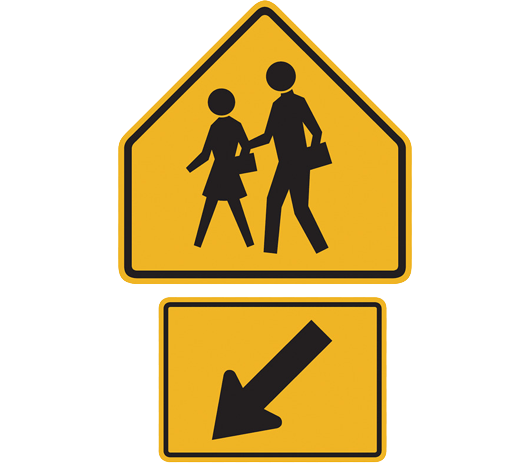 When they approach this sign, drivers must:
A
slow down and watch for children crossing the road.
B
obey signals from crossing guards.
C
stop if necessary.
D
All of the above.
Answer Explanation
This sign alerts drivers to several mandatory requirements: slow down and watch for children crossing the road, obey signals from crossing guards, stop if necessary. Obeying all posted traffic control instructions is required by law.
This sign alerts drivers to several mandatory requirements: slow down and watch for children crossing the road, obey signals from crossing guards, stop if necessary. Obeying all posted traffic control instructions is required by law.
Question 12:
A driver cuts off another vehicle, or threatens another motorist or a pedestrian. These are examples of:
A
excessive driving
B
road rage
C
defensive driving
Answer Explanation
Drivers must always yield the right-of-way to pedestrians crossing at intersections and crosswalks: road rage. Stop and allow them to clear the lane safely.
Drivers must always yield the right-of-way to pedestrians crossing at intersections and crosswalks: road rage. Stop and allow them to clear the lane safely.
Question 13:
At a stop sign there is no stop line, you must stop:
A
before you enter the intersection.
B
before you enter the crosswalk.
C
after you enter the crosswalk.
Answer Explanation
The correct driving rule is: before you enter the crosswalk. Following standard DMV road rules and practicing defensive driving ensures safety for all road users.
The correct driving rule is: before you enter the crosswalk. Following standard DMV road rules and practicing defensive driving ensures safety for all road users.
Question 14:
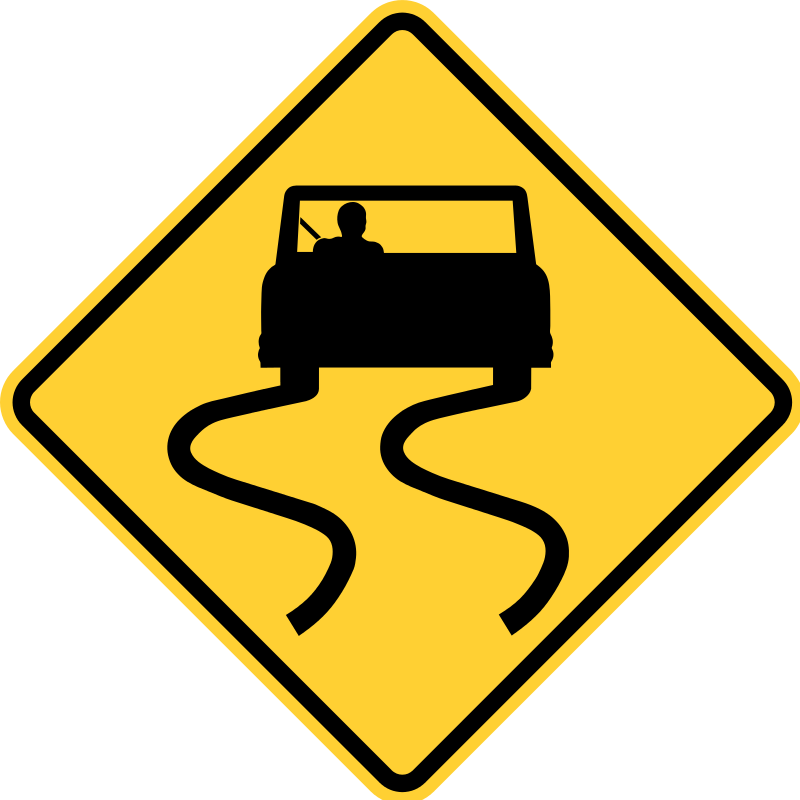 When they see this sign, drivers:
A
should be prepared to make sharp turns at a high speed.
B
need to be prepared to turn right and then left quickly.
C
should not speed up or brake quickly.
Answer Explanation
This traffic sign indicates: should not speed up or brake quickly. Observing and obeying all roadway signs ensures safe traffic flow and legal driving.
This traffic sign indicates: should not speed up or brake quickly. Observing and obeying all roadway signs ensures safe traffic flow and legal driving.
Question 15:
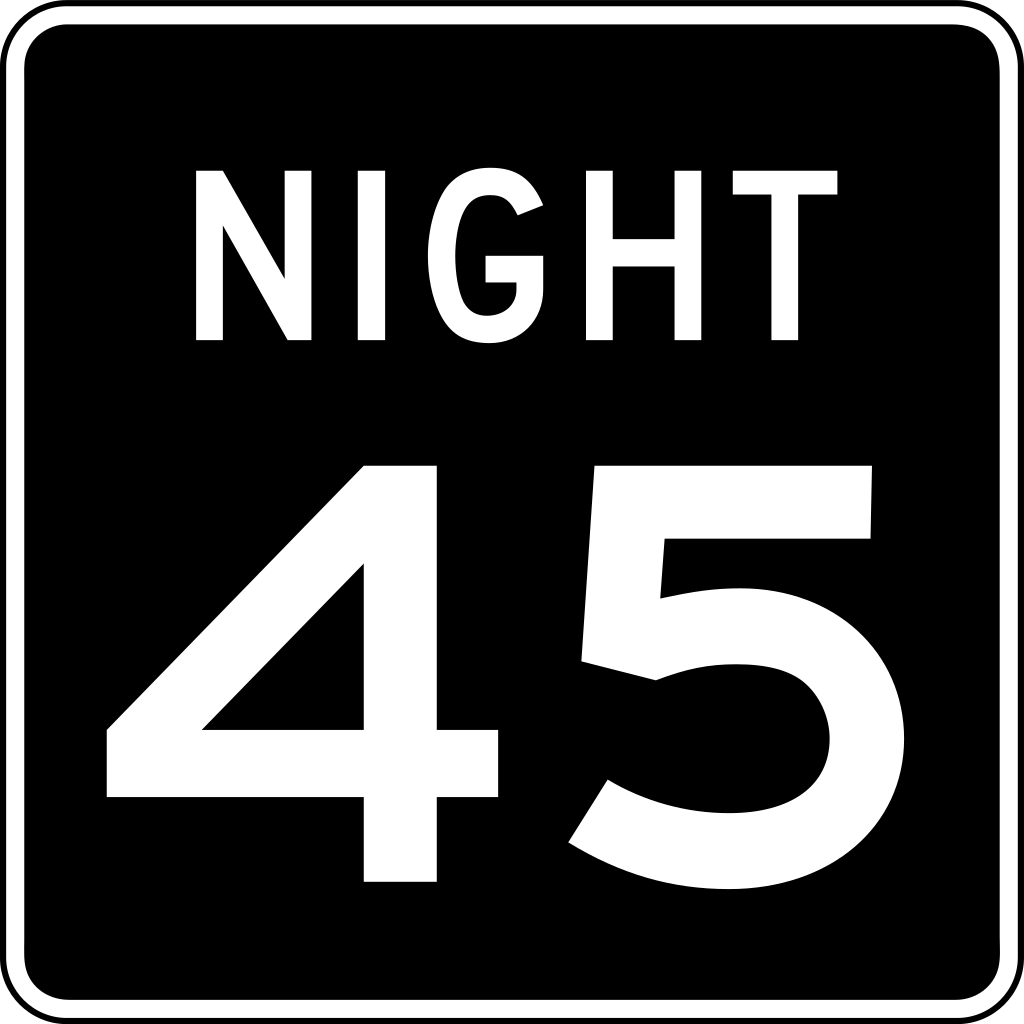 This sign means:
A
Take route 45 if you are driving at night.
B
The night-time speed limit is 45 MPH.
C
The minimum speed limit is 45 MPH.
Answer Explanation
This traffic sign indicates: The night-time speed limit is 45 MPH. Observing and obeying all roadway signs ensures safe traffic flow and legal driving.
This traffic sign indicates: The night-time speed limit is 45 MPH. Observing and obeying all roadway signs ensures safe traffic flow and legal driving.
Question 16:
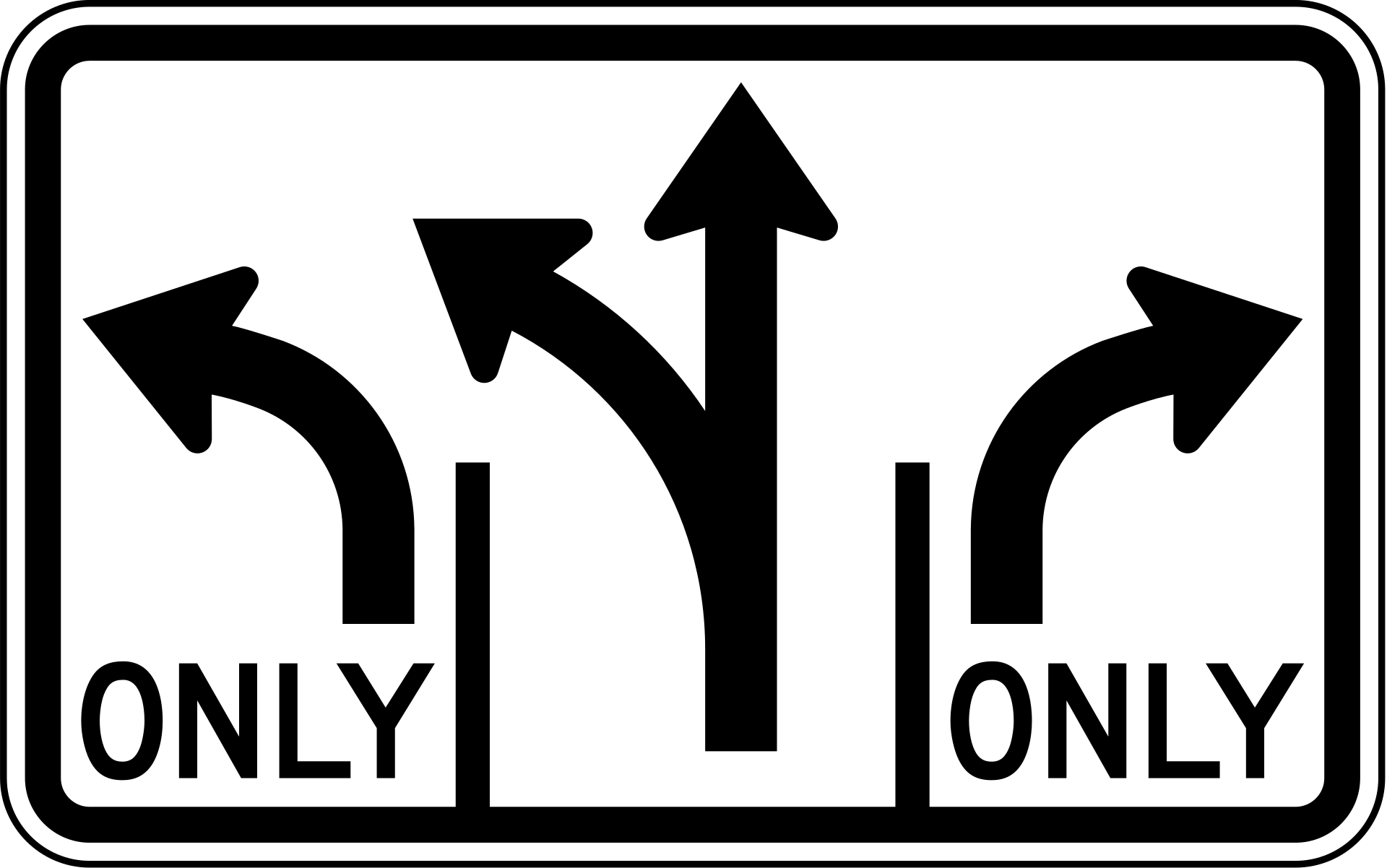 This regulatory sign tells drivers that:
A
traffic in the left lane must turn left at the intersection ahead.
B
all vehicles must turn left immediately.
C
traffic in the right lane must go straight.
Answer Explanation
This traffic sign indicates: traffic in the left lane must turn left at the intersection ahead. Observing and obeying all roadway signs ensures safe traffic flow and legal driving.
This traffic sign indicates: traffic in the left lane must turn left at the intersection ahead. Observing and obeying all roadway signs ensures safe traffic flow and legal driving.
Question 17:
You ________ traffic headed toward you when you turn left.
A
must not yield to
B
must interrupt
C
must yield to
Answer Explanation
According to standard right-of-way regulations: must yield to. Yielding appropriately prevents intersection collisions and maintains safe traffic flow.
According to standard right-of-way regulations: must yield to. Yielding appropriately prevents intersection collisions and maintains safe traffic flow.
Question 18:
 This road sign warns drivers that:
A
left turns are not allowed at the intersection.
B
the road will make a sharp turn to the right.
C
another road enters the highway from the direction shown.
Answer Explanation
This traffic sign indicates: another road enters the highway from the direction shown. Observing and obeying all roadway signs ensures safe traffic flow and legal driving.
This traffic sign indicates: another road enters the highway from the direction shown. Observing and obeying all roadway signs ensures safe traffic flow and legal driving.
Question 19:
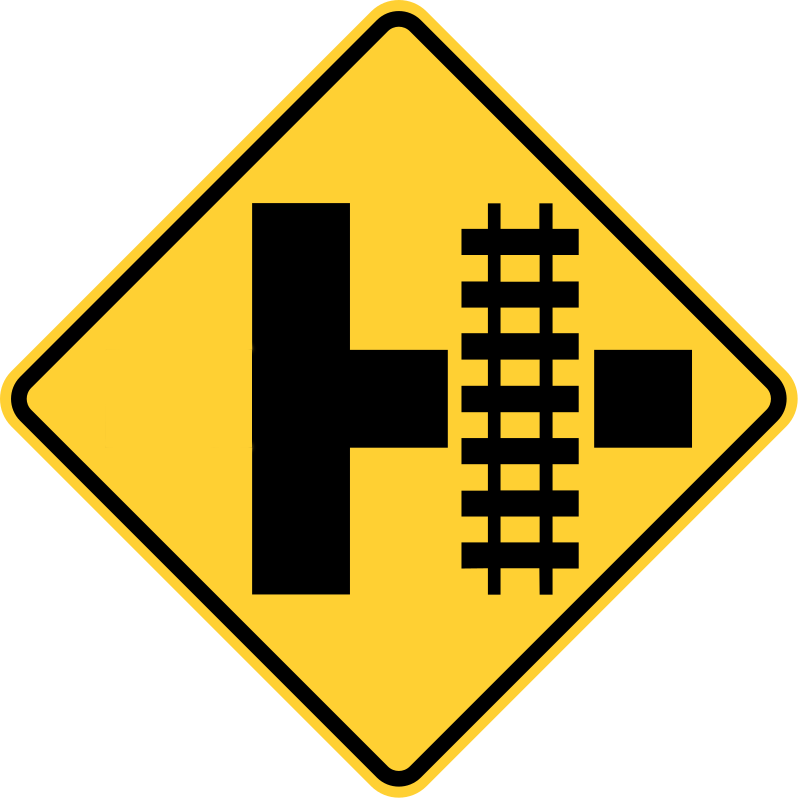 What does this sign indicate?
A
Parallel railroad crossing (side road)
B
Low ground clearance railroad crossing
C
Parallel railroad crossing (crossroad)
Answer Explanation
Circular signs with an 'X' and 'RR' designate a Railroad Advance Warning: Parallel railroad crossing (side road). Drivers must slow down, look both ways, listen for trains, and be prepared to stop.
Circular signs with an 'X' and 'RR' designate a Railroad Advance Warning: Parallel railroad crossing (side road). Drivers must slow down, look both ways, listen for trains, and be prepared to stop.
Question 20:
When riding in a vehicle equipped with air bags is, children ages 12 and under are safer:
A
buckled up in the back seat.
B
in the bed of a pick-up truck.
C
buckled up in the front seat.
Answer Explanation
The correct driving rule is: buckled up in the back seat. Following standard DMV road rules and practicing defensive driving ensures safety for all road users.
The correct driving rule is: buckled up in the back seat. Following standard DMV road rules and practicing defensive driving ensures safety for all road users.
Question 21:
Speed limit signs are:
A
service signs
B
regulation signs (regulatory signs)
C
warning signs
Answer Explanation
For safe speed and stopping control: regulation signs (regulatory signs). Adjusting speed to match visibility and road traction prevents loss of steering grip.
For safe speed and stopping control: regulation signs (regulatory signs). Adjusting speed to match visibility and road traction prevents loss of steering grip.
Question 22:
If you hear a thumping sound while driving, you should:
A
hook your shoe under the gas pedal and see if you can free it.
B
get off the road and check your tires.
C
try your emergency lights.
Answer Explanation
The correct driving rule is: get off the road and check your tires. Following standard DMV road rules and practicing defensive driving ensures safety for all road users.
The correct driving rule is: get off the road and check your tires. Following standard DMV road rules and practicing defensive driving ensures safety for all road users.
Question 23:
The driver of an emergency vehicle that uses lights and a siren can legally:
A
pass red lights.
B
exceed the speed limit
C
All of the above.
Answer Explanation
Sharing the road safely requires mutual awareness and respect: pass red lights; exceed the speed limit. Maintaining safe space cushions protects all roadway users.
Sharing the road safely requires mutual awareness and respect: pass red lights; exceed the speed limit. Maintaining safe space cushions protects all roadway users.
Question 24:
You reach an intersection that is not controlled at the same time as a driver on your right, and both of you prepare to go straight. Who has the right-of-way?
A
You.
B
No one.
C
The other driver.
Answer Explanation
According to standard right-of-way regulations: The other driver. Yielding appropriately prevents intersection collisions and maintains safe traffic flow.
According to standard right-of-way regulations: The other driver. Yielding appropriately prevents intersection collisions and maintains safe traffic flow.
Question 25:
When following a motorcycle, drivers must remember that motorcycles can ____________ than other vehicles.
A
accelerate much faster
B
stop much more quickly
C
stop much more slowly
Answer Explanation
Motorcycles can stop rapidly and are easily hidden in vehicle blind spots: stop much more quickly. Always allow an increased following distance of at least 3 to 4 seconds.
Motorcycles can stop rapidly and are easily hidden in vehicle blind spots: stop much more quickly. Always allow an increased following distance of at least 3 to 4 seconds.
Question 26:
When children are close, what should you do before you back out of a driveway?
A
Rely on your mirrors.
B
Get out of the car and check behind the car.
C
Look through your back window for children.
Answer Explanation
The correct driving rule is: Get out of the car and check behind the car. Following standard DMV road rules and practicing defensive driving ensures safety for all road users.
The correct driving rule is: Get out of the car and check behind the car. Following standard DMV road rules and practicing defensive driving ensures safety for all road users.
Question 27:
If your front wheels start to skid, the first thing you should do is:
A
Take your foot off the gas pedal and shift to neutral.
B
Immediately turn in the direction you want to go.
C
Speed up, pump your brakes and steer in the direction the vehicle is trying to go.
Answer Explanation
The correct driving rule is: take your foot off the gas pedal and shift to neutral. Following standard DMV road rules and practicing defensive driving ensures safety for all road users.
The correct driving rule is: take your foot off the gas pedal and shift to neutral. Following standard DMV road rules and practicing defensive driving ensures safety for all road users.
Question 28:
If the front right wheel of a vehicle runs off the pavement, the driver should slow down by easing off the accelerator, then gently steer back onto the pavement.
A
False
B
True
Answer Explanation
The correct driving rule is: True. Following standard DMV road rules and practicing defensive driving ensures safety for all road users.
The correct driving rule is: True. Following standard DMV road rules and practicing defensive driving ensures safety for all road users.
Question 29:
To maintain an adequate 'space cushion' to the front, drivers need to:
A
keep a safe distance between their car and the vehicle in front.
B
The other answers are both correct.
C
control their speed to suit the road and traffic conditions.
Answer Explanation
The correct driving rule is: The other answers are both correct. Following standard DMV road rules and practicing defensive driving ensures safety for all road users.
The correct driving rule is: The other answers are both correct. Following standard DMV road rules and practicing defensive driving ensures safety for all road users.
Question 30:
When following a vehicle at night you should dim your headlights.
A
True
B
False
Answer Explanation
The correct driving rule is: True. Following standard DMV road rules and practicing defensive driving ensures safety for all road users.
The correct driving rule is: True. Following standard DMV road rules and practicing defensive driving ensures safety for all road users.
Question 31:
Are bicyclists required to obey traffic laws and signs?
A
No, bicyclists are considered pedestrians when it comes to the rules of the road.
B
Yes.
C
Yes, but only if they are riding in a bicycle lane.
Answer Explanation
The correct driving rule is: Yes. Following standard DMV road rules and practicing defensive driving ensures safety for all road users.
The correct driving rule is: Yes. Following standard DMV road rules and practicing defensive driving ensures safety for all road users.
Question 32:
 This road sign means:
A
Lane shifting
B
Merging traffic
C
Do not block intersection
Answer Explanation
This traffic sign indicates: Merging traffic. Observing and obeying all roadway signs ensures safe traffic flow and legal driving.
This traffic sign indicates: Merging traffic. Observing and obeying all roadway signs ensures safe traffic flow and legal driving.
Question 33:
 This symbol is used for:
A
slow moving vehicles.
B
yield signs.
C
dangerous intersections.
Answer Explanation
The correct driving rule is: slow moving vehicles. Following standard DMV road rules and practicing defensive driving ensures safety for all road users.
The correct driving rule is: slow moving vehicles. Following standard DMV road rules and practicing defensive driving ensures safety for all road users.
Question 34:
When approaching a construction site, drivers should:
A
accelerate to get out of the way quickly.
B
slow down and adjust their driving manner.
C
honk their horn to alert construction workers of their presence.
Answer Explanation
The correct driving rule is: slow down and adjust their driving manner. Following standard DMV road rules and practicing defensive driving ensures safety for all road users.
The correct driving rule is: slow down and adjust their driving manner. Following standard DMV road rules and practicing defensive driving ensures safety for all road users.
Question 35:
What is the first thing to do when you make a three-point turn?
A
Signal with your left turn signal, then check carefully for traffic coming toward you.
B
Signal with your right turn signal, then pull over to the right and stop.
C
Turn left, go across the road so you come to a stop while you face the edge of the road.
Answer Explanation
The correct driving rule is: signal with your right turn signal, then pull over to the right and stop. Following standard DMV road rules and practicing defensive driving ensures safety for all road users.
The correct driving rule is: signal with your right turn signal, then pull over to the right and stop. Following standard DMV road rules and practicing defensive driving ensures safety for all road users.
Question 36:
A large vehicle is backing up to unload goods. You should:
A
enter one of the blind spots and wait.
B
try to pass close behind.
C
be patient and wait until the large vehicle has completed its backup maneuver.
Answer Explanation
The correct driving rule is: be patient and wait until the large vehicle has completed its backup maneuver. Following standard DMV road rules and practicing defensive driving ensures safety for all road users.
The correct driving rule is: be patient and wait until the large vehicle has completed its backup maneuver. Following standard DMV road rules and practicing defensive driving ensures safety for all road users.
Question 37:
When approaching an intersection with a traffic control signal that is not working, drivers should:
A
stop as you would if there were stop signs in all directions, yield the right-of-way, then enter the intersection.
B
speed up and proceed through the intersection.
C
try not to stop if the intersection is clear.
Answer Explanation
According to standard right-of-way regulations: stop as you would if there were stop signs in all directions, yield the right-of-way, then enter the intersection. Yielding appropriately prevents intersection collisions and maintains safe traffic flow.
According to standard right-of-way regulations: stop as you would if there were stop signs in all directions, yield the right-of-way, then enter the intersection. Yielding appropriately prevents intersection collisions and maintains safe traffic flow.
Question 38:
Your driving privileges will be suspended if you are convicted of illegally passing a stopped school bus.
A
True
B
False
Answer Explanation
When a school bus displays flashing red lights and extended stop sign: True. Traffic in both directions must come to a full stop on undivided roads until children are clear.
When a school bus displays flashing red lights and extended stop sign: True. Traffic in both directions must come to a full stop on undivided roads until children are clear.
Question 39:
When you prepare to make a left turn from a one-way road into a one-way road, you must:
A
move into the right lane, or to the left side of a single lane.
B
move into the right lane, or to the right side of a single lane.
C
move into the left lane, or to the left side of a single lane.
Answer Explanation
The correct driving rule is: move into the left lane, or to the left side of a single lane. Following standard DMV road rules and practicing defensive driving ensures safety for all road users.
The correct driving rule is: move into the left lane, or to the left side of a single lane. Following standard DMV road rules and practicing defensive driving ensures safety for all road users.
Question 40:
Double solid lines on the roadway mean:
A
you cannot pass.
B
you can not go across the lines except to turn left to enter or leave the highway.
C
All of the above.
Answer Explanation
All of the listed points are essential driving requirements: you cannot pass; you can not go across the lines except to turn left to enter or leave the highway. Practicing each ensures compliance with DMV safety laws.
All of the listed points are essential driving requirements: you cannot pass; you can not go across the lines except to turn left to enter or leave the highway. Practicing each ensures compliance with DMV safety laws.
Question 41:
An individual’s driving privileges may be suspended under which of the following conditions?
A
Illegal transportation of alcohol twice in 12 months if ages 21 or older.
B
Three reckless driving offenses in 12 months.
C
Drag or street racing.
Answer Explanation
The correct driving rule is: Illegal transportation of alcohol twice in 12 months if ages 21 or older. Following standard DMV road rules and practicing defensive driving ensures safety for all road users.
The correct driving rule is: Illegal transportation of alcohol twice in 12 months if ages 21 or older. Following standard DMV road rules and practicing defensive driving ensures safety for all road users.
Question 42:
Which of the following drugs could affect your ability to drive?
A
A cold remedy.
B
Marijuana.
C
All of the above.
Answer Explanation
Alcohol and impairing substances degrade all critical driving functions: A cold remedy; Marijuana. Driving while impaired carries severe criminal and safety penalties.
Alcohol and impairing substances degrade all critical driving functions: A cold remedy; Marijuana. Driving while impaired carries severe criminal and safety penalties.
Question 43:
Drivers are required to stop within how many feet of the nearest railroad crossing when a train is approaching?
A
Between 10 and 15 feet.
B
Between 15 and 50 feet.
C
10 feet
Answer Explanation
The correct driving rule is: Between 15 and 50 feet. Following standard DMV road rules and practicing defensive driving ensures safety for all road users.
The correct driving rule is: Between 15 and 50 feet. Following standard DMV road rules and practicing defensive driving ensures safety for all road users.
Question 44:
BAC is:
A
the acronym for Beer ACcumulation.
B
the number of ounces of alcohol in your blood.
C
the percentage of alcohol in your blood.
Answer Explanation
Under state DUI and traffic safety laws: the percentage of alcohol in your blood. Alcohol degrades judgment, slows reaction times, and distorts depth perception.
Under state DUI and traffic safety laws: the percentage of alcohol in your blood. Alcohol degrades judgment, slows reaction times, and distorts depth perception.
Question 45:
A yellow arrow means:
A
Do not go in the direction of the arrow.
B
If you intend to turn in the direction of the arrow, be prepared to stop.
C
The same as a steady yellow light.
Answer Explanation
The correct driving rule is: If you intend to turn in the direction of the arrow, be prepared to stop. Following standard DMV road rules and practicing defensive driving ensures safety for all road users.
The correct driving rule is: If you intend to turn in the direction of the arrow, be prepared to stop. Following standard DMV road rules and practicing defensive driving ensures safety for all road users.
Question 46:
You should never depend on your mirrors when you prepare to change lanes. Why?
A
You should look over your shoulder instead.
B
Mirrors are useless.
C
Mirrors need to be adjusted.
D
Mirrors leave 'blind spots' behind both sides of vehicles.
Answer Explanation
The correct driving rule is: Mirrors leave 'blind spots' behind both sides of vehicles. Following standard DMV road rules and practicing defensive driving ensures safety for all road users.
The correct driving rule is: Mirrors leave 'blind spots' behind both sides of vehicles. Following standard DMV road rules and practicing defensive driving ensures safety for all road users.
Question 47:
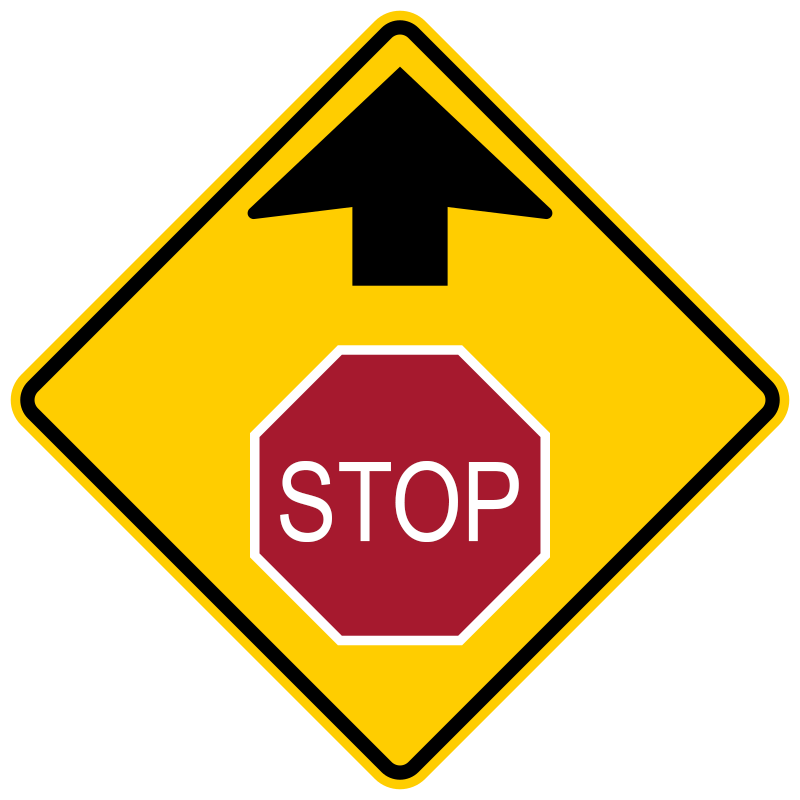 This road sign means:
A
Railroad Warning
B
Stop ahead
C
Yield ahead
D
Side Road
Answer Explanation
This traffic sign indicates: stop ahead. Observing and obeying all roadway signs ensures safe traffic flow and legal driving.
This traffic sign indicates: stop ahead. Observing and obeying all roadway signs ensures safe traffic flow and legal driving.
Question 48:
Trying to beat a tractor-trailer to a single-lane construction zone creates a particularly dangerous situation.
A
False
B
True
Answer Explanation
The correct driving rule is: True. Following standard DMV road rules and practicing defensive driving ensures safety for all road users.
The correct driving rule is: True. Following standard DMV road rules and practicing defensive driving ensures safety for all road users.
Question 49:
The BMV may require drivers 21 years of age and older who are convicted of 2 or more traffic offenses within a 12-month period to complete a BMV-approved DSP course.
A
True
B
False
Answer Explanation
The correct driving rule is: True. Following standard DMV road rules and practicing defensive driving ensures safety for all road users.
The correct driving rule is: True. Following standard DMV road rules and practicing defensive driving ensures safety for all road users.
Question 50:
 What does a flashing yellow light mean?
A
The same thing as a stop sign.
B
Drivers may move forward with caution.
C
All of the above.
Answer Explanation
According to standard right-of-way regulations: drivers may move forward with caution. Yielding appropriately prevents intersection collisions and maintains safe traffic flow.
According to standard right-of-way regulations: drivers may move forward with caution. Yielding appropriately prevents intersection collisions and maintains safe traffic flow.