Question 1:
When the gas pedal is jammed, drivers should NOT:
A
tap the gas pedal with their foot.
B
keep their eyes on the road.
C
pump the brake pedal hard and fast.
D
shift into neutral.
The correct driving rule is: pump the brake pedal hard and fast. Following standard DMV road rules and practicing defensive driving ensures safety for all road users.
Question 2:
 What should drivers do when they see this road sign?
A
come to a complete stop and wait for a train to cross.
B
slow down, look for a train, and be prepared to stop.
C
look for a human flagger.
This traffic sign indicates: slow down, look for a train, and be prepared to stop. Observing and obeying all roadway signs ensures safe traffic flow and legal driving.
Question 3:
Every car must have a white light that makes the license plate visible from how many feet away?
A
300
B
500
C
100
D
50
The correct driving rule is: 50. Following standard DMV road rules and practicing defensive driving ensures safety for all road users.
Question 4:
Which of the following is NOT true? Your license must be revoked if:
A
you are found guilty of drug possession.
B
you are found guilty of not stopping to give help when the vehicle you are driving is involved in a crash causing death or personal injury.
C
you use tobacco and you are under the age of 14.
D
All of the above.
The correct driving rule is: you use tobacco and you are under the age of 14. Following standard DMV road rules and practicing defensive driving ensures safety for all road users.
Question 5:
Which of the following is true about double solid yellow lines?
A
Drivers may travel in the same direction on both sides of this line.
B
Vehicles may cross these lines temporarily when passing is safe.
C
Drivers may not cross these lines unless turning left when it’s safe to do so.
D
All of the above.
The correct driving rule is: drivers may not cross these lines unless turning left when it’s safe to do so. Following standard DMV road rules and practicing defensive driving ensures safety for all road users.
Question 6:
Which of the following is NOT true? Before you start your engine you should:
A
make sure your safety belt is clean.
B
adjust the seat so you can reach all controls.
C
make sure your car is in park or neutral gear.
D
adjust the inside and outside rearview mirrors.
The correct driving rule is: make sure your safety belt is clean. Following standard DMV road rules and practicing defensive driving ensures safety for all road users.
Question 7:
High beams are ___________ the fog.
A
reflected back off
B
perfect to completely remove
C
the best choice when driving in
D
better than low beams when driving in
For safe speed and stopping control: reflected back off. Adjusting speed to match visibility and road traction prevents loss of steering grip.
Question 8:
A bicyclist on the road ahead has their left arm extended downward to their left. You should assume the bicyclist is signaling that he/she is:
A
turning left.
B
about to turn right.
C
slowing down or stopping.
D
tired.
The correct driving rule is: slowing down or stopping. Following standard DMV road rules and practicing defensive driving ensures safety for all road users.
Question 9:
Drivers entering a roundabout:
A
must yield to traffic already in the circle.
B
must follow the vehicle in front of them closely.
C
must travel in a clockwise direction.
D
must stop when the traffic signal turns red.
Vehicles entering a roundabout must yield right-of-way to circulating traffic already inside: must yield to traffic already in the circle. Wait for a safe gap before entering.
Question 10:
Perception distance is:
A
how far a vehicle travels, in ideal conditions, from the time the driver sees a hazard until his/her brain recognizes it.
B
how long it takes a driver to physically hit the brakes.
C
how far a drunk person can travel before coming to a complete stop in response to a hazard ahead.
D
how far a driver will continue to travel, in ideal conditions; before he/she physically hits the brakes.
The correct driving rule is: how far a vehicle travels, in ideal conditions, from the time the driver sees a hazard until his/her brain recognizes it. Following standard DMV road rules and practicing defensive driving ensures safety for all road users.
Question 11:
Your license must be revoked if you are found guilty of ___ cases of reckless driving within one year.
A
2
B
6
C
5
D
3
The correct driving rule is: 3. Following standard DMV road rules and practicing defensive driving ensures safety for all road users.
Question 12:
Turning motorists must _____________ at intersections and driveways:
A
make U-turns
B
block the crosswalk when stopped at a red light
C
stop for pedestrians
D
make a turn that causes pedestrians to stop
The correct driving rule is: stop for pedestrians. Following standard DMV road rules and practicing defensive driving ensures safety for all road users.
Question 13:
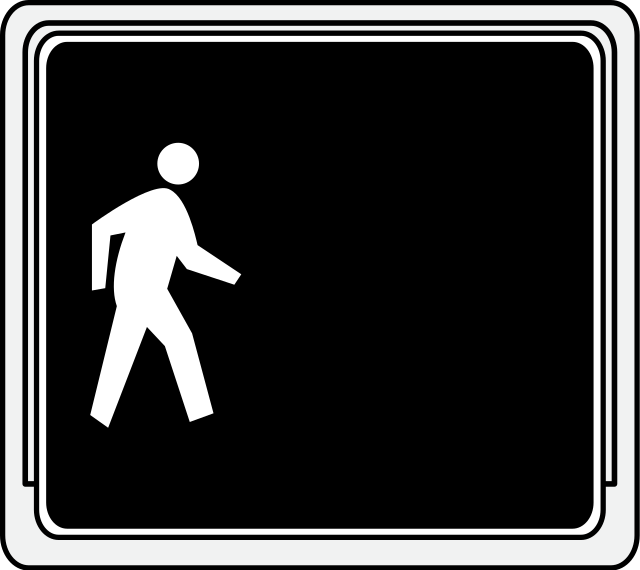 What does the pictured signal indicate?
A
A pedestrian may begin crossing the street.
B
Pedestrians may turn right.
C
A pedestrian may not not begin crossing the street.
State laws require signaling your intention: A pedestrian may begin crossing the street. Signal at least 100 feet before making a turn or changing lanes.
Question 14:
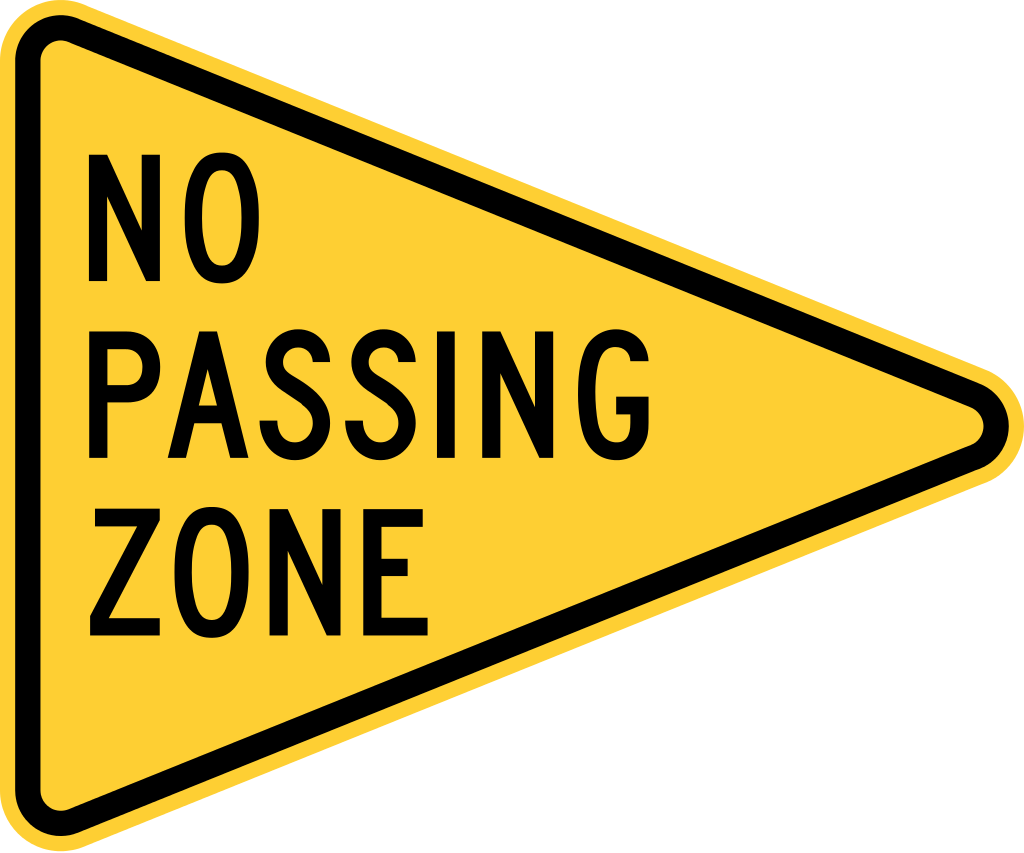 Where are pennant signs placed?
A
On the right side of the road, facing the driver.
B
On windy roads.
C
Where a highway is divided into two one-way roadways.
D
On the left side of the road, facing the driver.
The correct driving rule is: On the left side of the road, facing the driver. Following standard DMV road rules and practicing defensive driving ensures safety for all road users.
Question 15:
If you are in a crash while driving, you must:
A
take pictures immediately.
B
go to the hospital immediately.
C
stop and call law enforcement.
D
clear the road.
The correct driving rule is: stop and call law enforcement. Following standard DMV road rules and practicing defensive driving ensures safety for all road users.
Question 16:
What should you do if your gas pedal (accelerator) gets stuck while driving?
A
Shift the transmission into Neutral, apply steady brakes, and steer safely off the roadway
B
Turn the ignition to the locked position while driving
C
Pull the emergency brake at 65 mph
D
Pump the gas pedal vigorously
Shift to Neutral (N) to disconnect engine power from the wheels, brake steadily, turn on your hazard lights, and steer to the shoulder before turning off the key.
Question 17:
In a highway construction or work zone, traffic fines for speeding violations are generally:
A
Cut in half
B
Doubled or significantly increased
C
Waived if no workers are visible
D
The same as regular roads
In almost all US states, traffic fines for moving violations and speeding are doubled when committed inside designated highway work zones.
Question 18:
What are three types of intersections on the road?
A
Open, closed and narrow.
B
Roundabout, clear and closed.
C
Controlled, uncontrolled and blind.
D
Crossed, uncrossed and open.
The correct driving rule is: Controlled, uncontrolled and blind. Following standard DMV road rules and practicing defensive driving ensures safety for all road users.
Question 19:
If two vehicles reach the intersection at the same time:
A
The vehicle on the left yields to the vehicle on the right.
B
The vehicle on the right yields to the vehicle on the left.
C
The first vehicle to reach the intersection has the right-of-way.
D
None of the vehicles have the right of way.
According to standard right-of-way regulations: The vehicle on the left yields to the vehicle on the right. Yielding appropriately prevents intersection collisions and maintains safe traffic flow.
Question 20:
At most intersections, after stopping, drivers may __________ on red if the way is clear.
A
turn left
B
take a nap
C
turn right
D
cross the intersection
The correct driving rule is: turn right. Following standard DMV road rules and practicing defensive driving ensures safety for all road users.
Question 21:
When parking alongside a curb on a level street, your tires must be within ____ inches of the curb.
A
12 to 18 inches
B
36 inches
C
24 to 30 inches
D
Touching the curb firmly
When parallel parking along a street curb, tires must be parallel and within 12 to 18 inches (depending on state) of the curb.
Question 22:
What is the typical speed limit in a school zone when children are present, unless otherwise posted?
A
15 to 25 mph
B
35 to 45 mph
C
10 mph everywhere
D
Same as regular city streets
School zone speed limits typically range between 15 and 25 mph during school hours or when children are walking or playing nearby.
Question 23:
All cars must have two red taillights mounted on the rear, visible from how many feet away?
A
500
B
150
C
1000
D
50
The correct driving rule is: 1000. Following standard DMV road rules and practicing defensive driving ensures safety for all road users.
Question 24:
Low-beam headlights can show objects ___ feet ahead.
A
30
B
450
C
50
D
150
The correct driving rule is: 150. Following standard DMV road rules and practicing defensive driving ensures safety for all road users.
Question 25:
 Vehicles may travel in lanes beneath the green arrow signal, but drivers must:
A
never change lane.
B
prepare to leave the lane safely.
C
also obey all other signs and signals.
D
turn left if they can.
State laws require signaling your intention: also obey all other signs and signals. Signal at least 100 feet before making a turn or changing lanes.
Question 26:
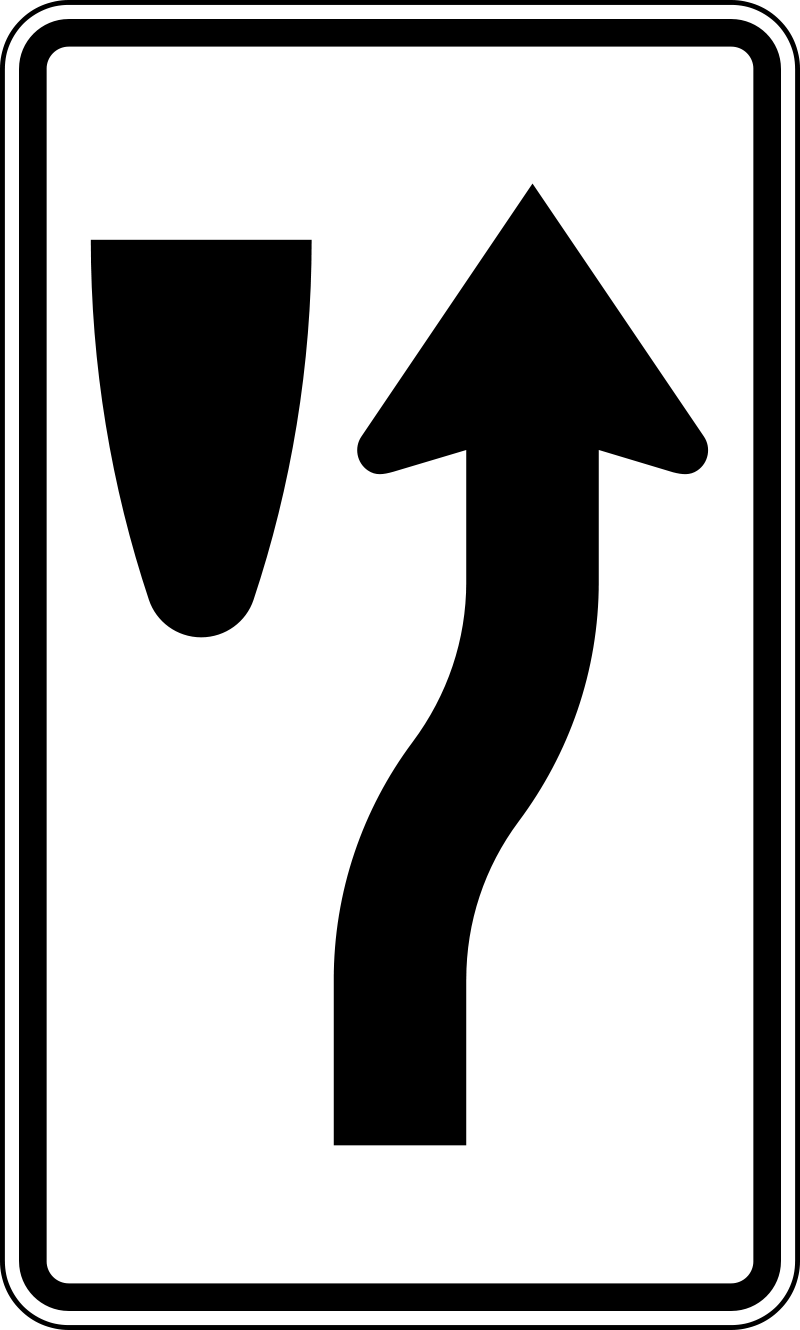 This sign tells drivers that:
A
there is a right turn ahead.
B
they must stay on the right side of the divider
C
a divided highway ends ahead.
This traffic sign indicates: they must stay on the right side of the divider. Observing and obeying all roadway signs ensures safe traffic flow and legal driving.
Question 27:
Who must wear safety belts?
A
The driver and front passengers under the age of 18.
B
Only the driver.
C
The driver and all passengers under the age of 18.
D
The driver and front passengers under the age of 16.
The correct driving rule is: The driver and all passengers under the age of 18. Following standard DMV road rules and practicing defensive driving ensures safety for all road users.
Question 28:
The total stopping distance of a vehicle traveling at 30 MPH is ___ feet:
A
633
B
123
C
268
D
66
For safe speed and stopping control: 123. Adjusting speed to match visibility and road traction prevents loss of steering grip.
Question 29:
Which of the following is NOT correct? Drivers entering a road from a driveway should:
A
yield to bicyclists and pedestrians on the sidewalk or bike lanes.
B
use their emergency lights to indicate their intention to turn.
C
yield to vehicles already on the main road.
D
All of the above.
The correct driving rule is: use their emergency lights to indicate their intention to turn. Following standard DMV road rules and practicing defensive driving ensures safety for all road users.
Question 30:
What should drivers do when the red lights begin to flash?
A
Stop.
B
Yield.
C
Slow down.
The correct driving rule is: stop. Following standard DMV road rules and practicing defensive driving ensures safety for all road users.
Question 31:
Expressways are:
A
single-lane roads with traffic lights, stop signs and railroad crossings.
B
single-lane roads with no traffic lights and stop signs.
C
multiple-lane roads with limited traffic.
D
multiple-lane roads with no traffic lights, stop signs or railroad crossings.
The correct driving rule is: multiple-lane roads with no traffic lights, stop signs or railroad crossings. Following standard DMV road rules and practicing defensive driving ensures safety for all road users.
Question 32:
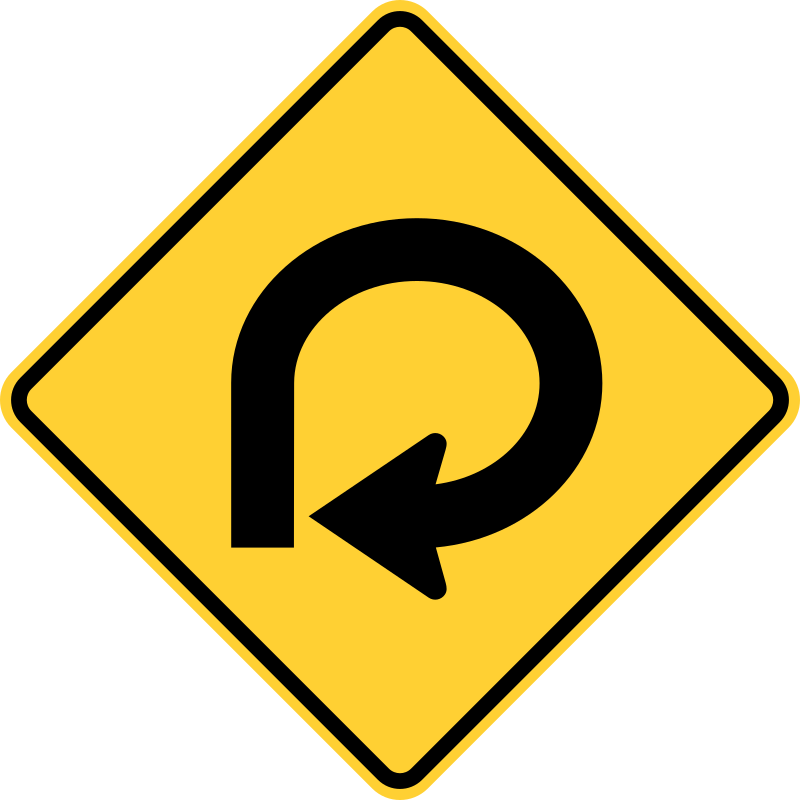 This sign means:
A
Roundabout ahead.
B
270 degree turn ahead.
C
Wrong way; Turn around immediately.
This traffic sign indicates: 270 degree turn ahead. Observing and obeying all roadway signs ensures safe traffic flow and legal driving.
Question 33:
White dashed (broken) lane lines on a roadway separate:
A
Traffic moving in opposite directions
B
Lanes of traffic traveling in the same direction
C
The road from the pedestrian sidewalk
D
Emergency parking lanes only
Broken white lines separate traffic lanes traveling in the same direction. You may cross them when changing lanes safely.
Question 34:
When should you increase your following distance beyond 3 to 4 seconds?
A
During rain, snow, or icy conditions
B
When following large commercial trucks or motorcycles
C
When being tailgated by another vehicle
D
All of the above
Following distance should be increased to 5-8 seconds in bad weather, behind motorcycles/trucks, when following heavy vehicles, or when tailgated.
Question 35:
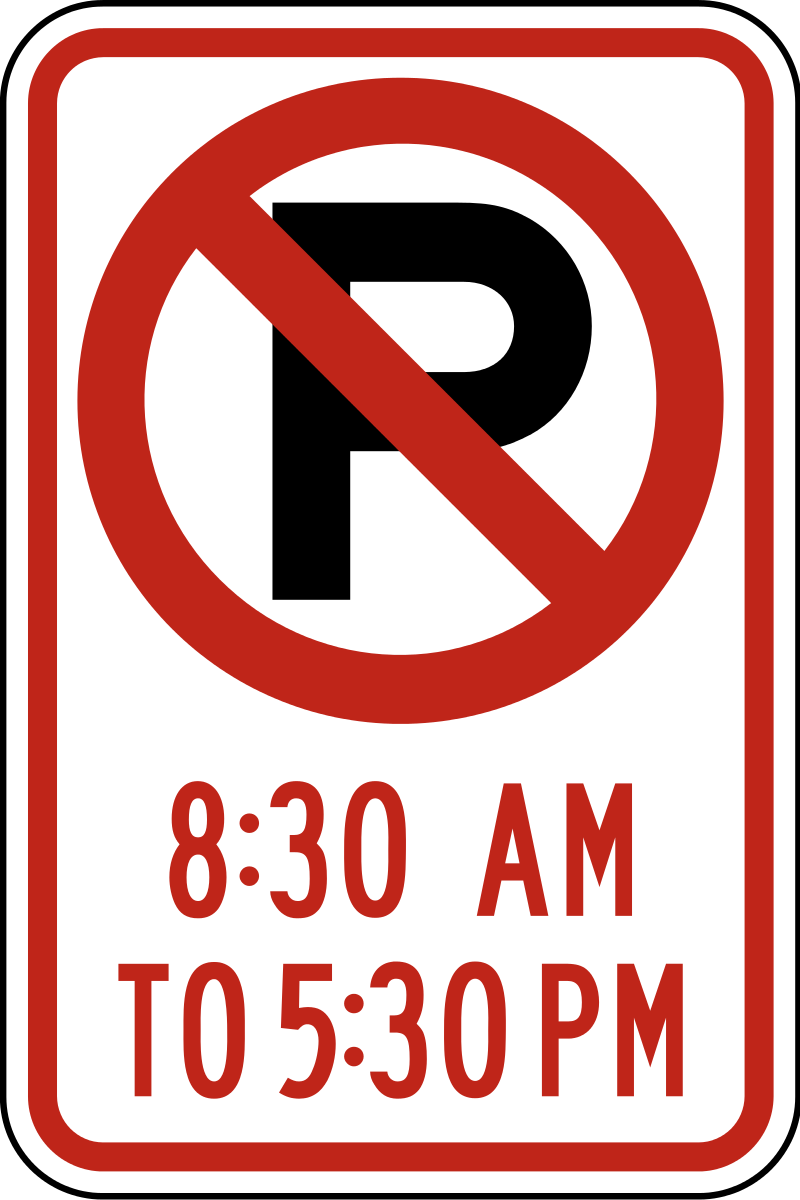 This sign means:
A
You can only park between 8:30 AM and 5:30 PM.
B
Parking is not allowed at 8:30 AM and at 5:30 PM
C
No parking between 8:30 AM and 5:30 PM.
This traffic sign indicates: No parking between 8:30 AM and 5:30 PM. Observing and obeying all roadway signs ensures safe traffic flow and legal driving.
Question 36:
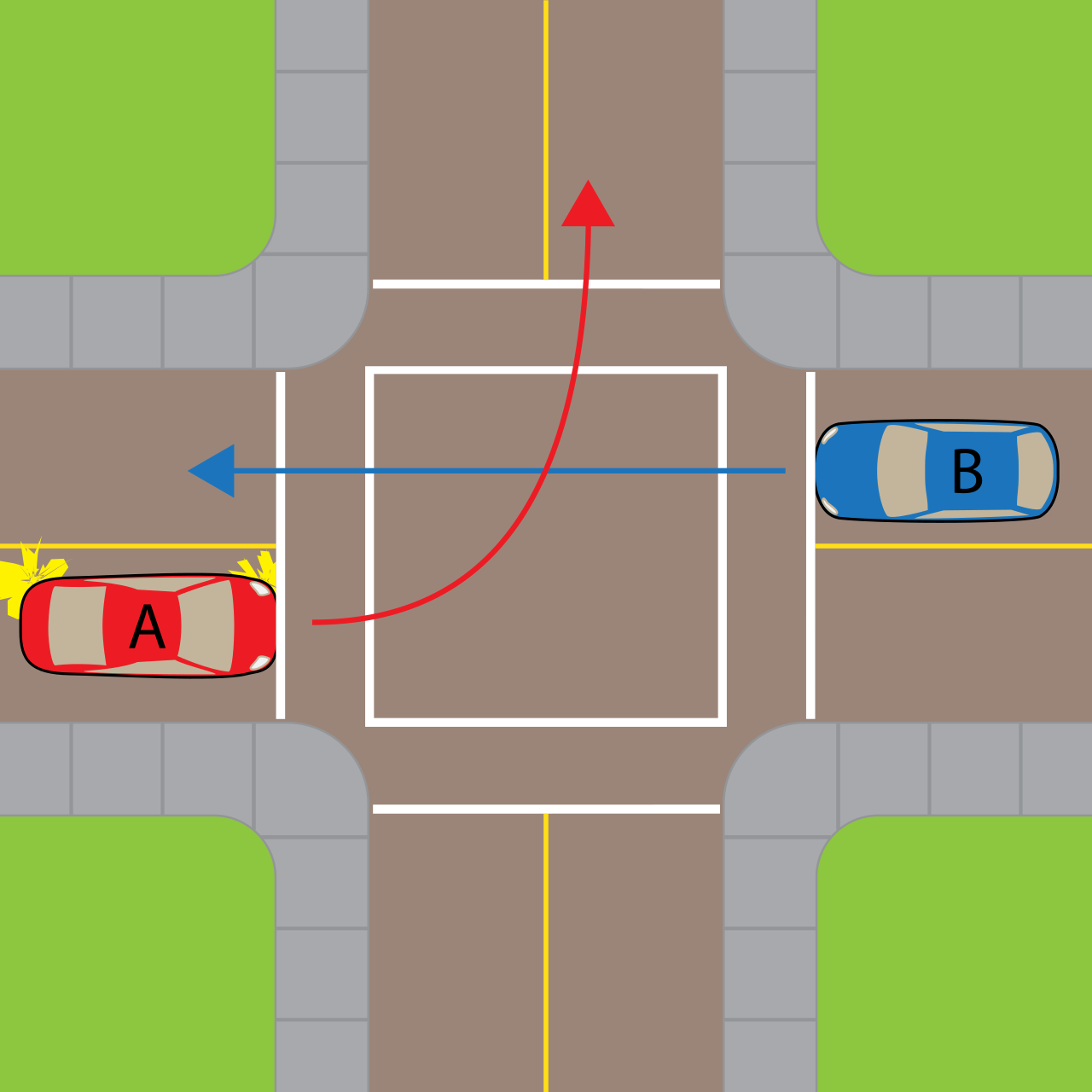 Cars A and B reach the intersection at the same time. Which of the following is correct?
A
Car B must yield.
B
Car A must yield.
C
The vehicle on the right yields to the vehicle on the left.
D
None of the above.
According to standard right-of-way regulations: Car A must yield. Yielding appropriately prevents intersection collisions and maintains safe traffic flow.
Question 37:
When following a motorcycle, drivers must remember that motorcycles can ____________ than other vehicles.
A
accelerate much faster
B
stop much more quickly
C
stop much more slowly
Motorcycles can stop rapidly and are easily hidden in vehicle blind spots: stop much more quickly. Always allow an increased following distance of at least 3 to 4 seconds.
Question 38:
At the time of arrest for DUI, you will be administratively suspended if you:
A
fail to declare which controlled substances you have used.
B
have a breath or blood alcohol level of 0.02 or above.
C
refuse to submit to a chemical test.
D
refuse to take a bus to go home.
Only time allows the liver to metabolize and remove alcohol from the bloodstream (roughly one standard drink per hour). Coffee, cold showers, and fresh air cannot lower BAC.
Question 39:
A second refusal to take a blood or breath test will result in:
A
a fine of $1,500.
B
an 18 month suspension and a first degree misdemeanor.
C
a fine of $1,000.
D
a 12 month suspension and a second degree misdemeanor.
The correct driving rule is: an 18 month suspension and a first degree misdemeanor. Following standard DMV road rules and practicing defensive driving ensures safety for all road users.
Question 40:
When driving through deep water or puddles, what should you do immediately after emerging?
A
Accelerate to top speed to dry tires
B
Tap or gently apply your brakes to test and dry the brake pads
C
Turn off headlights
D
Shift into Park
Water on brake drums or discs severely reduces stopping power. Gently apply brakes at low speed to generate friction and dry them out.
Question 41:
If you are involved in a crash and your vehicle enters water, you should:
A
take off your clothes and shoes before trying to open the door.
B
make every attempt to get out of the vehicle immediately.
C
wait for the vehicle to sink and for the pressure to equalize before trying to escape.
D
call the police.
The correct driving rule is: make every attempt to get out of the vehicle immediately. Following standard DMV road rules and practicing defensive driving ensures safety for all road users.
Question 42:
In Florida, vehicle license plates and registrations must be renewed each year or biennially:
A
on or before the birthday of the first owner listed on the registration form.
B
on the day the license plate was obtained.
C
on or before the day the vehicle was purchased.
D
on the first day of the year.
The correct driving rule is: on or before the birthday of the first owner listed on the registration form. Following standard DMV road rules and practicing defensive driving ensures safety for all road users.
Question 43:
You are driving and you are feeling drowsy. You should:
A
avoid drinking coffee.
B
turn on the radio to keep you awake.
C
find a safe place to stop for a break.
Under state DUI and traffic safety laws: find a safe place to stop for a break. Alcohol degrades judgment, slows reaction times, and distorts depth perception.
Question 44:
The Financial Responsibility Law requires drivers to:
A
be financially responsible for damages they may cause to others when a motor vehicle crash happens.
B
pay $15,000 of Property Damage Liability (PDL)
C
share the financial risk of road crashes with the other drivers
D
pay their car insurance.
The correct driving rule is: be financially responsible for damages they may cause to others when a motor vehicle crash happens. Following standard DMV road rules and practicing defensive driving ensures safety for all road users.
Question 45:
What does a green curb marking mean in most municipalities?
A
No stopping or parking at any time
B
Parking is permitted for a limited time (as posted on signs or painted on the curb)
C
Reserved for emergency vehicles only
D
Loading and unloading passengers only
Green curbs indicate parking is allowed for a specified brief time period (often 10, 15, or 20 minutes).
Question 46:
What is the penalty for a first-offense DUI conviction in most states?
A
A verbal warning
B
License suspension, substantial fines, mandatory alcohol education classes, and possible jail time
C
Automatic loss of license for 20 years
D
Community service without fines
First DUI convictions carry heavy financial penalties, license suspension (3 to 12 months), alcohol treatment courses, and potential jail time.
Question 47:
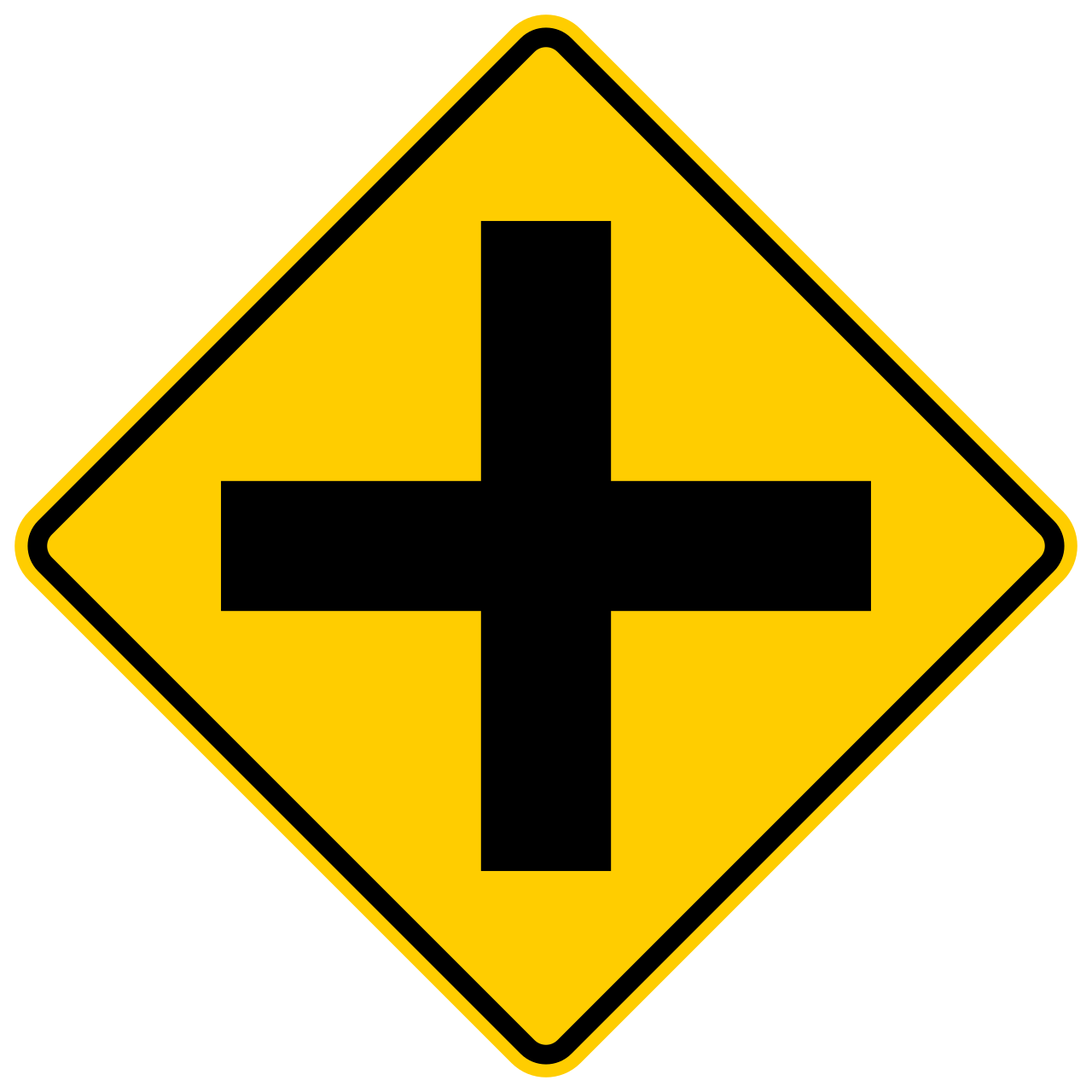 This sign indicates:
A
a side road.
B
a cross road.
C
a church zone ahead.
This traffic sign indicates: a cross road. Observing and obeying all roadway signs ensures safe traffic flow and legal driving.
Question 48:
Vehicles going less than __ miles per hour must display the ‘slow moving vehicle’ sign on the rear when using public highways.
A
25
B
35
C
15
D
55
The correct driving rule is: 25. Following standard DMV road rules and practicing defensive driving ensures safety for all road users.
Question 49:
Parking is not allowed within __ feet of any flashing signal, stop sign or traffic signal.
A
50
B
30
C
15
D
100
An octagonal Stop sign requires a full and complete stop before the stop line or crosswalk: 30. Proceed only after yielding to all cross traffic and pedestrians.
Question 50:
A center lane between lanes of traffic traveling in opposite directions may be designated for:
A
car-pool vehicles.
B
right turn only.
C
left turns only.
D
limos.
The correct driving rule is: left turns only. Following standard DMV road rules and practicing defensive driving ensures safety for all road users.