DriveQuiz drivequiz.com

WY DMV PERMİT PRACTİCE TEST 4

Wyoming
Duration: 45 min
|
Questions: 50
Student Name:
Date:
Correct:      Incorrect:      Score:      
1.
When approaching a highway-rail intersection, the first sign drivers see is usually:
A) an RXR round sign on a yellow background.
B) a stop sign.
C) a yield sign.
2.
You reach an intersection that is not controlled at the same time as a driver on your right, and both of you prepare to go straight. Who has the right-of-way?
A) You.
B) No one.
C) The other driver.
3.
What do flashing red lights on a school bus indicate?
A) The bus is stopped to load or discharge passengers.
B) Traffic that approaches from either direction may proceed.
C) The bus is about to stop.
4.
After parking, are you allowed to open a door on the road side of your vehicle?
A) Yes, always.
B) Yes, but only if it does not interfere with bicyclists and other traffic.
C) No, never.
5.
A broken yellow line on your side of the roadway only means:
A) Passing is permitted on both sides.
B) Passing is permitted on your side of the roadway.
C) Passing is not permitted on either side.
6.
When changing lanes:
A) slow down and check your left mirror.
B) look over your shoulder to make sure no one is in the blind spot.
C) change lane before checking the inside rearview mirror.
7.
What does BAC stand for?
A) Blood Alcohol Commission
B) Blood Alcohol Concentration
C) Blood Alcohol Content
8.
Most signs used in street work areas are:
A) round.
B) diamond shaped.
C) rectangle shaped.
9.
Slow down and give right-of-way to all oncoming vehicles, cyclists, and pedestrians. Stop completely if necessary before entering the intersection or merging.
This is the shape and color of a ________ sign.
A) yield
B) stop
C) do not enter
10.
Traffic lights are normally ____________ from the top to bottom or left to right.
A) red, green and yellow
B) green, yellow and red
C) red, yellow and green
11.
Right turns are strictly prohibited at this intersection under all circumstances.
This road sign means:
A) No left turn
B) No right turn
C) No U-turns
12.
If a tire suddenly goes flat while you are driving, you should:
A) pump the brake pedal 5-7 times until the vehicle stops.
B) slow down gradually do not apply the brake.
C) apply the brake firmly and stop.
13.
The road curves gradually to the right ahead. Reduce speed before entering the curve.
When they see this sign, drivers should:
A) increase their speed and keep well to the right.
B) slow down and keep well to the right.
C) slow down and keep well to the left.
14.
Large trucks:
A) have high-tech air brakes which allow them to stop quickly.
B) take longer to stop than passenger vehicles.
C) are more maneuverable than passenger vehicles.
15.
When you are angry or upset you should:
A) listen to loud music while driving.
B) take a few minutes to cool off before you drive.
C) drive fast to let off steam.
16.
Proceed with caution. You do not need to stop unless pedestrians or hazards are present in the intersection.
What does a flashing yellow light mean?
A) The same thing as a stop sign.
B) Drivers may move forward with caution.
C) All of the above.
17.
Warns of two consecutive curves in opposite directions (e.g., curves right then left). Slow down to maintain control.
This sign warns drivers that:
A) the highway ahead is divided into two one-way roadways. Drivers should keep to the right.
B) there is a winding road ahead.
C) there is a double curve ahead.
18.
When in a vehicle, wear a seat belt:
A) at all times.
B) on long trips.
C) on high-speed highways.
19.
Which of the following is a common cause of traffic collisions?
A) Scanning the road ahead and staying focused on the driving task.
B) Driving too fast for conditions.
C) Pedestrians being key participants in the transportation system.
20.
A flashing yellow light means:
A) The light will soon change from green to red.
B) Drive with caution.
C) Yield the right-of-way to other traffic at the intersection.
21.
There is no crosswalk and a pedestrian is crossing your lane ahead. You should:
A) stop and let the pedestrian finish crossing the street.
B) slow down as you pass the pedestrian.
C) make eye contact and then pass the pedestrian.
22.
A driver cuts off another vehicle, or threatens another motorist or a pedestrian. These are examples of:
A) excessive driving
B) road rage
C) defensive driving
23.
What should you do in case of a brake failure?
A) Pull off the road into an open space, if available.
B) Apply the parking brake slowly.
C) All of the above.
24.
Roads are the most slippery:
A) the first rain after a dry spell.
B) after it has been raining for an hour or more.
C) for the first 2 hours of a rain storm.
25.
What do pennant-shaped signs indicate?
A) A school crossing
B) Yield
C) A No Passing Zone
26.
Drivers can not pass a vehicle on the left if:
A) they approach the top of a hill on a two-way road and can not see over it.
B) they can not safely return to the right lane before they reach a solid yellow center line for the right lane.
C) All of the above.
27.
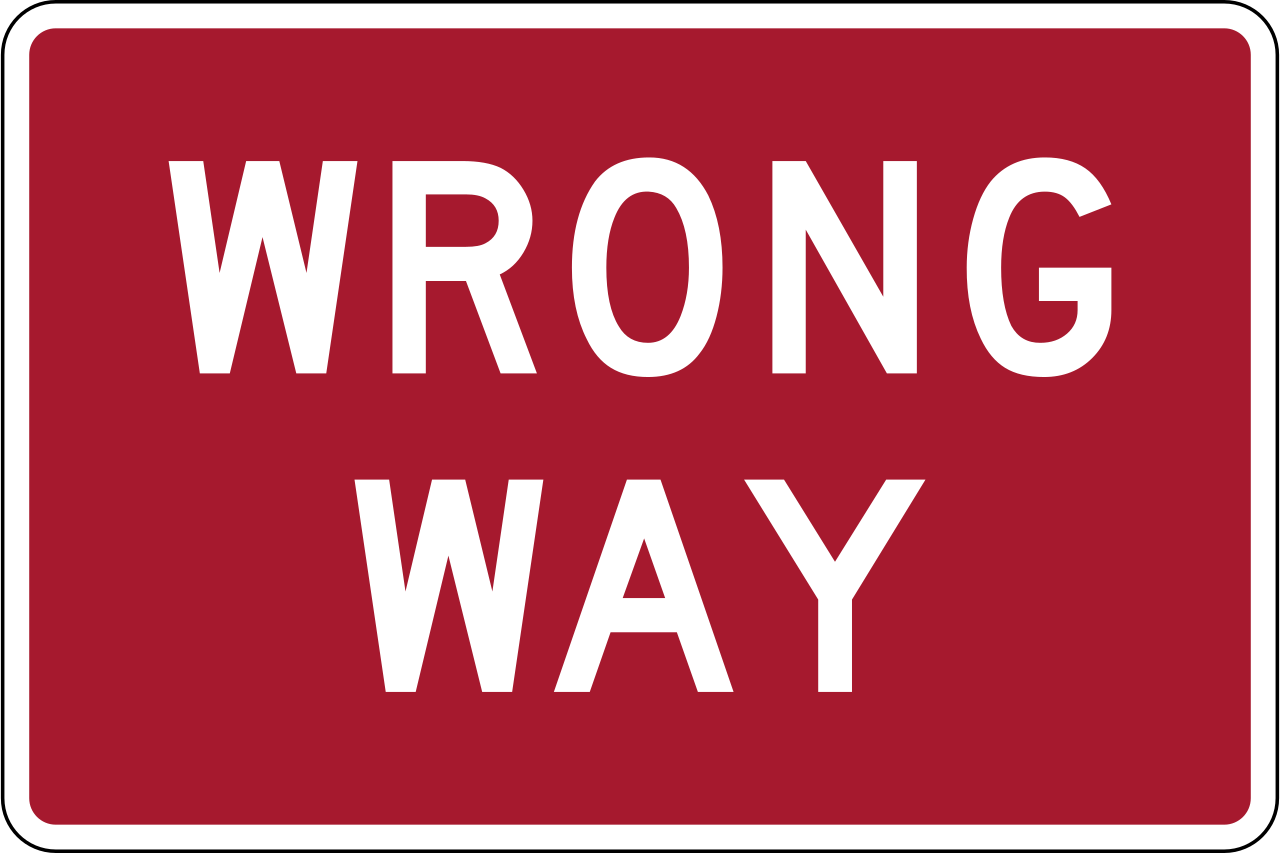
You are driving against the legal flow of traffic on a one-way street or freeway ramp. Immediately pull over, stop safely, and turn around when clear.
When drivers see this road sign:
A) they must come to a complete stop and call the police.
B) they must not drive past this sign.
C) they must turn around immediately.
28.
All approaching traffic must stop completely. The first vehicle to reach the intersection and stop has right-of-way; if two vehicles arrive simultaneously, the vehicle on the right goes first.
A four-way stop sign means:
A) traffic from all four directions must stop.
B) if two vehicles reach the intersection at the same time, the driver on the left yields to the driver on the right.
C) All of the above.
29.
To avoid hydroplaning you should:
A) keep your tires properly inflated.
B) slow down when roads are wet.
C) All of the above.
30.
When entering an expressway from the entrance ramp, you should:
A) go down to the bottom of the ramp and stop until it is safe to enter the expressway.
B) cross over to the traffic lane as soon as possible.
C) use the acceleration lane to blend into the traffic.
31.
The roadway ahead is narrowing or a lane is ending. Merge smoothly into the continuing lane.
This road sign means:
A) Right lane ends
B) Highway entrance ramp ahead
C) Left lane widens
32.
As you drive on the expressway, make sure:
A) you cut off vehicles behind you when you change lanes.
B) to signal all lane changes.
C) your directional signal goes off before you change lanes.
33.
When passing a motorcycle you must:
A) give the motorcyclist the right hand part of his traffic lane.
B) give the motorcyclist the entire traffic lane as if the motorcycle was a car.
C) sound your horn to alert the motorcyclist.
34.
__________________ is a safe driving technique.
A) Using your high beam lights in the fog
B) Starring at the road ahead of your vehicle
C) Checking your rearview mirrors frequently
35.
Treat the flashing red signal exactly like a STOP sign: come to a complete stop, yield to cross traffic and pedestrians, then proceed when safe.
What does a flashing red light mean?
A) NO TURN ON RED.
B) The same thing as a stop sign.
C) Drivers may move forward with caution.
36.
When in a motor vehicle on a highway, it is:
A) illegal to drink from, but permissible to transport, open containers of alcohol in the passenger compartment.
B) illegal to possess an open container of alcohol in the passenger compartment.
C) acceptable to drink alcoholic beverages if you are not driving.
D) permissible to drink a moderate amount of alcohol when driving with a passenger.
37.
Indicates a series of three or more consecutive sharp turns or curves ahead. Reduce speed and maintain lane control.
This road sign means:
A) Pavement ends
B) Winding road
C) Double curve ahead
38.
Parking, standing, or stopping is prohibited at all times in this designated zone except for emergency vehicles.
This sign means:
A) U-turns are not allowed.
B) Parking is not allowed.
C) No parking on pavement.
39.
Warns of two consecutive curves in opposite directions (e.g., curves right then left). Slow down to maintain control.
This road sign means the road you're driving on:
A) turns sharply to the left and then right
B) turns to the right and then the left
C) turns only to the left
40.
An edge line that angles toward the center of the road indicates that:
A) the road is narrower ahead.
B) there’s a narrow bridge ahead.
C) you must turn right.
41.
Don't be afraid to sound a sharp blast on your horn when:
A) when a child is about to run into the street.
B) another vehicle is in danger of hitting you.
C) All of the above.
42.
To reduce their chances of colliding with an animal, drivers should:
A) scan the sides of the road to watch for the reflection of vehicle headlights in the eyes of animals.
B) look well down the road and far off to each side.
C) All of the above.
43.
What should you do in case of a steering failure?
A) Pump your gas pedal a few times to increase the pressure.
B) Don't panic. Turn on your emergency lights to let other drivers know you are having car problems. Move toward the side of the road and bring the car to a gradual stop.
C) Leave the road immediately.
44.
When following another vehicle at night, drivers should use:
A) low beam headlights.
B) emergency flashers.
C) high beam headlights.
45.
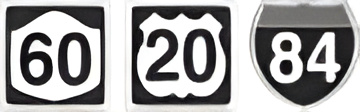
Interstate or State Route numbered highway marker used for route navigation and guide information.
These are:
A) route signs.
B) miles-left signs.
C) speed limit signs.
46.
BAC is:
A) the acronym for Beer ACcumulation.
B) the number of ounces of alcohol in your blood.
C) the percentage of alcohol in your blood.
47.
Drivers should change lanes:
A) often.
B) as quickly as possible.
C) gradually and carefully.
48.
To avoid becoming an aggressive driver, you should:
A) drive above the posted speed limit.
B) tailgate the driver in front of you.
C) relax and concentrate on driving.
49.
Come to a complete stop before the stop line, crosswalk, or intersection. Look left, right, and left again, and proceed only when it is safe and right-of-way is clear.
This road sign means:
A) Drive with caution and be ready to stop
B) Slow down or stop
C) You must come to a complete stop
50.
If you remain in the back blind spot of a large vehicle:
A) you increase the chance of a crash.
B) the large vehicle will take much longer to stop.
C) you can reduce fuel consumption.
ANSWER KEY Check answers after completing the test.
1 A
2 C
3 A
4 B
5 B
6 B
7 B
8 B
9 A
10 C
11 B
12 B
13 C
14 B
15 B
16 B
17 C
18 A
19 B
20 B
21 A
22 B
23 C
24 A
25 C
26 C
27 C
28 C
29 C
30 C
31 A
32 B
33 B
34 C
35 B
36 B
37 B
38 B
39 B
40 A
41 C
42 C
43 B
44 A
45 A
46 C
47 C
48 C
49 C
50 A