←
Back to Test
Hide Answer Key
Print / Save as PDF
Print / PDF
drive
quiz
.com
WV DMV PERMİT PRACTİCE TEST 8
West Virginia
Duration: 23 min
|
Questions: 25
Student Name:
Date:
Correct:
Incorrect:
Score:
1.
If you stop at a railroad crossing with more than one track:
A)
proceed with caution until you see a train.
B)
go through when one of the tracks is free.
C)
go through as soon as the first train passes.
D)
wait until you have a clear view of both tracks.
2.
This sign means:
A)
U-turns are not allowed.
B)
Parking is not allowed.
C)
No parking on pavement.
3.
When entering a crowded freeway, to merge into traffic you should:
A)
yield to vehicles already on the freeway.
B)
use the acceleration lane to adjust your speed to the same speed as freeway traffic.
C)
check your blind spots.
D)
All of the above.
4.
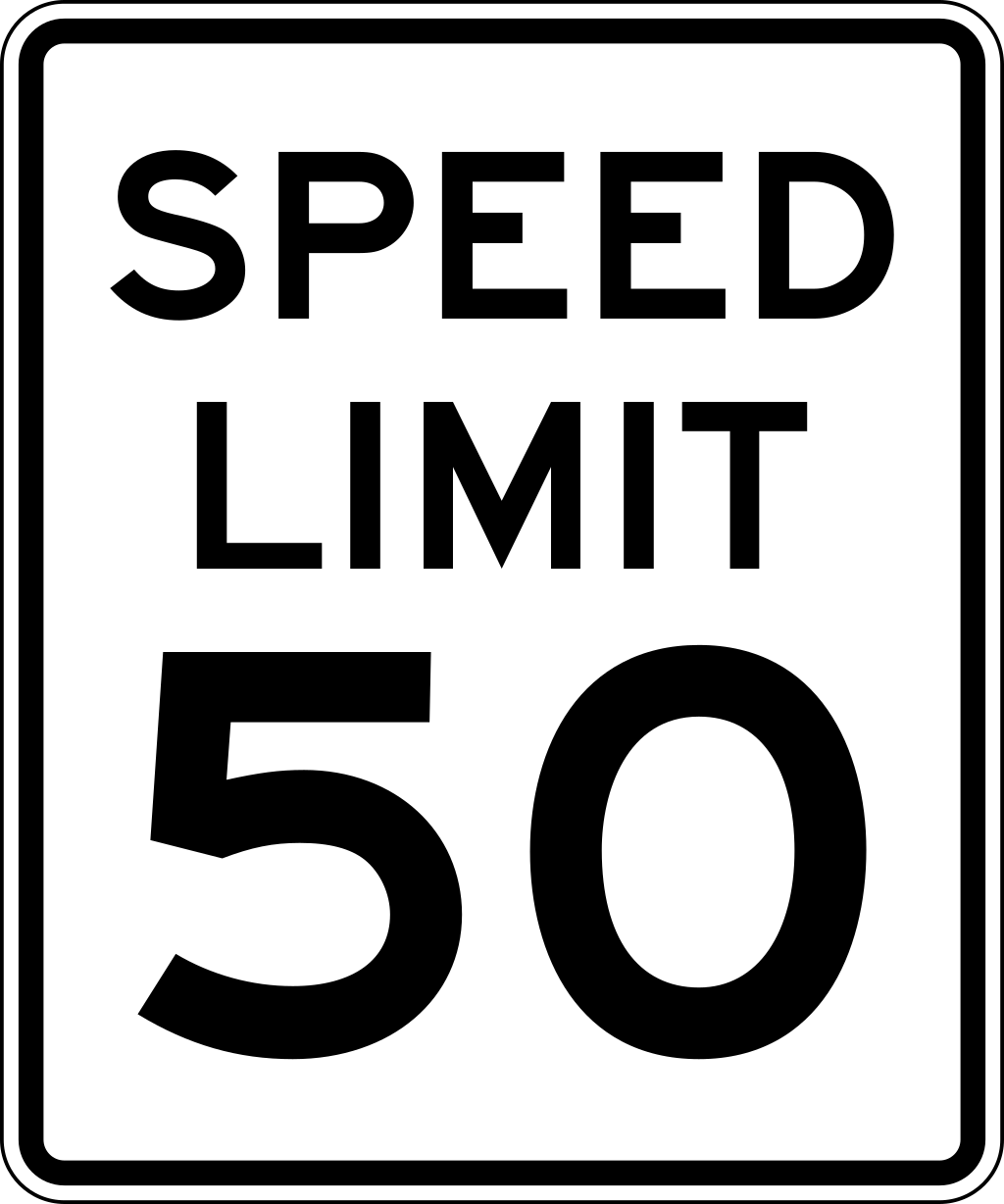
This sign indicates the _______________ vehicles can safely travel in this area.
A)
suggested speed
B)
maximum speed
C)
minimum speed
5.
When entering a highway from an entrance ramp, drivers should:
A)
enter slowly to avoid other vehicles.
B)
stop first, then gradually enter traffic.
C)
accelerate to the speed of traffic.
D)
drive above the speed of traffic to get ahead.
6.
You should never depend on your mirrors when you prepare to change lanes. Why?
A)
Mirrors leave “blind spots” behind both sides of vehicles.
B)
Mirrors need to be adjusted.
C)
Mirrors are useless.
7.
When driving on major highways you should:
A)
be ready to react to road hazards.
B)
stay alert.
C)
keep your eyes moving.
D)
All of the above.
8.
You should use turn signals to indicate your intention with sufficient time to allow other drivers to see the signal:
A)
if it’s raining.
B)
AFTER you move.
C)
BEFORE you move.
9.
This road sign means:
A)
No left turn
B)
No U-turn
C)
Detour ahead
10.
Which of the following must you obey over the others?
A)
Red light
B)
Stop sign
C)
Police officer
11.
If an intersection has crosswalk lines but no STOP line, where must you stop for a red light?
A)
After the crosswalk.
B)
Before the stop line.
C)
Before the crosswalk.
12.
If another vehicle passes you on the left, you must:
A)
increase your speed slightly and keep to the right.
B)
decrease your speed, then pull over to the right and stop.
C)
decrease your speed slightly and keep to the right.
13.
Where must a pedestrian walk when there are no sidewalks?
A)
On the side of the road, in the same direction of traffic.
B)
In the middle of the road, facing oncoming traffic.
C)
On the side of the road, facing the traffic.
14.
What is the purpose of minimum speed limits?
A)
To keep a smooth traffic flow.
B)
To halt the traffic flow.
C)
To allow emergency vehicles with red flashing lights to safely pass other vehicles.
15.
What should drivers do in case of a brake failure?
A)
Shift to a lower gear.
B)
Tie a white cloth on the left door handle.
C)
Brake lightly.
16.
A flashing red traffic light:
A)
has the same meaning as a yield sign.
B)
is used to indicate a pedestrian crossing.
C)
has the same meaning as a stop sign.
D)
indicates that you should drive with caution.
17.
A driver should be extra alert for motorcyclists, bicycles and pedestrians. Why?
A)
They obey specific traffic laws.
B)
They always have the right-of-way.
C)
They are hard to see in traffic.
D)
They don’t have rearview mirrors.
18.
As you drive on the expressway, make sure:
A)
you cut off vehicles behind you when you change lanes.
B)
to signal all lane changes.
C)
your directional signal goes off before you change lanes.
19.
Regulation signs normally are ____ rectangles with ____ letters or symbols.
A)
yellow; black
B)
white; black
C)
green; white
20.
If you miss your exit from an interstate expressway, you should:
A)
go to the next exit and come back to the exit you missed.
B)
use the right turn signal, check your mirrors and move to the right.
C)
pull over to the right and back up with caution until you reach the exit ramp.
D)
make a quick U-turn from your lane of travel.
21.
The shape of a route sign tells you:
A)
the type of route you are on.
B)
the speed limit on that route.
C)
that the route you are on might be dangerous.
22.
Your blind spot is the area of the road:
A)
you see in your rearview mirror.
B)
directly behind your vehicle.
C)
you cannot see without moving your head.
D)
you see in your side mirror.
23.
This sign is a:
A)
regulatory sign.
B)
warning sign.
C)
guide sign.
24.
When driving in fog, drivers should:
A)
not use high beam headlights.
B)
use low beam headlights to better illuminate the road ahead.
C)
slow down and drive cautiously.
D)
All of the above.
25.
This sign means:
A)
No traffic signal ahead
B)
Traffic signal ahead
C)
Open intersection ahead
ANSWER KEY
Check answers after completing the test.
1
D
2
B
3
D
4
B
5
C
6
A
7
D
8
C
9
B
10
C
11
C
12
C
13
C
14
A
15
A
16
C
17
C
18
B
19
B
20
A
21
A
22
C
23
B
24
D
25
B