DriveQuiz drivequiz.com

WV DMV PERMİT PRACTİCE TEST 6

West Virginia
Duration: 23 min
|
Questions: 25
Student Name:
Date:
Correct:      Incorrect:      Score:      
1.
Examples of proper glass maintenance include:
A) Replacing worn wiper blades.
B) Keeping your windows clean and clear.
C) All of the above.
2.
What do pennant-shaped signs indicate?
A) A school crossing
B) Yield
C) A No Passing Zone
3.
A red traffic sign means?
A) Do not enter.
B) Stop.
C) All of the above.
4.
When driving behind a motorcycle, drivers must:
A) remembers that motorcyclists have the right to use a complete traffic lane.
B) pass the motorcycle in the same lane.
C) drive on the shoulder beside the motorcycle.
D) share the lane with the motorcycle.
5.
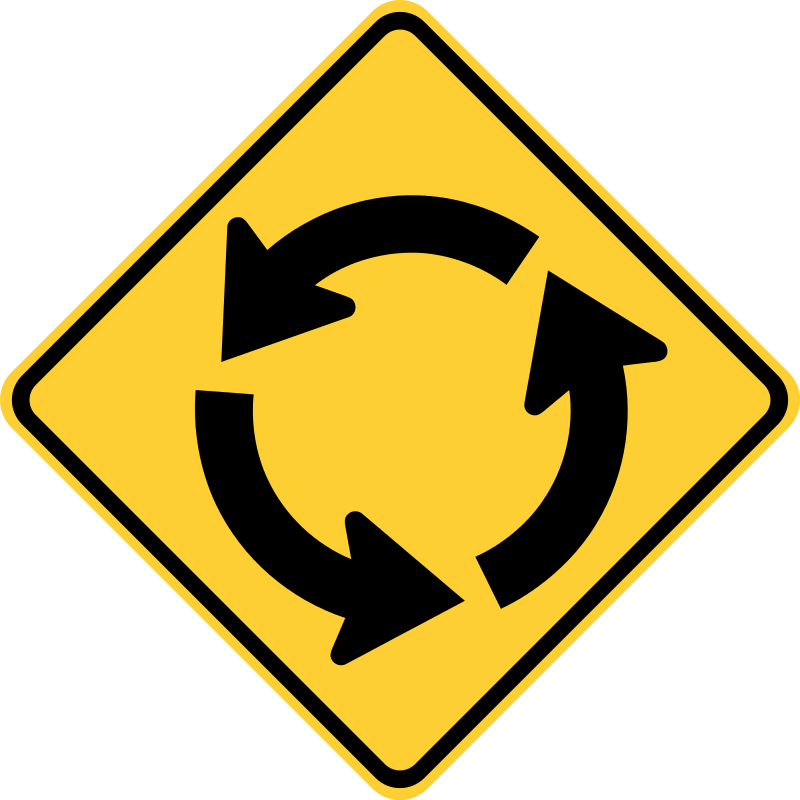
A circular intersection is ahead. Vehicles inside the roundabout have right-of-way; entering traffic must yield to traffic approaching from the left.
This road sign:
A) warns drivers of a sharp turn left. Drivers should slow their speed and keep to the left.
B) provides an advance notice of a roundabout.
C) warns drivers that U-turns are not permitted.
D) is a no-right-turns sign.
6.
Warns of an upcoming STOP sign that may not be immediately visible. Begin slowing down to prepare for a complete stop.
When drivers come to this sign, they must:
A) be ready to stop at the stop sign.
B) warn other drivers that a stop sign is ahead.
C) brake sharply and come to a complete stop.
7.
Drivers cannot pass safely unless:
A) they can return to their lane before meeting oncoming vehicles.
B) they can see far enough ahead.
C) their vehicle is capable of the speed necessary to pass.
D) All of the above.
8.
When changing lanes, you can check your blind spot by:
A) using the outside rearview mirror.
B) using the inside rearview mirror.
C) turning your head and glancing over your shoulder.
D) checking the rearview and outside mirrors.
9.
You ________ traffic headed toward you when you turn left.
A) must not yield to
B) must interrupt
C) must yield to
10.
What should you do if your brakes fail?
A) Hook your shoe under the pedal and see if you can free it.
B) Turn on your cruise control.
C) Try pumping the brake pedal to increase pressure.
11.
When meeting a car with blinding headlights, you should:
A) look toward the right side of the road.
B) dim your lights, then speed up and pass quickly.
C) use your emergency flashers to warn the other driver.
D) look toward the left side of the road.
12.
A thumping sound can be a warning:
A) that a tire blowout is about to occur.
B) of a steering failure.
C) of a brake failure.
13.
You hear a siren close by but can not see where the emergency vehicle is. What do you do?
A) Keep driving until you are sure the emergency vehicle is headed toward you.
B) Stop immediately and activate your emergency flashers.
C) Pull over to the right side of the road and stop until you are sure the emergency vehicle is not headed toward you.
14.
A broken white line:
A) means passing or crossing is prohibited in that lane.
B) separates two lanes traveling in the same direction.
C) marks the right edge of the roadway.
15.
Drivers must yield for emergency vehicles:
A) Never.
B) only when other vehicles yield.
C) when they see a flashing red or blue light or hear a siren.
D) None of the above.
16.
What is the most important rule to remember in any emergency?
A) Do not panic.
B) Run away.
C) Call the police.
17.
A speed restriction sign:
A) shows the recommended speed for a curve/turn.
B) is blue with white lettering.
C) must be ignored in snow conditions.
D) has a diamond shape.
18.
If you stop along the road at night:
A) turn on your emergency flashers and leave your low beams on.
B) turn off your emergency lights and leave your high beams on.
C) turn on your headlights only.
D) turn off all your lights.
19.
Object marker used to mark obstacles or bridge abutments near the edge of the road to alert drivers at night.
When they see a yellow X signal, drivers should:
A) come to a complete stop at the marked stop line.
B) turn off the ignition.
C) prepare to leave the lane safely.
20.
Drivers often fail to see a motorcycle headed toward them. Why?
A) It is difficult to judge a motorcycle's speed.
B) Motorcycles are hard to see.
C) All of the above.
21.
At a stop sign there is no stop line or crosswalk. You must stop:
A) before you enter the intersection.
B) at the next crosswalk.
C) after you enter the intersection, if you have a clear view of traffic on the intersecting roadway.
22.
A driver approaching a flashing red traffic signal must:
A) merge to the left.
B) stop before the intersection.
C) carefully drive through the intersection without stopping.
D) slow down at the traffic signal.
23.
Which signs have black letters on a white background?
A) Warning signs (diamond)
B) Regulatory signs (vertical rectangle)
C) Guide signs (horizontal rectangle)
24.
Prohibits drivers from making a 180-degree turn to travel in the opposite direction at this intersection or stretch of road.
This road sign means:
A) Left turns are not allowed where this sign is displayed.
B) Drivers cannot make a complete turn to go in the opposite direction.
C) Vehicles turning left must make a U-turn.
25.
Drivers can not pass a vehicle on the left if:
A) they approach the top of a hill on a two-way road and can not see over it.
B) they can not safely return to the right lane before they reach a solid yellow center line for the right lane.
C) All of the above.
ANSWER KEY Check answers after completing the test.
1 C
2 C
3 C
4 A
5 B
6 A
7 D
8 C
9 C
10 C
11 A
12 A
13 C
14 B
15 C
16 A
17 A
18 A
19 C
20 C
21 A
22 B
23 B
24 B
25 C