DriveQuiz drivequiz.com

WI DMV PERMİT PRACTİCE TEST 7

Wisconsin
Duration: 45 min
|
Questions: 50
Student Name:
Date:
Correct:      Incorrect:      Score:      
1.
In Wisconsin, if you have an instruction permit or probationary license using a cell phone while driving is against the law in Wisconsin except:
A) to report an emergency.
B) to send a text message.
C) to answer an important call.
D) All of the above.
2.
You can pass on the right:
A) when a vehicle ahead makes a right turn.
B) when a vehicle ahead makes a left turn.
C) when a vehicle that is approaching from the opposite direction is prepared to turn left.
3.
Doing all you can to prevent crashes is called:
A) Anti-Collision Driving
B) Crash-Prevention Driving
C) Defensive Driving
D) ABS Driving
4.
Indicates a series of three or more consecutive sharp turns or curves ahead. Reduce speed and maintain lane control.
This road sign means:
A) Pavement ends
B) Winding road
C) Double curve ahead
5.
If a vehicle suddenly cuts in front of you creating a hazard, which of these actions should you take first?
A) Sound your horn and step on the brake firmly.
B) Swerve into the lane next to you.
C) Take your foot off the gas pedal.
6.
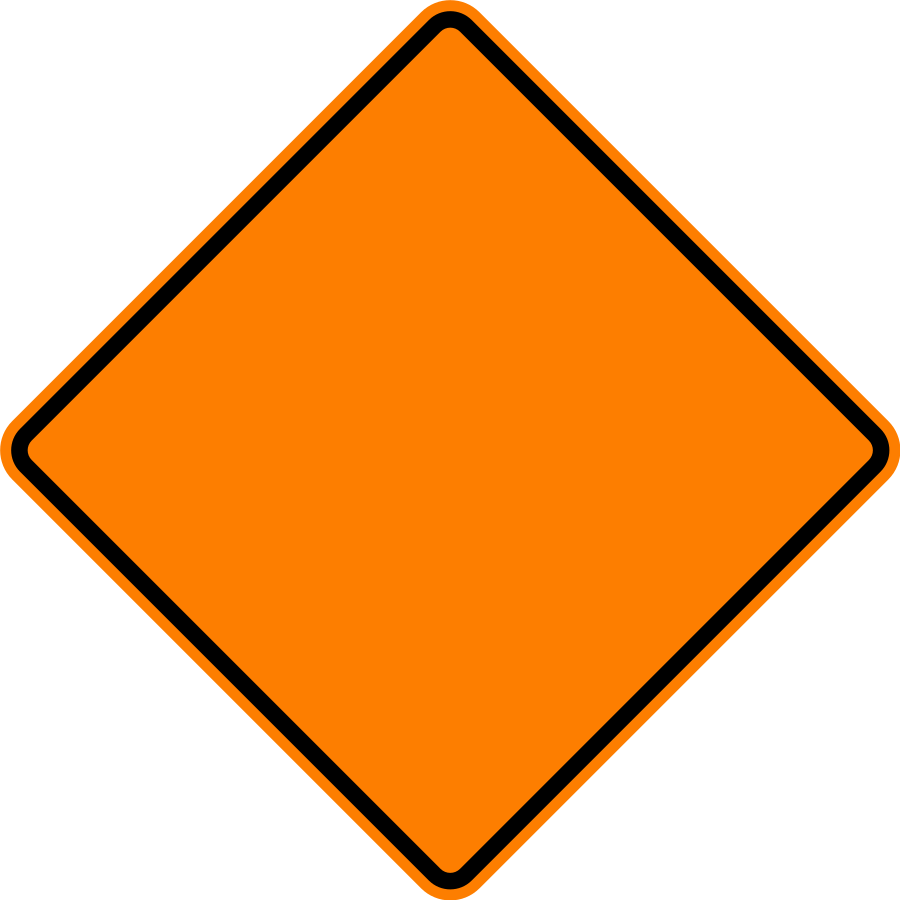
An orange-colored sign means:
A) Railroad crossing ahead
B) School zone ahead
C) Construction zone ahead
D) You must change lanes ahead
7.
Double solid lines on the roadway mean:
A) you cannot pass.
B) you can not go across the lines except to turn left to enter or leave the highway.
C) All of the above.
8.
When in a vehicle, wear a seat belt:
A) at all times.
B) on long trips.
C) on high-speed highways.
9.
While inside the roundabout, you should:
A) remain in your lane until you are ready to exit.
B) change lanes before you check for vehicles behind you.
C) use your left turn signal if you are in position to exit now.
10.
When following a motorcycle, drivers must remember that motorcycles can ____________ than other vehicles.
A) accelerate much faster
B) stop much more quickly
C) stop much more slowly
11.
Drivers should change lanes:
A) often.
B) as quickly as possible.
C) gradually and carefully.
12.
If you miss your exit from an interstate expressway, you should:
A) go to the next exit and come back to the exit you missed.
B) use the right turn signal, check your mirrors and move to the right.
C) pull over to the right and back up with caution until you reach the exit ramp.
D) make a quick U-turn from your lane of travel.
13.
You are driving in the far right lane of a four lane freeway and notice broken white lines on the left side of your lane. You are driving:
A) on the entrance ramp.
B) in a special lane for slow moving vehicles.
C) in an exit lane.
14.
The road is the most slippery:
A) when it first starts to rain.
B) after it rains.
C) All of the above.
15.
What do warning signs mean?
A) Danger ahead.
B) Drivers are approaching a location where there is a special rule.
C) All of the above.
16.
If you get on a wrong expressway exit, you must:
A) get off at the next exit and look for signs that tell you how to return to the expressway.
B) use the the exit ramp to accelerate to expressway speed and blend with traffic.
C) drive in reverse to return to the expressway.
17.
When a stop is required at an intersection with no stop line or crosswalk:
A) Drivers should stop only at a place where the driver can see at least 100 feet on either side.
B) Drivers are required to slow down to make sure crossing traffic is clear.
C) Drivers are not required to stop.
D) Drivers should stop at the point nearest the intersecting roadway where the driver has a view of approaching traffic on the intersecting roadway before actually entering the roadway.
18.
When driving in rainy weather, you should:
A) steer and brake smoothly.
B) drive in low gear.
C) steer off the road.
19.
When a pedestrian carrying a white cane is at the corner ready to cross the street in front of you, before making your right turn, you should:
A) use your horn to help the pedestrian cross the street.
B) turn off the ignition until the person crosses the street.
C) yield the right-of-way and wait until the pedestrian crosses the street.
20.
A steep downhill grade is ahead. Trucks and heavy vehicles should downshift to a lower gear to prevent brake overheating.
This road sign means:
A) Truck stop ahead
B) No trucks allowed
C) Hill or downgrade up ahead
21.
Yellow diamond warning that pedestrians may be crossing ahead. Exercise caution and yield.
This road sign means:
A) Pedestrian crossing
B) School zone
C) School crossing
22.
What should you do if one of your tires blows out?
A) Hold the steering wheel tight and brake immediately to avoid the risk of skidding.
B) Leave the road immediately.
C) Hold the steering wheel tight and slowly take your foot off the gas pedal.
23.
Destination signs are ______ with ____ letters and symbols.
A) green; white
B) blue; white
C) white; black
24.
If you are involved in a serious motor vehicle crash:
A) report the crash to the police.
B) determine if anyone is injured.
C) stop.
D) All of the above.
25.
As the percentage of alcohol in your blood (BAC) increases, you become:
A) more reactive.
B) more intoxicated.
C) more sober.
26.
Left turns on a red light are allowed:
A) from a one-way street into a one-way street.
B) Never.
C) at intersections, after stopping, if the way is clear.
27.
Yellow diamond-shaped signs always convey warnings about road hazards, changes in conditions, or upcoming requirements.
Signs with orange backgrounds mean:
A) railroad crossing.
B) side road ahead.
C) road construction site.
28.
When you plan to turn, you should signal at least ______ before you turn.
A) 200 feet
B) 250 feet
C) 50 feet
D) 100 feet
29.
Warns drivers that two separate lanes moving in the same direction are merging into one. Drivers in the right lane must adjust speed and merge smoothly with existing traffic.
This road sign means:
A) Winding Road Ahead
B) Persons with Disabilities Parking
C) Merge
30.
The roadway ahead is narrowing or a lane is ending. Merge smoothly into the continuing lane.
This sign warns drivers that:
A) there is a one lane bridge ahead.
B) the right lane ends.
C) the road ahead is narrow.
31.
Designated school crosswalk location. You must yield to all schoolchildren and pedestrians in the crossing.
At a school crossing, drivers should:
A) always stop, whether there’s a stop sign or not.
B) always sound their horn and stay alert.
C) watch for children and be ready to stop.
32.
When a school bus is picking up or dropping off children, you must:
A) slow down and pass the bus with caution.
B) stop if you are driving in the same direction.
C) stop regardless of your direction of travel.
33.
A signalized intersection is ahead. Prepare to stop if the light turns yellow or red.
This sign means:
A) No traffic signal ahead
B) Traffic signal ahead
C) Open intersection ahead
34.
What do pennant-shaped signs indicate?
A) A school crossing
B) Yield
C) A No Passing Zone
35.
Warns of two consecutive curves in opposite directions (e.g., curves right then left). Slow down to maintain control.
This sign indicates that the road ahead:
A) turns sharply right, then left.
B) is a divided highway.
C) curves right, then left.
D) curves right.
36.
When approaching a construction site, drivers should:
A) accelerate to get out of the way quickly.
B) slow down and adjust their driving manner.
C) honk their horn to alert construction workers of their presence.
37.
Warns of two consecutive curves in opposite directions (e.g., curves right then left). Slow down to maintain control.
This road sign means:
A) A road joins from the left
B) The road ahead turns sharply right then sharply left
C) Sharp right turn
D) Winding road ahead
38.
If the entrance lane is too short to allow acceleration to highway speed, you should:
A) go to the next entrance ramp.
B) stop and wait for a large gap in traffic, then enter the highway and accelerate quickly.
C) merge into highway traffic as soon as possible.
39.
Drivers should be aware that a motorcyclist may:
A) decrease speed and rise off the seat when approaching a railroad crossing.
B) quickly change speed or lane position.
C) All of the above.
40.
To keep your vehicle from rolling into traffic when parked on a hill, if you are facing uphill you should:
A) turn the front wheels away from the curb or edge of the road.
B) turn the back wheels towards the curb or edge of the road.
C) set the parking brake and keep the front wheels straight.
D) turn the front wheels towards the curb or edge of the road.
41.
At a crosswalk:
A) construction workers must yield to drivers.
B) drivers must yield to pedestrians.
C) pedestrians must yield to drivers.
42.
Unlike passenger cars, trucks have blind spots:
A) on the right.
B) directly behind them.
C) on the front.
43.
When following motorcycles, drivers should:
A) reduce the minimum following distance.
B) try to pass them as they have different braking capabilities than other motor vehicles.
C) keep more space in front of their vehicle.
44.
Indicates an upcoming bicycle crossing or shared road zone. Always leave at least 3 feet of clearance when passing cyclists.
This road sign means:
A) Watch for bicycles
B) Bicycle parking ahead
C) Bicycles are not allowed in this area
45.
The roadway becomes particularly slippery during wet or rainy conditions. Reduce your speed, increase following distance, and avoid abrupt braking or steering.
This road sign means:
A) Winding road
B) Side road ahead
C) Slippery when wet
46.
The octagonal (8-sided) shape is exclusively reserved for STOP signs so drivers can identify it immediately even in poor visibility or from behind.
The octagonal shape is used:
A) for stop signs and railroad advance warning signs.
B) exclusively for stop signs.
C) to warn drivers of existing or possible hazards on roadways.
47.
A sharp curve is ahead with a recommended safe speed plate. Slow down before entering the curve to prevent vehicle rollover.
This sign means:
A) If you are driving at 40 MPH or less you must stay in the right-hand lane
B) Curve ahead, drive at 40 MPH ot more around the curve ahead
C) Curve ahead, the recommended speed is 40 MPH or less
48.
When the road is slippery you should:
A) decrease the following distance.
B) slow and pro-ceed with caution.
C) check your brakes.
49.
When other drivers around you are acting in anger, you should:
A) slow down or move over safely.
B) distance yourself from the situation.
C) avoid making eye contact.
D) All of the above.
50.
Object marker used to mark obstacles or bridge abutments near the edge of the road to alert drivers at night.
When they see a yellow X signal, drivers should:
A) come to a complete stop at the marked stop line.
B) turn off the ignition.
C) prepare to leave the lane safely.
ANSWER KEY Check answers after completing the test.
1 A
2 B
3 C
4 B
5 C
6 C
7 C
8 A
9 A
10 B
11 C
12 A
13 C
14 A
15 C
16 A
17 D
18 A
19 C
20 C
21 A
22 C
23 A
24 D
25 B
26 A
27 C
28 D
29 C
30 B
31 C
32 C
33 B
34 C
35 C
36 B
37 B
38 B
39 C
40 A
41 B
42 B
43 C
44 A
45 C
46 B
47 C
48 B
49 D
50 C