DriveQuiz drivequiz.com

WA DMV PERMİT PRACTİCE TEST 6

Washington
Duration: 36 min
|
Questions: 39
Student Name:
Date:
Correct:      Incorrect:      Score:      
1.
What is the meaning of blue traffic signs?
A) A blue background indicates a regulatory sign.
B) They give directional information.
C) Blue indicates road user services.
2.
Where there is no bicycle lane, where on the road must a bicyclist ride?
A) on the left shoulder of the road.
B) near the right curb or edge of the road.
C) near the left edge of the road.
3.
Prohibits drivers from making a 180-degree turn to travel in the opposite direction at this intersection or stretch of road.
This road sign means:
A) Left turns are not allowed where this sign is displayed.
B) Drivers cannot make a complete turn to go in the opposite direction.
C) Vehicles turning left must make a U-turn.
4.
You can reduce the chance of a collision with a large vehicle if you:
A) delay near it.
B) cut abruptly in front of it.
C) pay close attention to the turn signals.
5.
Designated school crosswalk location. You must yield to all schoolchildren and pedestrians in the crossing.
When they approach this sign, drivers must:
A) slow down and watch for children crossing the road.
B) obey signals from crossing guards.
C) stop if necessary.
D) All of the above.
6.
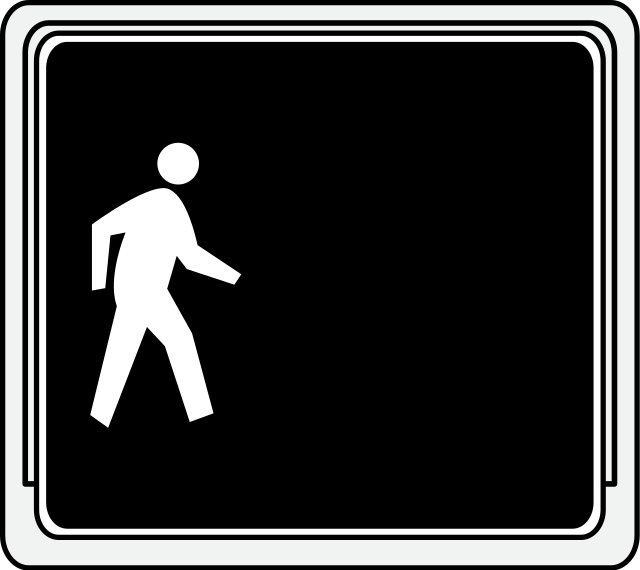
Illuminated white walking person indicates pedestrians have right-of-way to begin crossing the street in the designated crosswalk.
What does the pictured signal indicate?
A) A pedestrian may begin crossing the street.
B) Pedestrians may turn right.
C) A pedestrian may not not begin crossing the street.
7.
A steep downhill grade is ahead. Trucks and heavy vehicles should downshift to a lower gear to prevent brake overheating.
This road sign means:
A) No right turn
B) No left turn
C) Narrow Bridge
D) Steep downgrade
8.
For protection, motorcyclists are required to:
A) keep their headlights and taillights on at all times.
B) signal turns, lane changes and stops.
C) wear approved helmets.
9.
BAC is:
A) the acronym for Beer ACcumulation.
B) the number of ounces of alcohol in your blood.
C) the percentage of alcohol in your blood.
10.
When the road is slippery, you should:
A) brake suddenly carefully.
B) pump your brakes.
C) press your brakes in slow, steady strokes.
11.
What is the first thing to do when you make a three-point turn?
A) Signal with your left turn signal, then check carefully for traffic coming toward you.
B) Signal with your right turn signal, then pull over to the right and stop.
C) Turn left, go across the road so you come to a stop while you face the edge of the road.
12.
Warns of an extremely sharp 180-degree curve ahead. Decelerate significantly before entering the turn.
This sign means:
A) Hairpin corner ahead.
B) Warning: U-turn ahead.
C) Sharp right turn ahead.
13.
If you are involved in a collision with a parked vehicle, you need to:
A) call a tow truck at your expenses.
B) try to find the owner, or leave a note with the time and date telling the owner how to reach you.
C) call the police.
D) stay at the scene until the owner of the parked vehicle returns.
14.
A sharp curve is ahead with a recommended safe speed plate. Slow down before entering the curve to prevent vehicle rollover.
This sign indicates that:
A) the highest safe speed drivers should travel around the curve ahead is 25 MPH.
B) the safe speed around the curve ahead is at least 25 MPH.
C) drivers may not turn right if traveling at 25 MPH or less.
15.
When you make a left turn from a two-way road into a four-lane highway, you must:
A) enter the left lane, to the right of the center line.
B) enter the right lane, to the left of the center line.
C) go straight through the intersection, and then make the turn.
16.
Alcohol:
A) makes you less aware of what is happening to your driving abilities.
B) makes it easier to make correct decisions.
C) improves your reaction time.
17.
Warns drivers that two separate lanes moving in the same direction are merging into one. Drivers in the right lane must adjust speed and merge smoothly with existing traffic.
This sign indicates:
A) Winding road
B) Merging traffic
C) Divided highway ends
18.
Alerts drivers to an upcoming crosswalk where pedestrians frequently cross. Slow down and yield right-of-way to anyone in or about to enter the roadway.
What should drivers do when they see this road sign?
A) come to a complete stop and wait for a train to cross.
B) slow down, look for a train, and be prepared to stop.
C) look for a human flagger.
19.
At an uncontrolled intersection, drivers must:
A) speed up and clear the intersection as soon as possible.
B) take the right of way.
C) wait for other vehicles to give them the right of way.
D) slow down, yield to any vehicle already in the intersection and to the vehicles coming from the right.
20.
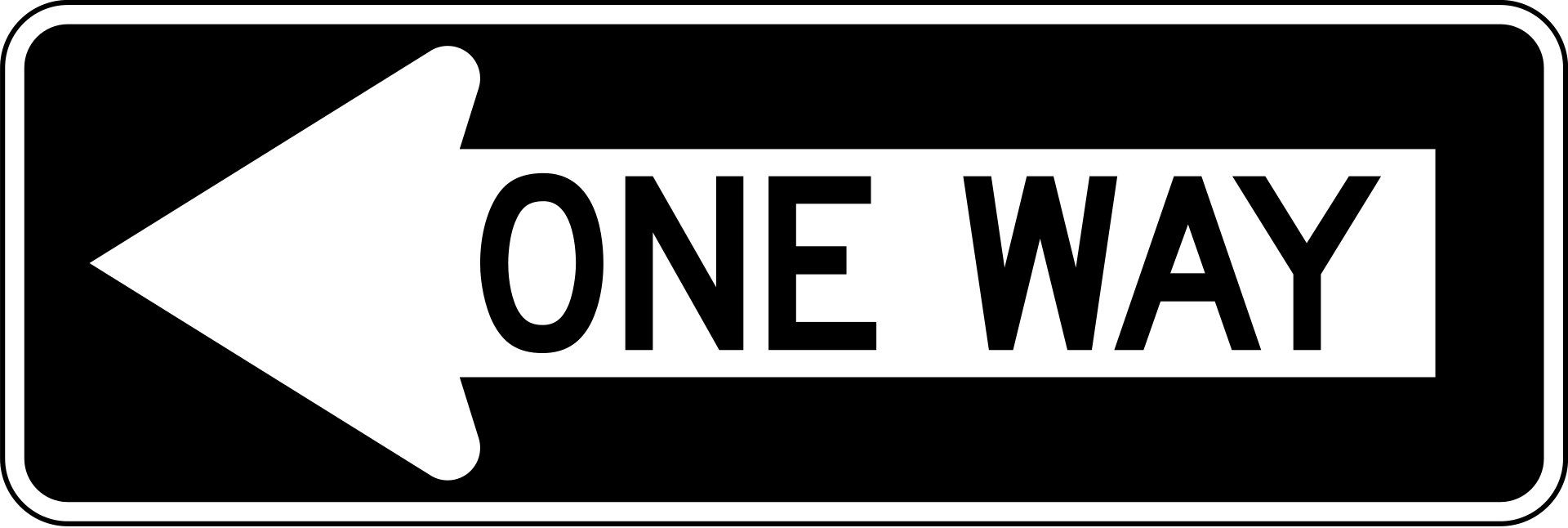
Traffic flows only in the direction indicated by the arrow. Never drive in the opposing direction.
The ‘One Way’ sign means that:
A) only vehicles turning left may travel in the direction of the arrow.
B) there is only one road that turns left at the intersection.
C) drivers may travel only in the direction of the arrow.
21.
The traffic light is green and you want to drive straight through an intersection. If a car is already in the intersection and is making a turn, you must:
A) enter the intersection and then stop.
B) drive through the intersection. You have the right-of-way.
C) let that car complete its turn before you enter the intersection.
22.
Reflective orange triangle displayed on vehicles traveling at 25 MPH or slower (such as farm tractors or construction machinery). Approach with caution and pass safely.
This sign indicates:
A) A slow-moving vehicle
B) A no-passing zone
C) Yield
23.
Any time a driver wants to merge with other traffic, they should:
A) always wait until their lane is ending and then merge.
B) merge only when other drivers have stopped their vehicles.
C) allow a space cushion of about 4 seconds.
D) merge as fast as they can.
24.
If you stop along the road at night:
A) turn on your emergency flashers and leave your low beams on.
B) turn off your emergency lights and leave your high beams on.
C) turn on your headlights only.
D) turn off all your lights.
25.
A sharp curve is ahead with a recommended safe speed plate. Slow down before entering the curve to prevent vehicle rollover.
This road sign means:
A) Merge, then slow down to the safe speed indicated
B) The road ahead curves right; slow down to indicated speed
C) Winding road ahead; slow down to the indicated speed
D) Divided highway begins. Slow down to the safe speed indicated
26.
On average, how long does it take your body to remove the alcohol contained in 5 ounces of wine?
A) one hour.
B) 30 minutes.
C) 3 hours.
27.
If one of your tires blows out while driving, you should:
A) apply the brakes firmly and steer toward the right edge of the road.
B) pump the brakes.
C) hold the steering wheel firmly, slow down, and steer smoothly.
28.
Right turns are strictly prohibited at this intersection under all circumstances.
This road sign means:
A) Right turn is not permitted
B) Left turns are permitted
C) You may turn right after yielding the right-of-way to oncoming traffic
29.
Right turns are strictly prohibited at this intersection under all circumstances.
This road sign means:
A) No left turn
B) No right turn
C) No U-turns
30.
What do flashing red lights on a school bus indicate?
A) The bus is stopped to load or discharge passengers.
B) Traffic that approaches from either direction may proceed.
C) The bus is about to stop.
31.
Who is most at risk?
A) Drivers who have overslept.
B) Drivers who are driving long distances without rest breaks.
C) Experienced drivers.
32.
On slippery roads, drivers should:
A) slow down.
B) increase their speed to avoid hydroplaning.
C) not drive faster than 25 MPH.
D) go faster.
33.
The median divider ends ahead, and you are returning to a two-way, two-lane undivided roadway. Watch for oncoming traffic on your left.
What does this sign indicate?
A) The highway ahead is divided into two one-way roadways.
B) Winding road ahead. Drive with caution.
C) Drivers will soon be on a roadway with two-way traffic.
34.
The first sign drivers see when approaching a highway-rail intersection is usually:
A) a crossbuck sign.
B) an advance warning sign.
C) a speed limit sign.
35.
The roadway ahead is narrowing or a lane is ending. Merge smoothly into the continuing lane.
This sign warns that:
A) traffic must merge left.
B) the bridge ahead is wide enough for only one vehicle at a time.
C) traffic must merge right.
36.
What should drivers do in case of a brake failure?
A) Shift to a lower gear.
B) Tie a white cloth on the left door handle.
C) Brake lightly.
37.
When you see a school bus on a road with two lanes traveling in opposite directions, you must stop:
A) only if you’re going in the same direction as the bus.
B) if the bus has flashing red warning lights.
C) if the bus is off the road and the yellow lights are flashing.
D) if the bus has flashing yellow lights.
38.
Car insurance is important because:
A) it protects your car.
B) you can drive faster if you have the proper insurance coverage.
C) it protects yourself and others.
D) it may be required by law.
39.
At intersections where two or more drivers stop at STOP signs at the same time and they are at right angles:
A) the driver on the left must yield to the driver on the right.
B) the driver who is late for work has the right-of-way.
C) the driver on the right must yield to the driver on the left.
ANSWER KEY Check answers after completing the test.
1 C
2 B
3 B
4 C
5 D
6 A
7 D
8 C
9 C
10 C
11 B
12 A
13 B
14 A
15 A
16 A
17 B
18 B
19 D
20 C
21 C
22 A
23 C
24 A
25 B
26 A
27 C
28 A
29 B
30 A
31 B
32 A
33 C
34 B
35 A
36 A
37 B
38 C
39 A