DriveQuiz drivequiz.com

VT DMV PERMİT PRACTİCE TEST 18

Vermont
Duration: 18 min
|
Questions: 20
Student Name:
Date:
Correct:      Incorrect:      Score:      
1.
Anything that requires you to _______ could cause you to crash.
A) take your hands off the wheel
B) take your attention away from driving
C) take your eyes off the road
D) All of the above.
2.
On a road with two or more lanes in the same direction, you approach an emergency vehicle that is stopped with its warning lights on. You must:
A) slow down. If possible, change lanes.
B) pass the emergency vehicle as quickly as possible.
C) drive to the right side of the road and stop.
D) maintain your current speed and stay in your lane.
3.
When exiting a highway, you should slow down:
A) when you first see the exit sign.
B) before moving into the exit lane.
C) once you have moved into the exit lane.
D) once you see the toll booth.
4.
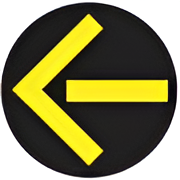
Unprotected left turns are allowed. You may turn left after yielding to oncoming traffic and pedestrians crossing the street.
What does a yellow arrow signal mean?
A) The same as the yellow light, but applies only to movement in the direction of the arrow.
B) The same as a green light.
C) Vehicles moving in all directions must stop if they can. The light will soon be red.
5.
Emergency vehicles:
A) may follow each other.
B) may use a loudspeaker to give instructions.
C) have the right-of-way when using siren and red/blue lights.
D) All of the above.
6.
A broken yellow line alongside a solid yellow line means:
A) Passing is permitted on the side of the broken yellow line
B) Passing is not permitted in either direction
C) Passing on the right is permitted in either direction
7.
Your BAC depends on:
A) how much alcohol you drink.
B) how much time passes between drinks.
C) All of the above.
8.
Right turns at circular red lights are allowed:
A) unless there is a sign indicating that drivers cannot turn right on red.
B) only after the driver has stopped completely and scanned the intersection.
C) after the driver has yielded the right of way to pedestrians and other vehicles.
D) All of the above.
9.
Double solid yellow lines mean:
A) the lane to the right may pass.
B) passing is not permitted in either direction.
C) the lane to the left may pass.
D) passing is permitted in either direction.
10.
What should you do if a vehicle is approaching head-on in your lane?
A) Pull over to the left and use your emergency lights to stop the other driver.
B) Decrease speed, pull over to the right and sound your horn to warn the other driver.
C) Turn off the ignition if your vehicle has power steering.
11.
When changing lanes, you should not:
A) signal your intentions early.
B) check your side and rear view mirrors.
C) use the inside rearview mirror to check for blind spots
D) check to see if other drivers are moving into the same lane.
12.
The road curves gradually to the right ahead. Reduce speed before entering the curve.
This sign is used to warn drivers about:
A) road construction.
B) changes in traffic lanes.
C) curves ahead.
D) drowsy driving.
13.
If your turn signals fail, you should use _____ to indicate your intention to turn.
A) your emergency flashers
B) your horn
C) your high beams
D) hand signals
14.
The roadway becomes particularly slippery during wet or rainy conditions. Reduce your speed, increase following distance, and avoid abrupt braking or steering.
This road sign means:
A) Traffic increases ahead
B) Steep grade ahead
C) Winding road ahead
D) Slippery road ahead
15.
You reach an intersection that is not controlled at the same time as a driver on your right, and both of you prepare to go straight. Who has the right-of-way?
A) You.
B) No one.
C) The other driver.
16.
Parking is not allowed:
A) on the road side of a parked vehicle.
B) in a tunnel.
C) All of the above.
17.
Drive below the posted speed limit when:
A) anything makes conditions less than perfect.
B) you are on a four lane road.
C) entering a highway where there are other cars.
D) others drive below the speed limit.
18.
After parking, are you allowed to open a door on the road side of your vehicle?
A) Yes, always.
B) Yes, but only if it does not interfere with bicyclists and other traffic.
C) No, never.
19.
Pentagonal signs are used to indicate:
A) possible hazards on roadways.
B) no passing zones.
C) school crossings.
20.
Your BAC depends on:
A) how fit you are.
B) the type of beverage you drink.
C) the amount of alcohol you drink.
ANSWER KEY Check answers after completing the test.
1 D
2 A
3 C
4 A
5 D
6 A
7 C
8 D
9 B
10 B
11 C
12 C
13 D
14 D
15 C
16 C
17 A
18 B
19 C
20 C