DriveQuiz drivequiz.com

VA DMV PERMİT PRACTİCE TEST 3

Virginia
Duration: 36 min
|
Questions: 40
Student Name:
Date:
Correct:      Incorrect:      Score:      
1.
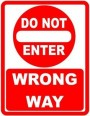
Alerts drivers to a major crossroads intersection ahead. Watch for vehicles entering or crossing the roadway.
This road sign means:
A) U-turns are prohibited
B) You may proceed only if the way is clear
C) You are about to enter a one-way street the wrong way
D) Do not pass
2.
The roadway becomes particularly slippery during wet or rainy conditions. Reduce your speed, increase following distance, and avoid abrupt braking or steering.
This road sign means:
A) Traffic increases ahead
B) Steep grade ahead
C) Winding road ahead
D) Slippery road ahead
3.
Reflective orange triangle displayed on vehicles traveling at 25 MPH or slower (such as farm tractors or construction machinery). Approach with caution and pass safely.
The sign in the picture:
A) is a Construction and Maintenance Traffic Control sign.
B) is found at most intersections and indicates that drivers must yield to other vehicles.
C) is displayed on the rear of slow moving vehicles.
4.
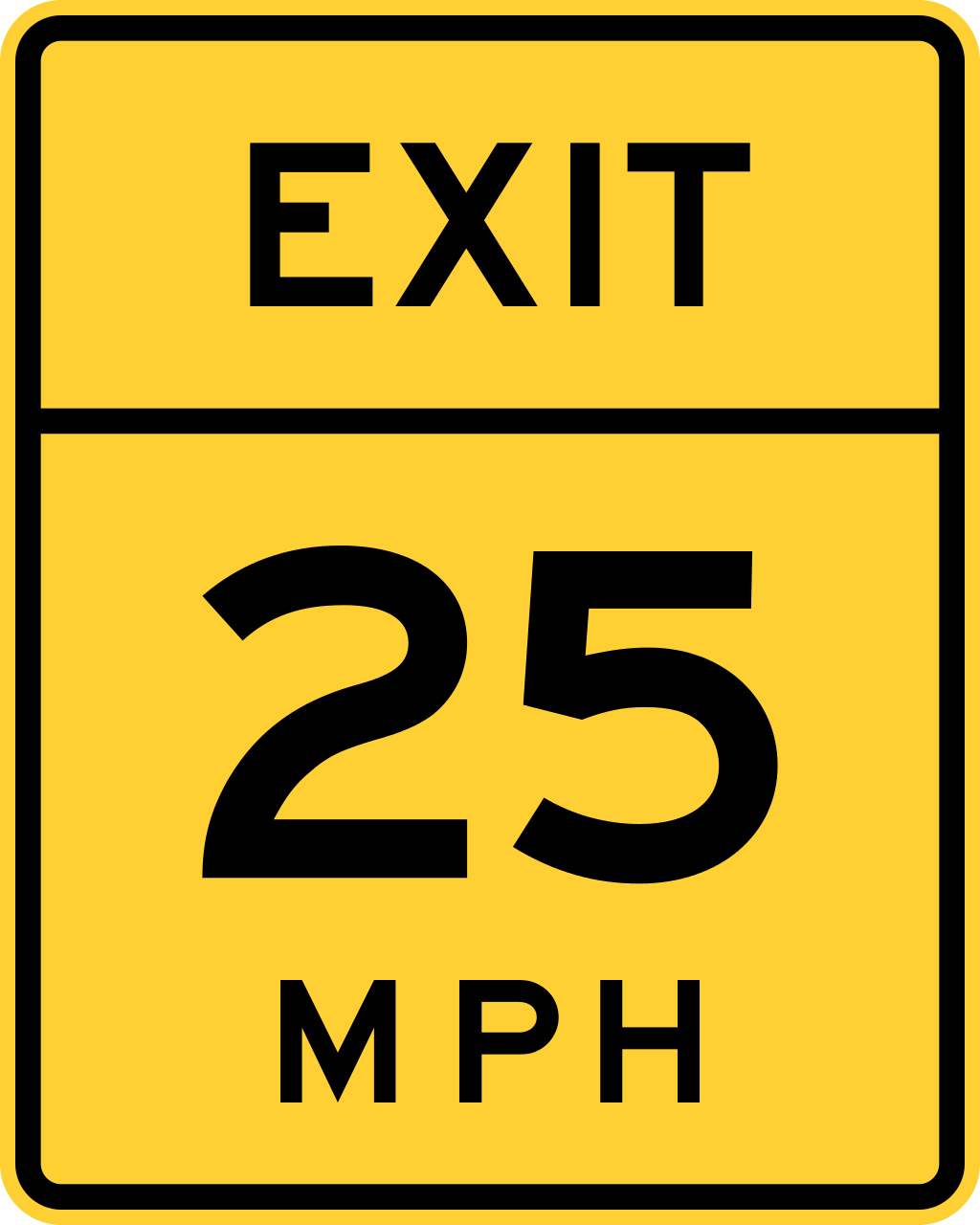
Advises exiting drivers to reduce vehicle speed to 25 MPH upon entering the freeway off-ramp deceleration lane.
This road sign indicates:
A) The maximum safe speed for an expressway exit.
B) The speed limit in a work zone.
C) The maximum safe speed for an expressway entrance.
D) The speed limit in a residential area.
5.
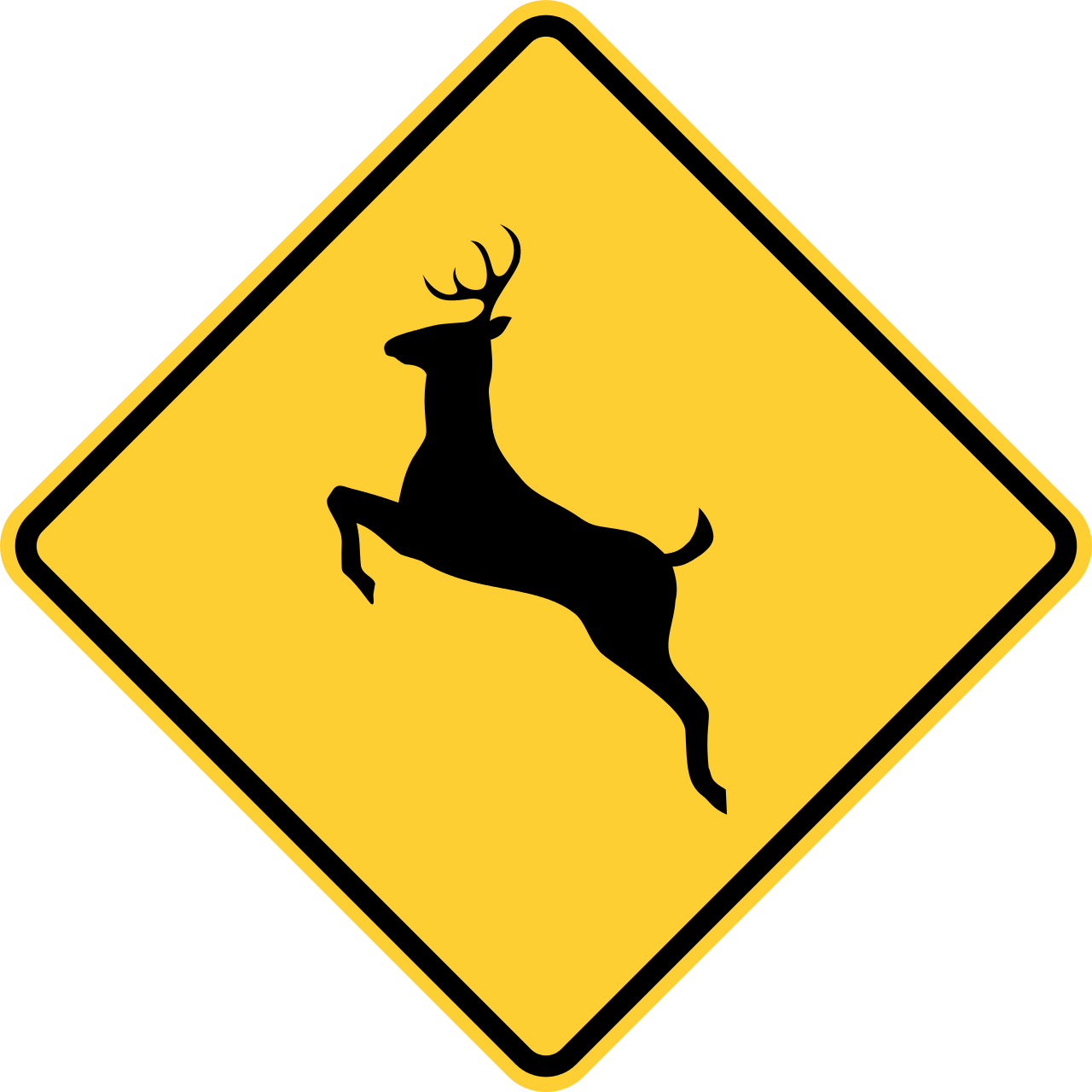
Wildlife and deer frequently cross in this area, especially at dawn and dusk. Scan the roadside and be prepared to brake safely.
This road sign means:
A) Natural reserve ahead
B) Zoo ahead
C) Cattle crossing
D) Deer crossing
6.
The median divider ends ahead, and you are returning to a two-way, two-lane undivided roadway. Watch for oncoming traffic on your left.
What does this sign indicate?
A) The highway ahead is divided into two one-way roadways.
B) Winding road ahead. Drive with caution.
C) Drivers will soon be on a roadway with two-way traffic.
7.
Indicates the maximum bridge or underpass vertical clearance. Vehicles taller than the posted height must not proceed.
This road sign means:
A) Work zone ahead
B) A steep grade is ahead
C) Underground intersection ahead
D) None of the above
8.
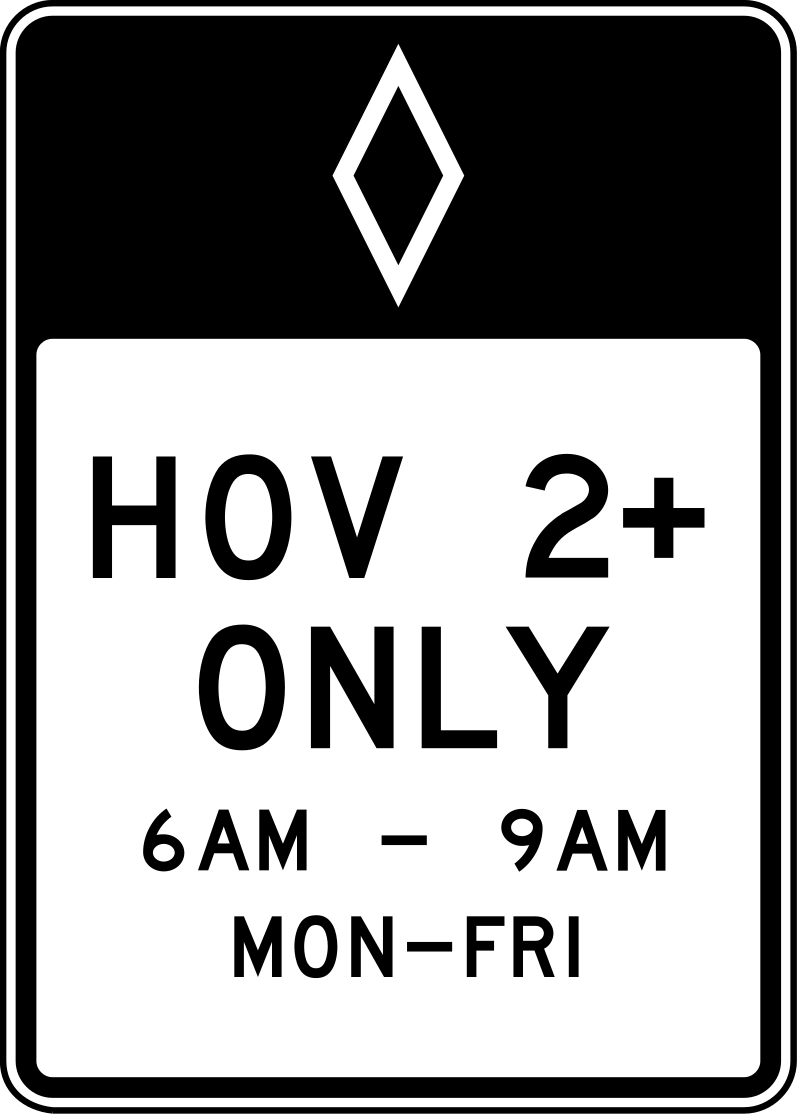
Carpool lane restricted to vehicles with 2 or more occupants during the specified morning and evening peak traffic hours.
This road sign means:
A) Lanes are reserved for vehicles with the indicated number of occupants in vehicle
B) No parking
C) Parking is not allowed during the indicated hours.
D) Do not enter
9.
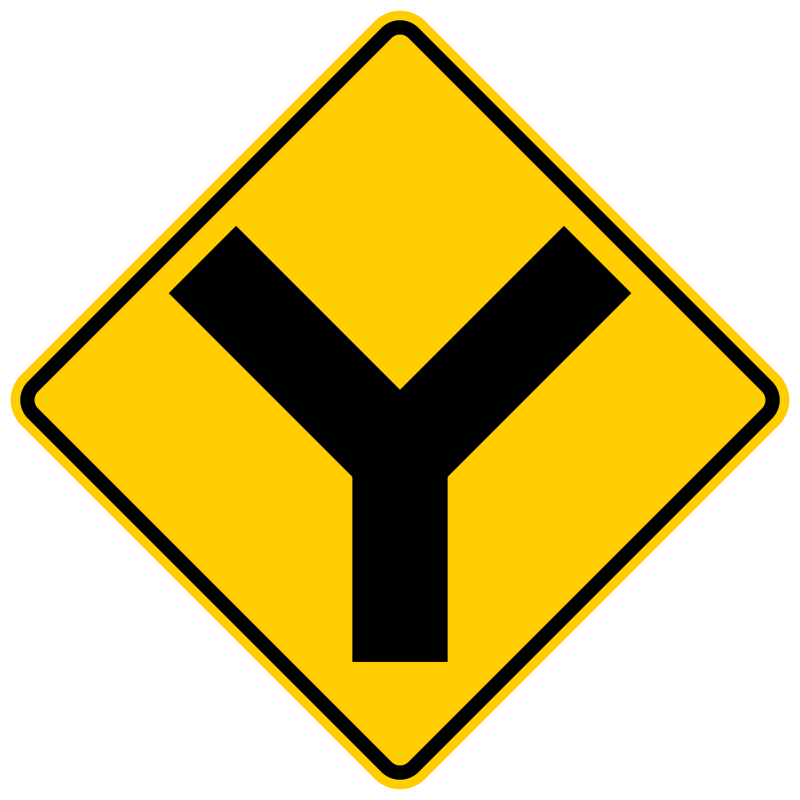
The road splits into a Y configuration ahead. Bear left or right depending on your destination and yield where marked.
This road sign means:
A) The road ends ahead
B) A four-way intersection is ahead
C) “Y” intersection ahead
D) A road joins from the right
10.
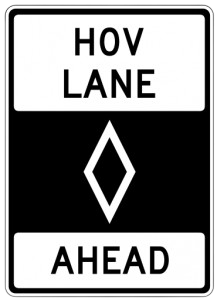
High-Occupancy Vehicle (HOV) diamond lane ahead. Only vehicles carrying the minimum required number of passengers (usually 2 or more) may use this lane.
This road sign indicates that:
A) a lane is reserved for certain purposes or certain vehicles.
B) buses and car pools may not travel in the restricted lane.
C) vehicles cannot go straight ahead. Cars must turn either to the right or left.
11.
U-turns in business districts are:
A) legal whenever oncoming vehicles are not a hazard.
B) legal only at intersections, unless a sign prohibits them.
C) always illegal.
12.
Before changing lanes:
A) check for other drivers who may be moving into the same lane as you.
B) check your side and rearview mirrors.
C) use your turn signal.
D) All of the above.
13.
Drivers can not pass a vehicle on the left if:
A) they approach the top of a hill on a two-way road and can not see over it.
B) they can not safely return to the right lane before they reach a solid yellow center line for the right lane.
C) All of the above.
14.
Which of the following is NOT true about ABS?
A) It improves the vehicle stability.
B) It helps increase your stopping distance.
C) It improves the steering ability.
15.
Examples of proper glass maintenance include:
A) Replacing worn wiper blades.
B) Keeping your windows clean and clear.
C) All of the above.
16.
High occupancy vehicles (HOV) lanes are reserved for all of the following, except:
A) carpools.
B) tractor trailers.
C) high occupancy vehicles.
D) motorcycles.
17.
If your front wheels start to skid, the first thing you should do is:
A) Take your foot off the gas pedal and shift to neutral.
B) Immediately turn in the direction you want to go.
C) Speed up, pump your brakes and steer in the direction the vehicle is trying to go.
18.
A flashing yellow light means:
A) The light will soon change from green to red.
B) Drive with caution.
C) Yield the right-of-way to other traffic at the intersection.
19.
When parking next to a curb, you may not park more than:
A) six inches from the curb.
B) 1 foot from the curb.
C) 18 inches from the curb.
D) two feet from the curb.
20.
Your car stalls on the tracks at a railroad crossing, and a collision with a train is imminent. After getting yourself and your passengers out of the car, you should:
A) run toward the train but stay off the tracks.
B) signal the train to stop.
C) cross the tracks.
21.
To avoid becoming an aggressive driver, you should:
A) Adjust your schedule to drive during times with the most highway traffic.
B) Allow enough travel time to reach your destination on schedule.
C) Listen to heavy metal music.
22.
What should you do if your vision through the windshield becomes blocked?
A) Pull your vehicle off the road and park it.
B) Turn on your emergency lights.
C) Open the side window so you can see.
D) All of the above.
23.
Where there is no bicycle lane, where on the road must a bicyclist ride?
A) on the left shoulder of the road.
B) near the right curb or edge of the road.
C) near the left edge of the road.
24.
When entering a street or crossing over a sidewalk from a driveway, drivers are not required to stop.
A) True
B) False
25.
Bicycles:
A) do not have the same rights as motorized vehicles.
B) required to stay on the curb.
C) are required to stay on bicycle paths.
D) are considered vehicles and have the same rights as motorized vehicles.
26.
A yellow arrow means:
A) Do not go in the direction of the arrow.
B) If you intend to turn in the direction of the arrow, be prepared to stop.
C) The same as a steady yellow light.
27.
When you prepare to make a left turn from a one-way road into a two-way road, you must:
A) enter the two-way road to the left of its center line.
B) approach the turn in the right lane or from the right side of a single lane.
C) approach the turn in the left lane or from the left side of a single lane.
28.
If your vehicle is equipped with airbags, you should:
A) move your seat back so that you are at least ten inches from the steering wheel.
B) always buckle up.
C) if your steering wheel is adjustable, tilt it downward to point the air bag toward your chest.
D) All of the above.
29.
Left turns on a red light are allowed:
A) from a one-way street into a one-way street.
B) Never.
C) at intersections, after stopping, if the way is clear.
30.
Your BAC depends on:
A) how fit you are.
B) the type of beverage you drink.
C) the amount of alcohol you drink.
31.
If you remain in the back blind spot of a large vehicle:
A) you increase the chance of a crash.
B) the large vehicle will take much longer to stop.
C) you can reduce fuel consumption.
32.
Motorists are required to use headlights:
A) whenever you use your windshield wipers as a result of bad weather.
B) at sunset, as soon as light begins to fade.
C) during inclement weather such as rain or fog, when visibility is reduced to 500 feet.
D) All of the above.
33.
Which of the following must you obey over the others?
A) Red light
B) Stop sign
C) Police officer
34.
Your first response to reduced visibility should be:
A) to look for road edge markings to guide you.
B) to turn on your windshield wipers.
C) to reduce your speed.
D) to turn on your headlights.
35.
You are entering a roadway from a private road, and you need to turn left. You have to yield to:
A) vehicles from the right.
B) vehicles from the left.
C) vehicles from both directions.
36.
Before a school bus stops to load passengers, the driver will usually flash:
A) yellow warning lights.
B) red warning lights.
C) red lights.
37.
You are driving and you are feeling drowsy. You should:
A) avoid drinking coffee.
B) turn on the radio to keep you awake.
C) find a safe place to stop for a break.
38.
For your own protection, never:
A) allow an unlicensed driver to drive your vehicle.
B) use a suspended drivers license.
C) lend anyone your drivers license.
D) All of the above.
39.
Roads are most slippery:
A) just before it rains.
B) when it stops raining.
C) when it first starts to rain.
40.
Your license will be revoked or suspended if you are convicted of:
A) making a false statement to DMV.
B) eluding police.
C) driving while under the influence of alcohol or drugs (DUI).
D) All of the above.
ANSWER KEY Check answers after completing the test.
1 C
2 D
3 C
4 A
5 D
6 C
7 D
8 A
9 C
10 A
11 B
12 D
13 C
14 B
15 C
16 B
17 A
18 B
19 B
20 A
21 B
22 D
23 B
24 B
25 D
26 B
27 C
28 D
29 A
30 C
31 A
32 D
33 C
34 C
35 C
36 A
37 C
38 D
39 C
40 D