DriveQuiz drivequiz.com

TX DMV PERMİT PRACTİCE TEST 7

Texas
Duration: 27 min
|
Questions: 30
Student Name:
Date:
Correct:      Incorrect:      Score:      
1.
If you are blinded by headlights on an approaching vehicle, you should:
A) avoid looking directly at the bright lights.
B) glance toward the side of the road, then look quickly ahead to determine the other vehicle’s position.
C) All of the above.
2.
Warns drivers that two separate lanes moving in the same direction are merging into one. Drivers in the right lane must adjust speed and merge smoothly with existing traffic.
This sign indicates:
A) Winding road
B) Merging traffic
C) Divided highway ends
3.
What is the main reason night driving is more difficult than daytime driving?
A) The use of headlight is required by law.
B) Reduced visibility.
C) Driving within the range.
4.
A sharp curve is ahead with a recommended safe speed plate. Slow down before entering the curve to prevent vehicle rollover.
This road sign means:
A) Merge, then slow down to the safe speed indicated
B) The road ahead curves right; slow down to indicated speed
C) Winding road ahead; slow down to the indicated speed
D) Divided highway begins. Slow down to the safe speed indicated
5.
The effects of alcohol on driving include:
A) None of the above.
B) Improved coordination
C) Better reflexes
D) Improved judgement
6.
A thumping sound can be a warning:
A) that a tire blowout is about to occur.
B) of a steering failure.
C) of a brake failure.
7.
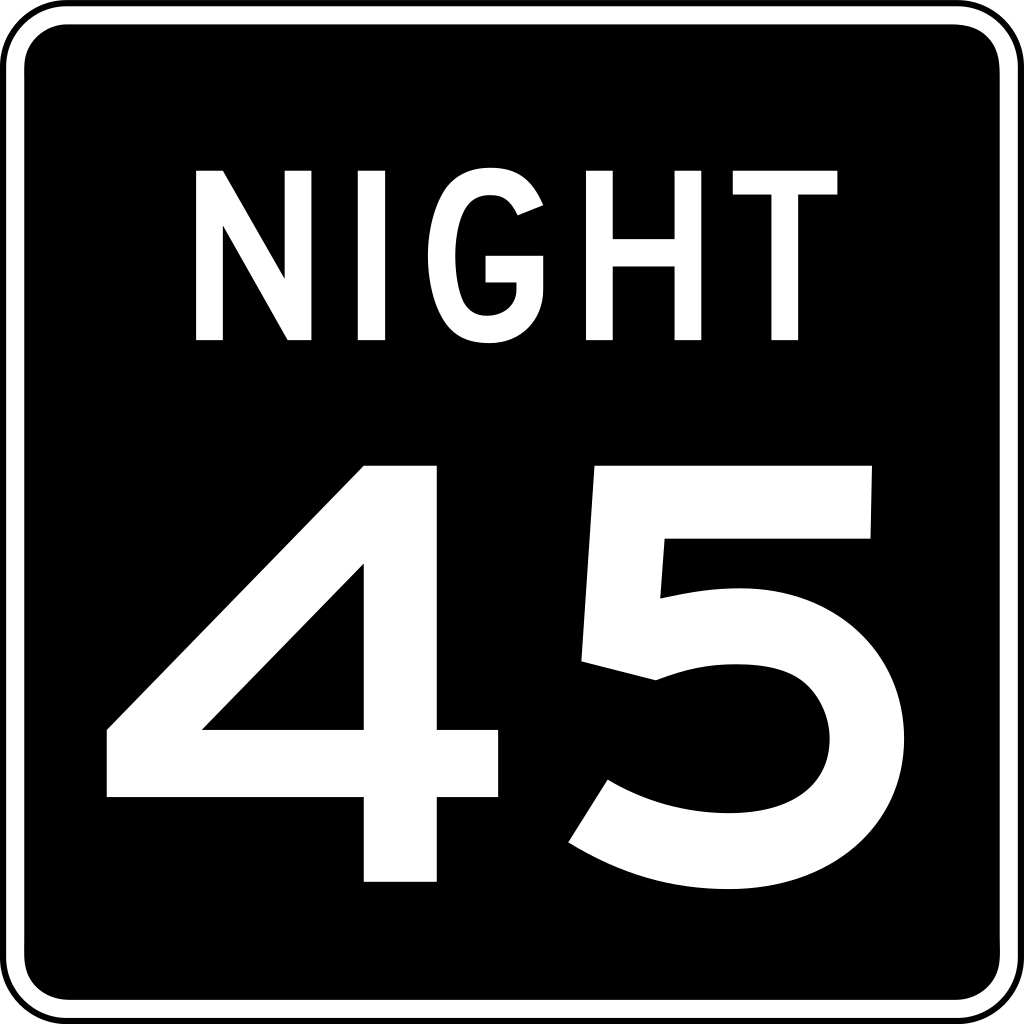
Indicates a lower maximum legal speed limit that applies only during nighttime hours for safety.
This sign means:
A) Take route 45 if you are driving at night.
B) The night-time speed limit is 45 MPH.
C) The minimum speed limit is 45 MPH.
8.
When driving near light rail vehicles, drivers should:
A) never drive around lowered crossing gates.
B) expect trains on any track at any time.
C) always obey signs and traffic signals.
D) All of the above.
9.
A traffic sign with a red circle around and a slash over a symbol means:
A) the maneuver shown by the symbol is not allowed.
B) Do not drive faster than the posted speed limit.
C) the maneuver shown on the sign should be executed with extreme caution.
10.
If traffic on the other side of an intersection is backed up and you cannot get completely through, you must:
A) enter the intersection and try to avoid blocking it.
B) enter the intersection and proceed with caution.
C) wait until traffic ahead is clear.
11.
Slow down and give right-of-way to all oncoming vehicles, cyclists, and pedestrians. Stop completely if necessary before entering the intersection or merging.
The yield sign means:
A) Go. The light will soon be red.
B) If the way is clear, you may move forward slowly without stopping.
C) Stop if you can.
12.
What is the only effective method to reduce your BAC?
A) Eating before or while you drink.
B) Not drinking over a period of time.
C) Drinking coffee.
13.
Warns that a one-way street or divided highway is ending, and you are entering a roadway with oncoming traffic in the opposing lane. Stay to the right.
This road sign warns drivers that:
A) they are coming to a point where another traffic lane joins the one they are on.
B) a divided highway is ahead.
C) the one-way street or roadway is about to change to two-way traffic.
14.
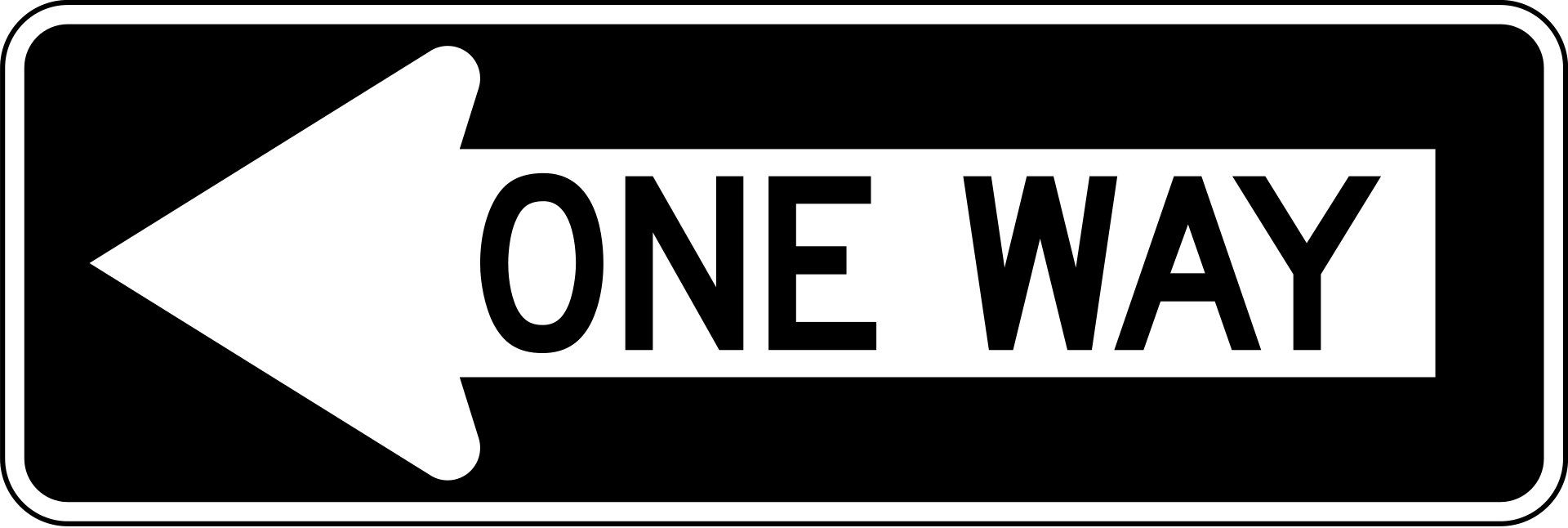
Traffic flows only in the direction indicated by the arrow. Never drive in the opposing direction.
The ‘One Way’ sign means that:
A) only vehicles turning left may travel in the direction of the arrow.
B) there is only one road that turns left at the intersection.
C) drivers may travel only in the direction of the arrow.
15.
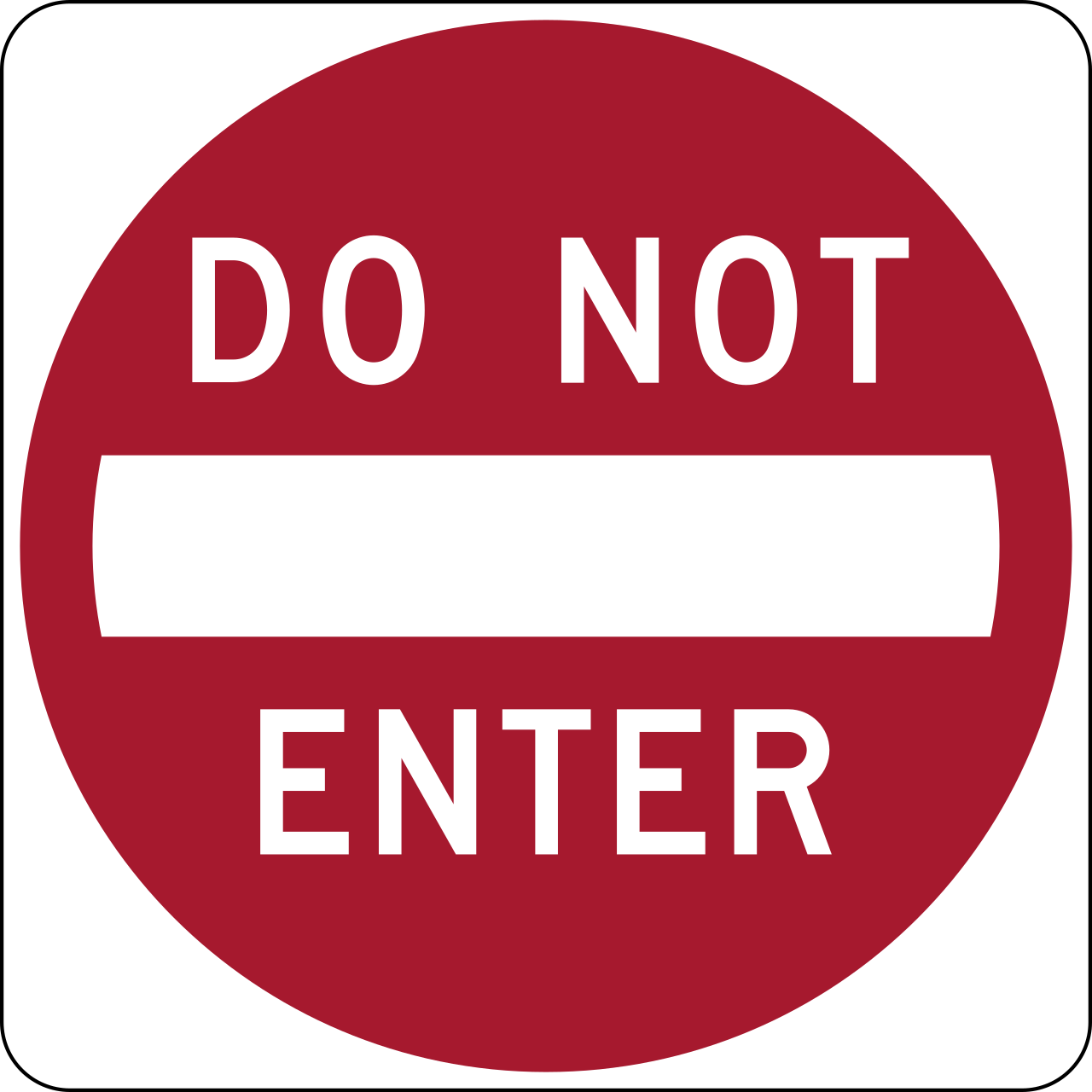
Marks a roadway or ramp where vehicular traffic is strictly forbidden to enter from your direction (such as freeway off-ramps or one-way streets).
This sign indicates:
A) that you must not drive past this sign.
B) that you must yield the right-of-way.
C) the entrance to a construction site.
D) the entrance to a dead-end street.
16.
Drinking alcohol while taking drugs can:
A) have a less pronounced effect than either taken separately.
B) have a more pronounced effect than either taken separately.
C) improves concentration.
D) improve your driving performance.
17.
Who is most at risk?
A) Drivers who are fatigued.
B) Drivers who are driving on long, boring roads.
C) All of the above.
18.
When driving, it is important to keep a space cushion _______ of your vehicle.
A) only on the left and right side
B) only in back
C) on all sides
D) only in front
19.
Right turns are strictly prohibited at this intersection under all circumstances.
This sign tells drivers that:
A) they must make a left turn at the intersection.
B) U-turns are not allowed.
C) they must not make a right turn.
D) None of the above.
20.
The road curves gradually to the right ahead. Reduce speed before entering the curve.
When they see this sign, drivers should:
A) increase their speed and keep well to the right.
B) slow down and keep well to the right.
C) slow down and keep well to the left.
21.
Parking is permitted only during specified hours and days as posted on the sign. Vehicles parked outside these hours are subject to ticketing or towing.
It's 10 AM. This sign tells you that:
A) you are allowed to park until 5:30 PM.
B) you must display a special permit in order to park here.
C) you are not allowed to park here.
22.
Standard yellow warning sign outline used across the US for all caution, hazard, and roadway change notifications.
This sign is a:
A) regulatory sign.
B) warning sign.
C) guide sign.
23.
Drivers can not pass a vehicle on the left if:
A) they approach the top of a hill on a two-way road and can not see over it.
B) they can not safely return to the right lane before they reach a solid yellow center line for the right lane.
C) All of the above.
24.
A steady yellow light means that a ______ light will soon appear.
A) steady green
B) steady red
C) flashing yellow
D) flashing green
25.
On slippery roads, drivers should:
A) leave more space in front of their vehicle.
B) increase their speed to avoid hydroplaning.
C) come to a complete stop.
26.
Which of the following does NOT affect the distance that it takes to stop your vehicle?
A) Perception time.
B) Braking distance.
C) Reaction distance.
D) Steering ability.
27.
What is the most important rule to remember in any emergency?
A) Do not panic.
B) Run away.
C) Call the police.
28.
Drivers often fail to see a motorcycle headed toward them. Why?
A) It is difficult to judge a motorcycle's speed.
B) Motorcycles are hard to see.
C) All of the above.
29.
Lanes of traffic moving in the same direction are divided by ____ lines.
A) orange
B) yellow
C) black
D) white
30.
Alerts drivers to an upcoming crosswalk where pedestrians frequently cross. Slow down and yield right-of-way to anyone in or about to enter the roadway.
The picture shows:
A) a railroad advance warning sign.
B) a speeding fines doubled sign.
C) a reversible road sign.
ANSWER KEY Check answers after completing the test.
1 C
2 B
3 B
4 B
5 A
6 A
7 B
8 D
9 A
10 C
11 B
12 B
13 C
14 C
15 A
16 B
17 C
18 C
19 C
20 C
21 C
22 B
23 C
24 B
25 A
26 D
27 A
28 C
29 D
30 A