DriveQuiz drivequiz.com

TN DMV PERMİT PRACTİCE TEST 15

Tennessee
Duration: 27 min
|
Questions: 30
Student Name:
Date:
Correct:      Incorrect:      Score:      
1.
Don't be afraid to sound a sharp blast on your horn when:
A) when a child is about to run into the street.
B) another vehicle is in danger of hitting you.
C) All of the above.
2.
If you see a “lane closed ahead” sign you should:
A) make a U-turn. You are on the wrong side of the road.
B) merge into the correct lane when it is safe.
C) speed to the end of the closed lane and try to get into the other lane.
3.
What do flashing red lights on a school bus indicate?
A) The bus is stopped to load or discharge passengers.
B) Traffic that approaches from either direction may proceed.
C) The bus is about to stop.
4.
On slippery roads, drivers should:
A) leave more space in front of their vehicle.
B) increase their speed to avoid hydroplaning.
C) come to a complete stop.
5.
If you drive slower than the flow of traffic, you will most likely:
A) improve traffic flow.
B) help create a safe driving environment.
C) interfere with traffic and receive a ticket.
6.
Indicates a two-way left-turn lane in the center of the road. Must only be used to make left turns or U-turns (where permitted), not for regular travel or passing.
This road sign means:
A) Vehicles may only travel in the center lane.
B) The center lane is shared for left turns in both directions of travel.
C) The center lane in both directions of travel will soon turn left.
7.
The roadway becomes particularly slippery during wet or rainy conditions. Reduce your speed, increase following distance, and avoid abrupt braking or steering.
This road sign means:
A) Watch for vehicles entering from the side
B) When pavement is wet, reduce your speed
C) Winding road ahead
8.
Right turns are strictly prohibited at this intersection under all circumstances.
This road sign means:
A) No left turn
B) No right turn
C) No U-turns
9.
The extra space in front of a large truck is needed for:
A) other drivers when merging onto a freeway.
B) the truck driver to stop the vehicle.
C) other drivers when they want to pass the truck.
10.
If your car goes into water, you should:
A) wait for water to rush in and let it out in small breaths through your nose.
B) call the fire department immediately.
C) remove yourself before it starts to sink.
11.
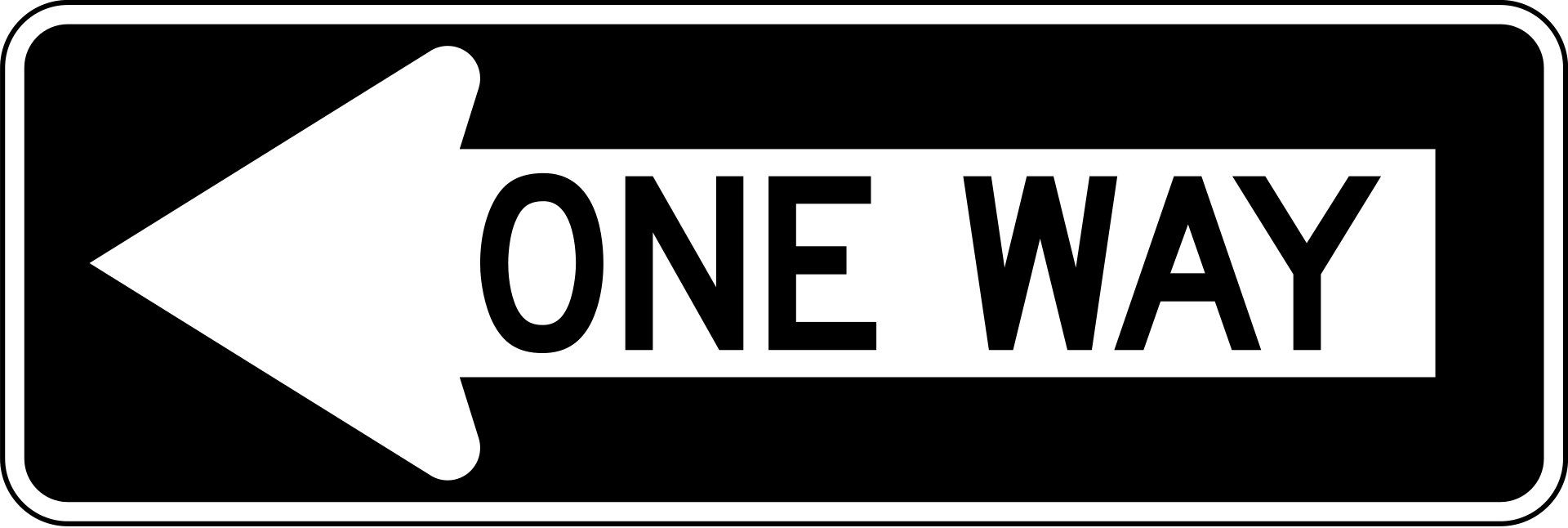
Traffic flows only in the direction indicated by the arrow. Never drive in the opposing direction.
The ‘One Way’ sign means that:
A) only vehicles turning left may travel in the direction of the arrow.
B) there is only one road that turns left at the intersection.
C) drivers may travel only in the direction of the arrow.
12.
Aggressive driving includes:
A) quick lane changes without a signal.
B) chasing or challenging other drivers.
C) All of the above.
13.
A sharp curve is ahead with a recommended safe speed plate. Slow down before entering the curve to prevent vehicle rollover.
This sign means:
A) If you are driving at 40 MPH or less you must stay in the right-hand lane
B) Curve ahead, drive at 40 MPH ot more around the curve ahead
C) Curve ahead, the recommended speed is 40 MPH or less
14.
A flashing red light means:
A) The same as a STOP sign.
B) The light will soon change to steady red.
C) Drive with caution.
15.
Are drivers allowed to exceed the speed limit to pass other vehicles?
A) Yes, but only by 10 MPH or less.
B) No.
C) Yes, but only if they drive with caution.
16.
At a stop sign there is no stop line or crosswalk. You must stop:
A) before you enter the intersection.
B) at the next crosswalk.
C) after you enter the intersection, if you have a clear view of traffic on the intersecting roadway.
17.
A traffic sign with a red circle around and a slash over a symbol means:
A) the maneuver shown by the symbol is not allowed.
B) Do not drive faster than the posted speed limit.
C) the maneuver shown on the sign should be executed with extreme caution.
18.
While you are in the middle of an intersection about to turn left, the light turns red. You should:
A) stop until you have the green light.
B) complete the turn when traffic clears.
C) back out of the intersection, if possible.
19.
Indicates a series of three or more consecutive sharp turns or curves ahead. Reduce speed and maintain lane control.
This road sign means:
A) Pavement ends
B) Winding road
C) Double curve ahead
20.
A driver who approaches an intersection:
A) must yield the right-of-way to traffic already in the intersection.
B) must drive straight through the intersection, even if another vehicle is already in the intersection.
C) has the right-of-way over traffic already in the intersection.
21.
Just like alcohol and other drugs, drowsiness can:
A) help you to be a better driver.
B) make you feel better.
C) impair your judgment.
22.
Treat the flashing red signal exactly like a STOP sign: come to a complete stop, yield to cross traffic and pedestrians, then proceed when safe.
A flashing red light:
A) is used at dangerous intersections.
B) means the same thing as a stop sign.
C) All of the above.
23.
The road curves gradually to the right ahead. Reduce speed before entering the curve.
When they see this sign, drivers should:
A) increase their speed and keep well to the right.
B) slow down and keep well to the right.
C) slow down and keep well to the left.
24.
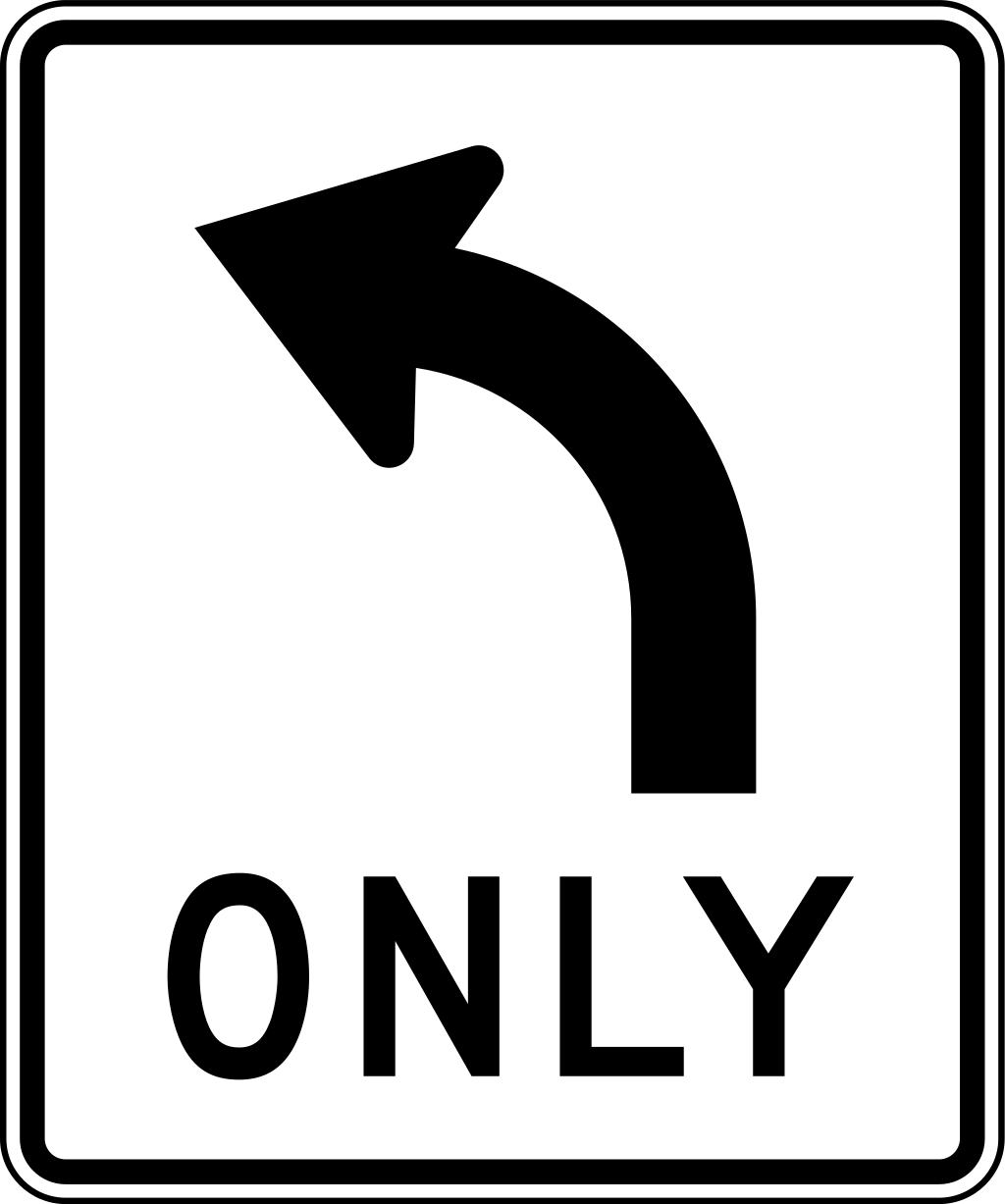
Vehicles in this lane are required to turn left at the intersection. Going straight is prohibited.
When you see an overhead lane sign with an arrow and the word 'ONLY' below it, you should:
A) change lanes immediately.
B) go the direction of the arrow.
C) proceed only if you plan on turning left.
25.
Drivers often fail to see a motorcycle headed toward them. Why?
A) It is difficult to judge a motorcycle's speed.
B) Motorcycles are hard to see.
C) All of the above.
26.
If another vehicle passes you on the left, you must:
A) increase your speed slightly and keep to the right.
B) decrease your speed, then pull over to the right and stop.
C) decrease your speed slightly and keep to the right.
27.
Slower-moving vehicles must stay in the right-hand lane to allow faster traffic to pass safely on multi-lane highways.
This road sign is:
A) a speed reduction sign.
B) a warning sign.
C) a regulatory sign.
28.
To drive defensively, you must:
A) anticipate errors by other drivers.
B) assume that a driver who approaches a STOP sign on a side road is actually going to stop.
C) not check behind you through your mirrors.
29.
If a vehicle suddenly cuts in front of you creating a hazard, which of these actions should you take first?
A) Sound your horn and step on the brake firmly.
B) Swerve into the lane next to you.
C) Take your foot off the gas pedal.
30.
One broken line indicates:
A) You can pass other vehicles and change lanes, if it is safe.
B) You can not pass other vehicles or go across the line.
C) You can change lanes, but only when traffic conditions or obstructions in the road make it necessary.
ANSWER KEY Check answers after completing the test.
1 C
2 B
3 A
4 A
5 C
6 B
7 B
8 B
9 B
10 C
11 C
12 C
13 C
14 A
15 B
16 A
17 A
18 B
19 B
20 A
21 C
22 C
23 C
24 B
25 C
26 C
27 C
28 A
29 C
30 A