DriveQuiz drivequiz.com

SD DMV PERMİT PRACTİCE TEST 3

South Dakota
Duration: 23 min
|
Questions: 25
Student Name:
Date:
Correct:      Incorrect:      Score:      
1.
To enter a gap in traffic while driving on a highway:
A) check behind, then watch the vehicle ahead.
B) speed up and let vehicles make way.
C) watch only the vehicles behind the gap.
2.
When they see a crossbuck sign, drivers:
A) must slow down and wait for the red lights to flash.
B) must always come to a complete stop.
C) are legally required to yield the right of way to trains.
3.
If you meet a stopped school bus with the lights flashing and the signal arm extended, you should:
A) proceed at 15 MPH or less, if no children are present.
B) stop.
C) watch for children and proceed at normal speed.
4.
If you are feeling tired while driving, you should:
A) stop and get some rest.
B) open a window.
C) drink coffee.
5.
If a vehicle is coming towards you at night with its high beams on, making it hard to see the road ahead, you should:
A) look straight ahead towards the middle of the lane.
B) look ahead towards the left edge of your lane.
C) look ahead towards the right edge of your lane.
6.
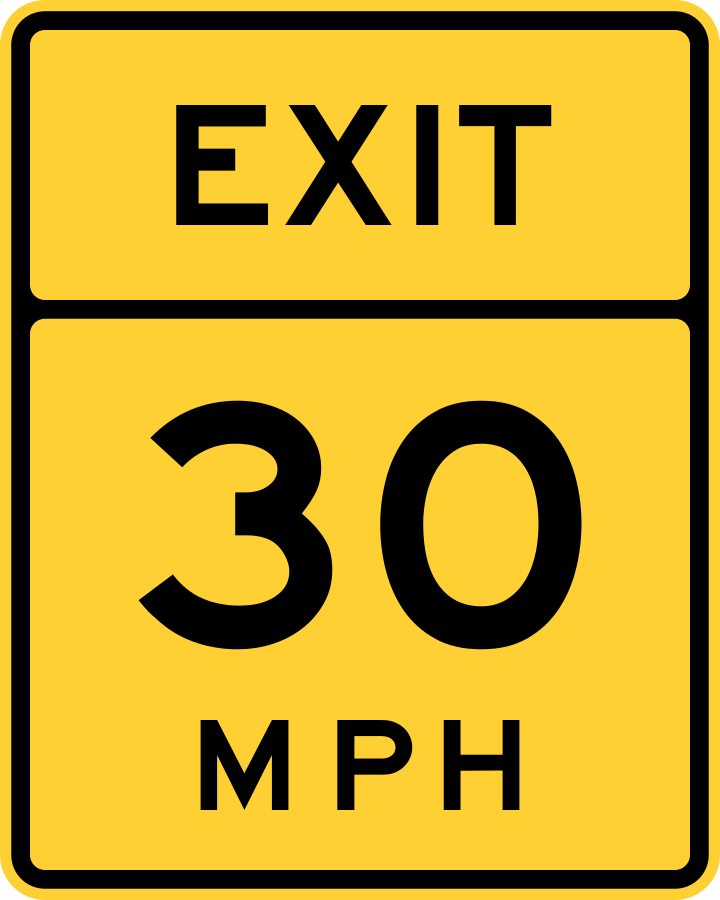
Recommends a safe speed of 30 MPH for negotiating the freeway exit ramp deceleration lane.
The sign in the picture:
A) shows the highest speed drivers can travel at the exit of the intersection.
B) is used to advise motorists of the appropriate ramp speed at the highway exit point.
C) indicates the minimum ramp speed at the highway exit point.
7.
To make a proper right turn:
A) swing to the left before turning right.
B) slow down and get into the lane nearest the centerline.
C) give the proper signal and get into the lane nearest the right curb.
8.
When the road is slippery, drivers should _________ their following distance.
A) increase
B) maintain
C) decrease
9.
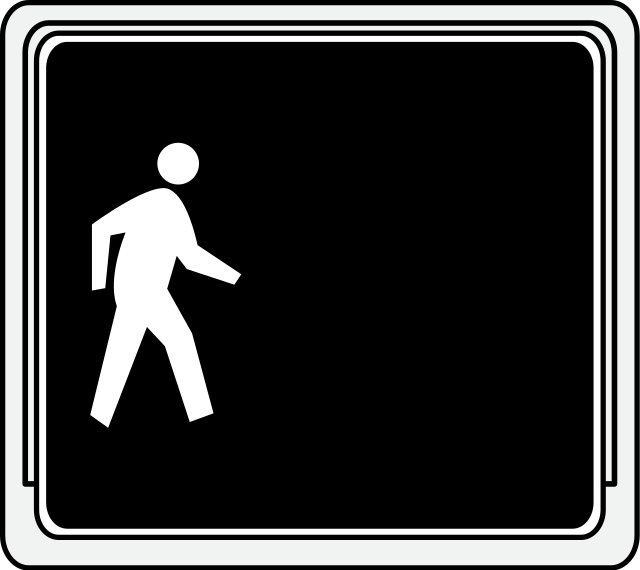
Illuminated white walking person indicates pedestrians have right-of-way to begin crossing the street in the designated crosswalk.
What does the pictured signal indicate?
A) A pedestrian may begin crossing the street.
B) Pedestrians may turn right.
C) A pedestrian may not not begin crossing the street.
10.
Slow down and give right-of-way to all oncoming vehicles, cyclists, and pedestrians. Stop completely if necessary before entering the intersection or merging.
This road sign means:
A) You have the right of way
B) No Passing Zone
C) Yield the right-of-way
11.
If you get on a wrong expressway exit, you must:
A) get off at the next exit and look for signs that tell you how to return to the expressway.
B) use the the exit ramp to accelerate to expressway speed and blend with traffic.
C) drive in reverse to return to the expressway.
12.
A school bus ahead of you in your lane is stopped with red lights flashing. You must:
A) stop until all the children have left the bus.
B) stop until the lights stop flashing.
C) reduce your speed, change lanes and pass.
13.
You should never depend on your mirrors when you prepare to change lanes. Why?
A) Mirrors leave “blind spots” behind both sides of vehicles.
B) Mirrors need to be adjusted.
C) Mirrors are useless.
14.
What type of pavement marking shows you which lane you must use for a turn?
A) Edge line
B) Diamond
C) Crosswalk Lines
D) Arrows
15.
What is the first thing you should do if your wheels move off the pavement?
A) Pull the steering wheel back.
B) Pull over to the right and sound your horn to warn the other drivers.
C) Ease your foot off the gas pedal and brake gently.
16.
The bridge ahead has narrower lanes or shoulders than the preceding road. Use caution when meeting oncoming vehicles.
This sign warns drivers of:
A) a reduction of lanes.
B) a dip in the road. Drivers should be ready to stop if the dip is filled with water.
C) a bridge ahead, wide enough to accommodate two lanes of traffic, but with very little clearance.
17.
Before entering an intersection, drivers should look:
A) left, right, then left again.
B) right, left, then right again.
C) left.
18.
The following symptoms are associated with drowsy driving:
A) You continue to yawn.
B) You don’t remember driving the last few miles.
C) All of the above.
19.
When driving in fog, drivers should use:
A) low beam headlights.
B) parking lights.
C) high beam headlights.
20.
Road signs that point out scenic areas and parks are:
A) brown and white.
B) black and orange.
C) green and white.
21.
To drive defensively, you must:
A) avoid scanning the road ahead.
B) keep one hand on the steering wheel.
C) keep your eyes moving.
22.
When a pedestrian carrying a white cane is at the corner ready to cross the street in front of you, before making your right turn, you should:
A) use your horn to help the pedestrian cross the street.
B) turn off the ignition until the person crosses the street.
C) yield the right-of-way and wait until the pedestrian crosses the street.
23.
The maximum legal speed under ideal driving conditions is 50 miles per hour. Always adjust speed downward for adverse weather, traffic, or road conditions.
This road sign means:
A) You must travel at the speed indicated
B) The maximum speed limit under ideal conditions
C) None of the above
24.
At intersections with a yield sign, you must:
A) yield to the vehicles on your left only.
B) yield the right-of-way to cross traffic close enough to cause conflict.
C) slow down and proceed.
25.
When changing lanes, you should remember that:
A) vehicles with two outside mirrors have no blind spots.
B) You only need to turn and look over your right shoulder for lane changes to the right or left.
C) you should look over your left shoulder for a left lane change and your right shoulder for a right lane change.
ANSWER KEY Check answers after completing the test.
1 A
2 C
3 B
4 A
5 C
6 B
7 C
8 A
9 A
10 C
11 A
12 B
13 A
14 D
15 C
16 C
17 A
18 C
19 A
20 A
21 C
22 C
23 B
24 B
25 C