DriveQuiz drivequiz.com

SD DMV PERMİT PRACTİCE TEST 18

South Dakota
Duration: 23 min
|
Questions: 25
Student Name:
Date:
Correct:      Incorrect:      Score:      
1.
Which statement about driving and drugs is true?
A) Only illegals drugs can impair your driving.
B) Prescription drugs are safe to use if they don't make you feel drowsy.
C) Even over the counter drugs can impair your driving.
2.
You may not turn right (or left from a one-way onto a one-way) while the traffic signal is red. Wait for the green signal before turning.
This sign tells drivers:
A) they must wait for the traffic signal to turn green before turning right or left.
B) they may not turn right or left during the red light.
C) All of the above.
3.
What is the first thing to do when you make a three-point turn?
A) Signal with your left turn signal, then check carefully for traffic coming toward you.
B) Signal with your right turn signal, then pull over to the right and stop.
C) Turn left, go across the road so you come to a stop while you face the edge of the road.
4.
You face a green light, but traffic on the other side of the intersection does not allow you to travel all the way through the intersection. What must you do?
A) Enter the intersection and wait until traffic ahead clears.
B) Wait for the next green light.
C) Wait until traffic ahead clears, so you do not block the intersection.
5.
If weather requires you to have your lights on, you should use your:
A) low beams.
B) parking lights.
C) high beams.
6.
Indicates that traffic is permitted to pass on either the left or the right side of an island, median, or obstruction.
This sign tells drivers that:
A) left and right turns are not allowed.
B) a divided highway is ahead.
C) they cannot go straight ahead.
7.
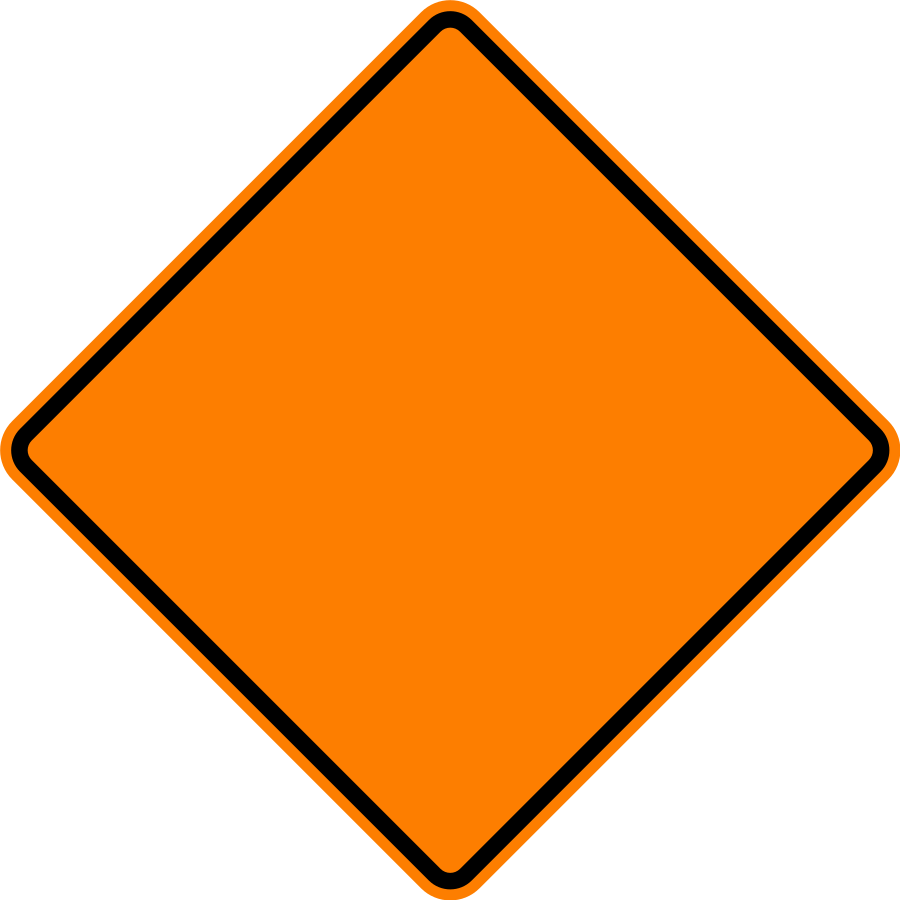
Yellow diamond-shaped signs always convey warnings about road hazards, changes in conditions, or upcoming requirements.
Signs with orange backgrounds mean:
A) railroad crossing.
B) side road ahead.
C) road construction site.
8.
Directions given by traffic officers ___________ signs, signals or pavement markings.
A) take precedence over
B) are less important than
C) must obey
9.
A steep downhill grade is ahead. Trucks and heavy vehicles should downshift to a lower gear to prevent brake overheating.
This road sign means:
A) Merging traffic
B) Steep grade ahead
C) Intersection ahead
10.
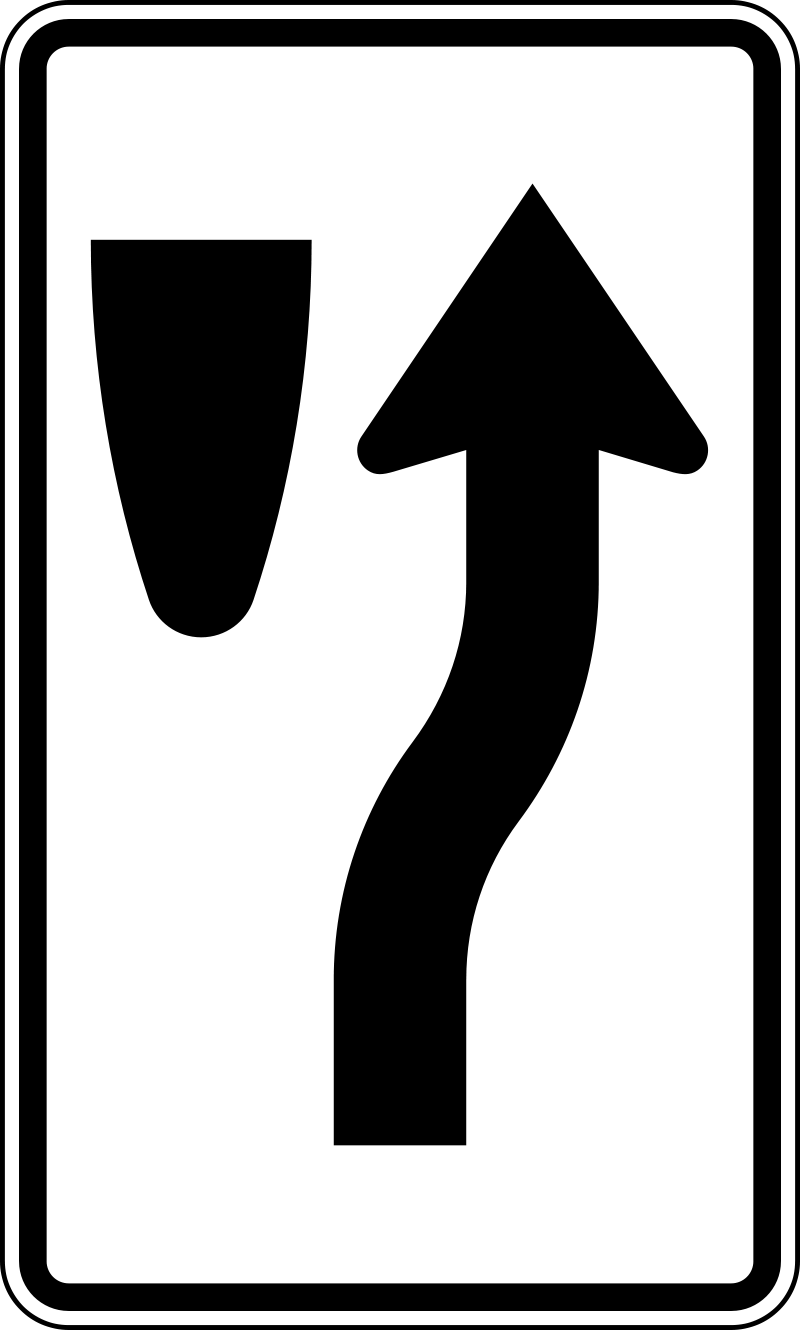
Drivers must pass to the right side of a traffic island, median barrier, or highway divider.
This sign tells drivers that:
A) there is a right turn ahead.
B) they must stay on the right side of the divider
C) a divided highway ends ahead.
11.
When changing lanes:
A) slow down and check your left mirror.
B) look over your shoulder to make sure no one is in the blind spot.
C) change lane before checking the inside rearview mirror.
12.
If the driver of an oncoming vehicle fails to dim the lights, you should look:
A) toward the right side of the road.
B) toward the center of the roadway.
C) straight ahead.
13.
You reach an intersection that is not controlled at the same time as a driver on your right, and both of you prepare to go straight. Who has the right-of-way?
A) You.
B) No one.
C) The other driver.
14.
Which of the following is NOT true about ABS?
A) It improves the vehicle stability.
B) It helps increase your stopping distance.
C) It improves the steering ability.
15.
What is the purpose of minimum speed limits?
A) To keep a smooth traffic flow.
B) To halt the traffic flow.
C) To allow emergency vehicles with red flashing lights to safely pass other vehicles.
16.
A person walking with a white cane or guide dog is likely to be:
A) a deaf person.
B) a traffic enforcement officer.
C) a blind person.
17.
A sharp curve is ahead with a recommended safe speed plate. Slow down before entering the curve to prevent vehicle rollover.
This sign indicates that:
A) the highest safe speed drivers should travel around the curve ahead is 25 MPH.
B) the safe speed around the curve ahead is at least 25 MPH.
C) drivers may not turn right if traveling at 25 MPH or less.
18.
You are stopped at a stop sign and you are going to go straight through the intersection. A car on the cross road has stopped at a stop sign on your right and is going to go straight. Who has the right-of-way?
A) Whoever enters the intersection first.
B) You.
C) The car on your right.
19.
If you miss your exit on a freeway, do NOT:
A) continue on the freeway and find an alternative route.
B) turn around or back up.
C) get back on the freeway in the opposite direction and return to the exit you want.
20.
Which of the following factors affect the absorption of alcohol?
A) Your race.
B) Your weight.
C) Your height.
21.
To drive defensively, you must:
A) anticipate errors by other drivers.
B) assume that a driver who approaches a STOP sign on a side road is actually going to stop.
C) not check behind you through your mirrors.
22.
A defensive driver:
A) never drives below the speed limit.
B) knows when it is safe to pass other vehicles.
C) considers what other drivers might do and is always prepared to act.
23.
What happens if two vehicles reach at the same time an intersection with four-way stop signs?
A) The driver on the right yields to the driver on the left.
B) The driver on the left yields to the driver on the right.
C) The first vehicle to reach the intersection must yield.
24.
Blind spots are:
A) Areas to the side or rear of a vehicle that are easy to spot.
B) areas of the road that cannot be seen even when looking into mirrors.
C) traffic control devices.
25.
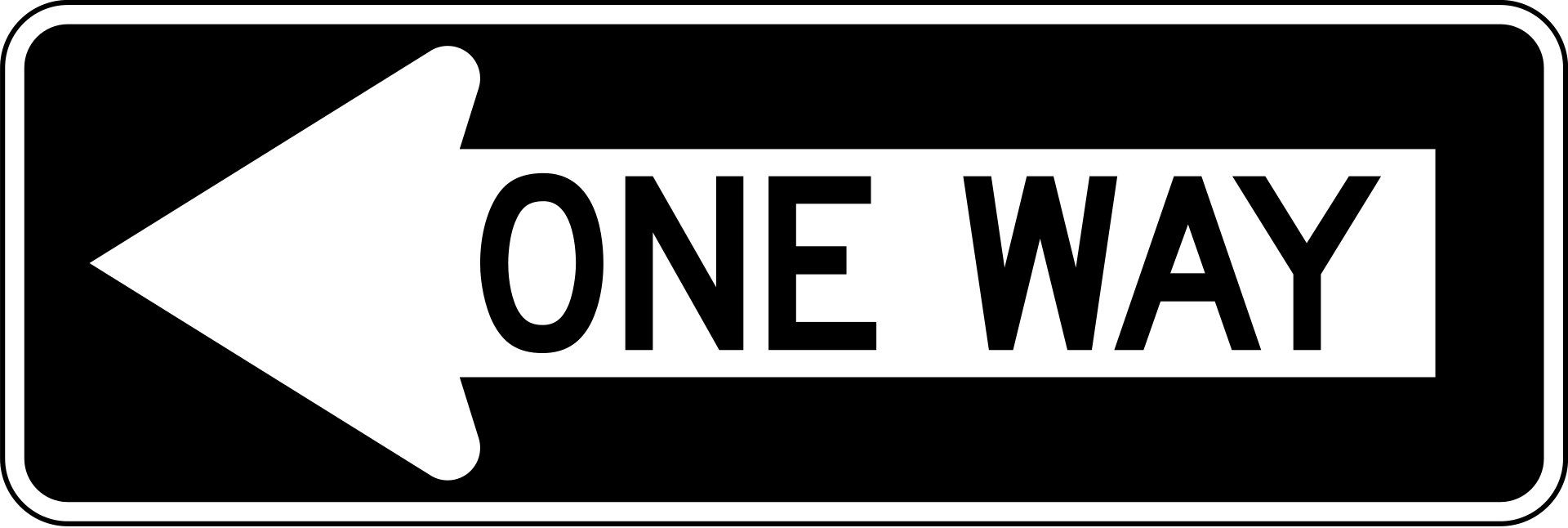
Traffic flows only in the direction indicated by the arrow. Never drive in the opposing direction.
The ‘One Way’ sign means that:
A) only vehicles turning left may travel in the direction of the arrow.
B) there is only one road that turns left at the intersection.
C) drivers may travel only in the direction of the arrow.
ANSWER KEY Check answers after completing the test.
1 C
2 C
3 B
4 C
5 A
6 C
7 C
8 A
9 B
10 B
11 B
12 A
13 C
14 B
15 A
16 C
17 A
18 C
19 B
20 B
21 A
22 C
23 B
24 B
25 C