←
Back to Test
Hide Answer Key
Print / Save as PDF
Print / PDF
drive
quiz
.com
SD DMV PERMİT PRACTİCE TEST 10
South Dakota
Duration: 23 min
|
Questions: 25
Student Name:
Date:
Correct:
Incorrect:
Score:
1.
Continuous hard braking on ice and snow often:
A)
is the best option during winter.
B)
keeps the brakes from freezing.
C)
causes the front wheels to lock.
2.
Always stop before you cross railroad tracks when:
A)
you are not wearing safety belts.
B)
you are following a bicyclist or motorcyclist across railroad tracks.
C)
you don't have room on the other side to completely cross the tracks.
3.
At a stop sign there is no stop line, you must stop:
A)
before you enter the intersection.
B)
before you enter the crosswalk.
C)
after you enter the crosswalk.
4.
When riding in a vehicle equipped with air bags is, children ages 12 and under are safer:
A)
buckled up in the back seat.
B)
in the bed of a pick-up truck.
C)
buckled up in the front seat.
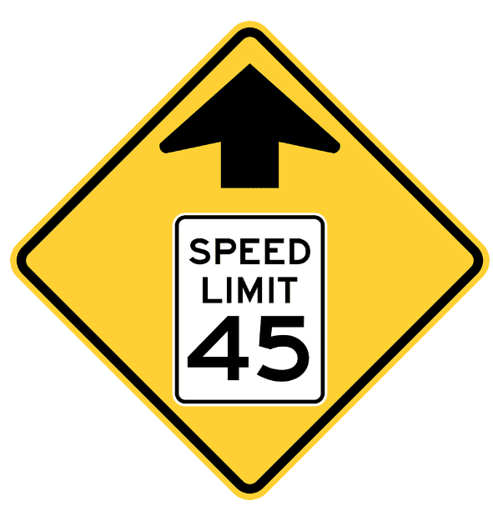
5.
This warning sign:
A)
provides advance notice to upcoming speed limit change.
B)
shows the current speed limit that all vehicles traveling in the direction of the arrow must not exceed.
C)
indicates the suggested highest safe speed.
6.
What is a likely effect when you take another drug while you drink alcohol?
A)
The effects of the alcohol and the drug are enhanced.
B)
There are no effects, unless the drug is prescription only.
C)
If the drug is over-the-counter, there are no effects.
7.
This road sign means:
A)
Yield sign ahead
B)
Side road entering from the left
C)
Side road
8.
When driving on a roadway with a single broken white line:
A)
you may cross the broken white line to change lanes.
B)
you may change lanes only if you are in the right lane.
C)
you may not cross the broken white line.
9.
At a crosswalk:
A)
construction workers must yield to drivers.
B)
drivers must yield to pedestrians.
C)
pedestrians must yield to drivers.
10.
When driving in a construction zone you should:
A)
slightly increase your speed.
B)
come to a complete stop and check road conditions.
C)
expect the unexpected.
11.
What is the meaning of blue traffic signs?
A)
A blue background indicates a regulatory sign.
B)
They give directional information.
C)
Blue indicates road user services.
12.
Where there is no bicycle lane, where on the road must a bicyclist ride?
A)
on the left shoulder of the road.
B)
near the right curb or edge of the road.
C)
near the left edge of the road.
13.
This sign warns drivers that:
A)
they must turn either to the right or left.
B)
there is a double curve ahead.
C)
there is a winding road ahead.
14.
The use of alcohol and/or drugs affects:
A)
concentration and reaction time.
B)
alertness and judgement.
C)
All of the above.
15.
Blind spots around a large vehicle are _________________ than the blind spots around a car.
A)
larger and deeper
B)
less dangerous
C)
narrower and shorter
16.
If you are continually being passed on the right, you should:
A)
move into the right lane and allow other vehicles to pass you on the left.
B)
move into the left lane and allow other vehicles to pass you on the right.
C)
increase your speed immediately.
17.
When driving in work zones, drivers should:
A)
closely follow the driver in front of them.
B)
reduce their speed and be prepared to stop.
C)
maintain their speed through the work zone.
18.
When parking downhill:
A)
turn your wheels away from the side of the road.
B)
turn your wheels towards the side of the road.
C)
keep your wheels straight.
19.
What do flashing red lights on a school bus indicate?
A)
The bus is stopped to load or discharge passengers.
B)
Traffic that approaches from either direction may proceed.
C)
The bus is about to stop.
20.
Signs that indicate a No Passing Zone tell drivers that:
A)
it is not safe to pass.
B)
passing is only permitted in daylight hours.
C)
not passing other vehicles is prohibited.
21.
If you become sleepy while driving you should:
A)
get some rest or change drivers.
B)
drink coffee.
C)
open a window.
22.
A red arrow on a traffic light means:
A)
You may not turn in the direction of the arrow until a green light or arrow light goes on.
B)
You may turn in in the direction of the arrow after coming to a complete stop.
C)
You must stop and then proceed when the way is clear.
23.
Vertical rectangles tell drivers:
A)
the law.
B)
what is not allowed.
C)
the direction they should travel.
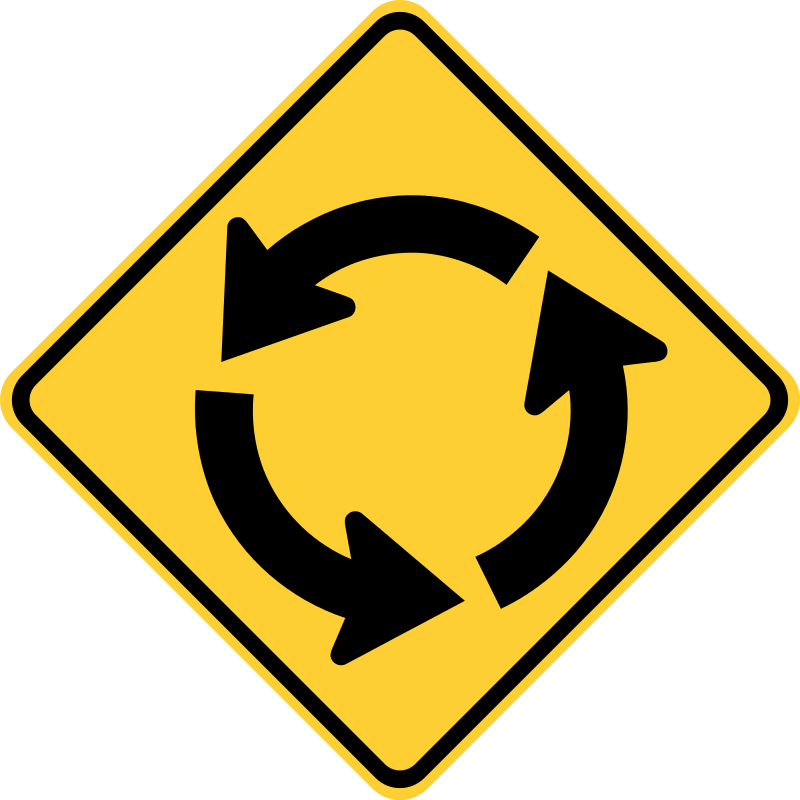
24.
This road sign:
A)
warns drivers of a sharp turn left. Drivers should slow their speed and keep to the left.
B)
provides an advance notice of a roundabout.
C)
warns drivers that U-turns are not permitted.
D)
is a no-right-turns sign.
25.
__________ are blue with white letters and symbols.
A)
Warning signs
B)
Service signs
C)
Destination signs (guide signs)
ANSWER KEY
Check answers after completing the test.
1
C
2
C
3
B
4
A
5
A
6
A
7
A
8
A
9
B
10
C
11
C
12
B
13
C
14
C
15
A
16
A
17
B
18
B
19
A
20
A
21
A
22
A
23
A
24
B
25
B