←
Back to Test
Hide Answer Key
Print / Save as PDF
Print / PDF
drive
quiz
.com
SC DMV PERMİT PRACTİCE TEST 14
South Carolina
Duration: 27 min
|
Questions: 30
Student Name:
Date:
Correct:
Incorrect:
Score:
1.
Speed limit signs are:
A)
service signs
B)
regulation signs (regulatory signs)
C)
warning signs
2.
When driving at night, drivers should:
A)
always use their high beams.
B)
increase their following distance.
C)
look directly into the oncoming headlights of approaching vehicles.
3.
This sign warns drivers of:
A)
low clearance.
B)
a narrow bridge ahead.
C)
a low place in the road.
4.
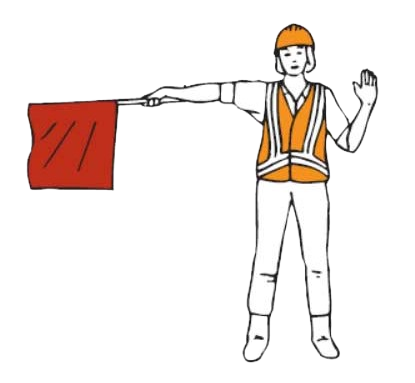
This signal means:
A)
Stop
B)
Move to the left
C)
Slow down
D)
Proceed
5.
Which statement about tires is true?
A)
Tires with low air pressure have better traction, particularly when driving on wet pavement.
B)
High speed reduces stress and strain on tires.
C)
The tires on your vehicle must have good treads and otherwise be in safe condition.
6.
In heavy rain, tires can begin to ride on the water that is on top of the road pavement. This is called:
A)
rideplaning.
B)
hydroplaning.
C)
pavement-planing.
D)
waterplaning.
7.
The picture shows a _________ sign.
A)
no U-turn
B)
no left turn
C)
sharp turn
8.
The yield sign means:
A)
Drive with caution in wet weather.
B)
You must come to a complete stop.
C)
Slow down and give vehicles crossing your path the right-of-way.
9.
Driving at excessive speed:
A)
improves your reaction time.
B)
often leads to high-risk decision-making.
C)
does not increase the chance of a crash.
10.
What is the first thing to do when you make a three-point turn?
A)
Signal with your left turn signal, then check carefully for traffic coming toward you.
B)
Signal with your right turn signal, then pull over to the right and stop.
C)
Turn left, go across the road so you come to a stop while you face the edge of the road.
11.
__________ are blue with white letters and symbols.
A)
Warning signs
B)
Service signs
C)
Destination signs (guide signs)
12.
Taking a prescription drug while drinking alcohol:
A)
has no effect one way or the other.
B)
can make you unfit to drive.
C)
will improve your alertness.
13.
A driver who approaches an intersection:
A)
must yield the right-of-way to traffic already in the intersection.
B)
must drive straight through the intersection, even if another vehicle is already in the intersection.
C)
has the right-of-way over traffic already in the intersection.
14.
It's 10 AM. This sign tells you that:
A)
you are allowed to park until 5:30 PM.
B)
you must display a special permit in order to park here.
C)
you are not allowed to park here.
15.
What does the flashing signal in the picture indicate?
A)
The same thing as a stop sign.
B)
Pedestrians should finish crossing the street if started.
C)
Pedestrians should start crossing the street.
16.
What should you do when an aggressive driver confronts you?
A)
Avoid eye contact with the aggressive driver.
B)
Make eye contact.
C)
Challenge the aggressive driver with increased speed.
17.
What should you do as you prepare to turn right at an intersection?
A)
Honk your horn.
B)
Yield to bicyclists coming from the opposite direction.
C)
Signal your turn, check for bicyclists, and do not turn directly in front of a bicyclist.
18.
Vertical rectangles tell drivers:
A)
the law.
B)
what is not allowed.
C)
the direction they should travel.
19.
Where must you position your vehicle when you prepare to make a left turn from a two-way roadway into a one-way roadway?
A)
As far to the right as possible.
B)
On the right curb.
C)
As close as possible to the center line.
20.
This sign indicates:
A)
a side road.
B)
a cross road.
C)
a church zone ahead.
21.
As the percentage of alcohol in your blood (BAC) increases, you become:
A)
more reactive.
B)
more intoxicated.
C)
more sober.
22.
Parking is not allowed:
A)
in an intersection, unless permitted by signs.
B)
within 300 feet of a pedestrian safety area.
C)
on public roads
23.
Which of these statements about railroad crossings is true?
A)
You must stop at a railroad crossing when directed by a “flagman” or stop sign.
B)
It is against the law to go around lowered gates at a crossing.
C)
All of the above.
24.
Left turns on a red light are allowed:
A)
from a one-way street into a one-way street.
B)
Never.
C)
at intersections, after stopping, if the way is clear.
25.
Which of the following is true about the Anti-Locking Brake System?
A)
It prevents skidding.
B)
It allows drivers to steer during an emergency braking situation.
C)
All of the above.
26.
To drive defensively, you must:
A)
avoid scanning the road ahead.
B)
keep one hand on the steering wheel.
C)
keep your eyes moving.
27.
Who is most at risk?
A)
Drivers who are fatigued.
B)
Drivers who are driving on long, boring roads.
C)
All of the above.
28.
When sharing the road with cyclists, you should:
A)
be careful.
B)
treat the cyclist as any other vehicle.
C)
All of the above.
29.
Where there is no bicycle lane, where on the road must a bicyclist ride?
A)
on the left shoulder of the road.
B)
near the right curb or edge of the road.
C)
near the left edge of the road.
30.
If you've had a few beers, the effects of alcohol will be reduced only by:
A)
waiting several hours.
B)
taking a cold shower.
C)
getting a cup of coffee.
ANSWER KEY
Check answers after completing the test.
1
B
2
B
3
B
4
A
5
C
6
B
7
A
8
C
9
B
10
B
11
B
12
B
13
A
14
C
15
B
16
A
17
C
18
A
19
C
20
B
21
B
22
A
23
C
24
A
25
C
26
C
27
C
28
C
29
B
30
A