B)pump the brakes gently if they are about to hit something.
C)tap the gas pedal with their foot.
2.
Blind spots are:
A)Dangerous intersection where the maximum speed limit is 15 MPH or less.
B)At night, the darkest areas of a road, where emergency flashers should be used.
C)Areas to the side or rear of a vehicle that the driver cannot see with use of mirrors.
3.
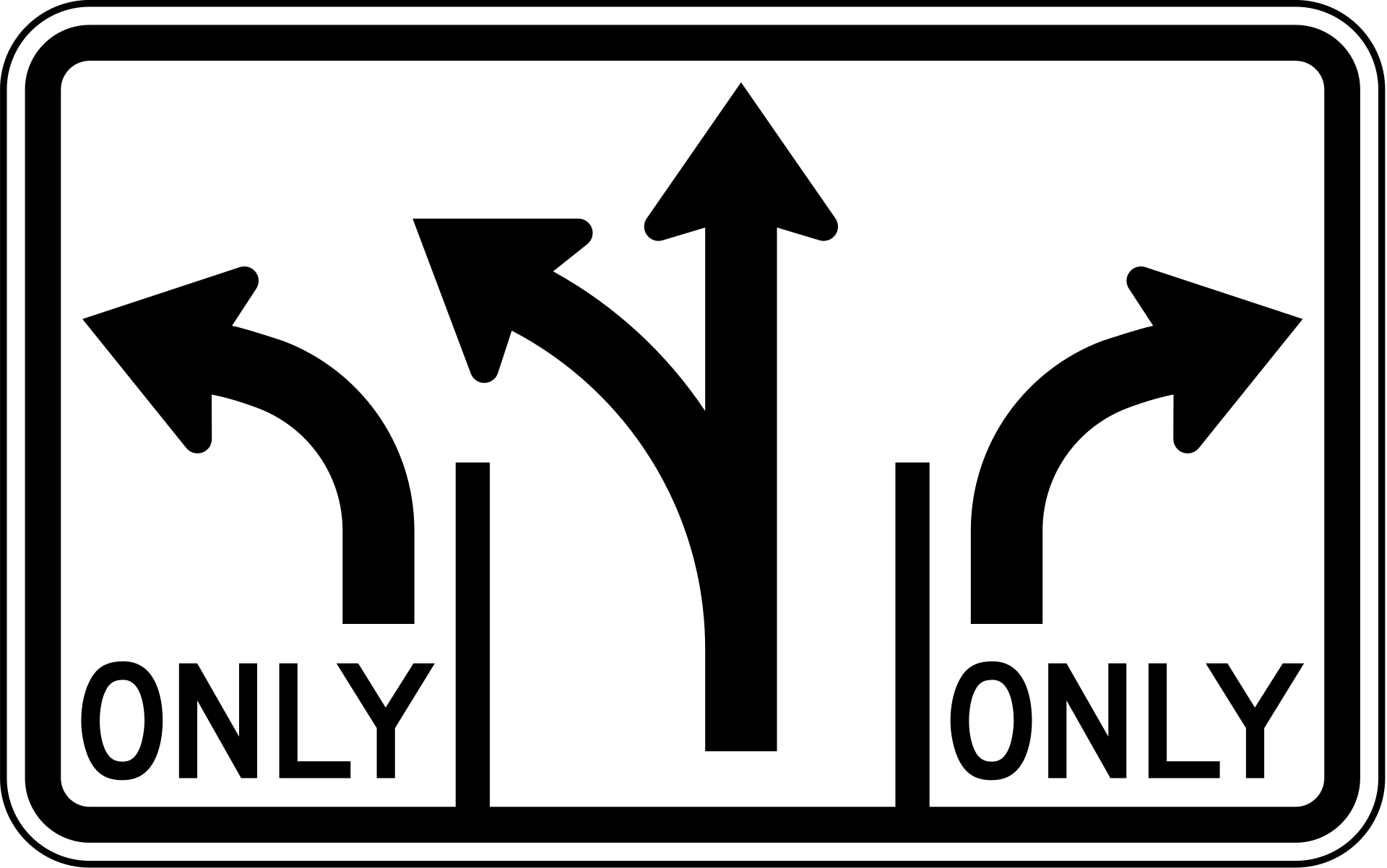
This regulatory sign tells drivers that:
A)traffic in the left lane must turn left at the intersection ahead.
B)all vehicles must turn left immediately.
C)traffic in the right lane must go straight.
4.
This road sign means:
A)Slow down, slippery when wet
B)Detour ahead
C)Road curves ahead
5.
When a traffic signal light turns green, you should:
A)back up slowly.
B)yield the right-of-way to pedestrians.
C)yield the right-of-way to larger vehicles.
D)wait 5 seconds before proceeding.
6.
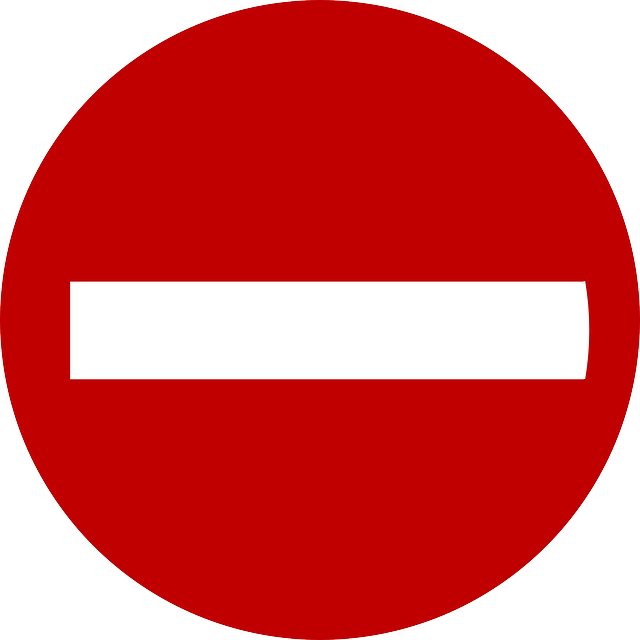
This road sign means:
A)No left turn
B)Lane ends
C)Do not enter
7.
What should you do if you see smoke come from under the hood?
A)Call the fire department and then pull off the road and park your vehicle.
B)Pull off the road and park your vehicle. Turn off the ignition, get away from the car and call the fire department.
C)Try to fight the fire yourself.
8.
This road sign means:
A)You must come to a complete stop
B)Do not enter
C)Slow down, stop if necessary and yield the right-of-way
D)Merging traffic
9.
Air bags are meant to _________ seat belts.
A)work with
B)fix
C)replace
10.
When driving near light rail vehicles, drivers should:
A)never drive around lowered crossing gates.
B)expect trains on any track at any time.
C)always obey signs and traffic signals.
D)All of the above.
11.
More than one vehicle is approaching a four-way stop sign. Who has the right of way?
A)The first driver to reach the intersection and stop.
B)The driver on the left.
C)The last driver to reach the intersection.
12.
This road sign means:
A)Merge right
B)Stop sign ahead
C)Reduction in lanes
13.
A motorist arriving at the intersection must yield the right of way to motorists who arrived before him.
A)True
B)False
14.
As your speed increases it is most important to:
A)drive with both hands on steering wheel.
B)maintain a constant speed.
C)look farther ahead.
15.
If your car breaks down on the highway, you should:
A)use your four-way flashers to warn other drivers.
B)sound your horn to warn passing vehicles.
C)flash your headlights at oncoming traffic.
D)stop in the right lane.
16.
To avoid traction loss from hydroplaning, drivers should:
A)keep a constant speed.
B)apply the brakes as soon as the car starts to skid.
C)slow down.
17.
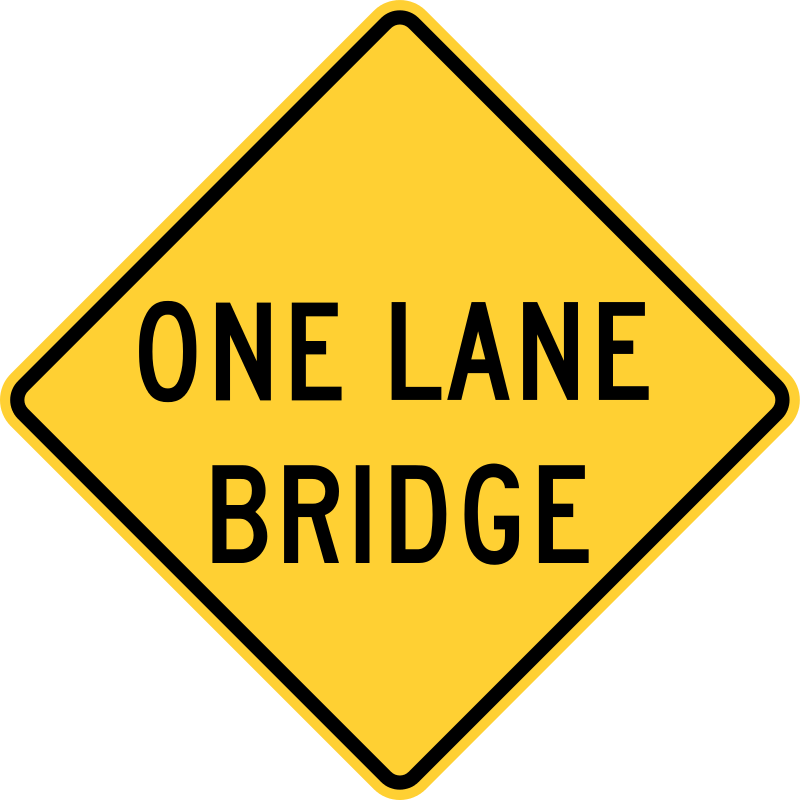
What should drivers do when they see this sign?
A)Make sure the bridge is clear of oncoming traffic before they cross.
B)Look to the left and right for other traffic.
C)Allow others to merge smoothly.
18.
This road sign means:
A)Yield sign ahead
B)Side road entering from the left
C)Side road
19.
Two motorcyclists are allowed to:
A)ride side-by-side in a single lane.
B)share the lane with another vehicle.
C)race on empty roads.
20.
When driving on roads that may be slippery:
A)do not make any sudden changes in direction or speed.
B)always drive at the highest speed allowed.
C)use cruise control to maintain a steady speed.
D)reduce your following distance.
21.
This sign warns drivers that:
A)they cannot go straight ahead.
B)they will soon be facing oncoming traffic.
C)a shared lane starts ahead.
22.
When you leave your vehicle unattended, you must:
A)lock the ignition and remove the ignition key.
B)set the parking brake.
C)turn off the engine.
D)All of the above.
23.
If you drink alcohol socially, what helps insure safe driving?
A)Stop drinking one hour before driving.
B)Drink coffee before driving.
C)Take a cold shower before driving.
D)Ride home with a friend who has not been drinking.
24.
If the vehicle is equipped with air bags, seat belts:
A)should not be worn.
B)should still be worn.
C)are optional.
25.
Although there may be enough room in the traffic lane for an automobile and a motorcyclist, a vehicle driver should not share the lane with motorcyclists.
A)False
B)True
ANSWER KEYCheck answers after completing the test.