DriveQuiz drivequiz.com

RI DMV PERMİT PRACTİCE TEST 5

Rhode Island
Duration: 23 min
|
Questions: 25
Student Name:
Date:
Correct:      Incorrect:      Score:      
1.
Indicates the maximum bridge or underpass vertical clearance. Vehicles taller than the posted height must not proceed.
This sign means:
A) Narrow bridge ahead. Slow down and drive with caution.
B) Do not to enter if your vehicle is taller than the height listed on the sign.
C) No passing zone ahead.
2.
Pentagonal signs are used to indicate:
A) possible hazards on roadways.
B) no passing zones.
C) school crossings.
3.
When following another vehicle at night, drivers should use:
A) low beam headlights.
B) emergency flashers.
C) high beam headlights.
4.
After parking, are you allowed to open a door on the road side of your vehicle?
A) Yes, always.
B) Yes, but only if it does not interfere with bicyclists and other traffic.
C) No, never.
5.
When the traffic light is green, but traffic is blocking the intersection, drivers should:
A) enter the intersection and wait for traffic to clear.
B) not enter the intersection until they can get completely across.
C) honk their horn to establish their right-of-way.
6.
A driver approaching a flashing red traffic signal must:
A) merge to the left.
B) stop before the intersection.
C) carefully drive through the intersection without stopping.
D) slow down at the traffic signal.
7.
The ‘Slower Traffic Keep Right’ sign is used:
A) at most intersections.
B) on multiple lane highways.
C) in school zones.
8.
Right turns are strictly prohibited at this intersection under all circumstances.
This road sign means:
A) No left turn
B) No right turn
C) No U-turns
9.
When you see an emergency vehicle with flashing lights behind you, you should:
A) slow down, provide a clear path for the emergency vehicle and stop.
B) keep moving slowly, staying to the right side of the road.
C) disregard the signal if there are other lanes available for the emergency vehicle.
D) immediately come to a complete stop.
10.
When is the pavement most slippery?
A) If it's been raining several hours.
B) When it has just begun to rain.
C) When it's been raining from at least one hour.
11.
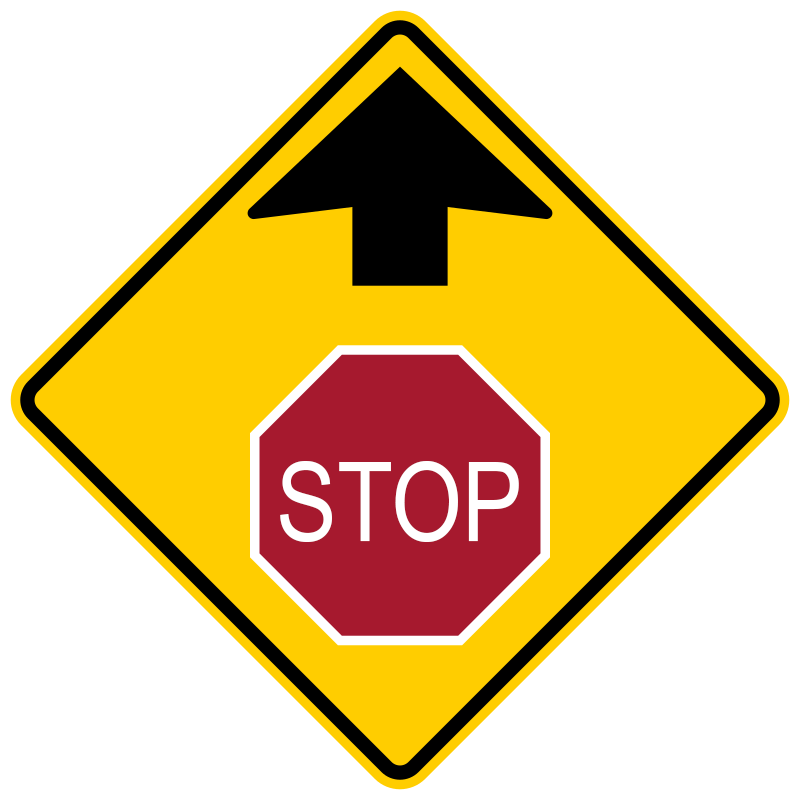
Warns of an upcoming STOP sign that may not be immediately visible. Begin slowing down to prepare for a complete stop.
This road sign means:
A) Railroad Warning
B) Stop Sign Ahead
C) Lane ends
D) Stop if necessary
12.
Slow down and give right-of-way to all oncoming vehicles, cyclists, and pedestrians. Stop completely if necessary before entering the intersection or merging.
This road sign means:
A) Slow down and yield to traffic on main road when merging
B) Always come to a complete stop
C) Lane reduction ahead
D) You must come to a complete stop and yield right-of-way
13.
When approaching a highway-rail intersection, the first sign drivers see is usually:
A) an RXR round sign on a yellow background.
B) a stop sign.
C) a yield sign.
14.
When passing a pedestrian who is walking on the road and an oncoming vehicle is approaching, you should:
A) keep driving, you have the right-of-way.
B) honk your horn to warn the pedestrian.
C) slow down and let the vehicle pass first.
15.
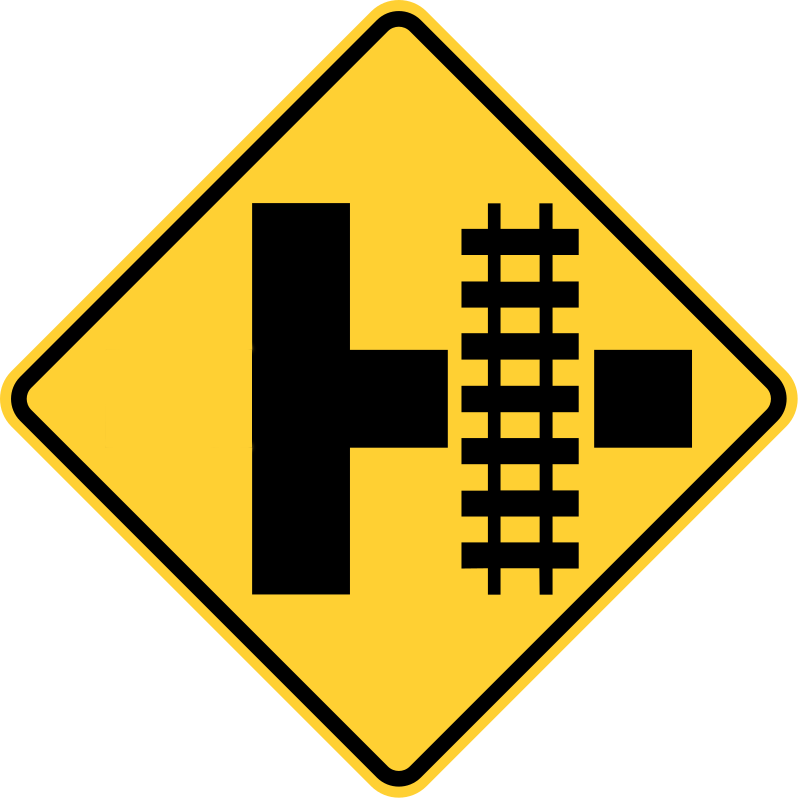
Four-way intersection ahead. Be prepared to yield right-of-way according to traffic control devices.
What does this sign indicate?
A) Parallel railroad crossing (side road)
B) Low ground clearance railroad crossing
C) Parallel railroad crossing (crossroad)
16.
A steep downhill grade is ahead. Trucks and heavy vehicles should downshift to a lower gear to prevent brake overheating.
When they see this sign, drivers should:
A) be ready to brake sharply and stop.
B) be ready to shift to lower gear.
C) yield to trucks coming from the hill on the right.
17.
Proceed with caution. You do not need to stop unless pedestrians or hazards are present in the intersection.
A flashing yellow light:
A) warns drivers to proceed with caution.
B) is used at dangerous intersections.
C) All of the above.
18.
What should drivers do when the red lights begin to flash?
A) Stop.
B) Yield.
C) Slow down.
19.
No Zones are areas around trucks where cars:
A) disappear into blind spots or are so close to the truck that the driver's ability to stop or maneuver safely is restricted.
B) can turn safely because several car lengths have been left between the truck and car.
C) can travel behind trucks at constant speed and have no risks of being involved in a collision.
20.
If a bus has signaled and is pulling back onto the roadway, you must:
A) yield.
B) honk to let them know you’re there.
C) move to the left lane.
D) speed up to pass.
21.
You are driving on a four-lane divided highway, two vehicles are driving side by side ahead of you, and you are in a hurry. You should:
A) drive closely behind the vehicles ahead changing lanes frequently.
B) drive in either lane with at least a two-second time interval behind the vehicle ahead.
C) drive closely behind the vehicle in the left lane and flash your headlights.
D) drive closely behind the vehicle in the right lane.
22.
The road ahead is divided by a median strip or physical barrier into two separate one-way roadways. Keep to the right of the divider.
This sign means:
A) Divided highway ahead.
B) Divided highway ends.
C) Drivers will soon be on a roadway with two-way traffic.
23.
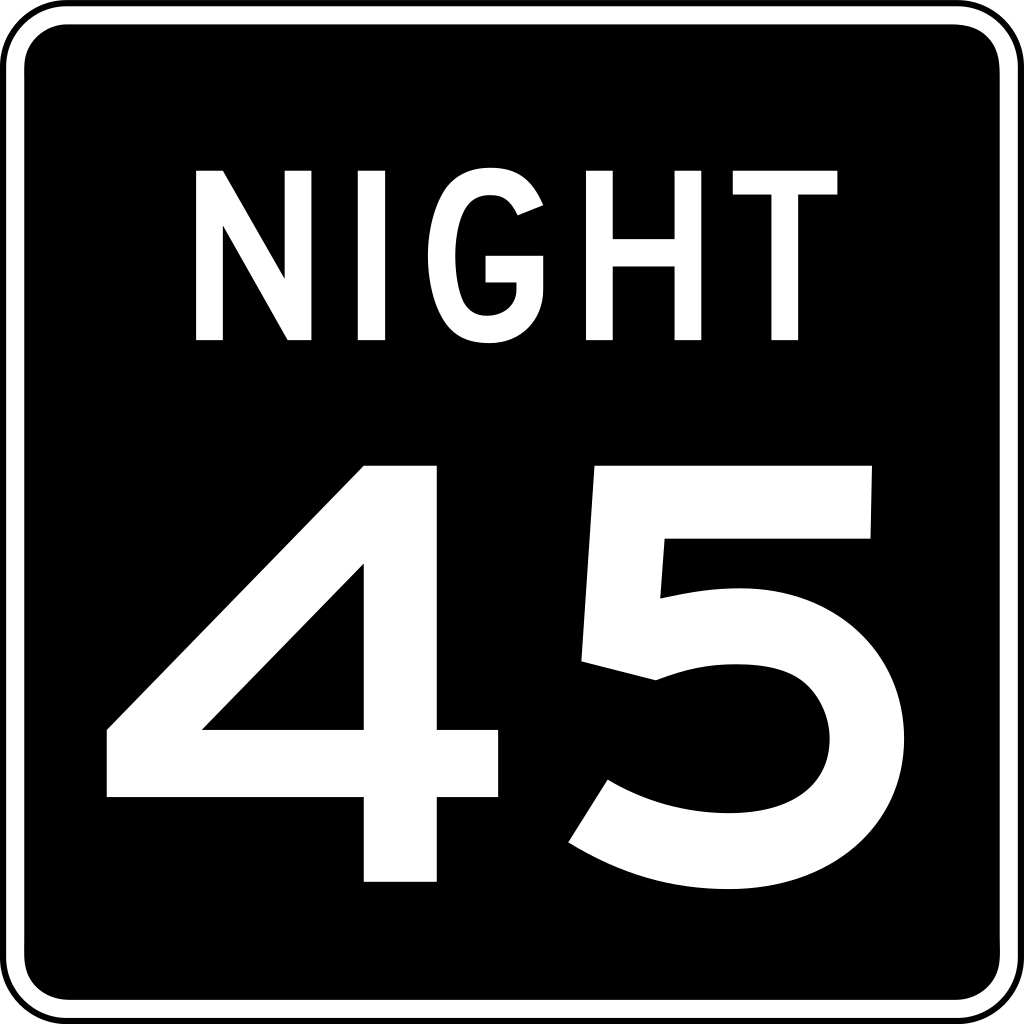
Indicates a lower maximum legal speed limit that applies only during nighttime hours for safety.
This sign means:
A) Take route 45 if you are driving at night.
B) The night-time speed limit is 45 MPH.
C) The minimum speed limit is 45 MPH.
24.
Road signs that direct drivers to services are:
A) black and white.
B) green and white.
C) brown and white.
D) blue and white.
25.
Yellow diamond warning that pedestrians may be crossing ahead. Exercise caution and yield.
This road sign means:
A) Pedestrian crossing
B) School zone
C) School crossing
ANSWER KEY Check answers after completing the test.
1 B
2 C
3 A
4 B
5 B
6 B
7 B
8 B
9 A
10 B
11 B
12 A
13 A
14 C
15 A
16 B
17 C
18 A
19 A
20 A
21 B
22 A
23 B
24 C
25 A